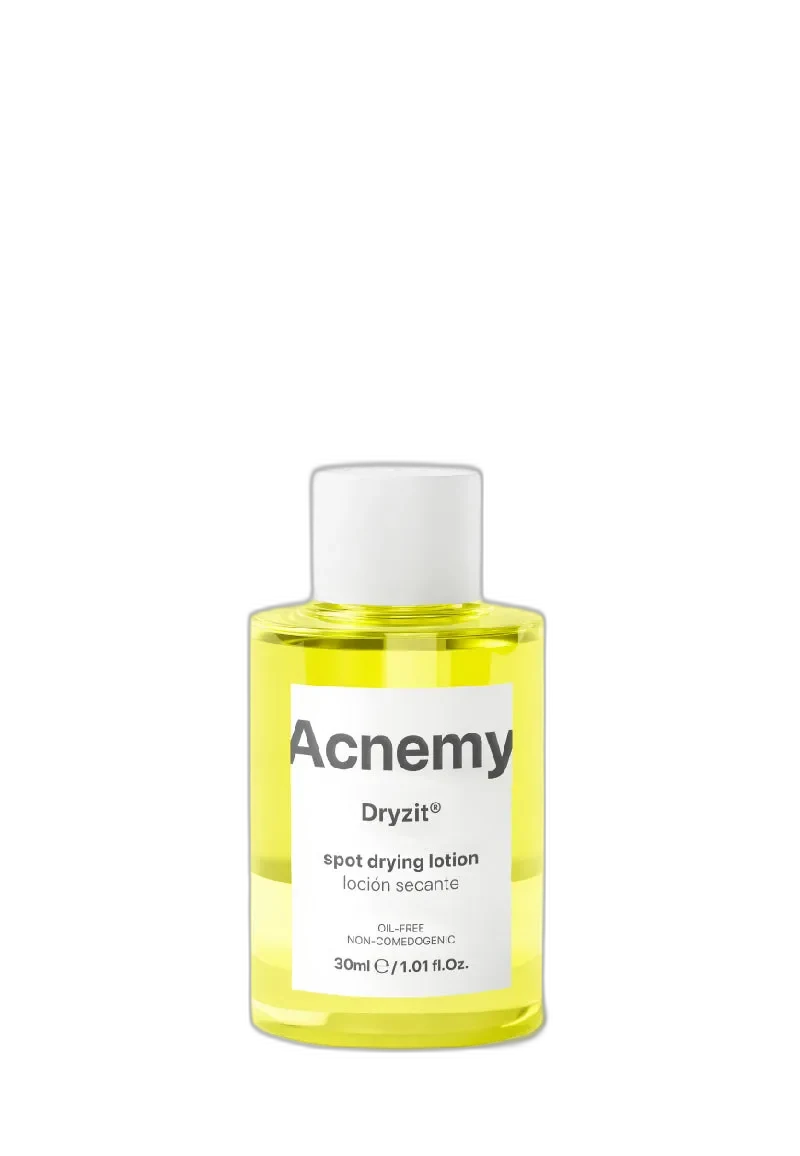
Dryzit Drying Lotion
Modern Calamine Upgrade
 Verified reviewer
Pros & cons.
- +Bifasic format updates a classic category with modern actives
- +5% niacinamide manages post-spot redness while drying the whitehead
- +No sulfur means no rotten-egg smell of legacy versions
- +Visible drying mechanism is satisfying and confirms it's working
- +Tiny per-use volume means a bottle lasts six months or longer
- +Vegan and cruelty-free with a tightly focused ingredient list
- −Pink residue rules out daytime wear under makeup
- −Alcohol base makes any non-spot use barrier-damaging
- −Salicylic acid means it's not pregnancy-safe
- −Useless on cystic or closed-comedone acne
- −Slightly more expensive than the original Mario Badescu version
The full review.
Bifasic drying lotions have remained largely unchanged since the 1960s. Mario Badescu’s original version sat in glass bottles for decades, using only calamine, sulfur, and alcohol. It featured a clear top layer and a pink chalk bottom layer; you dipped a cotton swab into the bottom without shaking. The mechanism works. However, for sixty years, no one updated the formula with modern acne care actives. Acnemy filled this gap when it launched Dryzit in Barcelona in 2020. The bottle layout is familiar: a clear alcohol-and-water phase sits above a pink calamine sediment. The instructions remain the same: do not shake, dip a cotton swab into the pink layer, dab it onto a surfaced whitehead, and leave it overnight. The formula is what changed. Niacinamide at 5% sits in the liquid phase, so every dab delivers a dose of a well-validated anti-inflammatory ingredient. It also contains 0.16% salicylic acid—low by design—and 4% zinc oxide bolsters the calamine. Dryzit omits sulfur, the most polarizing ingredient in the original Mario Badescu formula, so it lacks the rotten egg smell that triggers a gag reflex. The application ritual makes this category compelling. You see exactly what you apply, feel the alcohol sting on contact, and the calamine dries into a faintly visible pink chalk cap within a minute. This provides tactile reassurance that hydrocolloid patches lack; a patch is a passive bandage, but a drying lotion is an active intervention you watch in real time. By morning, the chalk cap typically integrates with overnight exudate, and cleanup requires only splashing water on your face. Underneath, the spot looks flatter and pinker, while the niacinamide worked on surrounding redness overnight. The alcohol base defines the product’s limits. Isopropyl alcohol is the second ingredient. This is appropriate for a cotton swab tool applied to an isolated spot because it dries fast, disinfects, and carries actives to the target. It is inappropriate for full-face use. Dryzit, like all drying lotions, will damage a skin barrier if used as a serum. The visible pink residue also prevents daytime use unless you want a chalky dot on your face. This is a bedtime tool, applied as the final step over a moisturized routine. The format also has functional limits. Dryzit targets whiteheads—pustules with a surfaced head you want to flatten by morning. It does this well. It does not work on cystic acne, where inflammation is too deep for calamine to wick, nor on closed comedones, which lack fluid to absorb. It does not prevent future breakouts. It is a reactive intervention for a specific pimple stage; expecting more leads to disappointment. As a price-quality proposition, Dryzit is defensible. At around seventeen dollars for a 30ml bottle that lasts most users six months or longer, the per-use cost is trivial. Mario Badescu’s classic version is cheaper at around seventeen dollars for a slightly larger bottle, but it lacks niacinamide and contains sulfur. If you want the heritage format and do not mind the smell, the legacy product works. If you want a modernized version that manages post-inflammatory redness and is more pleasant to use, Dryzit is the upgrade. For an emerging Spanish indie brand without a long clinical track record, the formulation is thoughtful and performs against products with sixty years of name recognition. That is a significant achievement in a category where the original recipe stayed unchanged for decades.
Ingredient analysis.
Full INCI list · pH 6.25
Isopropyl Alcohol, Aqua (Water), Zinc Carbonate, Zinc Oxide, Titanium Dioxide, Niacinamide, Glycerin, Methylpropanediol, Salicylic Acid, Salix Alba (Willow) Bark Extract, 4-Terpineol
Skin match.
The science.
The Science
Dryzit uses several established interventions that work together at the same spot. Calamine — a mixture of zinc carbonate and ferric oxide — has acted as a topical antipruritic and drying agent for over a century and is a Category I active in pharmacopeias for inflamed skin relief. Combined with the 4% zinc oxide in the powder phase, the spot deposit creates a hygroscopic chalk cap that pulls exudate from the lesion via capillary action. Dryzit uses recent literature for its niacinamide content. A 2013 review in the International Journal of Cosmetic Science summarized controlled studies showing that topical niacinamide at 2-5% concentrations reduced inflammatory lesions in mild-to-moderate acne over 8-12 weeks, with effect sizes comparable to topical clindamycin. This literature also documents niacinamide's effect on post-inflammatory erythema, making the 5% inclusion in a spot treatment clever — it treats both the active spot and the red mark in one application. The low-dose salicylic acid has a smaller role. At 0.16%, it is below the concentration in leave-on BHA exfoliants, but on a confined spot, it provides enough lipophilic penetration to break down the keratin plug at the follicular opening. The combination of physical absorption (calamine and zinc), follicular keratolysis (salicylic acid), and anti-inflammatory action (niacinamide) is more comprehensive than any single mechanism, and the bifasic delivery system keeps the actives stable until application.
Dermatologist Perspective
Dermatologists generally view bifasic calamine drying lotions as a reasonable adjunct for managing isolated surfaced whiteheads, but rarely recommend them as a primary acne treatment. Board-certified dermatologists say the format works best as a finishing tool — used at the end of an acne regimen that already includes leave-on actives like adapalene, benzoyl peroxide, or azelaic acid. The main risk is that users substitute drying lotions for real treatment and apply alcohol-heavy products too broadly, damaging their skin barrier. Used as intended on individual spots a few times a week, products like Dryzit are low-risk and can shorten a single pimple's visible lifespan by a day or two. Dermatologists also note that niacinamide makes Dryzit gentler on the skin around the spot than legacy sulfur-based formulas.
Where it fits in your routine.
Apply this at the end of your nighttime routine, only on isolated surfaced whiteheads. Do not shake the bottle; the separation is intentional. Dip a clean cotton swab into the pink calamine layer at the bottom. Transfer a small amount of the powder onto the swab, then dab it onto the spot. The pink chalk dries within a minute. Leave it overnight, then rinse with your normal cleanser in the morning. Do not apply to open or broken skin. Do not use on areas treated with retinoids, AHAs, or benzoyl peroxide on the same evening. Apply those to the rest of the face first, then use Dryzit as a final step on the spot.
Dryzit costs around seventeen dollars for a 30ml bottle. This price matches Mario Badescu's original drying lotion but uses a more modern formulation. Each use costs cents, as one bottle lasts most spot-users six months to a year. Value depends on your preference for niacinamide and the absence of sulfur. If you like legacy formats, the upgrade is incremental. If you dislike sulfur or want post-spot redness management in your spot treatment, the cost is justified. Acnemy is an emerging brand without decades of clinical validation, so it asks for slightly more than legacy alternatives for this reformulation. The bet is reasonable.
Oily or combination skin types with occasional whiteheads seeking overnight relief. Users who like the Mario Badescu format but dislike sulfur. Acne patients on stable routines needing a tool for surface flares.
Pregnant or breastfeeding people should avoid this due to the salicylic acid. The alcohol base stings and worsens reactivity for anyone with eczema, rosacea, or a compromised skin barrier. The format cannot reach the underlying problem for people with primarily cystic or comedonal acne.
Product details.
A two-phase suspension — clear liquid sits on top, pink calamine powder settles at the bottom
Sharp isopropyl alcohol on application, fades within seconds
30ml clear glass bottle with screw cap so you can see the two phases without shaking
Dip a cotton swab into the pink layer at the bottom (without shaking) and dab onto the whitehead. The alcohol stings briefly on contact and the spot turns pale pink as the calamine deposits. Dries to a chalky cap within a minute. By morning the chalk has often integrated with absorbed sebum and the spot beneath is visibly flatter.
6-12 months with occasional spot use
12 months
All Year
The backstory.
Acnemy launched in Barcelona in 2019 with a tight focus on acne-prone skin and built Dryzit as a modernized take on the bifasic drying lotion category. The brand's founders wanted to keep the visible 'overnight cap' mechanism that makes calamine spot treatments satisfying to use while updating the formula with the actives that have become standard in modern acne care.
About Acnemy
Emerging Brand (2–5 years)Acnemy is a Spanish indie brand from Barcelona founded in 2019. It focuses only on acne. Dermatologists help develop the formulas, but independent clinical validation for Acnemy's specific products is limited.
Common myths.
Drying lotions can be used all over the face like a serum.
Dryzit uses an alcohol-based, concentrated formula for spot application only. Applying it to the whole face strips the skin barrier and triggers reactive sebum overproduction within a week.
You should shake the bottle to mix the two phases.
Separation is intentional. The active drying agents sit in the bottom calamine layer. Shaking dilutes them into the alcohol phase and reduces the amount you transfer to the spot.
FAQ.
How is Dryzit different from Mario Badescu Drying Lotion?
Both are bifasic calamine drying lotions. Dryzit adds 5% niacinamide and salicylic acid but skips sulfur. The niacinamide helps Dryzit manage redness around a spot, and the lack of sulfur means no rotten-egg smell.
Should I shake Dryzit before using it?
No — the bifasic separation is intentional. Dip a clean cotton swab into the pink calamine layer at the bottom of the bottle and apply to your spot. Shaking dilutes the active calamine cap that dries the spot overnight.
Can I use Dryzit during pregnancy?
Not recommended. Dryzit contains salicylic acid. Low-concentration topical BHA is low-risk, but most dermatologists advise pregnant patients to skip salicylic acid spot treatments and use azelaic acid or hydrocolloid patches instead.
Will Dryzit work on cystic acne?
Dryzit works on surfaced whiteheads with visible exudate. Cystic acne is deep inflammation where calamine has nothing to absorb at the surface — cysts require an in-office cortisone injection or oral therapy.
Is Dryzit too drying for sensitive skin?
The base is isopropyl alcohol. Spot use works, but full-face use is aggressive. If your skin is reactive, test one spot first. Use a hydrocolloid patch as a gentler alternative for whitehead management.
How long does a 30ml bottle last?
One bottle lasts six months to a year for most occasional spot users. The product uses a cotton swab to dispense tiny amounts, so even daily spot users use it slowly.
What the community says.
"Visibly flattens whiteheads overnight"
"Less drying than Mario Badescu's classic version"
"Niacinamide helps with redness"
"Bottle lasts a long time"
"Pink residue is visible during application"
"Strong alcohol smell on application"
"Only works on already-surfaced spots"
"Not invisible enough for daytime wear"
People also looked at.