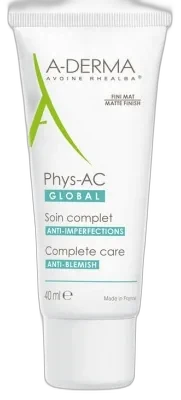
Phys-AC Global Severe Blemish Care
Persistent Acne Treatment
 Verified reviewer
Pros & cons.
- +Multi-mechanism approach targets multiple aspects of acne simultaneously
- +Salicylic acid and three-AHA combination provides comprehensive exfoliation
- +Rhealba oat base buffers the acid load for better tolerance
- +Niacinamide plus zinc PCA addresses sebum and inflammation
- +Myrtacine component adds a biofilm-targeting angle
- +Non-greasy finish layers well under moisturizer and sunscreen
- +Fragrance-free and vegan formulation
- −Not suitable for dry, sensitive, or rosacea-prone skin
- −Initial purging phase can be off-putting for 2-3 weeks
- −Pregnancy use requires healthcare provider consultation
- −Demands strict daily SPF discipline to prevent photosensitivity issues
- −40ml tube is small relative to the price
- −Cannot be stacked with retinoids at the same application
The full review.
Layering multiple acne actives usually destroys reactive skin. A salicylic acid cleanser, a glycolic acid toner, a niacinamide serum, an adapalene at night, and a zinc moisturizer are all fine alone, but together they cause barrier damage. Standard advice says to pick one BHA, one retinoid, and a supporting niacinamide. A-Derma’s Phys-AC Global Severe Blemish Care breaks this rule. It combines salicylic acid, three different AHAs, niacinamide, zinc PCA, and the brand’s proprietary Myrtacine myrtle extract in one leave-on cream. It avoids irritation because of the tolerance choreography in the base. Rhealba oat, glycerin, propanediol, and dimethicone form a soothing-emollient scaffolding that holds the aggressive active stack in a cream most users apply nightly without flaring.
The logic for combining these actives is mechanistic. Acne involves at least three problems. Follicular hyperkeratinization clogs pores, which salicylic acid and adapalene address. Excess sebum production fuels the process, which niacinamide and zinc target. The C. acnes bacterial component is addressed by the Myrtacine extract and its biofilm-disrupting research. Inflammation causes redness and painful lesions, which niacinamide, zinc, and Rhealba oat address together. A single-active product addresses one mechanism. This cream addresses all of them at once, which is useful for persistent acne that resists simpler treatments.
Texture
The texture makes this suitable for daily use. A cream with salicylic acid, glycolic acid, lactic acid, and citric acid sounds like it should sting or flake. In practice, Phys-AC Global applies as a light, fast-absorbing cream with a mild tingle that usually subsides within a minute. The finish is semi-matte and layers cleanly under a moisturizer without feeling like an acid coating. Rhealba oat and glycerin buffer the low-pH active phase and keep the cream from destabilizing an acne-prone barrier. This buffered format is a meaningful improvement for users who find raw AHA/BHA products intolerable.
Best for
Results build gradually. In the first two weeks, expect slight dryness, mild tingling, and possible purging as cell turnover accelerates. By four to six weeks, blackheads reduce, breakouts decrease, texture smoothes, and post-inflammatory marks fade. By eight to twelve weeks of consistent nightly use, the cumulative effect is clearer, more evenly-toned skin with less active acne. The most dramatic results occur in users with persistent moderate oily-skin acne—the adult acne that resists simple benzoyl peroxide. For this pattern, the multi-mechanism approach of Phys-AC Global matches the problem.
Not ideal for
This treatment cream has clear limitations due to its active density. It is not for dry or sensitive skin; the acid load is too high, so A-Derma’s Biology line or simpler pharmacy brands are better. It is not for rosacea or compromised barriers, which require gentler products first. Do not combine it with adapalene or tretinoin at the same application; alternate nights or use one in the morning and one at night if your dermatologist approves. SPF is non-negotiable during the day because AHAs increase photosensitivity, and sun exposure will undo the cream’s work on post-inflammatory pigmentation. Discuss use with a healthcare provider during pregnancy, as the salicylic and glycolic acid combination requires caution.
Works for
Phys-AC Global earns its place for persistent oily-skin acne that needs more than a single-active product. The combination of evidence-backed actives, the Myrtacine differentiator, and the buffered cream base makes it a serious pharmacy-level acne treatment available over the counter. It is not a miracle and will not fix severe cystic acne without a prescription, and it requires cautious introduction and consistent sunscreen. For its target users, it is a designed treatment cream that addresses more acne mechanisms than most competing products at this price point.
Ingredient analysis.
Full INCI list · pH 3.8
Aqua, Propanediol, Glycerin, Caprylic/Capric Triglyceride, Myrtus Communis Leaf Extract, Avena Rhealba Extract, Salicylic Acid, Citric Acid, Glycolic Acid, Lactic Acid, Niacinamide, Zinc PCA, Dimethicone, Cetearyl Alcohol, Glyceryl Stearate, Tocopherol, Xanthan Gum, Disodium EDTA, Sodium Hydroxide, Phenoxyethanol
Skin match.
The science.
The Science
Clinical evidence supports the active ingredients in this cream. Salicylic acid is one of the two most evidence-backed topical acne treatments alongside adapalene; decades of research document its comedolytic and anti-inflammatory effects in the follicle. A 2020 review in the Journal of Clinical and Aesthetic Dermatology summarized the clinical evidence for salicylic acid in acne, noting that leave-on formulations at 0.5 to 2% concentrations reliably reduce non-inflammatory lesions and help manage acne.
Alpha hydroxy acids — glycolic, lactic, and citric — work on the skin surface rather than in the follicle to accelerate cell turnover and improve texture. A 2018 paper in the Journal of Cosmetic Dermatology reviewed AHA and BHA combination products for acne management, concluding that combined formulations outperform single-acid products in real-world acne outcomes if buffering manages tolerance.
Niacinamide and zinc PCA form an anti-inflammatory and sebum-regulatory backbone standard in modern acne skincare. A 2015 review in the Journal of Clinical and Aesthetic Dermatology summarized niacinamide's effect on sebum excretion rate, showing consistent reductions over 4 to 8 weeks of topical application at 2 to 4% concentrations. Zinc salts add sebum modulation by affecting 5-alpha reductase and inflammatory markers.
Myrtacine is the novel component, though evidence for it is emerging. Pierre Fabre published in-house research on a myrtle leaf extract's effect on C. acnes biofilm formation in vitro, showing disrupted quorum sensing and reduced biofilm thickness. Independent literature has not yet firmly established how these in vitro findings translate to topical acne outcomes; treat this component as an interesting secondary mechanism rather than a primary driver. The well-established ingredients — salicylic acid, AHAs, niacinamide, and zinc — already make this a competent multi-mechanism acne cream. Myrtacine is the dimension Pierre Fabre adds, and researchers are still establishing if it produces measurable additional effects in clinical use.
Dermatologist Perspective
Dermatologists often recommend multi-active acne treatment creams to supplement prescription therapy for patients with persistent moderate acne that fails single-active approaches. European dermatology practice commonly cites Phys-AC Global as a pharmacy-brand option for patients using prescription retinoids on alternate nights who want a non-retinoid treatment layer on off nights. Board-certified dermatologists note the combination of salicylic acid, AHAs, niacinamide, and zinc in a single product suits oily and combination acne-prone skin, but users should introduce it gradually and use daily sunscreen. It is not typically recommended for dry, sensitive, or rosacea-prone skin types.
Where it fits in your routine.
Apply a thin layer to clean, dry skin at night. Start 2 to 3 nights per week, then move to nightly as your skin adapts. Follow with a moisturizer (the A-Derma Biology AC cream is a natural pairing) to seal the treatment and buffer any tingle. Use broad-spectrum SPF 50 every morning; the AHAs increase photosensitivity. Do not use retinoids in the same step; alternate nights or split into AM/PM. Avoid the eye area and broken skin.
At roughly 24 US dollars for 40ml, Phys-AC Global sits in the middle of the pharmacy-brand acne treatment price range. The 40ml tube lasts about 2 months with nightly use, so the monthly cost matches other targeted pharmacy acne products. The cream comes only in the 40ml size. For users with persistent acne seeking a multi-active treatment who cannot tolerate raw high-strength acid products, the price makes sense — you get a buffered combination of actives that is harder to assemble from individual products. Budget shoppers with straightforward acne often get similar benefits from simpler combinations of The Ordinary's BHA and niacinamide serum, but this integrated formulation is more comfortable to use.
Adults with persistent oily or combination acne who fail single-active products, users seeking multi-mechanism treatment creams at pharmacy-level pricing, and those wanting a buffered acid formulation more tolerable than raw high-strength peels.
Dry, sensitive, or rosacea-prone skin, pregnant users without provider consultation, people who skip daily sunscreen, and those with severe cystic acne needing prescription treatment should avoid this. Users stable on a retinoid-based routine likely do not need to add this cream.
Product details.
Light cream has a slight slip from the dimethicone; it absorbs within a minute to a non-greasy semi-matte finish.
Fragrance-free.
Airless pump tube in A-Derma pharmacy livery.
The first few applications may cause a mild tingling sensation as the acid combination hits the skin. Skin may feel slightly drier than usual for a short time. During the first two to three weeks, a mild purging effect is possible because cell turnover accelerates. This is normal for an AHA/BHA treatment and usually leads to steadier improvement.
40ml lasts approximately 2 months with nightly full-face application.
12 months
All Year
The backstory.
A-Derma's Phys-AC range was developed as the brand's direct answer to persistent and severe blemish-prone skin — a step up in treatment intensity from the Biology AC moisturizer. Pierre Fabre built the line around its Myrtacine research, pairing the myrtle extract with a well-studied acid and vitamin B3 stack to target the multiple mechanisms that drive chronic acne.
About A-Derma
Legacy Brand (20+ years)A-Derma's Phys-AC range is Pierre Fabre's acne line. It adds treatment-focused products to the Biology AC moisturizer to target active severe and persistent acne.
Common myths.
Mixing multiple acne actives always causes more irritation.
Oat and glycerin buffer this formula, making multiple actives more tolerable than using separate products. This cream's design addresses that tolerance challenge.
One over-the-counter cream solves severe acne.
Severe persistent acne usually needs prescription treatment. This cream works for persistent moderate acne and as an adjunct to prescription therapy, but not as a standalone cure for severe cases.
FAQ.
Can I use it every night?
Apply 2 to 3 times per week, then increase to nightly as your skin tolerates. Users with less reactive skin can switch to nightly within 2 weeks; others may prefer every-other-night application.
Will it cause purging?
The AHA/BHA combination accelerates cell turnover. This brings existing clogs to the surface during the first 2 to 3 weeks. If purging lasts more than 4 to 6 weeks or worsens, use it less often or consult a dermatologist.
Can I use it with adapalene or tretinoin?
Don't use them together. The retinoid-acid combination is too harsh for most users. Alternate nights—use retinoid one night and Phys-AC Global the next—or use one in the morning and the other at night. Always use SPF during the day.
Is it safe during pregnancy?
Consult your healthcare provider. This cream combines salicylic acid and glycolic acid. Low-concentration topical salicylic acid is generally acceptable during pregnancy, but guidance varies. Many providers prefer azelaic acid as the pregnancy-safe alternative for acne.
Do I need sunscreen when using this cream?
Yes, this is non-negotiable. AHAs increase photosensitivity. Untreated acne-prone skin is vulnerable to post-inflammatory hyperpigmentation under UV exposure. Use broad-spectrum SPF 50 daily when using any AHA/BHA product.
How does it compare to The Ordinary AHA 30 + BHA 2?
Very different. The Ordinary's product is a short-contact peel used weekly at very high acid concentrations. Phys-AC Global is a daily leave-on treatment with lower acid concentrations buffered by soothing ingredients. They serve different roles and can potentially complement each other if used carefully.
Community
What the community says.
"visible reduction in blackheads after several weeks"
"works well on persistent oily acne"
"smoothes texture and post-acne marks"
"non-greasy finish layers well"
"can be drying when started nightly"
"initial purging possible in the first 2-3 weeks"
"40ml tube is small for the price"
"not suitable for sensitive skin"
People also looked at.