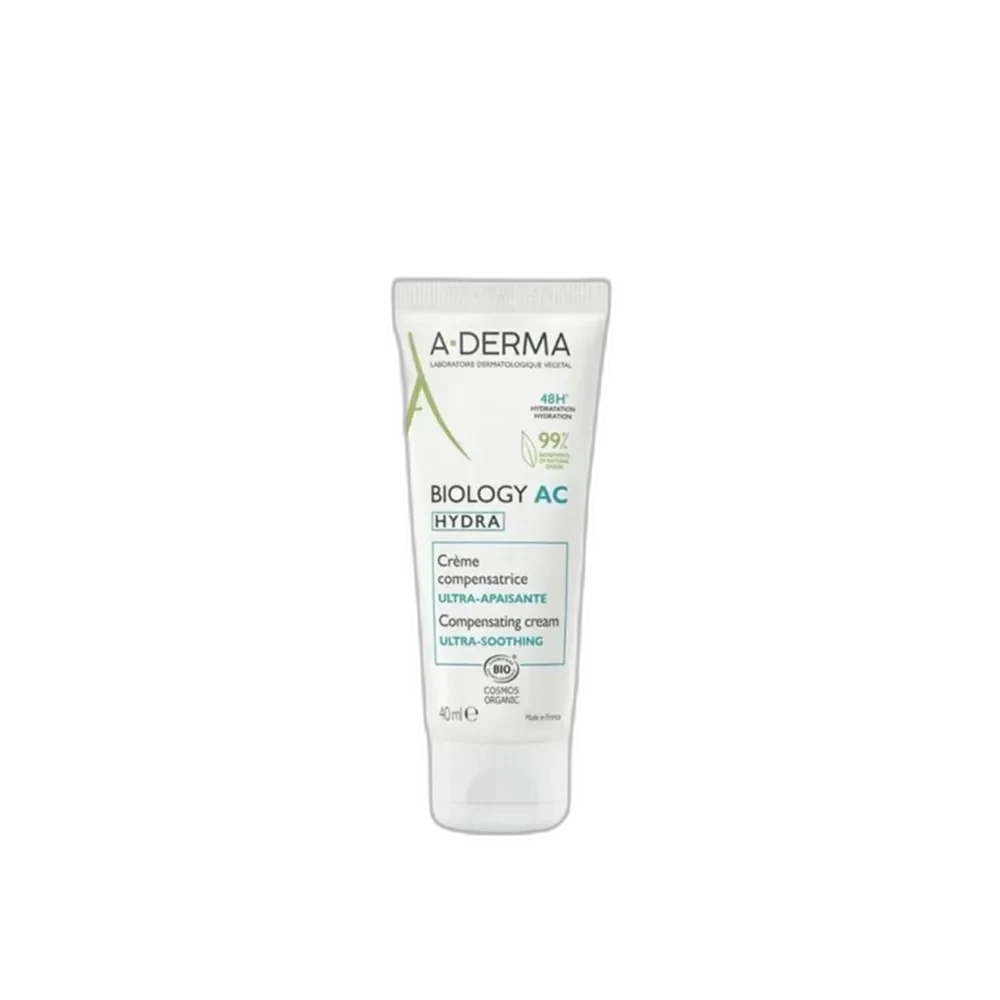
Biology AC Compensating Cream
Adult Acne Companion Cream
 Verified reviewer
Pros & cons.
- +Lightweight, non-comedogenic texture suited to combination and oily acne-prone skin
- +Rhealba oat and bisabolol buffer retinoid and BHA irritation effectively
- +Niacinamide plus zinc PCA regulates sebum without drying the barrier
- +Low-dose salicylic acid supports pore decongestion at a leave-on level
- +Fragrance-free formula tolerated by most adult acne routines
- +Holds up under mineral sunscreen and makeup without pilling
- +Pairs seamlessly with prescription adapalene or tretinoin
- −40ml tube is small relative to the twice-daily use rate
- −Insufficient hydration for very dry acne-prone skin in winter
- −Limited retail availability outside European pharmacies
- −Contains salicylic acid, requiring caution for pregnancy or salicylate sensitivity
- −Subtle performance may disappoint users expecting a dramatic acne treatment
The full review.
Adult acne routines often build up in layers. They typically start with a prescription retinoid, then add a salicylic acid cleanser, a niacinamide serum, and an azelaic acid step. Finally, users add a moisturizer from whatever is on the shelf. This last step often fails. The moisturizer is either too thick and causes clogs, too lightweight and leaves skin tight and flaking, or is an “acne” product that adds more exfoliation and irritation. A-Derma’s Biology AC Compensating Cream fills this specific gap and is a thoughtful entry in its category.
The airless tube contains a lightweight fluid cream that sinks in fast and dries to a soft, semi-matte finish. It has no fragrance, no menthol, no alcohol sting, and no tingling sensation. The “compensating” in the name describes its goal: compensate for the dryness, tightness, and barrier stress caused by acne actives, while performing minor pore-maintenance. It works under a prescription retinoid or alongside a BHA exfoliant without increasing irritation.
The ingredients reflect this strategy. Rhealba oat extract — Pierre Fabre’s branded juvenile oat — is high on the list to soothe skin, as it does in the rest of the A-Derma range. Niacinamide and zinc PCA regulate sebum and support the barrier, a standard combination for modern combination-skin moisturizers. Salicylic acid is included at a low leave-on concentration. It does not act as a treatment-strength BHA; instead, it keeps pores gently decongested to avoid over-exfoliation. A-Derma also uses Myrtacine, its proprietary myrtle leaf extract. The brand researches Myrtacine to target the C. acnes biofilm rather than planktonic bacteria. This biofilm approach is important because bacteria in biofilms resist standard antibacterial methods, making chronic adult acne stubborn.
The texture sits between a fluid and a standard moisturizer. It feels substantial but vanishes into skin within a minute. The finish holds makeup well and does not pill under mineral sunscreen. Texture matters; half of adult-acne moisturizer failures stem from texture rather than ingredients. A cream that pills under sunscreen won’t be used twice a day, and unused products do not work. Biology AC fits a realistic morning routine without requiring workarounds.
Performance is subtle but evident. Within one to two weeks, the skin tightness and flaking common in adult-acne routines stops. Oily sheen reduces enough to make midday blotting less urgent. New clogged-pore formation slows, likely due to the low-dose salicylic acid and the niacinamide-zinc pair. This is not a treatment cream, so active lesions do not vanish faster than with a plain moisturizer, but the skin around them looks calmer thanks to bisabolol and oat.
There are limitations. The 40ml tube is not a generous amount for the price, a common issue with the A-Derma range and pharmacy-brand pricing. People with very dry skin or those in cold climates may need to layer a hyaluronic serum underneath, especially in winter. Those with salicylate reactivity should patch test first. This is not a treatment product; it will not clear active acne on its own. It is a maintenance-layer, support-role moisturizer that adds value by supporting a routine where other products do the heavy lifting.
Biology AC stands out among other “for acne” moisturizers because of its specific goal. It does not act as a treatment. It assumes the user already uses a retinoid and that oily skin still needs hydration. It performs minor pore work at a leave-on dose while primarily serving as the comfortable moisturizer step the routine lacks. This mature approach results in a cream that earns its place in a routine.
Ingredient analysis.
Full INCI list
Aqua, Glycerin, Coco-Caprylate/Caprate, Propanediol, Pentylene Glycol, Avena Rhealba Extract, Isononyl Isononanoate, Cetearyl Alcohol, Dimethicone, Glyceryl Stearate, PEG-100 Stearate, Myrtus Communis Leaf Extract, Niacinamide, Zinc PCA, Salicylic Acid, Bisabolol, Tocopherol, Hydroxyethyl Acrylate/Sodium Acryloyldimethyl Taurate Copolymer, Disodium EDTA, Xanthan Gum, Citric Acid, Sodium Hydroxide, Phenoxyethanol
Skin match.
The science.
The Science
This cream combines niacinamide, zinc, and low-dose salicylic acid, an evidence-based approach for combination-skin acne. A 2015 review in the Journal of Clinical and Aesthetic Dermatology shows that 2-4% topical niacinamide concentrations reduce sebum excretion rate and improve enlarged pore appearance over 4 to 8 weeks. Zinc PCA adds sebum-modulating activity by affecting 5-alpha reductase and acts as a humectant to offset the slight drying effect of salicylic acid.
Salicylic acid is a well-studied comedolytic and, alongside adapalene, is one of the two most evidence-backed topical actives for non-inflammatory acne. At the low leave-on concentrations used in maintenance creams like this one, it works as a pore-decongesting exfoliant rather than a primary acne treatment. A 2019 paper in the Journal of the European Academy of Dermatology and Venereology discussed how low-dose daily BHA maintains clearance between flares, which matches this cream's intended use.
Myrtacine is the newer component. Pierre Fabre published in-house research on how myrtle leaf extract affects C. acnes biofilms, specifically its ability to disrupt quorum sensing and reduce biofilm formation in vitro. Independent literature does not firmly establish how this research translates to topical cream performance, so the Myrtacine angle is promising but lacks the same evidence footing as niacinamide or salicylic acid. Even without Myrtacine, the niacinamide-zinc-salicylic combination in a well-buffered oat base works as a competent adult-acne moisturizer. Myrtacine attempts something more interesting than the default.
Dermatologist Perspective
Dermatologists often recommend moisturizers like Biology AC as the 'comfort layer' for adult acne routines, especially for patients using topical retinoids like adapalene or tretinoin. The combination of low-dose salicylic acid and Rhealba oat suits combination and oily skin needing mild pore decongestion without increasing retinoid-induced flaking. Board-certified dermatologists note the fragrance-free base and measured active concentrations make this a safer over-the-counter choice than many 'acne moisturizers' that over-exfoliate. Routines typically use it twice daily alongside a gentle non-stripping cleanser and either a retinoid or benzoyl peroxide-based active treatment.
Where it fits in your routine.
Apply a pea-sized amount to clean, dry skin every morning and night. In the morning, it layers cleanly under oil-free or mineral sunscreen. At night, apply after your prescription retinoid absorbs for a few minutes. The cream buffers and moisturizes, reducing the flaking and tightness retinoids cause. Do not stack with high-concentration BHA toners or benzoyl peroxide in the same step; let those dry first and use the cream as the final moisturizing layer.
At roughly 26 US dollars for 40ml, Biology AC costs the same as other targeted European pharmacy moisturizers. The 40ml tube lasts about two months if used twice daily, making the monthly cost similar to a mid-tier acne-targeted moisturizer. Biology AC only comes in the 40ml size, so no larger value option exists. For users with an adult acne routine using prescription actives, the price is reasonable because it integrates into an active regimen without causing irritation. Budget-conscious shoppers find similar basic performance in drugstore options, but the Rhealba oat and Myrtacine components differentiate Biology AC and justify the premium for some users.
Adults with combination or oily acne-prone skin using active treatments like adapalene, tretinoin, or azelaic acid need a moisturizer that soothes without adding irritation. It works for those who outgrew teenage-acne marketing but want a pore-conscious daily cream.
Very dry acne-prone skin needing more hydration, sensitive skin reactive to salicylate, pregnant users without provider clearance, and anyone seeking a standalone acne treatment instead of a support-layer moisturizer.
Product details.
Lightweight fluid cream absorbs fast to a semi-matte finish; it is noticeably lighter than the Biology A.R cream in the same line.
Fragrance-free; neutral cosmetic smell only.
Airless pump tube in white and green A-Derma pharmacy livery.
On first use the cream feels light and matte-finishing, which is a relief if you've been stuck with either greasy general-purpose moisturizers or drying spot treatments. No stinging, no tingling — just a comfortable finish that holds the skin without shine. Over the first two weeks, expect oily sheen to reduce and new clogged pores to slow.
40ml lasts approximately 2 months with twice-daily facial use.
12 months
All Year
The backstory.
Pierre Fabre's dermatology research on adult acne led them to pair their proprietary Rhealba oat with Myrtacine, a branded myrtle leaf extract developed to target the biofilm formed by C. acnes bacteria. The Biology AC cream is one of the main vehicles for that research in the A-Derma catalog, positioned alongside the AR cream as the brand's two 'biology' targeted moisturizers.
About A-Derma
Legacy Brand (20+ years)A-Derma is a Pierre Fabre Dermo-Cosmétique brand founded in 1988. It uses Rhealba oat research from the company's own fields and labs in the Tarn region of France. The brand has decades of pharmacy presence and published research on its signature oat extract.
Common myths.
Acne-prone skin doesn't need moisturizer.
Under-moisturized acne skin produces more oil to compensate and reacts worse to active treatments. A lightweight cream like this one reduces both problems at once.
Acne requires a high-strength salicylic acid product.
This cream uses a low leave-on dose for maintenance and pore decongestion, not acute treatment. It complements a higher-dose cleanser or exfoliant instead of replacing them.
FAQ.
How is Biology AC different from A-Derma's Phys-AC line?
The Phys-AC line is A-Derma's treatment-focused acne range. It includes active cleansers and a night cream with higher salicylic acid content. Biology AC is the everyday moisturizer step. It uses low-dose salicylic acid, niacinamide, and zinc in a cushioning base to build tolerance alongside stronger treatments.
Can I use Biology AC with adapalene or tretinoin?
Yes — this is a primary use case. The Rhealba oat and bisabolol buffer retinoid-induced irritation, while niacinamide and zinc address oiliness that retinoids do not. Apply your retinoid first, wait a few minutes, then layer the cream on top.
Is this cream enough hydration for dry acne skin?
This works for normal to combination skin. For very dry acne-prone skin — which exists, especially for people using strong actives — you may need a second hydrating step underneath, like a hyaluronic acid serum.
Will the salicylic acid in this cream irritate sensitive skin?
The salicylic acid uses a low leave-on concentration and is buffered by the oat and bisabolol, so most users tolerate it well. People with salicylate sensitivity or very reactive skin should patch test first.
Is Biology AC safe during pregnancy?
Because the cream contains salicylic acid, consult your healthcare provider. Low-concentration topical salicylic acid is generally considered acceptable during pregnancy, but individual guidance varies and many providers prefer azelaic acid as the alternative.
Does Biology AC work for hormonal acne?
It works as the moisturizer step in a hormonal acne routine, but it does not treat hormonal drivers. Use it with an acne-targeting active like adapalene, tretinoin, or azelaic acid, and address the hormonal factors where appropriate.
Can I wear Biology AC under makeup?
Yes — it dries to a matte-satin finish that holds makeup without pilling. It is one of the better acne-targeted moisturizers for foundation compatibility.
What the community says.
"reduces oily shine without dehydration"
"layers well under sunscreen and makeup"
"doesn't trigger new breakouts"
"calms redness around active spots"
"small tube for the price"
"not hydrating enough for dry acne-prone skin"
"limited availability outside Europe"