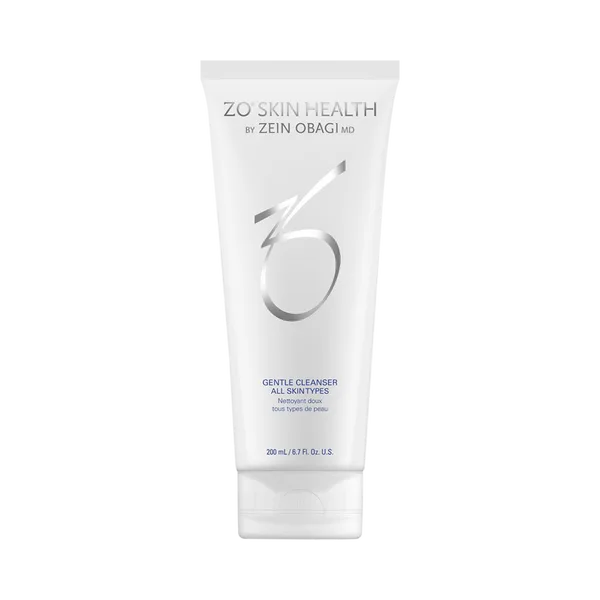
Gentle Cleanser
Derm-Office Daily Workhorse
 Verified reviewer
Pros & cons.
- +Effective makeup and sunscreen removal with small amount of product
- +Rich, satisfying foam from a pea-sized amount extends product life
- +Thoughtful botanical extract complex adds antioxidant depth
- +Oat amino acid surfactant moderates the SLES intensity
- +Rinses completely clean with no residue
- +Lasts 3-4 months, improving per-use value
- −SLES as lead surfactant contradicts the 'Gentle' positioning
- −Contains synthetic fragrance and four identifiable fragrance allergens
- −Two synthetic dyes serve no functional purpose
- −Fifty dollars is steep for a basic surfactant-based cleanser
- −Not ideal for truly sensitive, eczema-prone, or rosacea skin
The full review.
Naming a cleanser ‘Gentle’ is a promise. It tells consumers—often patients handed this product by a dermatologist or aesthetician—that the formula treats skin with care. ZO Skin Health’s Gentle Cleanser partially keeps that promise. It is a competent cleanser that foams well, removes impurities and makeup efficiently, and rinses clean. But the ingredient list shows a formula that is only gentle in relative terms, and the fifty-dollar price tag demands scrutiny the formula cannot fully meet.
The primary surfactant is sodium laureth sulfate, the workhorse cleansing agent the mainstream skincare industry is slowly leaving behind. SLES is not the villain social media claims—it is a well-studied, effective cleanser with decades of safe use. But it is a stronger surfactant than many alternatives. Using it as the lead ingredient in a product labeled ‘Gentle’ for post-procedure use is a choice worth questioning. ‘Gentle’ here means gentle relative to other ZO Skin Health cleansers, not gentle like a ceramide-rich, sulfate-free cleanser.
The cocamidopropyl betaine and sodium lauroyl oat amino acids provide moderation. These secondary surfactants soften the SLES impact, reducing foam density and skin irritation. The oat amino acid surfactant is a good addition—an ingredient that cleans while respecting the skin’s protein structure, common in sensitive-skin formulations. But it is listed fourth, after the SLES and cocamidopropyl betaine, so the cleansing profile still leans more thorough than tender.
The botanical complex is more interesting than most cleanser formulations. Green tea extract brings EGCG antioxidants to the cleansing step. Artemisia vulgaris—mugwort—has documented anti-inflammatory properties. Phellodendron bark extract provides additional soothing and antimicrobial support. Meadowsweet extract contains salicylic acid precursors. These are not window dressing; they show a genuine attempt to make the cleansing step do more than remove dirt. Whether meaningful amounts of these actives survive the rinse-off timeframe is another question—contact time in a cleanser is typically thirty to sixty seconds, which limits what any ingredient can do.
Glycerin provides the hydration bridge that prevents a post-wash tight feeling. In practice, most users with normal-to-oily skin report a comfortable, clean finish. The formula strips oil efficiently—which is what SLES does—making it satisfying for combination and oily skin types who want to feel clean after washing. For dry skin, the experience may be less comfortable.
The fragrance loses credibility with the product’s positioning. A cleanser marketed as ‘gentle,’ recommended post-procedure, and sold through medical channels contains synthetic fragrance plus four identifiable fragrance allergens: citronellol, hexyl cinnamal, limonene, and linalool. These are among the most common contact allergens in cosmetic products. Their presence in a product for sensitized skin is a formulation contradiction. The fragrance is pleasant—clean and slightly herbal—but it serves aesthetics, not skin health.
The two synthetic dyes (Blue 1 and Red 33) compound this issue. They serve no functional purpose; they only create the product’s attractive hue. In a fifty-dollar cleanser developed by a dermatologist, their presence is puzzling.
In use, the cleanser performs well. A small, pea-sized amount generates abundant, creamy foam that spreads easily. It dissolves daily makeup, sunscreen residue, and surface oil effectively. The rinse is clean with no soapy residue. Most users report skin feels refreshed and comfortable afterward. The product lasts several months because a small amount is needed per use, which improves the per-wash value.
The post-procedure use case deserves honest assessment. Many aestheticians recommend this cleanser after treatments, and many patients tolerate it well. Skin that has been professionally treated is not the same as chronically sensitive skin. Post-procedure skin is temporarily compromised but otherwise healthy; it may tolerate a stronger cleanser than skin with chronic conditions like eczema or rosacea. This distinction matters: this cleanser may be fine after a light peel but problematic for someone with an impaired barrier from chronic dermatitis.
At fifty dollars for 6.7 ounces, the price is among the highest for cleansers on the market. The formulation lacks ingredients that justify this premium from a cost-of-goods perspective. You are paying for the ZO Skin Health name, the assurance that this cleanser integrates into Dr. Obagi’s protocols, and its professional-channel provenance. If those things matter—and for patients who trust their dermatologist’s recommendations, they often do—the price may feel acceptable. If you evaluate cleansers purely on formulation merit, the value is weak.
The cleanser works. It cleans efficiently, foams well, and works with the ZO Skin Health products that follow it. But the gap between its ‘Gentle’ positioning and its actual ingredients—SLES, fragrance, and dyes—is a credibility issue that the botanical extract complex cannot close. A truly gentle cleanser from a dermatologist’s brand should not need an asterisk.
Ingredient analysis.
Full INCI list
Aqua/Water/Eau, Sodium Laureth Sulfate, Cocamidopropyl Betaine, Sodium Lauroyl Oat Amino Acids, Sodium Chloride, Artemisia Vulgaris Extract, Camellia Sinensis Leaf Extract, Crithmum Maritimum Extract, Hordeum Distichon (Barley) Extract, Phellodendron Amurense Bark Extract, Plantago Lanceolata Leaf Extract, Pterocarpus Soyauxii Wood Extract, Spiraea Ulmaria Extract, Butylene Glycol, Glycerin, Tetrasodium EDTA, Phenoxyethanol, Ethylhexylglycerin, Benzoic Acid, Fragrance/Parfum, Blue 1 (CI 42090), Red 33 (CI 17200), Citronellol, Hexyl Cinnamal, Limonene, Linalool
Skin match.
The science.
The Science
Sodium laureth sulfate (SLES) is the main cleansing agent here and one of the most studied surfactants in cosmetic chemistry. People often confuse it with sodium lauryl sulfate (SLS), but SLES undergoes ethoxylation. This process increases its molecular size and lowers its irritation potential. A study in Contact Dermatitis (Löffler & Happle, 2003) shows SLES disrupts the skin barrier less than SLS, though both are harsher than newer surfactants like glucosides and amino acid-based cleansers.
The co-surfactant system lowers the SLES irritation profile. Cocamidopropyl betaine is an amphoteric surfactant; research in the International Journal of Toxicology (2012) shows it reduces the irritation potential of anionic surfactants in combination. Sodium lauroyl oat amino acids are a newer class of gentle surfactants from oat proteins that show lower irritation in comparative studies.
The listed fragrance components (citronellol, hexyl cinnamal, limonene, linalool) are EU-regulated allergens requiring declaration above certain concentrations. An analysis in Contact Dermatitis (Schnuch et al., 2007) identified these fragrance components as common causes of contact allergic reactions to cosmetic products, with 1-3% prevalence in patch-tested populations.
References
- How irritant is sodium lauryl sulphate? — Contact Dermatitis (2003)
Dermatologist Perspective
Dermatologists often include this cleanser in ZO Skin Health treatment protocols as the foundational cleansing step before active treatment products. Board-certified dermatologists note that most patients tolerate SLES-based cleansers well, as they cleanse effectively without excessive barrier disruption. However, dermatologists specializing in sensitive skin or contact dermatitis may question the synthetic fragrance and identifiable allergens in a product for post-procedure use. The medical consensus prefers fragrance-free formulations for sensitized skin, so this cleanser's ingredient profile creates tension between its clinical positioning and current dermatological best practices.
Guidance
Where it fits in your routine.
Wet your face with lukewarm water. Put a pea-sized amount into wet palms and lather. Massage the face and neck for 30-60 seconds using circular motions. Rinse well with lukewarm water and pat dry. Use morning and evening. For makeup removal, use an oil cleanser first, then use this as the second step.
At $50 for 6.7 fl oz, this cleanser costs a premium. Using a small amount per wash lasts 3-4 months ($12-17/month), a reasonable cost for a daily cleanser. However, the formulation — SLES with secondary surfactants, glycerin, botanical extracts, fragrance, and dyes — lacks ingredients that justify the price through complexity alone. The price reflects the ZO Skin Health brand name, professional-channel positioning, and its place in Dr. Obagi's treatment protocols. The cleanser works as part of a ZO regimen. For consumers seeking independent value, comparable or gentler formulations cost much less.
Normal, combination, and oily skin types wanting an effective foaming cleanser for a ZO Skin Health treatment protocol. It works best for users who prefer a thorough, foaming cleanse and whose skin tolerates SLES and fragrance.
SLES, fragrance, and dyes can irritate sensitive, eczema-prone, or rosacea-affected skin. The formulation lacks value for budget-conscious consumers; the fifty-dollar premium over quality drugstore alternatives with gentler surfactant systems is not justified.
Product details.
Clear to slightly tinted gel lathers into a thick, creamy foam with little water. The foam is abundant but rinses cleanly without residue.
A noticeable synthetic fragrance — clean, slightly herbal, and mildly sweet. The scent is present during use and fades after rinsing. Contains identifiable fragrance allergens (citronellol, hexyl cinnamal, limonene, linalool).
Squeeze tube with a flip-top cap. The 200 ml size lasts months because a small amount makes plenty of foam. Branding is professional and clinical.
The gel dispenses easily and foams well with little product. The foam feels creamy and non-abrasive. After rinsing, most users feel clean and refreshed. Users with dry or sensitive skin may feel tightness — the SLES makes this a more thorough cleanser than the 'Gentle' name implies.
3-4 months with twice-daily use (a small amount produces significant foam)
12 months
All Year
The backstory.
Developed as the foundational cleansing step in ZO Skin Health's comprehensive skincare protocols, this cleanser is designed to prepare the skin for the brand's treatment products without disrupting the skin's natural balance. It's frequently the first product dermatologists recommend when onboarding patients to a ZO regimen.
About ZO Skin Health
Dr. Zein Obagi, a board-certified dermatologist and international skin health authority, founded ZO Skin Health in 2007. The brand uses clinical-grade standards for its formulations, which dermatologists and medical spas use widely.
Common myths.
A dermatologist-developed cleanser is gentle enough for everyone.
Despite the 'Gentle' name and dermatologist origin, this cleanser uses sodium laureth sulfate (SLES) as its primary surfactant, plus synthetic fragrance and dyes. These ingredients irritate sensitive, eczema-prone, or barrier-compromised skin. The 'gentle' label compares to other ZO cleansers, not absolute skin tolerance.
You need to use a lot of product for an effective cleanse.
A pea-sized amount of this gel foams enough to cleanse the entire face. Using more increases the surfactant load on your skin and strips it unnecessarily. Less is more with this formula.
FAQ.
Is this cleanser truly gentle enough for sensitive skin?
Despite the name, sodium laureth sulfate (SLES) is the primary surfactant in this cleanser, which also contains fragrance and synthetic dyes. Users with normal, combination, or some dry skin types tolerate it well, but those with sensitive, eczema-prone, or rosacea-affected skin may find it too stripping. The "gentle" label only compares it to stronger ZO cleansing options.
Can I use this after a chemical peel or laser treatment?
ZO Skin Health markets this for post-procedure use, and many aestheticians include it in post-treatment protocols. However, the SLES and fragrance may sting if your skin is raw, red, or compromised after a procedure. Confirm with your treating provider and patch-test before using on freshly treated skin.
Why is this cleanser fifty dollars?
The price reflects ZO Skin Health's medical-grade positioning and professional-channel distribution, not ingredient complexity. The formula uses standard surfactants, basic botanical extracts, and glycerin. You pay for the brand's dermatological credibility and its integration into ZO's comprehensive treatment protocols.
Does this remove makeup effectively?
Yes — the SLES-based formula removes most daily makeup and sunscreen. For heavy or waterproof makeup, use oil cleansing first and this as the second step in a double-cleanse method. The foaming action cleanses thoroughly.
Why does a dermatologist-developed cleanser contain fragrance and dyes?
This is a fair question. Many dermatologists recommend fragrance-free products for sensitive skin, but this formula contains synthetic fragrance and two dyes. These ingredients improve the sensory experience and aesthetics for most users, but they are unnecessary for dermatology and create a gap between the brand's clinical positioning and its formulation choices.
What the community says.
"Removes makeup effectively without stripping"
"Small amount creates rich, satisfying foam"
"Leaves skin feeling clean and refreshed"
"Pleasant scent"
"Expensive for a basic cleanser"
"Contains SLES despite 'Gentle' name"
"Added fragrance and dyes seem unnecessary"
"May be too stripping for truly sensitive or dry skin"
People also looked at.