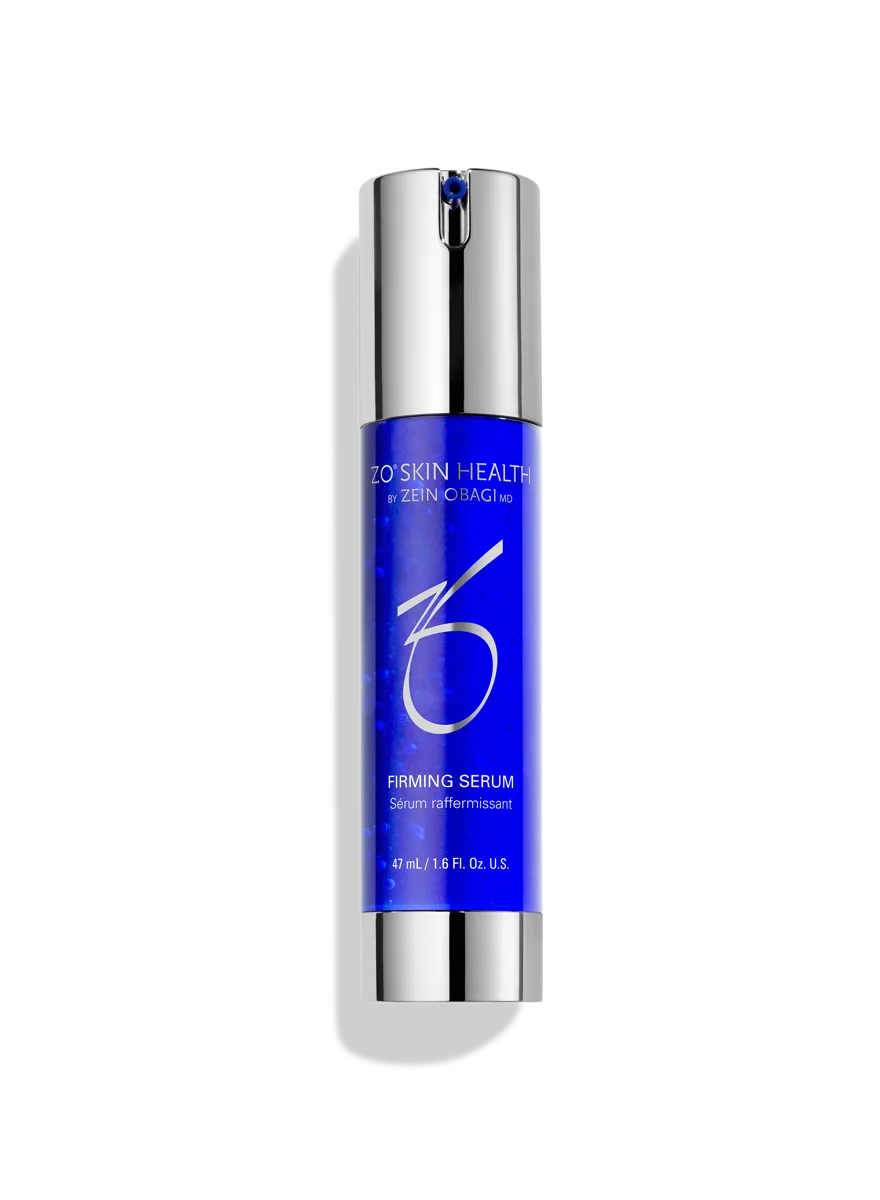
Firming Serum
Derm Office Splurge
 Verified reviewer
Pros & cons.
- +Layered peptide, plant stem cell, and retinoid ester system
- +Immediate tightening sensation from the DNA-based film former
- +Thin, fast-absorbing texture that layers well under sunscreen and makeup
- +Designed to complement stronger retinoids without overloading skin
- +Gentle enough for daily twice-a-day use on most non-sensitive skin
- +Frosted glass pump packaging protects light-sensitive actives
- −Extreme price tag not supported by peptide ingredient evidence alone
- −Contains added fragrance and limonene
- −Retinyl palmitate inside means not pregnancy-safe
- −Plant stem cell marketing overpromises against actual mechanism
- −Effects are subtle and hard to attribute in a multi-product routine
The full review.
The most interesting aspect of ZO Firming Serum is the gap between its ingredient list and its price. A dermatology-chemistry look at the INCI shows a defensible formulation: a signal peptide, two plant stem cell cultures with published in vitro antioxidant data, a mild retinoid ester, vitamin E, and a humectant-rich hydration base. The shelf tag shows $265 for 1.6 ounces. Both facts are true, and any honest review must address the tension between them.
The formula starts with water and three humectants — glycerin, propanediol, and dipropylene glycol — a sensible base for a leave-on serum at this price. Sodium DNA appears early, providing the immediate ‘firming’ sensation. High-molecular-weight DNA fragments form a thin, slightly tacky film on the skin surface that users describe as tightening. This is a sensory effect, not a structural one, and it rinses off during your next cleanse. If you judge this serum by the ‘I feel it working’ test, it passes on day one, but that sensation does not justify the $265 price.
The actual case for the product relies on caprooyl tetrapeptide-3 and the two plant stem cell cultures. Caprooyl tetrapeptide-3 is a signal peptide with preliminary in vitro data suggesting it stimulates fibroblast activity and encourages collagen and elastin production. The evidence exists, but it is less robust than the data for Matrixyl 3000 or copper peptides, which have more human clinical work. The plant stem cell cultures (edelweiss and Marrubium) are marketed as ‘cellular support,’ but their actual mechanism is antioxidant activity. They do not regenerate anything or ‘tell your cells’ to act. They quench free radicals like any other antioxidant; this is useful, but the term stem cells creates an expectation the ingredient cannot meet.
The retinyl palmitate placement is the formula’s cleverest part. Instead of using a stronger retinoid that competes with ZO Wrinkle + Texture Repair or Growth Factor Serum, Firming Serum uses a mild retinoid ester that converts slowly to retinoic acid. This allows you to layer Firming Serum with stronger retinoids without overloading the skin. In the ZO protocol, Firming Serum complements heavy-hitting retinoid products rather than substituting for them. Used as one step in a multi-serum regimen, the formula makes more sense than it does alone.
The texture justifies part of the markup. It is a thin, slightly violet-tinted liquid that applies weightlessly, absorbs in seconds, and leaves a tight, clean finish. Makeup sits well over it, and most sunscreens do not cause pilling. The fragrance is detectable — lighter than the Exfoliating Cleanser but still added perfume — and the limonene on the ingredient list matters for fragrance-sensitive users. For the third time in a ZO review, the fragrance is an unforced error a 2026 reformulation could fix.
What about actual results? Firming serums are difficult to evaluate because structural skin changes happen slowly and occur regardless of specific products if you also use retinoids, sunscreen, and a decent moisturizer. Users who use Firming Serum consistently for three months report smoother, more taut-feeling skin, but most also use other ZO products. Attribution is hard. Peptide and stem cell literature supports the mechanism in principle, but the magnitude of benefit in a real routine is modest at best.
This leads back to the price. At $265 for 1.6 ounces, this serum sits far above the peptide category. Drunk Elephant Protini is under $70. The Ordinary’s peptide options are under $15. Clinical peptide serums from Skinbetter or SkinMedica cost $150-200. Nothing at $265 is dramatically more effective via peptides alone; you are paying for the plant stem cell cultures, the retinyl palmitate, the ZO texture, and the derm-office distribution model. If you follow a ZO protocol and your dermatologist recommends it, the serum earns its spot. If you are shopping the category cold, there are more honest ways to spend your money.
Formula
Ingredient analysis.
Full INCI list
Aqua/Water/Eau, Glycerin, Propanediol, Dipropylene Glycol, Sodium DNA, Leontopodium Alpinum Meristem Cell Culture, Marrubium Vulgare Meristem Cell Culture, Melilotus Officinalis Extract, Tocopheryl Acetate, Retinyl Palmitate, Caprooyl Tetrapeptide-3, Lecithin, Dextran, Hydroxypropyl Methylcellulose, Carbomer, Aminomethyl Propanol, Cellulose, Polysorbate 20, Caprylyl Glycol, Lactose, Ethylhexylglycerin, Hexylene Glycol, Disodium EDTA, Citric Acid, Phenoxyethanol, Fragrance/Parfum, Ultramarines (CI 77007), Ext. Violet 2 (CI 60730), Limonene.
Skin match.
The science.
The Science
Topical signal peptides like caprooyl tetrapeptide-3 rely on in vitro fibroblast stimulation studies and limited human use studies. These studies show modest improvements in wrinkle depth and firmness over 8-12 weeks. Evidence is stronger for long-studied peptides like palmitoyl pentapeptide-4 (Matrixyl) and copper peptide complexes; caprooyl tetrapeptide-3 is a promising but less characterized member of this class. Plant stem cell extracts like Leontopodium alpinum meristem cell culture have published in vitro antioxidant and metalloproteinase-inhibiting data. A 2010s paper in the Journal of Drugs in Dermatology showed edelweiss extract reduces MMP activity in cultured human skin cells, though translating cell-culture findings to in vivo results remains an open question. Marrubium vulgare stem cell culture has similar in vitro antioxidant data but less human clinical work. Retinyl palmitate is a retinoid ester that must convert through retinol and retinaldehyde to retinoic acid to work. This conversion is inefficient, so retinyl palmitate acts as a mild supporting ingredient rather than a headline retinoid. Sodium DNA works as a film-forming humectant with well-established immediate tactile benefits but limited data on structural skin effects. The combination is mechanistically coherent, but human clinical evidence for the overall product comes primarily from ZO's internal data instead of independent published trials.
Dermatologist Perspective
Dermatologists familiar with the ZO line typically use Firming Serum as a layering product rather than a standalone hero. They recommend it to patients already using stronger ZO retinoids who want extra firming, or to patients recovering from radiofrequency or ultrasound-based tightening procedures who want a supportive topical. Board-certified dermatologists acknowledge the peptide and plant stem cell evidence is promising but less robust than evidence for retinoids, sunscreen, and growth factors; the price point is a regular topic of patient-practitioner discussion. As with any retinoid-containing product, dermatologists advise stopping use during pregnancy and breastfeeding. Dermatologists usually route sensitive skin and fragrance-allergic patients to an alternative peptide serum.
Where it fits in your routine.
Apply two to three pumps to clean skin after water-based serums and strong treatments like vitamin C or retinol, but before moisturizer. Use morning and evening. Pair with an SPF 30+ in the morning; the retinoid ester requires daytime UV protection. For best results, build up gradually if you are new to multi-serum routines: use once daily for the first two weeks, then twice daily. Stop use for 5-7 days before any in-office resurfacing procedure. Store away from heat and direct sunlight to protect the light-sensitive retinyl palmitate and peptide.
At $265 for 1.6 oz, Firming Serum costs more than any other ZO serum and ranks among the priciest peptide serums in mainstream skincare. The formula uses a peptide, two plant stem cell cultures, a retinoid ester, and vitamin E in a pleasant base. However, the evidence for these headline actives does not justify the price compared to $80-150 clinical peptide serums with more robust research. You pay for ZO's distribution overhead, the texture, and the integrated protocol. Firming Serum is a reasonable addition for patients already using the ZO system under dermatologist guidance. Other peptide serums offer better value for shoppers outside that context.
Patients on a ZO protocol can add this firming step to their main retinoid treatment if they have the budget for a full multi-serum regimen. It works best for normal, combination, or dry skin types in their 40s and beyond seeking gradual improvements in skin firmness and texture.
Skip this if you want a peptide serum with high value; cheaper options give similar results. Sensitive or fragrance-reactive skin, pregnant or breastfeeding users, and anyone expecting topical tightening should look elsewhere.
Product details.
Thin, slightly violet-tinted serum with a quick-absorbing, film-forming finish.
Signature ZO floral fragrance; it is lighter than the Exfoliating Cleanser but remains present.
Frosted glass bottle with a pump — premium feel that matches the price bracket.
The film-forming DNA and stem cell base create an immediate skin-tightening sensation, but this is a sensory effect, not a structural change. Most users will not experience purging or irritation. Judging the real anti-aging work takes weeks.
One 1.6 oz bottle lasts about 3 months when applied to the face and neck twice daily.
12 months
All Year
The backstory.
Firming Serum was added to the ZO lineup in the mid-2010s as patients and clinicians asked for a product specifically targeting the mid-face and jawline laxity that retinol alone wasn't addressing. ZO positioned it not as a competitor to their retinol products but as a complementary step meant to layer alongside them — the 'firming' slot in the broader anti-aging protocol.
About ZO Skin Health
Dr. Zein Obagi founded ZO Skin Health in 2007. The brand sells mostly through U.S. dermatology and plastic surgery offices. Patients often use the brand's firming and anti-aging formulas with in-office tightening procedures like radiofrequency and ultrasound treatments. *Established Brand (5–20 years)*
Common myths.
Plant stem cell cultures 'regenerate' your own skin cells.
Plant stem cell extracts provide antioxidants and secondary metabolites that protect skin cells from oxidative stress. They do not interact with human stem cells or trigger human cell regeneration — cosmetic 'stem cells' marketing exceeds the actual mechanism.
Firming Serum replaces surgical or in-office tightening.
No topical peptide serum — at any price — replaces radiofrequency, ultrasound, or surgical interventions for significant skin laxity. Firming Serum complements those procedures; it does not replace them.
FAQ.
Is ZO Firming Serum actually worth $265?
The formula is thoughtful, but the price is hard to justify by ingredients alone. The peptide, plant stem cell cultures, and retinyl palmitate work well together, but other clinical brands sell comparable peptide serums for half the price. You pay for the ZO ecosystem and the texture as much as the actives.
Can I use ZO Firming Serum with retinol?
Yes — and that's how ZO recommends using it. Their protocol layers Firming Serum with stronger retinol products instead of using it alone. The retinyl palmitate is gentle so it works with other retinoids.
How long until I see results?
The film-forming base creates a soft tightening effect on first application, but this is not structural change. Real improvements in texture and firmness take 8-12 weeks of consistent use, which is typical for any peptide-based formulation.
Is this product safe during pregnancy?
No. Firming Serum contains retinyl palmitate, and dermatology guidance is to avoid topical retinoids during pregnancy and breastfeeding. Switch to a peptide-only product without retinoid esters during that period.
Can I use it around my eyes?
ZO says it is safe for the orbital bone, but not the lash line or lid. Use ZO's dedicated eye products for direct under-eye work; they suit thinner skin better.
Does Firming Serum replace a moisturizer?
No. This is a treatment step, not a moisturizer. It lacks the occlusive and emollient components that seal in hydration. Use a ceramide or peptide moisturizer after to finish the routine.
Why is there a retinoid in a firming serum?
Retinyl palmitate is a mild retinoid ester that converts slowly to retinoic acid in the skin. ZO uses it to support cell turnover while the peptides and plant stem cell cultures work on structure. It is a supporting ingredient, not the headline active.
What the community says.
"Pleasant immediate tightening feel"
"Light, non-greasy texture"
"Works well under makeup"
"Noticeable smoothing over weeks"
"Extremely expensive"
"Contains fragrance"
"Effects described as subtle"
"Hard to evaluate vs layered retinoid results"
People also looked at.