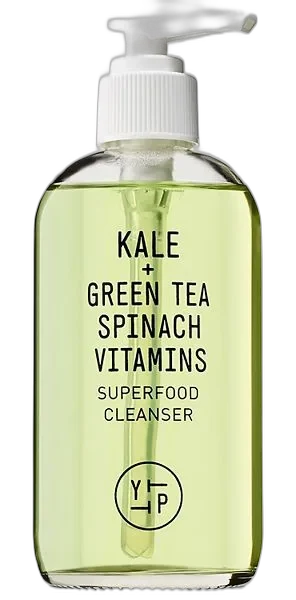
Superfood Cleanser
The Founding Cleanser
 Verified reviewer
Pros & cons.
- +Genuinely gentle amino-acid surfactant base that still produces real lather
- +Soft, non-tight post-rinse feel even with twice-daily use
- +Pleasant herbal-green scent and satisfying daily ritual
- +pH-friendly for retinoid and acid users
- +Vegan, cruelty-free, with full INCI transparency
- +Eleven-year track record with consistent formulation
- +Lower-commitment 5oz size for testing or travel
- +Doesn't undermine the actives layered on top
- −Added fragrance plus limonene and linalool make it a no for sensitive types
- −Botanical 'superfood' marketing oversells what extracts can do in a wash-off
- −Per-ounce cost is the same as the bigger version, so no value gain from sizing down
- −Won't fully remove waterproof makeup alone
- −Pricier than equivalent drugstore amino-acid cleansers
The full review.
Most beauty brands launch a hero product, use it for two or three years, and then let the SKU age out for newer formulas. Youth to the People is a rare exception. The original Superfood Cleanser remains on the brand’s shelf eleven years after launch, still selling and earning bestseller badges at Sephora. This staying power shows the founders got the formula right from the start.
They focused on the unsexy part: the surfactant base. Pairing sodium cocoyl glutamate with cocamidopropyl hydroxysultaine creates a good lather, a pH-friendly rinse, and a soft post-cleanse feel instead of a tight one. Most 2015-era clean-beauty cleansers were either too gentle to remove sunscreen or used harsh coco-glucosides that feel drying. The Youth to the People lab found a middle ground. They built a foaming gel that cleans without disrupting the acid mantle and used a kale-and-spinach story to reach the early-clean-beauty audience.
The sensory experience drives repeat use. The gel looks like pale green juice, smells faintly herbal, and lathers into a dense, low-volume foam. Massage it into damp skin for thirty or forty seconds, rinse, and your face is clean—not squeaky, tight, or coated. You do not need toner to feel finished. It is a simple daily driver for use twice a day.
The limitations match the larger Antioxidant version, as the formulas share roughly 90% of their architecture. Fragrance is the main issue. It contains added parfum plus naturally occurring limonene, linalool, and hexyl cinnamal. Most users like the scent, but those with fragrance sensitivity, eczema, or rosacea should choose fragrance-free alternatives. Also, the botanicals have a marketing-versus-reality gap. Kale, spinach, alfalfa, and green tea sound impressive, but in a wash-off product, the dwell time is too short for meaningful antioxidant activity. They provide brand identity and a green tint, but your skin won’t absorb dietary phytonutrients during a thirty-second cleanse. This is fine, but save your antioxidant budget for leave-on serums where it matters.
Value is straightforward. Twenty-four dollars for 5 ounces is about $4.80 per ounce, the same per-ounce price as the 8oz Antioxidant version. Choose based on size preference. The 5oz works for travel or testing; the 8oz works for a long-term supply. You can find comparable amino-acid cleansers at the drugstore (Cetaphil Gentle Skin Cleanser, Vanicream) for half the price, or at Asian beauty retailers (Hada Labo, Beauty of Joseon) for even less. The premium pays for sensory polish, brand experience, and the pump bottle design. Whether that markup is worth it is a personal choice.
Consistency keeps this product on shelves for over a decade. The formula has not been downgraded. The brand still publishes the full INCI. The daily experience remains satisfying. Because the founders haven’t reformulated for new buzz ingredients every two years, they have built credibility. They got it right the first time.
Ingredient analysis.
Full INCI list · pH 5.5
Water/Aqua/Eau, Cocamidopropyl Hydroxysultaine, Sodium Cocoyl Glutamate, Sorbeth-230 Tetraoleate, Polysorbate 20, Sodium Chloride, Aloe Barbadensis Leaf Juice Powder, Brassica Oleracea Acephala (Kale) Leaf Extract, Spinacia Oleracea (Spinach) Leaf Extract, Camellia Sinensis (Green Tea) Leaf Extract, Medicago Sativa (Alfalfa) Extract, Chamomilla Recutita (Matricaria) Flower Extract, Glycerin, Panthenol, Tocopheryl Acetate, Decyl Glucoside, Sorbitan Laurate, Tetrasodium Glutamate Diacetate, Gluconolactone, Ethylhexylglycerin, Maltodextrin, Citric Acid, Phenoxyethanol, Potassium Sorbate, Sodium Benzoate, Gardenia Jasminoides Fruit Extract, Fragrance/Parfum, Sodium Hydroxide, Sodium Glycolate, Sodium Formate, Hexyl Cinnamal, Linalool, Limonene, Chlorophyllin-Copper Complex (CI 75810).
Skin match.
The science.
The Science
This cleanser's logic relies on its surfactant chemistry. Sodium cocoyl glutamate is an amino-acid-derived anionic surfactant. It has a low irritation profile and a pH range compatible with the skin's natural acid mantle. Dermatology literature supports pH-balanced, mild surfactant cleansing for daily facial use. Published evidence shows glutamate-based surfactants produce lower transepidermal water loss after cleansing than traditional sulfate-based controls. Cocamidopropyl hydroxysultaine works as an amphoteric co-surfactant; it stabilizes foam, boosts cleansing power without aggression, and broadens compatibility across skin types.
This surfactant pairing gives the cleanser its dermatologist-friendly reputation. Marketing rarely mentions it, as amino-acid surfactant chemistry does not trend on TikTok like kale does.
The botanical extracts require closer inspection. Green tea (Camellia sinensis) has documented topical antioxidant and anti-inflammatory activity in leave-on contexts, with EGCG being the most studied polyphenol. Research supports topical green tea in serum and moisturizer formats. Kale, spinach, and alfalfa extracts have less robust topical research, though they provide polyphenols and trace nutrients. The critical caveat for these botanicals is dwell time: a cleanser stays on skin for thirty to forty-five seconds before rinsing, which prevents meaningful absorption or biological engagement. The extracts are in the product, but their functional contribution to skin is minimal compared to their role in brand storytelling. This is not a flaw in the cleanser—it is an honest framing of what botanical extracts do in a wash-off context.
Dermatologist Perspective
Dermatologists often recommend gentle, sulfate-free, pH-balanced cleansers for daily facial use across most skin types; this product fits that recommendation. Board-certified dermatologists note that amino-acid surfactant systems suit patients using retinoids, benzoyl peroxide, or alpha hydroxy acids, because they do not compound the barrier disruption caused by aggressive cleansers. The fragrance content is the primary caution dermatologists raise. Patients with eczema, rosacea, perioral dermatitis, or known fragrance sensitivities typically use fragrance-free alternatives. For everyone else, this is a reasonable, low-risk daily cleanser.
Where it fits in your routine.
Use morning and night. Wet your face with lukewarm water, put one to two pumps into damp palms, and lather. Massage onto skin for 30-45 seconds, focusing on the T-zone, hairline, and jaw. Rinse well and pat dry. At night, double-cleanse if you wore waterproof makeup or high-SPF sunscreen — use an oil or balm cleanser first, then use this gel. Apply hydrating toner or serum to slightly damp skin to lock in the soft post-rinse feel, then start your treatment routine.
At $24 for 5 oz, the per-ounce cost is about $4.80 — the same as the 8 oz Antioxidant version. Sizing down doesn't save money per use; it only lowers the upfront cost. The 5oz is best for first-time buyers testing the brand or for travel. The 8oz is the smarter spend for long-term daily use. Drugstore or Asian beauty retailers sell amino-acid surfactant cleansers with comparable performance for half the price — you pay a premium for brand cachet and sensory polish, not unique formulation value.
Normal, combination, and oily skin types want a gentle daily gel cleanser that lathers well without stripping the barrier. It works for anyone curious about Youth to the People who wants to test the brand's hero formula at a lower commitment than the 8oz size.
Sensitive skin, rosacea, eczema, or fragrance-reactive types. Budget-conscious shoppers find functionally similar amino-acid cleansers at the drugstore for half the price. Anyone needing waterproof-makeup removal should use an oil cleanser alongside this instead of using it solo.
Product details.
Pale green translucent gel that lathers into a low-volume foam
Fresh, herbal-green, lightly fragranced
Pump bottle, recyclable plastic
Lathers more than typical sulfate-free formulas. Skin feels clean and soft without squeaking or tightness after one use. No purging or adjustment occurs.
About 2-3 months with twice-daily use
12 months
All Year
The backstory.
Co-founders Joe Cloyes and Greg Gonzalez launched Youth to the People with this cleanser as the brand's hero product in 2015, drawing on family experience in the skincare manufacturing world and a fascination with the LA juice and wellness scene. The kale-spinach-green-tea blend was less about clinical efficacy than about telling a sensory story that resonated with the early clean-beauty audience.
About Youth to the People
Established Brand (5–20 years)Youth to the People launched in 2015 using this kale-and-spinach gel cleanser as its core identity. The brand uses transparent INCI lists and has been a Sephora bestseller for nearly a decade.
Common myths.
The original Superfood Cleanser is more 'natural' than the larger Antioxidant version.
They use essentially the same surfactant system and preservative system. The Antioxidant version adds THD ascorbate as a marketing addition. Both have the same fragrance load.
A green-tinted cleanser is somehow more potent.
Chlorophyll-copper complex at the bottom of the INCI provides the green color. It is a colorant, not an active. Botanical extracts add a light tint but do not change the cleansing chemistry.
FAQ.
What's the difference between this and the Superfood Antioxidant Cleanser?
The formulas are about 90% the same. This is the original 5oz version, whereas the Antioxidant version is the 8oz version that adds THD ascorbate to the bottom of the INCI. They use the same surfactant base, same fragrance, and same feel. The choice depends on size and price.
Is this cleanser safe for daily use?
Yes — the amino-acid surfactant base is gentle enough for twice-daily use on most skin types. People with sensitive skin or fragrance sensitivities should choose a fragrance-free option.
Will it remove sunscreen?
It removes most chemical sunscreens and lighter mineral SPFs easily. For high-SPF or water-resistant formulas, use an oil cleanser first to double-cleanse.
Does the small size last long?
Use twice daily for 2-3 months. The pump dispenses one to two pumps per wash; the lather is efficient, so a little goes a long way.
Is it really worth $24 for 5 ounces?
The price is mid-tier for a clean beauty cleanser. The formulation works well, but drugstore amino-acid cleansers cost less. You pay for brand experience and sensory polish.
Is it pregnancy-safe?
Yes — no retinoids, no salicylic acid, no actives of concern for pregnancy or breastfeeding.
Does it leave residue?
No. It rinses cleanly without a slick film. Skin feels soft, not coated.
What the community says.
"Gentle but actually cleans"
"Pleasant green smoothie scent"
"Doesn't leave tightness"
"Pricey for the size"
"Fragrance is too much for some"
"Doesn't remove waterproof makeup alone"
People also looked at.