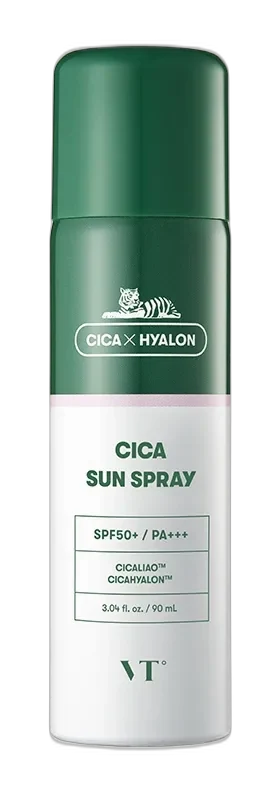
Cica Sun Spray SPF 50+
K-Beauty Spray-On Reapply
 Verified reviewer
Pros & cons.
- +Modern Asian filter blend including Tinosorb S and Uvinul A Plus
- +Strong UVA coverage beyond what most US spray sunscreens offer
- +Fast-drying, lightweight finish that doesn't disturb makeup
- +Useful reapplication format for midday SPF top-ups
- +Fragrance-free with supporting Cica and niacinamide actives
- +No white cast across skin tones
- +Effective for body as well as face use
- −Alcohol-based carrier can feel drying on sensitive or dry skin
- −Aerosol application requires care for even coverage
- −Not reef-safe for marine environments
- −Less reliable as a primary sunscreen versus cream formats
- −Limited standalone soothing impact despite Cica branding
The full review.
Americans know spray sunscreens well, but often overlook them. US drugstore shelves stock aerosol SPFs using 1990s-era filter combinations like oxybenzone, avobenzone, and octinoxate, which hurt the format’s reputation. Korean sunscreen formulation differs. Filter technology has advanced, and the Korean Ministry of Food and Drug Safety has approved photostable UV filters like Tinosorb S and Uvinul A Plus while they await US FDA approval. These filters offer stronger UVA coverage, better photostability, and better cosmetic finishes. VT Cica Sun Spray SPF 50+ uses this regulatory advantage. The filter blend is modern. Ethylhexyl methoxycinnamate and ethylhexyl salicylate provide UVB protection and the classic chemical SPF backbone. Tinosorb S (bis-ethylhexyloxyphenol methoxyphenyl triazine) and Uvinul A Plus (diethylamino hydroxybenzoyl hexyl benzoate) cover the UVA range, including long-wave UVA1 that standard US filters struggle to cover. This filter combination is better than typical American aerosol sunscreens for those concerned about photoaging, hyperpigmentation, or UVA-triggered melasma. The Cica elements are present, but keep expectations realistic. In a spray containing alcohol and silicones, the Centella asiatica complex amount is too low to influence skin during the brief contact and dry-down time. The niacinamide, glycerin, and panthenol partially offset the alcohol base’s drying effect, but this is not a soothing treatment product masquerading as a sunscreen. It is a sunscreen that includes mild supporting ingredients. The alcohol base is fine for normal and oily skin; it helps the product dry fast and stay non-greasy. For dry and sensitive skin, it is a trade-off. Alcohol can increase tightness, especially with repeated daily application. Rosacea-prone users should likely use a cream or fluid sunscreen instead. Application is critical for any spray sunscreen. You must apply enough. Hold the can six inches from your skin and spray in a sweeping motion across the face or body. Then—a step most users skip—pat the product into your skin with clean hands or fingers. Patting ensures even distribution and full coverage. Spraying without patting leaves thin, uneven SPF coverage that fails to match the rated protection. For face use, spraying into your palm first and patting it in is often most reliable. The strength of this format is reapplication. Most people skip cream sunscreen reapplication because it disrupts makeup. A spray works over foundation, cushion, or bare skin without ruining the finish, and that reapplication is where sunscreen makes the biggest difference. This spray works well for a midday top-up. For outdoor activities, the 150ml size covers the face, neck, and upper body on beach or pool days. Known limitations: alcohol-based spray carriers suit dry or sensitive skin poorly, the aerosol format risks eye and lung contact if sprayed carelessly, and the chemical filters make this non-reef-safe for ocean use. These factors narrow the use case but are not deal-breakers. For normal, combination, or oily skin wanting reliable reapplication with modern UV filter technology, this is a top spray sunscreen. It does not replace your primary cream SPF; it provides a good second layer and does that job well.
Ingredient analysis.
Full INCI list
Water, Alcohol Denat, Ethylhexyl Methoxycinnamate, Butylene Glycol, Ethylhexyl Salicylate, Cyclopentasiloxane, Bis-Ethylhexyloxyphenol Methoxyphenyl Triazine, Diethylamino Hydroxybenzoyl Hexyl Benzoate, Centella Asiatica Extract, Madecassoside, Niacinamide, Glycerin, Panthenol, Allantoin, Sodium Hyaluronate, Tocopherol, Phenoxyethanol, Ethylhexylglycerin
Skin match.
The science.
The Science
The filter science in this spray highlights a regulatory gap between Korean and US sunscreen markets. Tinosorb S (bis-ethylhexyloxyphenol methoxyphenyl triazine) is a photostable broad-spectrum UV filter approved in Europe, Korea, and much of Asia, but the FDA's slow GRASE review process keeps it pending in the US. Research in photodermatology journals shows Tinosorb S has better photostability and UVA1 coverage than avobenzone, the main UVA filter in most US chemical sunscreens. Uvinul A Plus (diethylamino hydroxybenzoyl hexyl benzoate) is another modern UVA filter with similar benefits. Combined with ethylhexyl methoxycinnamate for UVB and ethylhexyl salicylate for UVB-II, this formulation offers more complete and photostable UV protection than typical US spray sunscreens. This means users get better UVA1 coverage — the wavelength linked to photoaging, pigmentation, and deep dermal damage — than they would from comparable American drugstore spray sunscreens. The alcohol base helps the water and lipid phases mix into a sprayable aerosol and evaporates quickly for a non-sticky finish. Alcohol in sunscreen is not problematic for normal and oily skin, but it can cause transepidermal water loss and tightness in dry or compromised skin. The Centella asiatica complex and niacinamide are present in supporting roles; contact time with a fast-drying spray is too short for these ingredients to provide the calming effects seen in leave-on creams.
Dermatologist Perspective
Dermatologists often recommend spray sunscreens for daytime reapplication rather than primary morning SPF, as cream formats allow easier visual confirmation of coverage. Board-certified dermatologists note that the UVA filter technology in Korean and European sunscreens — including Tinosorb S and Uvinul A Plus — is more advanced than US options, and some dermatologists recommend Asian or European sunscreens for patients concerned about photoaging and melasma. For alcohol-based spray sunscreens, dermatologists generally caution against routine use on sensitive, dry, or rosacea-affected skin, but affirm their usefulness for normal and oily skin types needing convenient reapplication.
Where it fits in your routine.
Shake the can well before use. Hold the can about six inches from the skin and spray in a sweeping motion. To apply to the face, spray into your palm first, then pat into skin with clean fingers. Apply generously—spray sunscreens often lack enough coverage—and reapply every 2-3 hours during sun exposure or after swimming/sweating. Do not spray directly at the face or into wind. Do not inhale the aerosol. For daily routine use, apply as reapplication over a cream SPF base instead of as the only morning sunscreen.
At $22 for 150ml, this spray sunscreen is affordable for the Korean market and provides better filter technology than US drugstore alternatives. Daily face and neck use as a primary SPF empties a bottle in 1-2 months, costing $11-22 per month. If used as a reapplication layer over a cream base, a bottle lasts several months and lowers the price per use. The real value is not the cost—it is access to Tinosorb S and Uvinul A Plus in a format many users cannot get without importing.
Normal, combination, or oily skin types needing easy sunscreen reapplication, users wanting modern Korean UV filter technology, and anyone seeking travel-friendly SPF for face and body. It also works as a midday sunscreen over makeup.
Avoid this if you have dry, sensitive, or rosacea-prone skin, as the alcohol base feels less comfortable. Skip this as your main daily sunscreen if you want thick-layer cream coverage, or for reef-sensitive environments where mineral sunscreen is better.
Product details.
Lightweight aerosol mist
Faint alcohol smell that dissipates quickly
Aerosol can with spray nozzle
Sprays in a fine, even mist. Dries to an invisible finish within 30 seconds. The alcohol carrier provides a slight cooling sensation. Most skin tones show no white cast.
1-2 months with daily reapplication use
12 months
All Year
The backstory.
Korea's sunscreen market is famously ahead of the US in filter technology and reapplication formats. VT launched this spray in 2020 as a natural Cica line extension, targeting users who needed midday SPF reapplication over makeup without disrupting their base.
About VT Cosmetics
Established Brand (5–20 years)VT Cosmetics added a spray-format sun protection to its Cica line in 2020. This combines the brand's soothing positioning with an on-the-go reapplication format popular in the Korean sunscreen market.
Common myths.
Spray sunscreens don't provide real SPF protection.
Spray sunscreens provide full SPF protection if applied correctly—using enough product, spreading it evenly, and rubbing or patting it in after spraying. The problem is consistent application thickness, which aerosols make harder to gauge than creams.
Alcohol in sunscreen is automatically bad.
Alcohol has a function in spray and mist sunscreens — it helps the product spread evenly and dry fast. This works for normal and oily skin. Alcohol-based sunscreens can dry out dry or very sensitive skin, so a non-alcohol formula is a better choice.
FAQ.
Can I use VT Cica Sun Spray as my only sunscreen?
Yes, if you apply it evenly and generously. Most users get more reliable coverage using a cream sunscreen as their primary morning application and this spray for daytime reapplication. We recommend that combination.
Is this spray safe to use on the face?
Yes, but do not spray your face directly. Spray into your palm first or use a fine mist from a distance, then pat the product into your skin for even coverage. Do not inhale the aerosol.
How does this compare to US spray sunscreens?
The filter technology is more advanced. This formula uses Tinosorb S and Uvinul A Plus, which the FDA has not yet approved in the US. These filters provide better UVA protection and photostability than the older filter sets in many American sunscreen sprays.
Will this spray ruin my makeup?
Apply it lightly from a proper distance and it dries quickly without residue. Over-spraying or holding the can too close disturbs powder finishes. Test a small area first.
Is this sunscreen spray reef-safe?
The formula uses ethylhexyl methoxycinnamate and ethylhexyl salicylate as chemical filters. Some environmental standards do not label these as reef-safe. Use a mineral-only sunscreen for beach use in sensitive marine environments.
What the community says.
"Easy reapplication format"
"Quick-drying finish"
"No white cast"
"Good for body sunscreen use too"
"Alcohol base feels drying"
"Not ideal for sensitive skin"
"Can disturb makeup if over-sprayed"
"Needs even application"
Featured in.
People also looked at.