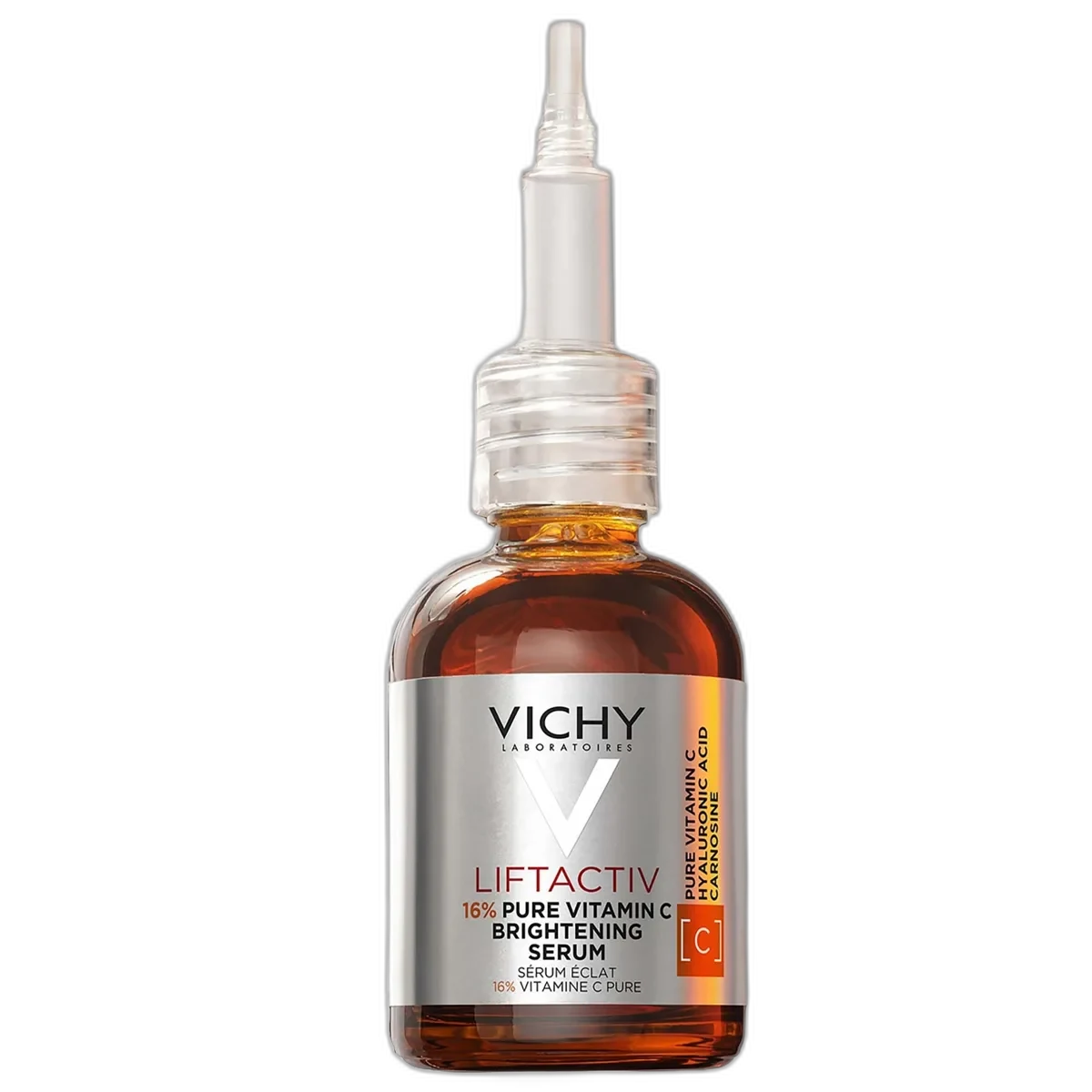
LiftActiv Vitamin C Serum
French Pharmacy Brightening Hero
 Verified reviewer
Pros & cons.
- +16% pure L-ascorbic acid at the upper end of clinically validated concentrations
- +Multi-pathway formula addressing both oxidation and glycation aging mechanisms
- +Vitamin C + E synergy doubles photoprotective efficacy over vitamin C alone
- +Alcohol-free and fragrance-free reformulation eliminates previous formula irritants
- +Noticeable brightening and radiance improvement within the first week
- +Haematococcus pluvialis extract provides additional astaxanthin antioxidant layer
- +Dermatologist-certified and allergy-tested by a 90-year legacy brand
- −Small bottle size makes it expensive per month of daily use
- −Pure ascorbic acid is inherently unstable — requires careful storage and timely use
- −16% concentration may cause tingling or stinging on sensitive skin
- −Brief sticky phase during absorption can feel uncomfortable under layers
- −Short 3-month post-opening window means no stockpiling
- −Not cruelty-free or vegan
The full review.
Most skincare brands with a lab and marketing budget sell vitamin C serums. Most follow a pattern: ascorbic acid, maybe hyaluronic acid, dark glass packaging, and prices from twenty to sixty dollars. Vichy’s LiftActiv Vitamin C Serum looks like any other entry until you check the ingredient list and see a more sophisticated approach.
The ascorbic acid is 16% — one percentage point higher than the 15% concentration in most published clinical trials. This isn’t marketing; it places the formula at the top of the range supported by evidence for collagen synthesis and photoprotection, staying below the 20% threshold where irritation increases faster than benefits.
The supporting ingredients are also notable. Tocopherol (vitamin E) provides synergy with vitamin C. A 2005 study by Pinnell et al. in the Journal of the American Academy of Dermatology showed that combining L-ascorbic acid with alpha-tocopherol doubled the photoprotective effect compared to vitamin C alone. Vitamin E also stabilizes the formula by recycling oxidized vitamin C molecules back to their active form, extending the serum’s functional lifespan.
Carnosine sets this formula apart. This naturally occurring dipeptide addresses glycation, a separate aging pathway from oxidative damage. Glycation happens when glucose molecules bond to collagen and elastin fibers, creating advanced glycation end products (AGEs) that make structural proteins stiff, brittle, and yellow. Most vitamin C serums ignore glycation and focus only on free-radical defense. By adding carnosine, Vichy targets two distinct molecular mechanisms of skin aging in one product.
Haematococcus pluvialis extract adds another layer. This microalgae is a top natural source of astaxanthin, a carotenoid antioxidant that some studies show is more potent than vitamin C or E as a free-radical scavenger. Whether this concentration provides meaningful clinical impact is debatable, but its inclusion shows formulation ambition.
The current reformulated version removes the alcohol denat. found in earlier versions. This change reflects updated dermatological guidance or consumer feedback. The current formula is fragrance-free, alcohol-free, and paraben-free, addressing most previous objections.
On the skin, it behaves like a typical aqueous vitamin C serum. Lightweight, slightly viscous, it absorbs within a minute or two. Some users notice a brief sticky phase during absorption, followed by a comfortable, slightly dewy finish. The characteristic faint metallic smell of concentrated ascorbic acid is present but fleeting. Mild tingling on first application is normal at this concentration and typically resolves within the first week.
The brightening effect is impressive. Skin looks more luminous within the first few days of use — not from light-reflecting particles, but from inhibited melanin production and enhanced cell turnover. Dark spots and post-inflammatory hyperpigmentation fade visibly around the four-week mark, with continued improvement over months.
The main criticism is the price-to-volume ratio. At $33 for 20ml (and a 10ml size exists for even less product), you get roughly 6-8 weeks of daily use. Pure ascorbic acid is inherently unstable, so the product should be used within 2-3 months of opening. The small format makes scientific sense, but repurchasing every couple of months is expensive.
Vichy’s legacy matters. This brand did not come from fashion or social media. Ninety years of dermatological collaboration, L’Oréal’s research infrastructure, and French pharmaceutical culture are in this formula. When Vichy adds carnosine for anti-glycation or haematococcus for astaxanthin, it is a research-driven decision, not a trend chase. That pedigree makes the ingredient choices more trustworthy.
Formula
Texture
On the skin, it behaves like a typical aqueous vitamin C serum. Lightweight, slightly viscous, it absorbs within a minute or two. Some users notice a brief sticky phase during absorption, followed by a comfortable, slightly dewy finish.
Scent
The characteristic faint metallic smell of concentrated ascorbic acid is present but fleeting.
Common Praise
The brightening effect is impressive. Skin looks more luminous within the first few days of use — not from light-reflecting particles, but from inhibited melanin production and enhanced cell turnover. Dark spots and post-inflammatory hyperpigmentation fade visibly around the four-week mark, with continued improvement over months.
Common Complaints
The main criticism is the price-to-volume ratio. At $33 for 20ml (and a 10ml size exists for even less product), you get roughly 6-8 weeks of daily use. Pure ascorbic acid is inherently unstable, so the product should be used within 2-3 months of opening. The small format makes scientific sense, but repurchasing every couple of months is expensive.
Works for
- Brightening
- Dark spots
- Post-inflammatory hyperpigmentation
AM routine
Mild tingling on first application is normal at this concentration and typically resolves within the first week.
Ingredient analysis.
Full INCI list
Aqua/Water, Ascorbic Acid, Glycerin, Sodium Hydroxide, Pentylene Glycol, Laureth-23, Haematococcus Pluvialis Extract, Carnosine, Neohesperidin Dihydrochalcone, Sodium Hyaluronate, Trisodium Ethylenediamine Disuccinate, Tocopherol, Dipotassium Glycyrrhizate, Caprylic/Capric Triglyceride, Caprylyl Glycol, Carrageenan, Phenoxyethanol
Skin match.
The science.
The Science
L-ascorbic acid at 10-20% concentrations is the gold standard for topical vitamin C and has the strongest evidence base of any vitamin C derivative. A double-blind, half-face study in Dermatologic Surgery shows that daily topical vitamin C for 12 weeks produces clinically visible and statistically significant improvements in wrinkling, with biopsy evidence of new collagen formation. A 2003 placebo-controlled study in Experimental Dermatology found that 5% topical ascorbic acid applied for 6 months increased skin density and thickness via ultrasound, confirming structural collagen remodeling.
The vitamin C and E combination in this formula has a specific scientific rationale. Pinnell et al. (2005) showed in a Journal of the American Academy of Dermatology study that combining 15% L-ascorbic acid with 1% alpha-tocopherol in a solution also containing ferulic acid doubled the photoprotection measured against solar-simulated UV radiation. This specific formula lacks ferulic acid, but the C+E synergy alone provides enhanced antioxidant capacity — vitamin E donates hydrogen atoms to neutralize lipid peroxyl radicals, and vitamin C regenerates the oxidized vitamin E to create a recycling antioxidant cascade.
Carnosine's anti-glycation properties are a scientifically supported anti-aging mechanism. Glycation — the non-enzymatic reaction between reducing sugars and amino groups on proteins — produces advanced glycation end products (AGEs) that cross-link collagen fibers, reducing skin elasticity and causing the yellowish discoloration of aged skin. In vitro studies show carnosine inhibits AGE formation and may help reverse some glycation damage on already-modified proteins.
A 2023 systematic review in the Journal of the American Academy of Dermatology examined topical vitamin C efficacy for melasma and photoaging across multiple clinical trials. It concluded that topical ascorbic acid provides statistically significant improvements in photoaging severity and pigmentation, with the strongest evidence at 10-20% concentrations.
References
- Double-blind, half-face study comparing topical vitamin C and vehicle for rejuvenation of photodamage — Dermatologic Surgery (2002)
- Ferulic acid stabilizes a solution of vitamins C and E and doubles its photoprotection of skin — Journal of Investigative Dermatology (2005)
- Efficacy of topical vitamin C in melasma and photoaging: A systematic review — Journal of the American Academy of Dermatology (2023)
Dermatologist Perspective
Dermatologists view this serum as a solid, evidence-based option in the crowded vitamin C category. Board-certified dermatologists note the 16% pure L-ascorbic acid concentration is within the optimal range in clinical literature, and adding vitamin E for synergistic antioxidant enhancement follows current best-practice formulation science. The inclusion of carnosine for anti-glycation is a thoughtful differentiator that addresses an underappreciated aging mechanism. Dermatologists recommend this product for patients seeking photoprotective antioxidant support alongside sunscreen, noting that morning application of vitamin C under SPF provides superior UV defense compared to sunscreen alone.
Where it fits in your routine.
Apply 3-4 drops to clean, dry facial skin every morning. Wait 1-2 minutes for absorption before you apply moisturizer and sunscreen. Use sunscreen with SPF 30+ daily; the vitamin C enhances sun protection but does not replace it. Store in a cool, dark place and use within 3 months of opening. If the serum turns from pale yellow to dark orange or brown, it has oxidized and needs replacement.
At $33 for 20ml, this serum costs more than The Ordinary but much less than prestige brands like SkinCeuticals ($166 for 30ml). The formula uses carnosine, vitamin E, and algae extract, making it more complex than most competitors at this price. Daily use costs roughly $16-$17 per month due to the small volume, a reasonable price for a dermatologist-backed, multi-pathway antioxidant serum. The 10ml size option offers a lower-commitment entry point.
People seeking an evidence-based brightening serum with multi-pathway antioxidant and anti-aging benefits. Those with hyperpigmentation, dark spots, sun damage, or dull skin tone. Users who value a dermatologist-recommended brand with 90 years of clinical research.
16% ascorbic acid irritates people with very sensitive skin or active rosacea. The Ordinary is the most cost-effective vitamin C option. Users who cannot finish products within 3 months of opening should use a stable vitamin C derivative instead of pure ascorbic acid.
Product details.
This lightweight, slightly viscous serum has a watery-gel consistency. It absorbs within 1-2 minutes. Some users feel a brief stickiness that goes away once the serum dries.
Fragrance-free. Some users may detect the faint metallic/acidic smell typical of high-concentration ascorbic acid, but it dissipates quickly.
Amber glass ampoule-style bottles minimize light exposure and oxidation. The small 10ml and 20ml sizes reflect that pure ascorbic acid serums need use within 2-3 months of opening to stay potent.
16% ascorbic acid often causes mild tingling or warmth on first application. This sensation usually stops within 30 seconds and fades during the first week of use. Skin looks brighter and more luminous once the serum absorbs. Intense or persistent stinging means the concentration is too high for your skin.
6-8 weeks with daily morning application (20ml bottle)
3 months
All Year
The backstory.
Vichy reformulated this serum to remove the alcohol denat. that was present in earlier versions — a direct response to dermatologist feedback and consumer demand for gentler formulations. The current version represents Vichy's effort to create a clinically serious vitamin C serum that meets their dermatological standards while remaining accessible at the pharmacy price point. The 16% concentration slightly exceeds the 15% used in many clinical studies, positioning it at the top of the evidence-based range.
About Vichy
Legacy Brand (20+ years)Vichy Laboratoires was founded in 1931 by Dr. Prosper Haller and has been part of L'Oréal's Dermatological Beauty division since 1955. The brand is recommended by more than 80,000 dermatologists worldwide and has over 90 years of clinical research behind its formulations, with products developed in partnership with dermatologists.
Common myths.
Vitamin C serums do nothing; they oxidize in the bottle before use.
Ascorbic acid is unstable, but well-formulated vitamin C serums in correct packaging stay potent for 2-3 months after opening. This formula uses amber glass packaging and chelating agents (trisodium ethylenediamine disuccinate) to slow oxidation. If the serum turns dark orange or brown, oxidation occurred and you must replace it.
Don't use vitamin C in the morning because it increases skin sensitivity to the sun.
The opposite is true — vitamin C is a photoprotective antioxidant that improves sunscreen's UV protection. Published research shows combining vitamin C with sunscreen provides better photoprotection than sunscreen alone. Apply it in the morning to provide antioxidant defense during peak UV exposure hours.
FAQ.
What percentage of vitamin C is in Vichy LiftActiv serum?
The current formulation contains 16% pure L-ascorbic acid, which is slightly higher than the 15% concentration used in most published clinical studies. This sits at the upper end of the effective range for topical vitamin C. It provides maximum antioxidant and brightening benefits and remains tolerable for most non-sensitive skin types.
Should I use Vichy Vitamin C Serum in the morning or at night?
Apply in the morning. Vitamin C is a photoprotective antioxidant that increases sunscreen UV protection when applied underneath. Morning use provides antioxidant defense during peak UV exposure hours. Use retinol and exfoliating acids at night.
Can I use Vichy Vitamin C Serum with retinol?
Yes, but not in the same routine. Use the vitamin C serum in the morning and retinol in the evening. Using them together causes irritation and reduces the efficacy of both actives because they have different optimal pH ranges. The morning/evening split gives your skin the benefits of both without conflict.
How do I know if my Vichy Vitamin C Serum has gone bad?
Fresh ascorbic acid serum is clear to pale yellow. If the serum turns dark orange, amber, or brown, it has oxidized and lost potency. Use the serum within 2-3 months of opening and store it in a cool, dark place. The amber glass packaging helps, but replace the serum once it oxidizes.
Why does Vichy Vitamin C Serum tingle when I apply it?
The 16% ascorbic acid concentration has a low pH. This causes mild tingling or warmth upon application; this reaction is normal and does not mean damage. The sensation usually stops within 30 seconds and fades during the first week as your skin acclimates. If stinging is intense or causes redness that lasts more than a few minutes, the concentration is likely too high for your skin.
What the community says.
"Noticeably brighter skin within the first week of use"
"Lightweight, quick-absorbing formula"
"Fragrance-free and alcohol-free reformulation is a significant improvement"
"Skin feels firmer and more radiant with consistent use"
"Good dermatological backing inspires confidence"
"Small bottle size for the price — runs out quickly"
"Can feel slightly sticky before absorbing"
"Tingling or stinging on first application for some users"
"Pure ascorbic acid degrades quickly — requires careful storage"
"Some users with oily skin found it left a shiny residue"
Featured in.
People also looked at.