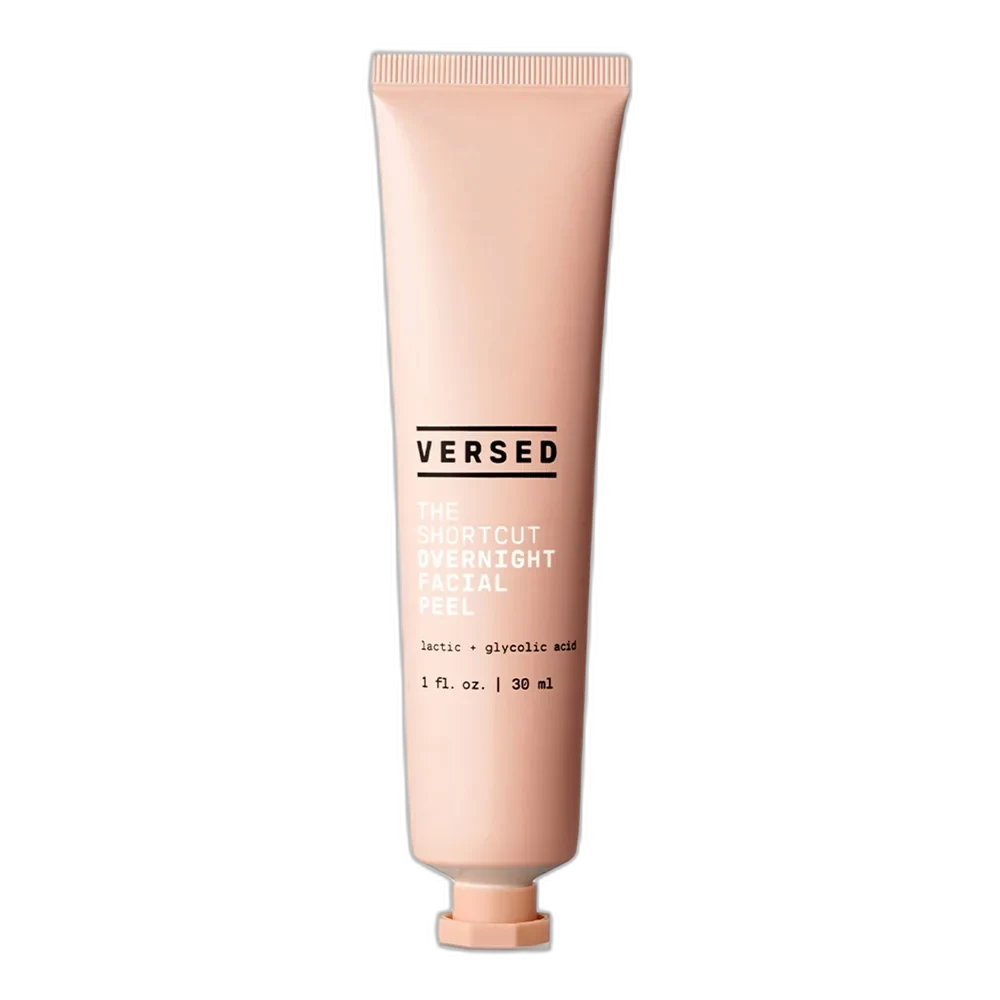
The Shortcut Overnight Facial Peel
Budget Overnight Glow
 Verified reviewer
Pros & cons.
- +Real 10% glycolic acid concentration at a drugstore price
- +Multi-acid complex smooths texture within 2-3 uses
- +Thoughtful buffer system with bisabolol, panthenol, and aloe
- +Fragrance-free, vegan, and Leaping Bunny certified
- +Noticeable morning-after glow and improved pore clarity
- +Excellent entry point for first-time chemical peel users
- +Pregnancy-compatible topical acid option
- −Real tingle and potential flaking during the first few uses
- −Not suitable for sensitive, rosacea-prone, or eczema-affected skin
- −Easy to over-exfoliate if used more than 2-3 nights weekly
- −Small 30ml bottle despite weekly usage pattern
- −Must be isolated from other actives on peel nights
The full review.
Overnight leave-on glycolic peels are successful premium skincare inventions. Drunk Elephant’s TLC Sukari set the template—a lightly buffered, leave-on acid blend used once or twice a week for glassy skin—but its price excludes most users. Versed’s The Shortcut is the affordable alternative. It uses a 10% glycolic acid base with lactic, tartaric, malic, and citric acids at pH 3.8, plus bisabolol, panthenol, allantoin, and aloe to manage stinging. It costs under twenty dollars. The concentration is high; this is no homeopathic drugstore dupe. First use tingles for two to five minutes, or longer if your barrier is compromised, which is normal. A pH-3.8 acid pool is working on the stratum corneum. The next morning, skin feels noticeably smoother. It is a tactile difference you feel on your jaw. Pores look cleaner because chemical action softens the plugs inside them. Tone looks more uniform as sun-damaged cells turn over faster. Texture changes appear within the first three uses, which is rare for skincare and makes this category addictive. The formulation’s strength is the buffer system. Cheap AHA products often use a barebones glycerin base to cut manufacturing costs, which irritates the skin. Versed spent its secondary ingredient budget on bisabolol (anti-inflammatory chamomile extract), panthenol (hydrating and skin-soothing), allantoin (cell-smoothing, protective), and aloe. These do not neutralize the glycolic acid; they work in parallel to calm inflammation while the acids work. This makes the experience feel like a spa treatment rather than a mistake. The risk lies in user error. The bottle lacks clear instructions on frequency, so new users may overuse it. Using The Shortcut more than two or three times a week, or combining it with retinoids, vitamin C, or salicylic acid, causes over-exfoliation. Over-exfoliating 10% glycolic acid results in flaky, inflamed, reactive skin that takes weeks to recover. Do not use this daily. Use it once or twice weekly. People with sensitive skin, active rosacea, or eczema should skip it; the buffers help, but they do not make 10% glycolic acid gentle. Pregnancy users should note that while topical glycolic acid is generally considered compatible with pregnancy, this concentration is high and requires consultation with an OB. The value is excellent. At roughly one-fifth the cost of premium options, you get a similar experience. The formulation lacks the polish of TLC Sukari—it has no marula oil occlusion or potassium sorbate calibration artistry—but it is close for the price. For those new to overnight peels who want to avoid a $90 commitment, this is the right starting point. Pair it with a good ceramide moisturizer, start with once a week, and wait one month for results. If tolerated, you can move to twice a week. Most faces can likely only handle that much from a bottle this strong.
Ingredient analysis.
Full INCI list · pH 3.8
Water/Aqua/Eau, Glycolic Acid, Propanediol, Glycerin, Sodium Hydroxide, Lactic Acid, Citric Acid, Tartaric Acid, Malic Acid, Panthenol, Allantoin, Bisabolol, Aloe Barbadensis Leaf Juice, Chamomilla Recutita (Matricaria) Flower Extract, Sodium Hyaluronate, Xanthan Gum, Disodium EDTA, Phenoxyethanol, Ethylhexylglycerin
Skin match.
The science.
The Science
Glycolic acid is the most studied alpha-hydroxy acid in dermatology. As the smallest AHA molecule (76 daltons), it penetrates the stratum corneum easily and breaks ionic bonds between corneocytes to speed up desquamation. Clinical research since the 1990s shows its effects on photoaging, fine lines, and pigmentation; Ditre and colleagues showed histologic improvements using 25% glycolic acid peels. This 10% leave-on concentration works more mildly but cumulatively—expect gradual texture and tone improvements rather than the intense exfoliation of in-office peels. The secondary AHAs in this formulation (lactic, tartaric, malic, citric) work differently. Lactic acid is a larger 90 daltons molecule that exfoliates the surface while acting as a humectant to hold moisture in the skin. Tartaric and malic acids add mild exfoliation and pH buffering. Bisabolol, the main active compound in German chamomile, has documented anti-inflammatory and skin-calming effects that help users tolerate higher-concentration AHA products. Contact time distinguishes a leave-on formulation from a rinse-off peel: by staying on the skin overnight, a 10% glycolic formulation produces cumulative effects similar to stronger rinse-off products. This requires careful frequency management, as combining them with other exfoliants or retinoids predictably compromises the skin barrier.
Dermatologist Perspective
Dermatologists often recommend leave-on AHA peels as an at-home adjunct between in-office chemical peel sessions. Glycolic acid is a widely cited, useful over-the-counter exfoliant for photoaged and dull skin. Board-certified dermatologists caution that these products require disciplined frequency—usually once or twice weekly at most—and should not be used with retinoids or benzoyl peroxide on the same night. Patients with rosacea, eczema, or active barrier compromise should generally avoid leave-on glycolic products at this concentration. Dermatologists note that user overapplication, not the ingredient itself, is the main cause of adverse reactions to at-home AHA products. Therefore, introducing a product like this gradually is the standard clinical advice.
Where it fits in your routine.
Use once weekly in the evening to start. Apply 3-4 drops to dry skin after cleansing, avoiding the immediate eye area and corners of the mouth. Let it absorb for 1-2 minutes — a tingle will subside within a few minutes — then layer a ceramide-rich moisturizer on top. Skip retinoids, vitamin C, benzoyl peroxide, and other AHAs/BHAs on peel nights. Always wear SPF 30+ the next morning because freshly exfoliated skin is more UV-sensitive. Increase to twice weekly after two to three weeks of successful once-weekly use.
At $17.99 for 30ml, The Shortcut offers high value in the leave-on peel category. Premium brands charge $80-$100 for similar bottle sizes. Because you use The Shortcut once or twice weekly, one bottle lasts 3-4 months. This costs under $5 per month for an effective resurfacing treatment. Versed does not offer larger sizes, but most users will not finish a bottle quickly enough for that to matter. The price reflects the ingredients rather than brand mystique. Versed lacks decades of clinical research to justify a premium, and that honesty is the pitch.
This works for overnight peel beginners wanting a credible 10% glycolic experience without a premium price. It suits people with dullness or rough texture who tolerate exfoliation well, and budget-conscious shoppers seeking a weekly glow treatment. It is also a strong choice for pregnancy users needing a retinoid alternative.
Skip this if you have sensitive skin, rosacea, eczema, or compromised barriers — the buffers don't offset the 10% glycolic strength. Also skip if you use retinoids nightly and do not want to change your routine for a weekly peel night.
Product details.
Thin, watery serum with slight slip
Fragrance-free, faint acidic note
Frosted glass bottle with dropper
Expect a noticeable tingle for 2-5 minutes during first applications. Some flaking or mild pinkness can occur the next morning, followed by obvious smoothness and glow. The sting subsides as skin acclimates over the first two to three uses.
3-4 months with 1-2 weekly uses
12 months
All Year
The backstory.
Versed launched in 2019 with a narrow, editor-curated lineup designed to make the Clique Brands' media audience the first customer base. The Shortcut was one of the original launch products, positioned as a democratized version of the overnight glycolic peels that had become a cult category after Drunk Elephant's TLC Sukari popularized them.
About Versed
Emerging Brand (2–5 years)Versed launched in 2019 under Clique Brands (Who What Wear's parent company). It offers clean-beauty-adjacent skincare at drugstore prices. The brand uses recognizable active ingredients instead of proprietary research to build credibility.
Common myths.
Overnight peels work better with longer contact time.
AHAs stop working once the surface pH equilibrates. The intended protocol is leaving this on overnight, but applying it twice in one night or layering more won't increase exfoliation — it only increases irritation.
Use a strong peel and retinol in one routine to speed up results.
Using a 10% glycolic peel and a retinoid on the same night often breaks the skin barrier. Use this peel instead of other actives on application nights, not with them.
FAQ.
How often should I use Versed The Shortcut?
Use this once a week for the first two weeks. If your skin tolerates it, use it twice a week. Most skin needs no more than 2-3 nights weekly, especially if you use other actives in your routine.
Can I use this peel with retinol?
Don't use them on the same night. Glycolic acid and retinoids used together break the barrier. Alternate nights: use retinol one night and this peel another. Add barrier-repair nights in between if needed.
Does The Shortcut need to be rinsed off?
No — this is a leave-on overnight treatment. Apply it to clean dry skin, wait one or two minutes for absorption, then apply your moisturizer and sleep. Rinse it off in the morning as usual.
Will this peel help with acne scars?
Consistent weekly use over 8-12 weeks helps fade post-acne dark marks (post-inflammatory hyperpigmentation). True atrophic scars — indented acne scars — require professional procedures like microneedling or laser, not topical AHAs.
Is this safe for sensitive skin?
Sensitive skin needs caution. The 10% glycolic concentration is high; buffers help, but patch testing on your jaw for a few nights before full-face use is smart. People with active rosacea or eczema should avoid this.
Community
What the community says.
"Morning-after glow"
"Smoother texture quickly"
"Affordable vs Drunk Elephant/SkinCeuticals equivalents"
"No sticky residue"
"Stings on first uses"
"Needs slow introduction"
"Can over-exfoliate if used too often"
"Small bottle for the price"
People also looked at.