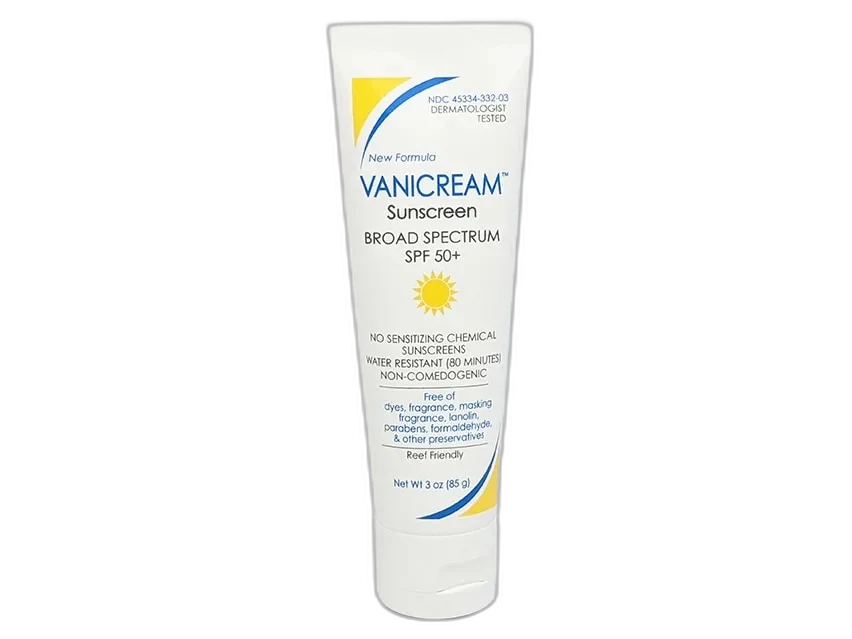
Sunscreen Broad Spectrum SPF 50+
Derm Office Staple
 Verified reviewer
Pros & cons.
- +Single-filter zinc oxide formula — one of the cleanest mineral sunscreens at SPF 50+
- +Does not irritate rosacea, eczema, or post-procedure skin
- +Non-stinging near eyes — no chemical UV filters to cause burning during sweat
- +Water resistant for the maximum FDA-allowed 80 minutes
- +Pregnancy-safe mineral formula with no systemic absorption concerns
- +Reef-friendly certified with no oxybenzone or octinoxate
- +Allantoin and squalane provide soothing and conditioning benefits
- −Noticeable white cast that is prominent on medium to deep skin tones
- −Thick, pasty texture that requires effort to blend evenly
- −Does not dry down matte — stays tacky and transfers to clothing
- −Can pill or ball up when layered under makeup
- −Three-ounce tube lasts only 1-2 months with proper daily application
- −Intermittent availability and stock issues at multiple retailers
The full review.
Every mineral sunscreen faces a trade-off: more zinc oxide improves protection but worsens appearance. Chemical UV filters dissolve invisibly. Zinc oxide sits on the surface and leaves a white cast ranging from ‘subtle glow’ to ‘mime who forgot to finish their routine.’ Vanicream’s Sunscreen Broad Spectrum SPF 50+ falls into the latter category.
The 2021 reformulation made a specific choice: remove the titanium dioxide from the previous dual-mineral formula and use 12% zinc oxide as the sole active UV filter. This is unusual. Most mineral sunscreens combine zinc oxide and titanium dioxide to cover the full UV spectrum, using titanium dioxide for UVB and zinc oxide for broader UVA coverage. By using only zinc oxide, Vanicream simplified the formula and reduced one source of white cast—but at 12%, the zinc oxide still shows.
The protection is real. The FDA classifies zinc oxide as Category I—generally recognized as safe and effective. It provides the broadest spectrum coverage of any single UV filter, reaching the long UVA I range where many chemical filters fail. Research by Mitchnick, Fairhurst, and Pinnell in the Journal of the American Academy of Dermatology in 1999 shows zinc oxide has superior photostability and UVA protection compared to other filters. At SPF 50+, this formula provides high-level protection via one well-studied ingredient.
Texture
The texture is the most polarizing feature. It is thick. It requires effort to spread. The silicone crosspolymer helps with dispersibility, and squalane prevents the dry, chalky feel common in mineral sunscreens, but the product lacks cosmetic elegance. It does not dry to a matte finish. It stays somewhat tacky. It can pill under makeup. For oily skin, the dewiness feels greasy.
Who Should Buy
The people who need this sunscreen do not care about those issues. A person with perioral dermatitis who has tried six sunscreens that each triggered a flare cares about the ingredient list. A rosacea patient whose face turns crimson from the avobenzone in chemical sunscreens cares about the zinc oxide. An eczema sufferer who cannot wear most sunscreens without itching and burning cares about the absence of fragrance, botanical extracts, and chemical UV filters.
Works for
Allantoin is a smart addition to the inactive ingredient list. It provides skin-soothing properties that complement the mineral filter and help calm irritation from sun exposure. Squalane is the primary emollient, which keeps the formula from drying out the skin like some zinc-only formulations.
Best for
The water resistance is rated at 80 minutes—the FDA maximum—making it suitable for swimming, outdoor sports, and extended sun exposure. It does not sting the eyes, unlike chemical sunscreens that run when you sweat.
Value
At around fifteen dollars for three ounces, the value is decent for a mineral SPF 50+, though the tube will not last long with daily application. Using the recommended quarter teaspoon for face and neck, one tube lasts one to two months. This is standard for sunscreens, but sun protection is expensive when used correctly.
Common Complaints
Availability is an issue. This product has intermittent stock issues at retailers, and some specialty sites list it as no longer available. It is unclear if this is a supply chain issue or a discontinuation, but it concerns users who want this as a daily sunscreen.
Vanicream Sunscreen Broad Spectrum SPF 50+ does not try to be the best-feeling sunscreen. It tries to be the most tolerable. For skin that reacts to everything else, that matters more than a matte finish or invisible application. You will look a little white. You will feel a little tacky. Your skin will be protected by a formula designed to avoid causing harm.
Formula
Ingredient analysis.
Full INCI list
Active Ingredient: Zinc Oxide 12%. Inactive Ingredients: Allantoin, Butyloctyl Salicylate, C12-15 Alkyl Benzoate, Caprylyl Glycol, Dimethiconol/Propylsilsesquioxane/Silicate Crosspolymer, Glyceryl Behenate, Glyceryl Dibehenate, Glyceryl Stearate, Isodecyl Salicylate, Isopropyl Isostearate, Lecithin, Neopentyl Glycol Diheptanoate, 1,2-Hexanediol, Polyester-7, Polyglyceryl-3 Polyricinoleate, Propanediol, Silica Silylate, Sodium Chloride, Squalane, Tribehenin, Tridecyl Salicylate, Water
Skin match.
The science.
The Science
The reformulated formula uses zinc oxide as its only UV filter — a choice based on research into zinc oxide's spectral coverage. A 1999 study by Mitchnick, Fairhurst, and Pinnell in the Journal of the American Academy of Dermatology shows that microfine zinc oxide provides photostable broad-spectrum protection into the long UVA I range (above 360 nm), coverage many chemical UV filters lack.
A 2019 review by Schneider and Lim in Photodermatology, Photoimmunology & Photomedicine confirms zinc oxide's advantages for sensitive populations: it is chemically inert on the skin, does not penetrate the stratum corneum, and does not generate free radicals under UV exposure like some organic filters. The review lists mineral filters as the preferred choice for sensitive, pediatric, and pregnancy-related use.
Cole, Shyr, and Ou-Yang addressed a common misconception about mineral sunscreens in a 2016 study in Photodermatology, Photoimmunology & Photomedicine, finding that zinc oxide provides UV protection primarily through absorption (95-96%), not reflection. This disproves the idea that mineral sunscreens 'bounce' UV rays off the skin — they absorb UV radiation and convert it to heat, working mechanistically like chemical filters but without skin penetration concerns.
The FDA classifies zinc oxide as Category I (GRASE) — one of only two UV filters with this designation. Chemical UV filters including avobenzone, oxybenzone, and octinoxate must provide more safety data due to systemic absorption, a concern that does not apply to mineral filters.
References
- Microfine zinc oxide (Z-cote) as a photostable UVA/UVB sunblock agent — Journal of the American Academy of Dermatology (1999)
- A review of inorganic UV filters zinc oxide and titanium dioxide — Photodermatology, Photoimmunology & Photomedicine (2019)
- Metal oxide sunscreens protect skin by absorption, not by reflection or scattering — Photodermatology, Photoimmunology & Photomedicine (2016)
Dermatologist Perspective
Dermatologists often recommend mineral-only sunscreens for patients with rosacea, eczema, contact dermatitis, and post-procedure skin — conditions where chemical UV filters can increase inflammation and sensitivity. Board-certified dermatologists note that zinc oxide's lack of skin penetration makes it the safest UV filter choice for compromised barriers. This sunscreen's minimal ingredient list reduces sensitization risk, making it a reliable option for patients who have failed multiple chemical and combination mineral sunscreens. Dermatologists also recommend mineral-only sunscreens during pregnancy, as zinc oxide does not enter systemic circulation.
Where it fits in your routine.
Apply a generous amount to the face and neck as your last morning skincare step, at least 15 minutes before sun exposure. Use about a quarter teaspoon for the face and neck. Reapply every two hours during extended outdoor activity, and immediately after swimming, sweating, or toweling off. For best cosmetic results, apply in thin layers to build coverage instead of one thick layer. Let it absorb fully before applying makeup.
At approximately fifteen dollars for three ounces, this mineral SPF 50+ sunscreen is competitively priced—many comparable mineral formulas cost more. However, the three-ounce tube lasts only one to two months with proper daily facial application. This makes the annual cost around ninety to one hundred eighty dollars. For a product this essential to daily skin protection, the cost is reasonable but not negligible. No larger sizes exist currently, which limits the per-ounce value for heavier users.
Patients with rosacea, eczema, or contact allergies who cannot tolerate chemical UV filters should choose this first. It works for post-procedure skin protection, pregnancy-safe sun care, and users who prioritize ingredient safety over cosmetic elegance. Parents seeking a gentle mineral sunscreen for children will find this suitable.
Oily skin users will find the finish too greasy and the white cast too prominent for daily wear. Daily makeup users may experience pilling. The white cast is significant for medium to deep skin tones. Those seeking a cosmetically elegant, invisible-finish sunscreen should look elsewhere — this product prioritizes protection and tolerability over aesthetics.
Product details.
This thick, dense cream requires effort to spread evenly. It is heavier than most modern mineral sunscreens. A silicone crosspolymer helps spreadability, but this is not an elegant-finish sunscreen — it prioritizes protection and tolerability over cosmetic feel.
Completely odorless — no fragrance, no masking fragrance, no discernible scent.
White squeeze tube (3 oz) has a flip-top cap. Vanicream branding is clean and clinical. The size works for travel, but the single size limits options.
The first application uses a thick, white cream that requires effort to blend. A visible white cast remains, especially on medium to deep skin tones. The finish is dewy, not matte, and some users find it stays tacky. It causes no tingling, stinging, or warmth — even around the eyes or on compromised skin. The experience is protective, not cosmetically elegant.
Apply 1/4 teaspoon to the face and neck daily for 1-2 months.
12 months
All Year
The backstory.
Vanicream's sunscreen line extends the brand's founding mission to sun protection — a category where sensitive-skin patients often struggle to find tolerable options. The 2021 reformulation simplified the formula from a dual-mineral (zinc oxide + titanium dioxide) system to zinc oxide alone, reducing the ingredient complexity and potential for white cast from titanium dioxide while maintaining the SPF 50+ protection level.
About Vanicream
Legacy Brand (20+ years)Pharmacists and dermatologists founded Pharmaceutical Specialties, Inc. in 1975 in Rochester, Minnesota. The brand reformulated the SPF 50+ sunscreen in 2021 to use zinc oxide as the only active UV filter. This change shows the brand's focus on minimal, well-tolerated formulations for the most reactive skin types.
Common myths.
Mineral sunscreens reflect UV rays off the skin like a mirror.
Research in Photodermatology, Photoimmunology & Photomedicine (Cole et al., 2016) shows zinc oxide and titanium dioxide protect against UV primarily through absorption (95-96%), while reflection provides only 4-5% of protection. Mineral sunscreens absorb UV radiation and convert it to heat like chemical filters; marketing overstates the difference in mechanism.
A single mineral filter cannot reach SPF 50+ without chemical boosters.
This formula uses 12% zinc oxide to reach SPF 50+ without chemical UV filters. The formulation vehicle is the key: salicylate esters and silicone crosspolymer create an even film. This maximizes zinc oxide coverage efficiency and provides high protection from a modest concentration.
FAQ.
Is Vanicream Sunscreen safe during pregnancy?
Yes — the FDA classifies zinc oxide as one of only two 'generally recognized as safe and effective' UV filters. It stays on the skin and does not enter the bloodstream. This mineral-only formula lacks chemical UV filters, retinoids, or other ingredients of concern during pregnancy. Dermatologists and OB-GYNs widely recommend it for pregnant individuals.
Is Vanicream Sunscreen SPF 50+ water resistant?
Yes, it is water resistant for 80 minutes — the FDA's maximum water resistance rating. Reapply after swimming, sweating, or toweling off. Reapply every two hours during continued sun exposure, even with water resistance.
Is Vanicream Sunscreen reef safe?
Yes — this formula is reef-friendly certified and lacks oxybenzone or octinoxate, the two UV filter ingredients most linked to coral reef damage. Zinc oxide is the sole active ingredient; it is safer for the environment than chemical UV filters.
Can I use Vanicream Sunscreen under makeup?
You can, but the thick texture may pill under foundation or powder. Let the sunscreen absorb for several minutes before applying makeup. Some users use a silicone-based primer between the sunscreen and makeup to reduce pilling. Daily makeup wearers may prefer a more cosmetically elegant sunscreen.
Why did Vanicream reformulate their SPF 50+ sunscreen?
The 2021 reformulation simplified the formula. It removed titanium dioxide and uses zinc oxide as the sole active UV filter. This lowers the ingredient count and the white cast titanium dioxide causes. The reformulated version provides SPF 50+ broad-spectrum protection from zinc oxide alone.
What the community says.
"Does not irritate sensitive, rosacea-prone, or eczema-prone skin"
"Effective sun protection — users report no sunburns with consistent use"
"Minimal ingredient list with no fragrance, dyes, or common irritants"
"Does not sting or burn eyes on contact"
"Water-resistant for 80 minutes"
"Reef-friendly mineral formula safe for pregnancy and children"
"Leaves a noticeable white cast, especially on medium to deep skin tones"
"Thick, pasty texture requires significant effort to blend"
"Can feel greasy and shiny on the face for oily skin types"
"Does not dry down well — stays tacky and may transfer to clothing"
"Can pill or ball up when layered under makeup"
"Intermittent availability and stock issues at some retailers"
Featured in.
People also looked at.