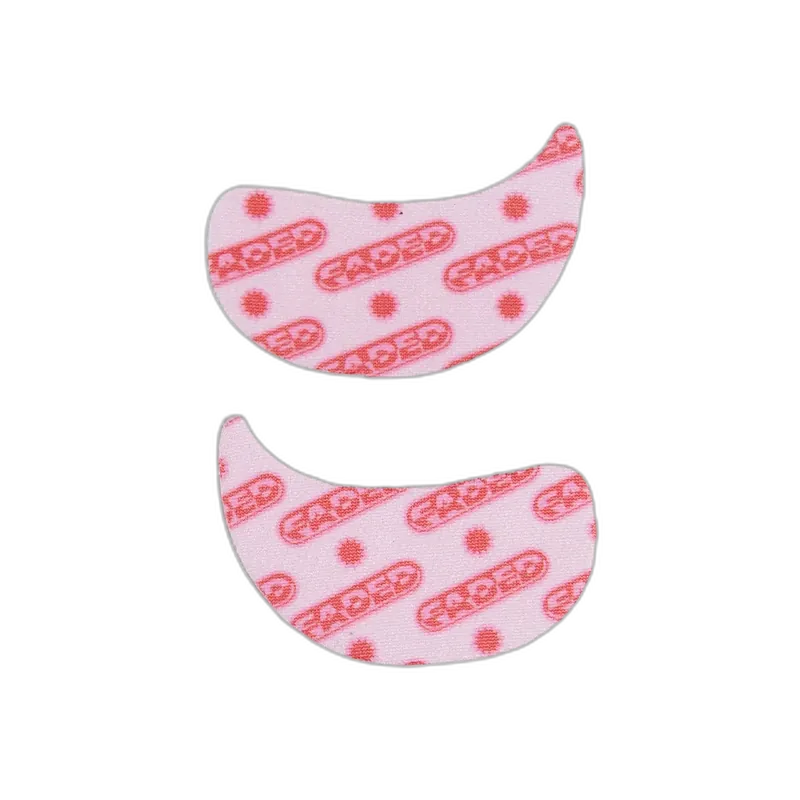
Faded Under Eye Brightening & Clearing Eye Masks
Multi-Pathway Pigment Eraser
 Verified reviewer
Pros & cons.
- +Multi-pathway brightening stack hits four different pigmentation mechanisms
- +Hydrogel format drives in actives via prolonged occlusive contact
- +Niacinamide and licorice root reduce peri-orbital inflammation
- +Cooling sensation is genuinely satisfying on tired mornings
- +Fragrance-free, suitable for most reactive skin
- +Caffeine provides immediate de-puffing benefit
- +Specifically formulated with melanin-rich skin in mind
- +Leftover essence can be patted into the rest of the face
- −$30 for six single-use pairs is a steep per-application cost
- −Patches can slide if you move around during the 15 minutes
- −Minimal benefit on vascular blue-purple dark circles
- −Requires 8-12 weeks of consistent twice-weekly use to see full results
- −Pregnancy safety not established
The full review.
The Topicals Faded Serum became a cult product for one specific reason: it actually faded post-inflammatory hyperpigmentation on dark skin tones. The problem was that everyone who loved it for their cheeks and chin immediately wanted to put it on their under-eye darkness, and that was a bad idea. The original Faded uses a fairly aggressive active blend that’s appropriate for resilient face skin but a recipe for stinging on the most delicate skin around the eye.
So the team did something most indie brands wouldn’t bother with — they rebuilt the brightening strategy from scratch in a different format. Out went the leave-on cream-or-serum approach. In came a hydrogel patch saturated with tranexamic acid, kojic acid, alpha-arbutin, niacinamide, licorice root extract, and caffeine. The format shift matters as much as the ingredient swap. Hydrogel patches deliver actives via prolonged occlusive contact, which means a fifteen-minute application can drive in concentrations of brighteners that a leave-on cream would never get away with on the eye area.
And this is where the formulation gets genuinely interesting. Most brightening patches pick a lane. Caffeine patches shrink blood vessels temporarily. Retinol patches accelerate cell turnover. This one stacks the brightening actives across four different mechanisms simultaneously: tranexamic acid blocks the inflammatory signaling that triggers melanin overproduction, kojic acid inhibits tyrosinase directly, alpha-arbutin slowly releases hydroquinone-like activity from another angle, niacinamide blocks the transfer of finished melanosomes to surface keratinocytes, and caffeine handles the vascular puffiness component. It’s the most multi-pathway approach in the brightening patch category, and it’s the kind of formulation philosophy that only makes sense when you’re treating a complaint that has multiple causes — which under-eye darkness almost always does.
The texture is a cool, jelly-firm hydrogel that conforms to the orbital bone and sits in place for the full fifteen minutes if you don’t move around too much. There’s an immediate temperature-drop sensation that’s a genuine pleasure on a tired morning, and the patches hold a generous reservoir of essence that you can pat into the rest of your face after removal rather than wiping away. The lavender foil pouch is undeniably cute and undeniably small — six pairs total, which sounds stingy until you remember the patches are intended for twice-weekly use, putting one pack at about three weeks of treatment.
The results question is where this product divides reviewers. If your dark circles are pigmentation-based — brown, taupe, grey, the kind that get worse after a breakout or after rubbing — this works. Slowly. Most users report visible tone improvement around the four-to-six-week mark, with the most dramatic change at eight to twelve weeks. If your dark circles are vascular — blue, purple, the kind that come from visible veins under thin skin — these patches will give you mild caffeine-related improvement but won’t fundamentally solve the problem. Vascular dark circles are largely a structural issue and no topical fully fixes them.
The price is the legitimate critique. Thirty dollars for six single-use pairs puts the per-application cost above five dollars, and the formulation is good enough to justify it for the right candidate group. If you’re shopping for a generic puffiness reducer or a hydrating eye treat, this is overkill and overpriced. If you’re specifically trying to fade melanin-based discoloration around your eyes and you’ve tried the cheaper caffeine-and-peptide patches without success, this is the formula to graduate to.
The brand context matters here. Topicals built itself around chronic skin conditions and skin-of-color concerns at a time when most prestige brands still didn’t bother. The brightening stack in this product reflects that — it’s not a generic anti-pigmentation formula, it’s specifically tuned for the kind of post-inflammatory hyperpigmentation that affects darker phototypes more aggressively. That clinical thoughtfulness is what justifies the brand’s existence and what justifies, on the right candidate, the price of these patches.
Ingredient analysis.
Full INCI list
Water, Glycerin, Butylene Glycol, Niacinamide, Caffeine, Tranexamic Acid, Alpha-Arbutin, Kojic Acid, Sodium Hyaluronate, Hydroxyethyl Acrylate/Sodium Acryloyldimethyl Taurate Copolymer, Carrageenan, Hydrolyzed Collagen, Glycyrrhiza Glabra (Licorice) Root Extract, Centella Asiatica Extract, Bisabolol, Allantoin, Panthenol, Tocopherol, 1,2-Hexanediol, Caprylyl Glycol, Phenoxyethanol, Ethylhexylglycerin, Disodium EDTA, Xanthan Gum, Sodium Hydroxide, Citric Acid
Skin match.
The science.
The Science
Tranexamic acid started as an oral antifibrinolytic medication. Dermatologists later used it topically for pigmentation after seeing it reduce melasma in patients. A 2017 clinical study in the Journal of the American Academy of Dermatology showed that 5% topical tranexamic acid reduced melasma severity scores over 12 weeks, with fewer side effects than hydroquinone. Its mechanism is unique: it works upstream of melanin synthesis by interrupting plasmin-induced inflammatory signaling that triggers melanocyte activation, instead of blocking tyrosinase directly.
Kojic acid uses the complementary tyrosinase inhibition pathway. Multiple published trials show it reduces melanin production in cultured melanocytes and human skin, though it works best with other depigmenting agents rather than as a monotherapy. Combining tranexamic acid and kojic acid in this formula is theoretically more effective than using either alone because they target different points in the melanogenesis pathway.
Niacinamide completes the strategy by blocking melanosome transfer from melanocytes to keratinocytes—the final step before pigment reaches the skin surface. Research in the British Journal of Dermatology documented this mechanism at 2-5% concentrations, matching this formula's INCI position. Glabridin, the active component in licorice root extract, has tyrosinase-inhibitory activity in vitro and adds a fourth angle of attack. This formula addresses melanin-based hyperpigmentation through synthesis inhibition, transfer blockade, and inflammatory modulation simultaneously.
References
- Topical tranexamic acid as a promising treatment for melasma — Journal of the American Academy of Dermatology (2017)
Dermatologist Perspective
Dermatologists often recommend tranexamic acid for melasma and post-inflammatory hyperpigmentation, especially for patients who cannot tolerate hydroquinone or fear retinoid irritation near the eyes. Board-certified dermatologists note that combination brightening formulas—those stacking mechanisms like tyrosinase inhibition, melanosome transfer blockade, and anti-inflammatory action—often produce better outcomes than single-active products, particularly in skin of color where pigmentary disorders have multifactorial causes. This product's combination of tranexamic acid, kojic acid, niacinamide, and licorice extract follows current evidence-based layered brightening strategies. Because it lacks retinoids, it is a reasonable choice for periorbital application, where retinoid eye creams often cause stinging or contact dermatitis.
Where it fits in your routine.
Cleanse and dry the under-eye area. Peel one patch from each pair and apply to the orbital area, smoothing it down. Leave for 15 minutes; stay still to prevent sliding. Remove the patches and pat the leftover essence into the under-eye and surrounding face. Apply your normal serum and moisturizer next. Use 2-3 times per week. Always use daily broad-spectrum SPF in the morning. Brightening actives make skin more vulnerable to UV-induced repigmentation, and sun exposure is the main reason brightening regimens fail.
At $30 for six single-use pairs, each application costs over five dollars — premium-patch territory. The active stack costs more to formulate than typical caffeine-and-peptide patches, but the multi-pathway approach justifies the price. Only one size is offered. The value verdict: if you have melanin-based dark circles and cheaper patches failed, this is worth the investment. If you want general puffiness reduction or hydration, you pay for unnecessary actives. As an emerging brand, Topicals lacks the legacy clinical validation of larger labels, but the formulation choices reflect evidence-based thinking.
This works for pigmentation-based dark circles—especially post-inflammatory hyperpigmentation on melanin-rich skin tones—if cheaper caffeine patches failed to work. Use these twice weekly for two to three months alongside daily SPF.
Use this if your dark circles are vascular (blue-purple from visible veins) instead of pigmentary. Skip this if you want a hydrating leave-on eye treatment instead of an episodic treatment, if you are pregnant or breastfeeding, or if you cannot afford a $30 pack that lasts about three weeks.
Product details.
Cooling, jelly-like hydrogel patches saturated with active essence
Fragrance-free with a faint clean cosmetic smell
Lavender-purple resealable foil pouch contains 6 pairs of die-cut hydrogel patches
The patches feel cooling and slightly tightening upon first use. Caffeine provides mild de-puffing immediately, but the brightening effect builds over time. Most users see tone improvement after 4-6 weeks of consistent twice-weekly use.
3 weeks of twice-weekly use per 6-pair pack
12 months
All Year
The backstory.
Released in 2023 as a sister product to Topicals' original Faded Serum, which had become a viral hit for hyperpigmentation. The under-eye version was developed specifically because the serum was too irritating for the periorbital area, so the team rebuilt the active stack into a hydrogel patch format that delivers high concentrations of brighteners without the rubbing and friction that periorbital skin can't tolerate.
About Topicals
Emerging Brand (2–5 years)Topicals launched in 2020. Co-founder Olamide Olowe built the brand to focus on chronic skin conditions with funding from major beauty investors. The formulations use evidence-backed actives, but the brand has a short track record and limited independent clinical validation.
Common myths.
Under-eye patches are expensive, single-use placebos for puffiness.
Most caffeine-and-peptide patches only treat vascular puffiness temporarily. These target melanin-based dark circles using tranexamic acid, kojic acid, and alpha-arbutin — all have published clinical evidence for fading post-inflammatory pigmentation.
FAQ.
Do Topicals Faded Under Eye Masks actually work on dark circles?
These work on pigmentation-based dark circles—brown or grey discoloration from melanin or post-inflammatory hyperpigmentation. The combination of tranexamic acid, kojic acid, alpha-arbutin, and niacinamide targets the melanin pathway from multiple angles. They do not significantly fade purple-blue vascular dark circles, which stem from visible blood vessels instead of pigment.
How are these different from the Topicals Faded serum?
The serum works on the face and body. Its high active load can irritate the periorbital area. These hydrogel patches use tranexamic acid, kojic acid, and alpha-arbutin to brighten. This leave-on format is comfortable for the eye area.
Can I use these with retinol?
Yes — apply the patches on a non-retinol night, or use them in the morning and your retinol product at night. Do not put retinol directly under the patches; the occlusive seal increases penetration and irritation.
Are they safe during pregnancy?
Topical safety for tranexamic acid and kojic acid during pregnancy lacks established data, so dermatologists recommend caution. Ask your OB or dermatologist before using these patches if you are pregnant or breastfeeding.
How long until I see results?
Caffeine de-puffs skin immediately after each use. Tranexamic acid, kojic acid, and alpha-arbutin fade pigmentation gradually. Most users see tone improvements at 4-6 weeks, with full effects at 8-12 weeks of consistent twice-weekly use.
Why only six pairs in a pack?
Each pair is single-use and saturated with a high-concentration brightening essence. Six pairs last about three weeks at twice-weekly use. Users typically see initial tone improvements before reordering at this stage.
Can I reuse a pair of patches?
No — once you remove a hydrogel patch, it is dry and the essence is gone. Reusing them risks bacterial contamination and adds no extra brightening benefit.
What the community says.
"Visible fading on PIH after 6-8 weeks"
"Cooling sensation feels great in the morning"
"Multi-pathway brightening approach"
"Fragrance-free formula"
"Inclusive marketing and shade testing"
"Six pairs feels stingy for the price"
"Slow on vascular dark circles"
"Patches can slide if you move around"
"Some users see no change at all"
People also looked at.