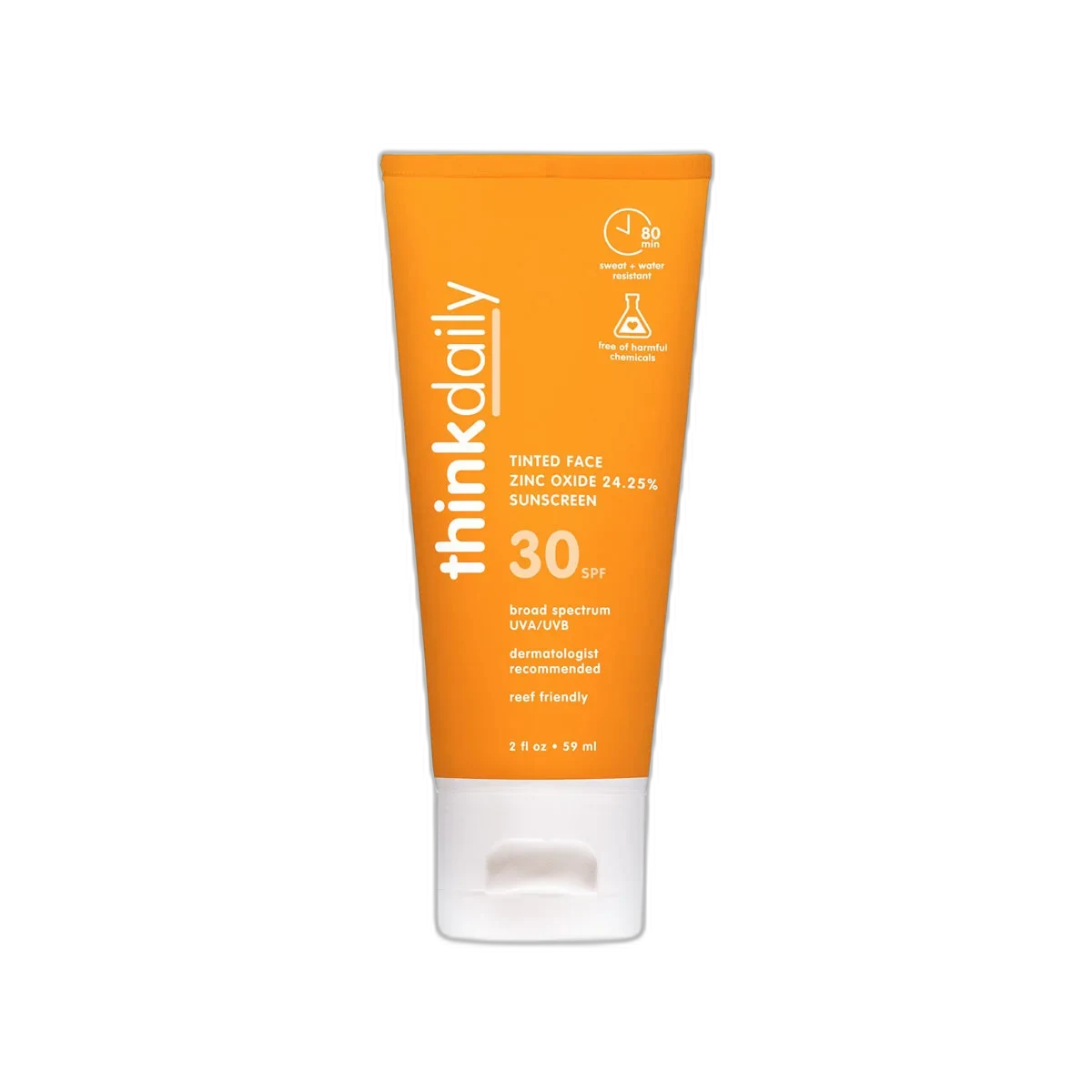
Everyday Face Sunscreen SPF 30
Sensitive Skin Mineral MVP
 Verified reviewer
Pros & cons.
- +20% zinc oxide delivers strong broad-spectrum mineral protection
- +Completely fragrance-free with a clean, low-irritant inactive list
- +Excellent tolerance for rosacea, eczema, and post-procedure skin
- +Pregnancy and breastfeeding safe with no chemical UV filters
- +Doesn't sting eyes, making it safe for the orbital area
- +EWG Verified and Leaping Bunny certified
- +Established brand with a strong reputation in the sensitive-skin segment
- −Visible white cast on medium and deep skin tones
- −Thick texture requires deliberate massage to blend in
- −Not water resistant — won't survive swimming or heavy sweating
- −Olive oil content may not suit acne-prone users
- −Difficult to wear smoothly under foundation
The full review.
Most mineral sunscreens make a quiet compromise. They cap zinc oxide concentrations between fifteen and eighteen percent because higher levels leave a visible white cast and a heavy texture that is hard to wear under makeup. This compromise makes products more appealing and reduces common consumer complaints. Thinkbaby refuses this compromise. The Everyday Face Sunscreen contains a full twenty percent zinc oxide, which is at the high end for a mineral formulation. The brand has not lowered that number even as competitors release more cosmetically elegant alternatives. That decision defines who this sunscreen is for and who it isn’t.
The formulation is straightforward and works for sensitive skin. Aloe vera leaf juice is second on the inactive list to soften the heavy mineral payload. Sunflower seed oil and olive oil provide the lipid base to spread the thick zinc oxide across the skin. Cetyl dimethicone adds slip without changing the mineral-only positioning. Vitamin E and a small amount of vitamin C provide antioxidant support against free radical generation that even physical sunscreens cannot fully prevent. There is no fragrance, no chemical UV filters, no parabens, and no preservatives that commonly trigger contact dermatitis. The inactive list shows it was designed for reactive skin rather than just using a clean-beauty label on a standard mineral formulation.
Using the sunscreen requires deliberate application. You squeeze out a thick, opaque white lotion and must massage it across the face for at least a minute for reasonable coverage. The white cast is honest; no marketing claims it absorbs invisibly. On fair skin, thorough massage and a few minutes of absorption time settle the cast into a soft natural finish most people find acceptable. On medium skin tones, it is noticeable. On deep skin tones, it is pronounced enough that this sunscreen is likely the wrong choice. The brand is honest about this trade-off in their marketing, unlike many mineral sunscreen brands that promise no white cast but deliver something visibly chalky. Application volume matters. Most people under-apply sunscreen—the standard recommendation is a quarter-teaspoon for the face and neck—and under-applying this one reduces protection and concentrates the white cast in patches.
Who is this sunscreen actually for?
People with sensitive skin, rosacea, recently treated post-procedure skin, eczema, fragrance reactivity, or any condition where ingredient simplicity and irritation tolerance matter more than cosmetic elegance. People in the early postpartum period or pregnancy who prefer to avoid chemical sunscreens. Parents who want one sunscreen they trust for themselves and their children. Outdoor workers in cooler climates who can wear a heavier formula comfortably. People who have tried many tinted mineral sunscreens and reacted to various ingredients. For these audiences, this sunscreen is one of the better options, and the white cast is a reasonable price for the broader-spectrum confidence of a high zinc concentration in a clean inactive list.
Who is this sunscreen not for?
People with deeper skin tones who cannot tolerate the visible cast. People who want to wear sunscreen under foundation without the texture and color interacting with makeup. People with combination-to-oily skin who need a lightweight, fast-absorbing finish. People who require SPF 50+ for outdoor activity (this is SPF 30 only). People in hot, humid climates where a thick mineral formula feels uncomfortable. For these audiences, better choices exist in the broader sunscreen market—including some Korean and Japanese mineral formulations that offer similar protection with more cosmetic elegance, even if they sometimes include fragrance or other ingredients sensitive users avoid.
The fourteen-dollar price is fair. You pay for a high-quality mineral active in a thoughtfully-formulated clean inactive list from an established brand with a reputation in the sensitive-skin sunscreen space. It is not the cheapest option—drugstore mineral sunscreens cost less—but the formulation quality justifies the modest premium. The two-ounce tube lasts about one to two months with daily face and neck use. Within its target audience, this is one of the more defensible choices on the shelf. Set realistic expectations about the white cast and application effort, and it will provide dependable, low-drama UV protection.
Ingredient analysis.
Full INCI list
Active: Zinc Oxide 20%. Inactive: Water, Aloe Barbadensis Leaf Juice, Methylpropanediol, Glycerin, Caprylic/Capric Triglyceride, Cetyl Dimethicone, Helianthus Annuus (Sunflower) Seed Oil, Olea Europaea (Olive) Fruit Oil, Cetearyl Olivate, Sorbitan Olivate, Magnesium Sulfate, Glyceryl Stearate, Tocopherol (Vitamin E), Hydrogenated Methyl Abietate, Sodium Chloride, Hydrogenated Castor Oil, Cetyl Alcohol, Lauryl Lysine, Ascorbic Acid (Vitamin C), Raspberry Seed Oil, Cranberry Seed Oil, Sodium Gluconate, Glyceryl Caprylate, Glyceryl Undecylenate, p-Anisic Acid
Skin match.
The science.
The Science
Zinc oxide is one of two physical UV filters approved in the United States and is the gold standard for broad-spectrum mineral sun protection. It reflects and absorbs UV radiation across the UVA and UVB spectrum. This provides immediate protection upon application, unlike chemical filters that require an absorption window. The 20% concentration in this product is at the high end for mineral sunscreens; most over-the-counter mineral SPFs use 10% to 18% zinc oxide. Higher concentrations improve broad-spectrum protection, especially in the UVA range where some chemical filters underperform, but they also cause thicker textures and more visible white cast. Particle size matters. Non-nano zinc oxide particles (greater than 100 nanometers) are larger than nano zinc and produce more visible white cast, but some consumers and regulators prefer them for safety. The plant oils in the inactive list provide marginal photoprotection via antioxidant content. While some claim raspberry seed oil and cranberry seed oil have inherent SPF, independent testing does not support these claims. The vitamin C and vitamin E in the formula have a documented role: dermatologic research shows combined topical antioxidants enhance sunscreen photoprotection by neutralizing free radicals from UV exposure that filters alone do not fully prevent.
Dermatologist Perspective
Dermatologists frequently recommend high-concentration zinc oxide sunscreens for patients with sensitive skin, rosacea, melasma, and recently treated post-procedure skin. The mineral-only formulation is the safest option during pregnancy and breastfeeding, when chemical UV filter absorption raises theoretical concerns. Board-certified dermatologists also note that high-zinc formulations have anti-inflammatory benefits beyond UV protection, which helps inflammatory skin conditions. The dermatologic community acknowledges the trade-off of white cast and texture; dermatologists typically direct patients with deeper skin tones to tinted mineral options or chemical/hybrid sunscreens for better cosmetic outcomes.
Where it fits in your routine.
Apply as the final step of your morning skincare routine, after moisturizer and before any makeup. Use a generous quarter-teaspoon for the face and neck — this is more than most people apply, but it's the volume required for the labeled SPF protection. Massage thoroughly until the white cast settles into a soft natural finish, then allow at least five minutes of absorption time before applying makeup. Reapply every two hours of direct sun exposure, or after sweating heavily.
At $14 for two ounces, this fragrance-free 20% zinc oxide sunscreen from an established, EWG verified brand is fairly priced. It costs more than drugstore mineral sunscreens under $10, but the formulation quality, consistent brand standards, and sensitive-skin performance justify the small premium. No larger size exists to lower the cost-per-ounce, which is a drawback for daily users. Using a quarter-teaspoon per day for the face and neck makes the tube last one to two months.
This high-zinc, fragrance-free mineral sunscreen works for sensitive, rosacea-prone, eczema-prone, or post-procedure skin. It suits pregnancy, breastfeeding, and users who prefer ingredient simplicity over cosmetic elegance.
People with medium-to-deep skin tones who dislike white cast should use tinted mineral or hybrid options. Those needing water resistance for swimming or sweating should use the Thinkbaby SPF 50 body version. The texture may feel uncomfortable for combination-to-oily skin in humid climates.
Product details.
Thick white lotion that needs massage to spread fully across the skin.
Essentially fragrance-free with a faint natural scent from the plant oils.
Standard plastic squeeze tube with a flip cap.
The application is thick and white, requiring one to two minutes of massage to blend. Medium and deep skin tones show a noticeable white cast; you can reduce it, but not eliminate it. It has no stinging, no fragrance, and no eye irritation.
About 1-2 months with daily face and neck application.
12 months
All Year
The backstory.
Thinkbaby was founded in 2008 by Kevin Brodwick, a kinesiologist concerned about chemical exposure in everyday baby products. Sunscreen became the brand's flagship category after the founder couldn't find a mineral-only formulation he trusted for his own children. The Everyday Face version launched a decade later as an adult-focused complement to the original baby and kid sunscreens, with the same zinc oxide concentration but a slightly refined inactive ingredient list.
About Thinkbaby
Established Brand (5–20 years)Thinkbaby launched in 2008 to provide safer everyday products for children, led by its sunscreen category. Thinkbaby was the first sunscreen to pass Whole Foods Premium Body Care criteria. The brand has credibility in the mineral sunscreen space, but independent clinical efficacy testing is limited compared to derm-focused brands.
Common myths.
Mineral sunscreens always leave a white cast.
Zinc oxide concentration, particle size, and formulation determine white cast severity. This product uses a high concentration and leaves a slight cast to provide stronger UV protection. Lower-concentration mineral sunscreens or those using nano zinc reduce the cast but trade off protection.
SPF 30 isn't enough for daily use.
SPF 30 blocks about 97% of UVB rays, while SPF 50 blocks 98%. SPF 30 works for daily incidental sun exposure if you use the right volume and reapply. Higher SPFs matter more during extended outdoor activity.
FAQ.
Is it good for acne-prone skin?
Use caution. The 20% zinc oxide is anti-inflammatory and helps acne, but the olive oil is high in the formula and some acne-prone users find it causes issues. Patch test on the jawline before daily face use.
How does this compare to the regular Thinkbaby SPF 50?
The Everyday Face version uses a refined inactive ingredient list for adult facial skin and has a thinner texture than the original. The SPF rating is lower (30 vs 50), but the 20% zinc oxide concentration is the same. Use this for daily face use; use the SPF 50 for body and extended sun exposure.
Can it be used under makeup?
It can, but expect to work for it. The thick texture and slight white cast interact unpredictably with foundations and primers. Wait at least five minutes for absorption before applying makeup, and use a tinted moisturizer or color-correcting primer over the top.
Is it pregnancy-safe?
Yes — mineral sunscreens using zinc oxide as the only active are the gold standard during pregnancy and breastfeeding. The fragrance-free, low-irritant inactive list makes this a good pregnancy choice.
Is it water resistant?
The Everyday Face version lacks a water resistant label. For swimming or heavy sweating, use the Thinkbaby SPF 50 body sunscreen, which has an 80 minutes water resistance rating.
Does it sting eyes?
No. Mineral sunscreens using only zinc oxide as the active typically do not migrate into the eyes like some chemical filters. Many users choose this brand because it is tolerable around the eye area for sensitive skin.
What the community says.
"gentle on sensitive skin"
"no fragrance"
"high zinc oxide concentration"
"good for kids and adults"
"doesn't sting eyes"
"leaves a noticeable white cast"
"thick texture takes effort to spread"
"not ideal under makeup"
"olive oil may cause breakouts in some users"
People also looked at.