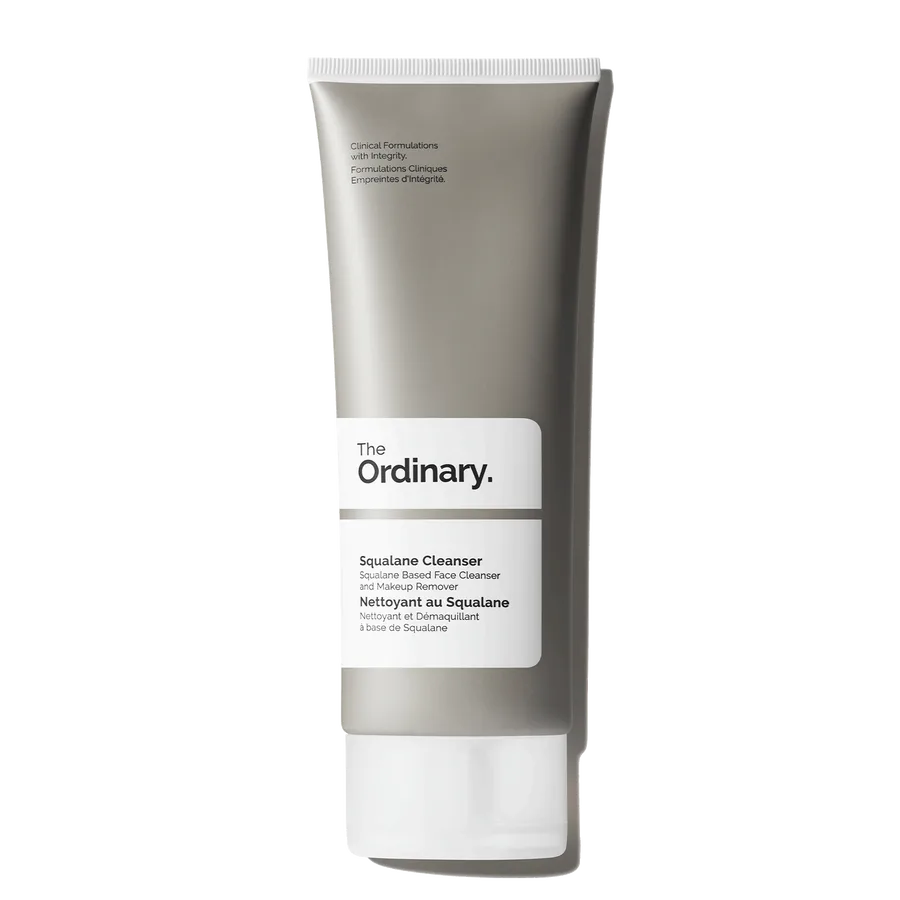
Squalane Cleanser
Gentle Cleansing Cult Favorite
 Verified reviewer
Pros & cons.
- +Squalane is bioidentical to human sebum, dissolving impurities without disrupting the lipid barrier
- +Effective at removing waterproof makeup, sunscreen, and heavy foundation in one step
- +Accepted by the National Eczema Association for sensitive and eczema-prone skin
- +Fragrance-free and surfactant-free — avoids common irritants in traditional cleansers
- +Elegant balm-to-oil-to-milk transformation makes cleansing genuinely pleasant
- +Available in two sizes (50ml travel, 150ml standard) for flexibility
- +Skin feels hydrated and comfortable post-cleanse with no tightness
- −150ml tube lasts only 6-8 weeks with daily use — product is consumed quickly
- −Balm texture is inconsistent and sometimes fails to melt into oil properly
- −May leave a hydrating residue that oily skin types perceive as incomplete cleansing
- −Not effective as a standalone cleanser for heavy oiliness — best paired with a second cleanser
- −50ml size offers poor value and runs out in under a month
The full review.
The Ordinary’s first cleanser arrived with a quiet challenge baked into its existence. Here was a brand that had built its entire identity on stripped-down formulas — single actives in clinical packaging, no frills, no luxury textures, no sensory pleasure beyond the satisfaction of knowing exactly what you were putting on your face. A cleansing balm, by its nature, asks for something different. It needs to feel good. It needs to melt. It needs that moment where makeup dissolves beneath your fingertips and you think, briefly, that skincare might actually be enjoyable.
The Squalane Cleanser manages this trick with surprising grace. The formula starts as a thick, white, almost putty-like balm that resists the first touch. Then you press it between your palms, and body heat does its work — within fifteen seconds, the balm softens into a clear, silky oil that glides across skin. This transformation is powered by a clever system of sucrose ester emulsifiers rather than traditional surfactants, which is worth noting because it means the product can emulsify and rinse away without relying on the detergent-like ingredients that make so many cleansers feel stripping.
The squalane itself is the star, and its casting makes biological sense. Squalane is a stabilized version of squalene, a lipid that human sebaceous glands naturally produce. When you massage it into your skin, it does not register as a foreign substance — it integrates with the skin’s existing lipid layer while simultaneously dissolving the oil-based impurities sitting on top: sunscreen, foundation, mascara, the accumulated sebum and environmental grime of a full day. This is the ‘like dissolves like’ principle at work, and it is more effective at removing oil-based products than most surfactant cleansers.
The rinse-off is where the sucrose esters earn their keep. Add a splash of water and the clear oil transforms again, this time into a light, milky emulsion that carries the dissolved impurities away. In theory, this three-phase transformation — balm to oil to milk — should leave skin perfectly clean and perfectly hydrated. In practice, it mostly delivers. Most users find their skin feels softer and more comfortable post-cleanse than with any foaming alternative. The tight, squeaky-clean feeling that many people associate with a proper cleanse is entirely absent, which is actually the point — that tightness is your barrier protesting.
The complaints that do surface tend to center on consistency. Not every squeeze from the tube melts with equal willingness. Sometimes the balm stays thick and sticky, refusing its oil phase like a stubborn guest at a party. The fix is simple — warm it longer between your palms, apply to bone-dry skin, and massage with more pressure — but it is a fix you should not have to apply to a product designed around a specific textural experience.
As a first cleanser in a double-cleansing routine, the Squalane Cleanser is excellent. It strips away makeup and SPF with genuine efficiency, leaving a clean canvas for a second water-based cleanser or for toners and serums if you prefer a single-cleanse approach. For dry and sensitive skin types, using this alone — no second cleanser — is often enough, and the skin benefits from not being washed twice.
The formula’s gentleness is not just marketing. The National Eczema Association has accepted this product, which requires meeting specific criteria around ingredient safety and irritation potential. The ingredient list is clean in the way that actually matters: no fragrance, no sulfates, no harsh surfactants, no drying alcohols. The preservative system is minimal — ethylhexylglycerin and chlorphenesin at concentrations low enough to preserve without irritating.
The Ordinary has been making this cleanser since 2019, which gives it nearly seven years of market feedback. The brand’s established reputation for transparency means you know exactly what you are getting: a squalane-based cleansing vehicle with sugar emulsifiers and glycerin for hydration. There are no proprietary complexes, no trademarked ingredient blends, no mystery.
Value is where opinions split. At around $20 for 150ml, this is objectively affordable for a cleansing balm — comparable products from prestige brands run $35-65. But cleansers get used quickly. You need a generous amount for each application, and daily use burns through a tube in six to eight weeks. The 50ml travel size is particularly punishing in this regard, lasting barely a month. If you are accustomed to drugstore gel cleansers that last three months for $8, the per-use math may give you pause.
For oily skin types, this cleanser works best as a first step followed by a gel or foam cleanser that can address residual oiliness. Used alone, it may leave oily skin feeling under-cleansed — not because the product hasn’t worked, but because the hydrating finish reads as residue to skin accustomed to that stripped-clean feeling.
The Squalane Cleanser is ultimately a well-designed product that accomplishes something genuinely difficult: it makes a cleanser from The Ordinary feel like a small luxury. Not the overwrought luxury of a $60 cleansing balm that comes in a glass jar and smells like a spa — something quieter and more practical. The luxury of washing your face and having it feel better afterward, not worse. For a brand that made its name on function over form, that is a meaningful achievement.
Ingredient analysis.
Full INCI list · pH 5.5
Squalane, Aqua (Water), Coco-Caprylate/Caprate, Glycerin, Sucrose Stearate, Ethyl Macadamiate, Caprylic/Capric Triglyceride, Sucrose Laurate, Hydrogenated Starch Hydrolysate, Sucrose Dilaurate, Sucrose Trilaurate, Polyacrylate Crosspolymer-6, Isoceteth-20, Sodium Polyacrylate, Tocopherol, Hydroxymethoxyphenyl Decanone, Trisodium Ethylenediamine Disuccinate, Malic Acid, Ethylhexylglycerin, Chlorphenesin
Skin match.
The science.
The Science
Squalane's efficacy as a cleansing agent derives from its molecular structure — as a saturated hydrocarbon, it dissolves oil-soluble substances (makeup, sunscreen, sebum) through hydrophobic interactions without the need for surfactants that disrupt the skin barrier. A 2023 clinical trial evaluating nightly squalane use on participants with oily, sensitive skin demonstrated a 41% reduction in transepidermal water loss (TEWL) and a 27% decrease in sebum excretion rate over eight weeks, suggesting that squalane not only avoids barrier damage but actively supports barrier function.
The sucrose ester emulsifier system (Sucrose Stearate, Sucrose Laurate, Sucrose Dilaurate, Sucrose Trilaurate) is a deliberate alternative to conventional surfactants. Unlike sodium lauryl sulfate or cocamidopropyl betaine, sucrose esters have extremely low irritation potential and provide emulsification through a non-ionic mechanism. Published research in the International Journal of Pharmaceutics has confirmed that sucrose esters can serve as effective emulsifiers for cosmetic formulations while maintaining excellent skin compatibility profiles.
Squalane's biocompatibility is well-documented. It is the hydrogenated (stabilized) form of squalene, which constitutes approximately 12% of human sebum. This structural identity means squalane integrates with the stratum corneum's lipid matrix rather than disrupting it. Research published in the Journal of Cosmetic Dermatology has demonstrated that topical squalane application significantly improves skin hydration metrics and strengthens barrier integrity, even in formulations designed to be rinsed off.
References
- Squalane as a Natural Antioxidant and Moisturizing Agent: A Review — International Journal of Molecular Sciences (2018)
Dermatologist Perspective
Dermatologists frequently recommend oil-based or balm cleansers for patients with dry, sensitive, or eczema-prone skin, and the Squalane Cleanser's acceptance by the National Eczema Association reinforces its credentials in this space. Board-certified dermatologists note that squalane's bioidentical nature makes it one of the least likely cleansing agents to provoke irritation or sensitization. The surfactant-free formulation is particularly valued for patients undergoing retinoid therapy or post-procedure recovery, when the skin barrier is already compromised and cannot tolerate traditional foaming cleansers. Dermatologists typically recommend using it as the first step in a double-cleansing routine for thorough makeup and sunscreen removal.
Guidance
Where it fits in your routine.
Rub a nickel-sized amount between dry palms for 10-15 seconds until the balm melts into a clear oil. Massage onto a dry face in circular motions for 30-60 seconds, targeting makeup or sunscreen. Add a little lukewarm water and massage; the oil turns into a light milky emulsion. Rinse well with lukewarm water. Use a water-based cleanser if double-cleansing, or move to toners and serums.
At about $20 for 150ml, the Squalane Cleanser costs less than prestige balm cleansers, which usually run $35-65 for similar volumes. But consumption is high—one tube lasts 6-8 weeks with daily use, costing roughly $130-170 annually for one cleansing step. The 50ml travel size costs around $10 and has poor per-unit value. For a brand with a seven-year track record, the formulation quality justifies the price, but budget-conscious consumers must account for how often they replace it.
This cleanser works for dry, sensitive, or eczema-prone skin needing a gentle first cleanser that removes makeup without stripping the barrier. It suits people who find foaming cleansers drying or irritating, and anyone wanting a cleansing balm feel without the high price tag.
Users with very oily skin who prefer the clean, matte feel of a gel or foam cleanser may find this too emollient alone. Budget-conscious users needing a cleanser to last more than two months may find the consumption rate frustrating.
Product details.
This thick, white, opaque balm turns into a clear, slippery oil 10-30 seconds after massaging into skin. It emulsifies to a light milky consistency when water is added for rinsing.
Fragrance-free. The squalane base has a faint, neutral oily scent. Most users notice no smell.
Gray squeeze tube with a flip-top cap. It is functional and travel-friendly, but the opaque tube hides how much product remains. It comes in 50ml travel and 150ml standard sizes.
The first use feels different — the thick balm melts into a silky oil during facial massage and visibly dissolves makeup. Adding water turns it into a light milk that rinses clean. Skin feels softer and more comfortable than after a foaming cleanser. There is no stinging, no tightness, and no adjustment period.
6-8 weeks with daily PM use (150ml size)
12 months
All Year
The backstory.
When The Ordinary launched the Squalane Cleanser in 2019, it represented the brand's first move beyond treatment serums into everyday essentials. The product filled a gap for an affordable, gentle first cleanser that could compete with premium cleansing balms costing three to five times more.
About The Ordinary
Established Brand (5–20 years)The Ordinary launched in 2016 under DECIEM. It became an influential skincare brand by offering clinical-grade ingredients at transparent, accessible prices. The Squalane Cleanser, launched in 2019, moved the brand from treatment serums into daily-use essentials.
Common myths.
Oil-based cleansers clog pores and cause breakouts
Squalane is non-comedogenic and bioidentical to the squalene in human sebum. The emulsifier system makes the oil — and the dissolved impurities it lifts — rinse away with water. Oil-based cleansing is gentler on the barrier than surfactant-based alternatives.
You need a foaming cleanser to truly clean your skin
Surfactants cause the foaming sensation, not cleansing efficacy. This balm cleanser uses oil-based solubilization to dissolve makeup and sunscreen. This method removes oil-based products, especially waterproof formulations, better than surfactant foams.
FAQ.
Does The Ordinary Squalane Cleanser remove waterproof makeup?
Yes — the squalane-based formula dissolves oil-based and waterproof products like mascara, liquid lipstick, and long-wear foundation. Massage the balm onto dry skin for at least 30 seconds to break down stubborn formulations, then add water to emulsify and rinse.
Do I need a second cleanser after The Ordinary Squalane Cleanser?
Your skin type and what you remove matters. Use a gentle water-based cleanser after for double cleansing on heavy makeup or sunscreen days. For light makeup or bare-face mornings, the Squalane Cleanser alone works for most people.
Can oily skin use The Ordinary Squalane Cleanser?
Oily skin can use it as a first cleanse in a double-cleansing routine, but it feels too emollient as a standalone cleanser. The squalane leaves a hydrating finish that oily skin types may perceive as residue. A gel or foam cleanser follows to balance the cleansing process for oilier complexions.
Why does my Squalane Cleanser feel thick and not melt properly?
Warmth and friction trigger the balm-to-oil transformation. Rub a small amount between your palms for 10-15 seconds before applying to your face; body heat melts it into its oil phase. Applying to completely dry skin (no water) also makes the transformation smoother.
Is The Ordinary Squalane Cleanser safe for eczema-prone skin?
Yes — the National Eczema Association accepts this cleanser, so it meets their standards for gentle, barrier-supportive skincare. The fragrance-free, surfactant-free formula avoids common irritants that trigger eczema flares, and the squalane helps maintain the skin's lipid barrier during cleansing.
Community
What the community says.
"Removes all makeup including waterproof mascara in one wash"
"Leaves skin soft, hydrated, and never tight or stripped"
"Luxurious balm-to-oil texture feels like a much more expensive product"
"Gentle enough for sensitive and eczema-prone skin"
"No fragrance and minimal ingredient list for a cleanser"
"Product is used up quickly relative to price — tube doesn't last long"
"Balm-to-oil transformation is inconsistent and sometimes stays thick or sticky"
"Some users feel it doesn't rinse cleanly and leaves residue"
"Not effective as a standalone cleanser for very oily skin"
"Travel size (50ml) runs out in under a month"
People also looked at.