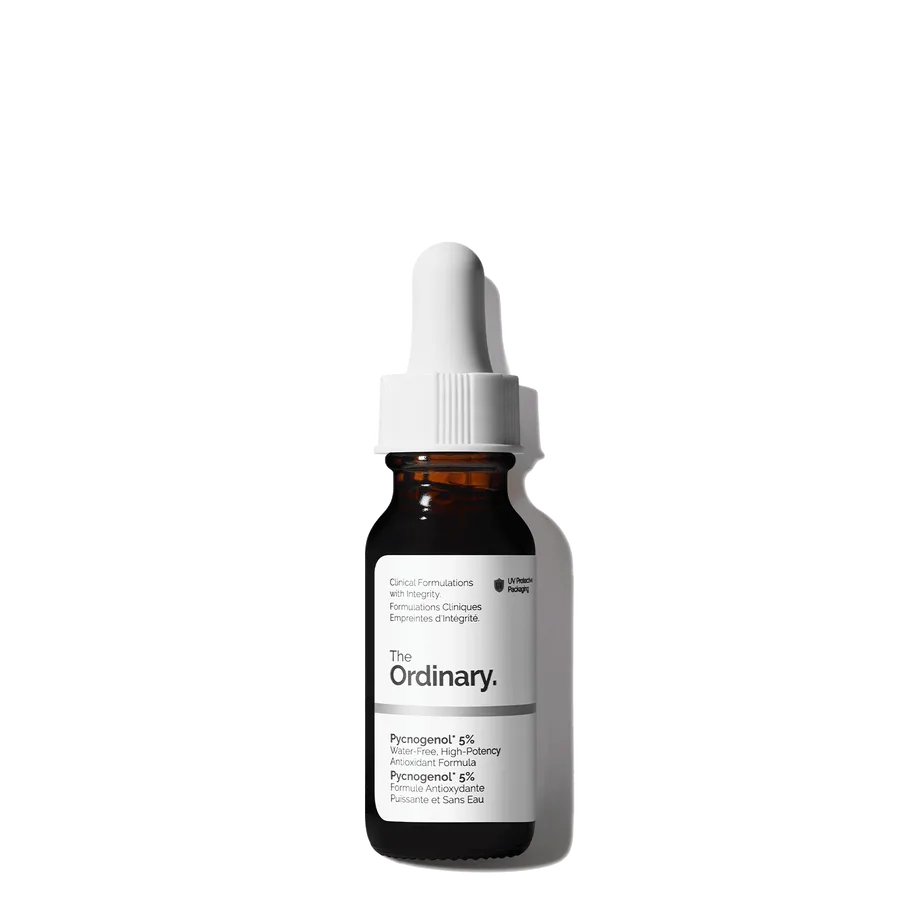
Pycnogenol 5%
Antioxidant Deep Cut
 Verified reviewer
Pros & cons.
- +Patented Pycnogenol extract backed by over 450 published studies on its biological activity
- +Two-ingredient formula ensures the active is delivered without dilution or interference
- +Binds directly to collagen and elastin, providing structural protein protection unique among antioxidants
- +Pairs synergistically with vitamin C — helps regenerate oxidized ascorbic acid
- +Fungal acne safe, pregnancy safe, and suitable for all skin types
- +Only 2-3 drops needed per use — 15 mL bottle lasts 3-4 months
- −Deep red color can stain light fabrics and pillowcases if not fully absorbed
- −Most Pycnogenol skin research involves oral supplementation, not topical application
- −Smaller 15 mL bottle at 1.50 has higher per-mL cost than most Ordinary products
- −Six-month PAO is shorter than standard serums
- −Benefits are subtle and cumulative — no immediate visible wow factor
The full review.
There are ingredients that become famous because of marketing, and there are ingredients that remain obscure despite remarkable research. Pycnogenol belongs firmly in the second category. A patented extract from the bark of French maritime pine trees grown in a specific region of southwest France, Pycnogenol has been the subject of over 450 published studies spanning cardiovascular health, cognitive function, and — the part that concerns us here — skin biology. And yet, if you mention it in a skincare conversation, you are likely to get a blank stare. The Ordinary’s Pycnogenol 5% is, for most people, their first encounter with this ingredient.
The extract is standardized for procyanidins — oligomeric proanthocyanidins (OPCs) — a class of polyphenolic compounds that are among the most potent natural antioxidants identified in biochemical research. In vitro testing shows Pycnogenol’s antioxidant capacity exceeds both vitamin C and vitamin E, though in vitro potency does not translate linearly to in vivo efficacy. What makes Pycnogenol more interesting than its raw antioxidant power is its specificity: it physically binds to collagen and elastin proteins, protecting them from the enzymatic degradation (particularly by matrix metalloproteinases) that UV exposure and chronological aging accelerate.
The formula, like The Ordinary’s EUK 134, is almost aggressively minimal. Two ingredients: propanediol and Pinus pinaster bark extract at 5%. No water, no emulsifiers, no preservatives needed beyond the inherent stability of the anhydrous format. The deep red-amber color is not cosmetic — it is the visual signature of high procyanidin concentration, the same compounds responsible for the extract’s biological activity.
On the skin, it applies as a thin, slightly oily liquid that absorbs within a minute or two. There is a faint woody, nutty scent — the natural aroma of pine bark extract — that dissipates quickly and is neither pleasant nor unpleasant, merely present. Once absorbed, the skin has a subtle glow and feels soft without any greasy residue. The sensory experience is modest, which is appropriate for a product whose benefits are molecular rather than cosmetic.
The research behind Pycnogenol’s skin benefits is more robust than most botanical actives can claim, but it comes with an important caveat. The majority of published skin studies examine oral Pycnogenol supplementation rather than topical application. Marini et al. (Skin Pharmacology and Physiology, 2012) demonstrated that 12 weeks of oral Pycnogenol in postmenopausal women significantly improved skin hydration and elasticity, with hyaluronic acid synthase-1 expression increasing by 44% and collagen type I gene expression also rising. A comprehensive review by Grether-Beck et al. (Skin Pharmacology and Physiology, 2016) confirmed Pycnogenol’s benefits for hyperpigmentation reduction and skin barrier function.
The topical evidence is thinner but encouraging. Sime and Reeve (Photochemistry and Photobiology, 2004) showed that topical Pycnogenol at concentrations as low as 0.05% provided dose-dependent reduction in UV-induced inflammation in mice and was effective even when applied after UV exposure. The 5% concentration in The Ordinary’s formula is twenty-five to one hundred times higher than the effective topical concentrations in that study — suggesting meaningful activity, though murine skin and human skin differ in important ways.
The practical question is whether the benefits you get from topical Pycnogenol at 5% justify a spot in your routine. If your antioxidant strategy currently consists of vitamin C alone, adding Pycnogenol provides a complementary mechanism — procyanidin-based protection that works differently from ascorbic acid’s electron donation. Pycnogenol has also been shown to help regenerate oxidized vitamin C, which means the two ingredients can extend each other’s functional lifespan on the skin. If you already have a comprehensive antioxidant approach with vitamin C, vitamin E, and ferulic acid, Pycnogenol adds incremental value rather than transformative value.
The staining concern is real but manageable. The deep red color can transfer to light-colored fabrics if you touch them before the product absorbs. Washing hands immediately after application and waiting a minute or two before touching pillowcases or clothing prevents the issue entirely. Using it in the morning rather than at night eliminates the pillowcase concern altogether.
At 1.50 for 15 mL, the per-milliliter cost is higher than most Ordinary products — but the low dosage (2-3 drops) means the bottle lasts three to four months with daily use. The annual cost works out to roughly 5-46, which is less than a single bottle of most competing antioxidant serums. The six-month PAO gives you comfortable margin if you use it once daily.
The Ordinary Pycnogenol 5% is the kind of product that rewards the research-inclined consumer. It will not produce dramatic visible changes that you can photograph after a week. But it delivers a patented, well-studied botanical antioxidant at a genuine concentration, in a formula that cannot be simpler, at a price that cannot be lower. For anyone building an antioxidant routine and looking beyond the vitamin C and E standard playbook, this is one of the most interesting options available.
Ingredient analysis.
Full INCI list
Propanediol, Pinus Pinaster Bark Extract
Skin match.
The science.
The Science
Pycnogenol's antioxidant activity comes from its procyanidin content — oligomeric proanthocyanidins (OPCs) that scavenge free radicals via hydrogen atom donation and electron transfer. Pycnogenol differs from simpler antioxidants because it binds to structural proteins. The procyanidins bind to collagen and elastin fibers, protecting them in situ against matrix metalloproteinases (MMPs) — the enzymes UV radiation and chronological aging upregulate to degrade the dermal matrix.
Marini et al. published a study in Skin Pharmacology and Physiology (2012) on 20 postmenopausal women taking oral Pycnogenol for 12 weeks. Skin hydration and elasticity improved, and molecular analysis showed a 44% increase in hyaluronic acid synthase-1 (HAS-1) expression and increased collagen type I gene expression. A review by Grether-Beck et al. in the same journal (2016) confirmed these findings and showed Pycnogenol reduces hyperpigmentation and improves extracellular matrix homeostasis.
For topical application — the delivery route relevant to this product — Sime and Reeve (Photochemistry and Photobiology, 2004) showed that Pycnogenol applied to murine skin at 0.05-0.2% reduced UV-induced sunburn inflammation and immunosuppression in a dose-dependent manner. Topical Pycnogenol worked even when applied after UV exposure, meaning it addresses ongoing oxidative damage instead of only preventing initial free radical generation. At 5%, The Ordinary's concentration is 25-100 times higher than the effective range in that study.
The interaction between Pycnogenol and vitamin C is pharmacologically noteworthy. Procyanidins regenerate the ascorbate radical back to active ascorbic acid, recycling vitamin C after it neutralizes a free radical and oxidizes. This synergy extends the functional lifespan of both antioxidants when used together, providing stronger net antioxidant coverage than either ingredient alone.
References
- Pycnogenol effects on skin elasticity and hydration coincide with increased gene expressions of collagen type I and hyaluronic acid synthase in women — Skin Pharmacology and Physiology (2012)
- French Maritime Pine Bark Extract (Pycnogenol) Effects on Human Skin: Clinical and Molecular Evidence — Skin Pharmacology and Physiology (2016)
- Protection from inflammation, immunosuppression and carcinogenesis induced by UV radiation in mice by topical Pycnogenol — Photochemistry and Photobiology (2004)
Dermatologist Perspective
Dermatologists recognize Pycnogenol as a well-researched botanical antioxidant, though they note the gap between extensive oral supplementation literature and more limited topical application data. Board-certified dermatologists view topical Pycnogenol as a reasonable addition to an antioxidant regimen, especially for patients diversifying beyond the standard vitamin C, E, and ferulic acid combination. Its collagen-binding property is pharmacologically unique among topical antioxidants and provides a mechanism of action that complements other antioxidants. Dermatologists generally recommend using Pycnogenol alongside — not instead of — vitamin C and broad-spectrum sunscreen for comprehensive photoprotective coverage.
Where it fits in your routine.
Apply 2-3 drops to clean skin after water-based serums and before oils and moisturizers, morning and/or evening. Mix it into other serums or moisturizers to boost antioxidant capacity. It works well layered after a vitamin C serum for synergistic antioxidant coverage. Wash hands immediately after application to prevent staining. Wait 1-2 minutes for full absorption before touching fabrics. Do not use in the same routine as copper peptides.
At 1.50 for 15 mL, the per-milliliter price (/bin/bash.77/mL) exceeds most Ordinary products, but a low per-application dosage (2-3 drops) makes the bottle last 3-4 months. Daily antioxidant supplementation costs 5-46 annually, which is less than comparable botanical antioxidant serums. Using trademarked Pycnogenol instead of generic pine bark extract adds ingredient authenticity. The value is highest as a complement to an existing antioxidant routine rather than a standalone treatment.
Skincare enthusiasts can use this to diversify antioxidant strategies beyond vitamin C and E. It helps protect collagen and combat environmental aging using research-backed botanical ingredients. Pycnogenol also works well with vitamin C, as it recycles vitamin C to extend its functional lifespan.
Pycnogenol offers subtle, preventative benefits rather than visible, dramatic results. It is not the best choice for a minimalist routine needing a comprehensively proven antioxidant, as vitamin C has a deeper evidence base for topical skin use. If staining is a dealbreaker, the deep red color causes constant anxiety.
Product details.
This thin, slightly oily liquid has a deep red-amber color. It feels mildly oily on application but absorbs within 1-2 minutes. It leaves a soft, non-greasy finish and a subtle glow. The high procyanidin content of the pine bark extract causes the deep color.
The pine bark extract has a faint, natural woody, nutty scent. There is no added fragrance. The scent dissipates quickly after application.
Small 15 mL amber glass dropper bottle with The Ordinary's standard minimalist white label and black text. The dark glass protects the antioxidant-rich extract from light degradation.
The deep red color may surprise you on first use. Apply carefully to avoid staining light-colored towels or clothing. The serum feels silky, absorbs quickly, and leaves a subtle glow. It causes no tingling, stinging, or adjustment period. Results are cumulative and subtle; do not expect dramatic changes in the first few days.
3-4 months with once or twice daily use of 2-3 drops
6 months
All Year
The backstory.
DECIEM introduced Pycnogenol 5% to The Ordinary's antioxidant lineup in 2018, offering consumers direct access to a premium patented ingredient that had been studied extensively but was available in very few consumer products at therapeutic concentrations. The ingredient itself has been developed and trademarked by Horphag Research, a Swiss company, and has been used in supplements and pharmaceuticals for decades. The Ordinary's topical formulation represents one of the most accessible ways to apply this well-researched extract directly to the skin.
About The Ordinary
Established Brand (5–20 years)The Ordinary launched under DECIEM in 2016. It disrupted skincare by offering clinical-grade actives at unprecedented price points. Now owned by Estée Lauder Companies, the brand has nearly a decade of consumer trust from ingredient transparency and accessible pricing.
Common myths.
Pycnogenol is pine bark extract — any pine bark product works the same way.
Pycnogenol is a standardized extract from Pinus pinaster grown in a specific region of France. Manufacturers use strict quality control to standardize its procyanidin content. Generic pine bark extracts use different species, extraction methods, and active compound concentrations. The research behind Pycnogenol applies only to this standardized extract.
The red color means it will stain your skin
The extract's deep red color absorbs into the skin without staining it. It can transfer to light-colored fabrics, towels, and pillowcases before full absorption. Wash hands after application and wait 1-2 minutes before touching fabric to prevent staining.
FAQ.
What does Pycnogenol do for skin?
Pycnogenol is a potent antioxidant from French maritime pine bark. It binds to collagen and elastin proteins to stop enzymatic degradation. Research shows it stimulates collagen type I gene expression and increases hyaluronic acid synthesis by up to 44%. At 5%, this formula provides antioxidant defense against UV and environmental damage and supports the structural proteins that keep skin firm and hydrated.
Can I use Pycnogenol with vitamin C?
Yes — Pycnogenol and vitamin C work together. Pycnogenol regenerates oxidized vitamin C and extends its antioxidant activity. Apply your vitamin C serum first, let it absorb, then layer Pycnogenol 5% on top. This combination provides antioxidant coverage through complementary mechanisms.
Will The Ordinary Pycnogenol 5% stain my skin?
No — the deep red color absorbs into the skin without staining. The extract transfers to light-colored fabrics, towels, and pillowcases before it fully absorbs. Wash your hands after application and wait 1-2 minutes before touching fabric. Use it at night over a pillowcase you do not mind getting colored for the safest approach.
Why is the Pycnogenol bottle smaller than other Ordinary products?
The 15 mL size accounts for the patented Pycnogenol cost and the low dosage per application. Using only 2-3 drops per use makes the bottle last 3-4 months with daily use — matching or exceeding most 30 mL serums that require 4-5 drops per application.
Is The Ordinary Pycnogenol 5% better than their EUK 134?
They use different mechanisms and do not compare directly. EUK 134 mimics antioxidant enzymes (SOD and catalase) and self-regenerates after neutralizing free radicals. Pycnogenol provides procyanidin-based antioxidant activity and binds to structural proteins. Both are effective antioxidants — EUK 134 excels at enzymatic radical neutralization, while Pycnogenol adds collagen-protective and HA-boosting benefits. You can use them together.
Is Pycnogenol safe during pregnancy?
Pycnogenol is generally safe for topical use during pregnancy. It lacks retinoids, high-concentration acids, and ingredients contraindicated during pregnancy. Because specific research on topical Pycnogenol use during pregnancy is limited, consult your healthcare provider if you have concerns.
What the community says.
"Delivers a noticeable healthy glow and improved skin radiance"
"Pairs beautifully with vitamin C serums for enhanced antioxidant protection"
"Ultra-minimal two-ingredient formula with zero irritation potential"
"A little goes a long way — only 2-3 drops needed per application"
"Skin feels bouncy, hydrated, and firmer with consistent use"
"Deep red color can stain light fabrics and pillowcases"
"Only 15 mL bottle — smaller than most Ordinary products"
"Effects are subtle and preventative rather than immediately dramatic"
"Slight woody, nutty scent from the pine bark extract"
"Six-month PAO is shorter than most serums"
Featured in.
People also looked at.