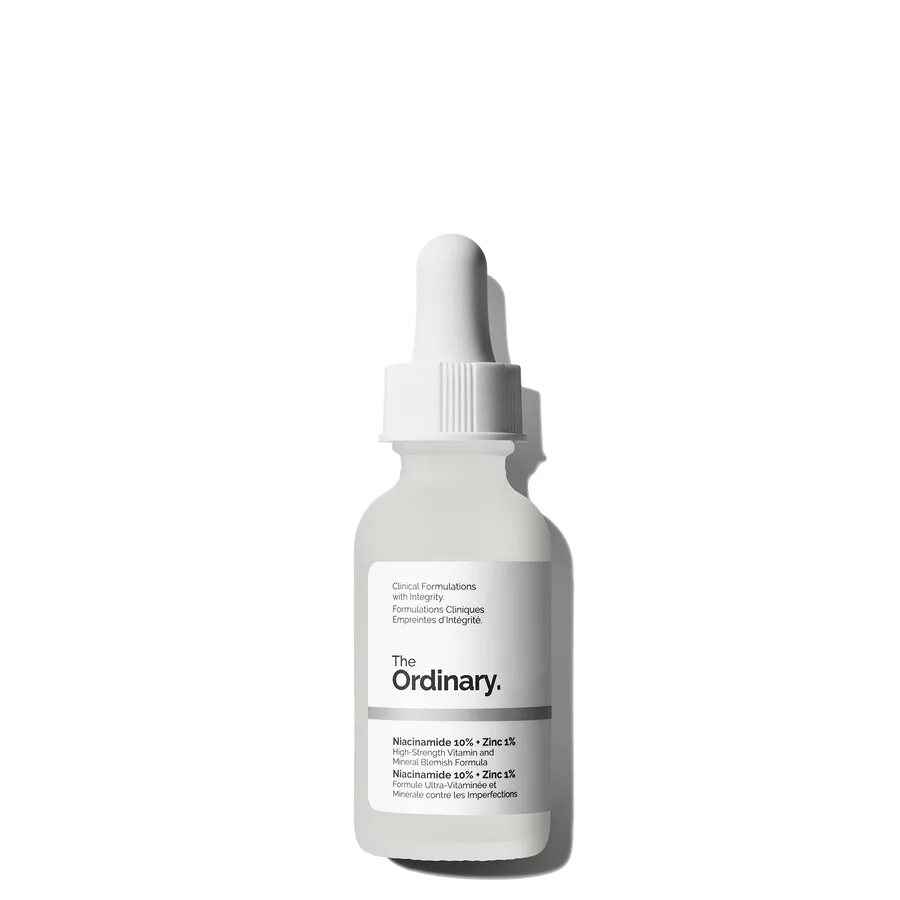
Niacinamide 10% + Zinc 1%
The $6 Skin Transformer
 Verified reviewer
Pros & cons.
- +Nearly unbeatable value at $6 for a 10% niacinamide serum with zinc PCA
- +Visibly reduces excess oil and shine within the first week of consistent use
- +Minimizes pore appearance through proven sebum-regulation mechanism
- +Brightens uneven skin tone and fades dark spots over 4-6 weeks
- +Ultra-minimalist 11-ingredient formula reduces interaction and irritation risk
- +Available in 60ml size for 6-8 months of use at under $10
- +Backed by one of the most extensive research bodies of any skincare active
- −10% concentration causes flushing or irritation in a meaningful minority of users
- −Slightly sticky, tacky texture that can pill under certain moisturizers and sunscreens
- −Too mattifying and sebum-reducing for dry skin types — not a universal product
- −Some users experience initial purging or breakouts during the first 2 weeks
- −Conflicts with direct vitamin C in the same routine limits combination options
The full review.
Some products change a category. This one changed an industry.
When The Ordinary launched The Niacinamide 10% + Zinc 1% in 2016, a 10% niacinamide serum costing six dollars was “bonkers.” Comparable formulations cost $30-60. Brands treated niacinamide as a premium active, using complex formulations and proprietary names to suggest it required advanced technology. Then The Ordinary published an INCI list with eleven ingredients, set a $5.90 price, and let consumers do the math.
The math was devastating. Niacinamide is not an expensive raw material. Zinc PCA is not an expensive raw material. The supporting ingredients — pentylene glycol, dimethyl isosorbide, tamarindus indica seed gum, xanthan gum — are functional but unremarkable. Industry estimates put the total ingredient cost for a 30ml bottle of this serum at around fifty cents. The Ordinary’s price reflected this. Every other brand’s price reflected something else.
Nearly a decade later, this is the most-reviewed skincare serum on multiple platforms, with nearly 6,000 reviews on Ulta alone. It remains The Ordinary’s single bestselling product worldwide. The reasons are simple: it works as described, the price makes regular use affordable, and the active ingredient has extensive research behind it.
Niacinamide at 10% performs several functions in this formula. It inhibits melanosome transfer from melanocytes to keratinocytes — the cellular handoff that creates visible pigmentation — which brightens uneven skin tone and fades dark spots. It downregulates sebaceous lipid production, reducing the excess oil that causes shine, enlarged pore appearance, and acne. It stimulates ceramide synthesis in the stratum corneum to strengthen the moisture barrier. It also has anti-inflammatory properties that reduce redness and calm blemish-prone skin. Clinical research supports these benefits at 2-5% concentrations; while the extrapolation to 10% isn’t linear, the higher concentration delivers faster, more pronounced results for most users.
Zinc PCA adds a complementary dimension. Zinc ions have documented antimicrobial activity against Cutibacterium acnes (the bacterium linked to inflammatory acne), while PCA — pyrrolidone carboxylic acid — is a natural moisturizing factor component that provides mild hydration. This combination attacks oiliness and breakouts from two angles: niacinamide regulates sebum production at the glandular level, while zinc disrupts the bacterial component of acne on the skin surface.
The texture is functional, not luxurious. It is a slightly viscous, water-based serum that absorbs within a minute but leaves a faintly tacky finish. This stickiness is the most common cosmetic complaint, and it is valid — the residue can cause pilling under makeup or certain sunscreens. Using less product (2-3 drops is sufficient) and allowing full absorption before layering helps, but the texture lacks elegance.
Results for oily and combination skin are reliably impressive. Reduced shine occurs within the first week. Pores appear visibly smaller at two to three weeks — not because they physically shrunk (pores do not do that), but because reduced sebum production means less stretched, less visible openings. Brightened, more even skin tone appears at four to six weeks. Fewer and less severe breakouts occur at six to eight weeks. These are not miraculous claims; they are the documented effects of niacinamide at working concentrations in a formula that does not interfere with the active’s performance.
The limitations depend on skin type. Dry skin types may find the zinc PCA’s sebum-regulating action counterproductive; reducing oil on skin that lacks it causes tightness and discomfort. Sensitive skin may react to the 10% concentration with flushing, irritation, or breakouts. The niacin flush — a temporary warmth and redness triggered by prostaglandin release — affects a minority of users at this concentration. While not dangerous, it is unpleasant enough to stop use. If you experience persistent flushing, mix the serum with moisturizer to dilute it to approximately 5% to retain benefits with less irritation risk.
The 60ml size option, added later, is the smart purchase for long-term use. At six to eight months per bottle with twice-daily application, the per-use cost is below five cents. Five cents for a dose of the most researched brightening and oil-controlling active in skincare. The Ordinary’s brand promise lives in that number.
An entire universe of niacinamide serums exists now, many launched in response to this product. Some offer lower concentrations in more elegant textures. Some add actives for targeted concerns. Some cost ten to twenty times more for the same ingredient at the same concentration. The Ordinary’s Niacinamide 10% + Zinc 1% is not the most sophisticated niacinamide product available. But it proved what niacinamide could do at a price that made the ingredient accessible, forcing competitors to answer: what, exactly, are you charging for?
Formula
Texture
The texture is functional, not luxurious. It is a slightly viscous, water-based serum that absorbs within a minute but leaves a faintly tacky finish. This stickiness is the most common cosmetic complaint, and it is valid — the residue can cause pilling under makeup or certain sunscreens. Using less product (2-3 drops is sufficient) and allowing full absorption before layering helps, but the texture lacks elegance.
Best for
Results for oily and combination skin are reliably impressive. Reduced shine occurs within the first week. Pores appear visibly smaller at two to three weeks — not because they physically shrunk (pores do not do that), but because reduced sebum production means less stretched, less visible openings. Brightened, more even skin tone appears at four to six weeks. Fewer and less severe breakouts occur at six to eight weeks. These are not miraculous claims; they are the documented effects of niacinamide at working concentrations in a formula that does not interfere with the active’s performance.
Not ideal for
The limitations depend on skin type. Dry skin types may find the zinc PCA’s sebum-regulating action counterproductive; reducing oil on skin that lacks it causes tightness and discomfort. Sensitive skin may react to the 10% concentration with flushing, irritation, or breakouts. The niacin flush — a temporary warmth and redness triggered by prostaglandin release — affects a minority of users at this concentration. While not dangerous, it is unpleasant enough to stop use. If you experience persistent flushing, mix the serum with moisturizer to dilute it to approximately 5% to retain benefits with less irritation risk.
Ingredient analysis.
Full INCI list · pH 5.75
Aqua (Water), Niacinamide, Pentylene Glycol, Zinc PCA, Dimethyl Isosorbide, Tamarindus Indica Seed Gum, Xanthan Gum, Isoceteth-20, Ethoxydiglycol, Phenoxyethanol, Chlorphenesin
Skin match.
The science.
The Science
Niacinamide is a top topical active in dermatology, with research covering many skin concerns. A 2006 study by Draelos et al. in Dermatologic Therapy shows 2% niacinamide reduces sebum production in Asian skin over 4 weeks, with more improvement at 8 weeks. This serum uses a 10% concentration, which should increase the sebum-regulating effect, though direct dose-response studies for this concentration in cosmetic formulations are limited.
For brightening, Hakozaki et al. published a double-blind, randomized clinical trial in the British Journal of Dermatology (2002). It shows 5% niacinamide reduces hyperpigmentation and increases skin lightness over 8 weeks compared to vehicle alone. The mechanism—inhibiting melanosome transfer from melanocytes to keratinocytes—is well-characterized and explains the gradual, cumulative brightening users report.
Niacinamide strengthens the barrier by increasing ceramide and sphingolipid synthesis in the stratum corneum. Tanno et al. in the British Journal of Dermatology (2000) showed topical niacinamide increases free fatty acid and ceramide levels in the skin, which supports barrier function and reduces transepidermal water loss.
Zinc PCA provides antimicrobial activity against Cutibacterium acnes and absorbs sebum. Combining niacinamide's sebum regulation with zinc's surface-level antimicrobial action creates a dual-mechanism approach to acne and oiliness by targeting both production and bacteria.
The niacin flush some users feel at 10% is a prostaglandin D2-mediated response—a vasodilatory reaction causing temporary warmth and redness. This is pharmacologically distinct from irritation or allergy and typically habituates with continued use.
References
- The effect of 2% niacinamide on facial sebum production — Journal of Cosmetic and Laser Therapy (2006)
- The effect of niacinamide on reducing cutaneous pigmentation and suppression of melanosome transfer — British Journal of Dermatology (2002)
Dermatologist Perspective
Dermatologists recommend niacinamide as a versatile, well-tolerated active for oily, acne-prone, and hyperpigmented skin. Board-certified dermatologists note that niacinamide's multifunctionality—addressing sebum, pigmentation, barrier function, and inflammation at once—makes it a highly efficient single active. This specific formula is a common, affordable entry point, but some dermatologists say the 10% concentration may be unnecessary. Published studies show efficacy at 2-5%, and higher concentrations increase prostaglandin-mediated flushing risk without proportional benefits. For patients who flush, dermatologists suggest diluting with moisturizer or switching to a 5% formulation.
Where it fits in your routine.
Apply 2-3 drops to a clean face every morning and evening before moisturizer. Use less to avoid stickiness and pilling. Let it absorb for 60 seconds before layering other products. Do not use with direct vitamin C (L-ascorbic acid) in the same routine. Mix with moisturizer to dilute to approximately 5% if the 10% concentration causes flushing. It works well under retinoids, SPF, and ceramide moisturizers.
At $6 for 30ml — or less per ml in the 60ml size — this product offers the most extreme value in skincare. Twice-daily application costs about three to four cents per use. No other product in The Ordinary's lineup (or any lineup) provides a clinically validated active at a working concentration for less. The 60ml bottle lasts six to eight months, making the annual cost of twice-daily niacinamide supplementation roughly $12-18 per year. This value makes the product a category benchmark.
People with oily, combination, or acne-prone skin can use this to control shine, minimize pores, brighten tone, and reduce breakouts affordably. It also works well for post-inflammatory hyperpigmentation. This is the best entry-level serum for those starting active skincare.
Dry skin types will find this too mattifying and dehydrating. The 10% concentration causes persistent flushing or irritation in sensitive skin or rosacea-prone individuals. Avoid this if you react poorly to niacinamide at lower concentrations. The sticky finish makes this a dealbreaker if texture and cosmetic elegance are priorities.
Product details.
This lightweight, slightly viscous water-based serum has a faintly tacky finish. It absorbs less elegantly than some serums and feels occasionally sticky.
Essentially unscented — no detectable fragrance
Frosted glass dropper bottle with white pipette cap — now comes in 60ml for better long-term value
Most users see less oil and shine after a few uses. Some feel temporary flushing—a warm, slightly red sensation—especially during week 1. This is a known niacinamide effect at 10% and usually stops as skin acclimates. A small percentage of users experience purging or more breakouts during weeks 1-2, which resolves within a month. If flushing or irritation persists, use it once daily or mix with moisturizer to dilute.
3-4 months with twice-daily use (30ml); 6-8 months with the 60ml
12 months
All Year
The backstory.
This was the product that made The Ordinary a global phenomenon. When it launched in 2016, niacinamide serums at 10% cost $30-60 from other brands. The Ordinary priced it at $5.90 and the internet lost its collective mind. It became the brand's single bestselling product, the gateway drug into The Ordinary's range, and the proof point for their entire business model: well-studied actives at transparent concentrations for prices that made the industry's margins uncomfortably visible. It remains one of the most-reviewed skincare products on the internet.
About The Ordinary
Established Brand (5–20 years)The Ordinary launched in 2016 under DECIEM and became a top name in affordable, ingredient-focused skincare. The brand lacks proprietary clinical trials on its specific formulations, but it uses well-studied actives at transparent concentrations, which earns widespread dermatologist acknowledgment.
Common myths.
Niacinamide and vitamin C cancel each other out.
This myth relies on outdated 1960s research using extreme heat and low pH levels not found in skincare. Still, The Ordinary advises against using their Niacinamide serum with direct vitamin C (L-ascorbic acid) in one routine. This combination causes flushing and can reduce vitamin C stability. Use them at different times of day to solve this.
If niacinamide causes flushing, you're allergic to it.
High-concentration niacin causes flushing through prostaglandin release, not an allergic reaction. At 10%, some users feel temporary warmth and redness. This usually ends within 20-30 minutes and decreases with continued use. True niacinamide allergies exist but are rare.
FAQ.
Can I use The Ordinary Niacinamide with retinol?
Yes — niacinamide and retinol work well together. Niacinamide strengthens the moisture barrier and reduces irritation, which buffers the drying and sensitizing effects of retinoids. Apply this niacinamide serum first, let it absorb, then apply your retinoid. This combination targets aging, texture, and pigmentation from different angles.
Why does The Ordinary Niacinamide make my face red?
Niacinamide at 10% can cause prostaglandin-mediated flushing—temporary warmth and redness that usually lasts 20-30 minutes. This is a pharmacological response, not an allergy or sensitivity. The effect usually stops as your skin acclimates to continued use. If it persists or bothers you, use it once daily or mix a few drops with your moisturizer to dilute the concentration.
Is 10% niacinamide too strong for my skin?
Yes, for some users. Research shows niacinamide works at concentrations as low as 2-5%. If 10% causes flushing, stickiness, or irritation, mix this serum with your moisturizer to lower the concentration to 3-5%. Alternatively, some users find The Ordinary's reformulated products with lower niacinamide percentages work better for their skin.
Can I use this niacinamide serum with AHA or BHA?
Yes, but not in the same routine step. Niacinamide works best at pH 5-7, but AHAs and BHAs work at pH 3-4. Applying them together reduces the efficacy of both. Use AHA/BHA first, wait 20-30 minutes, then apply niacinamide — or use acids in the evening and niacinamide in the morning.
How long does it take to see results from The Ordinary Niacinamide?
Oil control and shine reduction show within the first week. Pore appearance improves at 2-3 weeks. Skin tone brightens and evens at 4-6 weeks. Breakout frequency drops at 6-8 weeks. Use twice daily for the best cumulative results.
Is The Ordinary Niacinamide good for dry skin?
Not ideal. While niacinamide itself supports barrier function, the zinc PCA in this formula is sebum-regulating — designed to reduce oil production. Combined with the mattifying finish and lack of rich emollients, this serum is better suited for oily and combination skin. Dry skin types may find it drying or may prefer a lower niacinamide concentration in a more hydrating base.
Community
What the community says.
"Dramatically reduces excess oil and shine with consistent daily use"
"Visible improvement in pore appearance within weeks"
"Incredible value at $6 for a 10% niacinamide serum"
"Helps reduce breakout frequency and severity over time"
"Brightens dull, uneven skin tone noticeably within a month"
"Can cause irritation, flushing, or breakouts in some users — especially at 10%"
"Slightly sticky or tacky texture that some find unpleasant under makeup"
"May pill when layered with certain moisturizers or sunscreens"
"Too drying or mattifying for dry skin types"
"Some users experience an initial purging or breakout period"
People also looked at.