Vitamin C Serum
Gentle Brightener
 Verified reviewer
Pros & cons.
- +Ascorbyl glucoside provides stable vitamin C activity without the irritation of L-ascorbic acid
- +Extremely well-tolerated — 87% of clinical trial participants saw no redness, stinging, or peeling
- +Only 13 ingredients with every component serving a clear functional purpose
- +Opaque pump packaging protects the vitamin C from light and air degradation
- +Pregnancy and breastfeeding safe — addresses a genuine gap in the brightening serum market
- +No unpleasant oxidized vitamin C smell that plagues many L-ascorbic acid serums
- −Pilling under moisturizer and sunscreen is a frequent and well-documented complaint
- −Ascorbyl glucoside delivers slower, more subtle brightening than L-ascorbic acid serums
- −At 7 for 30 ml, pricier than most INKEY List products without proportionally stronger performance
- −EGF peptide (Oligopeptide-1) has limited evidence for topical cosmetic efficacy
- −Texture divides opinion — some find it pasty and difficult to spread evenly
The full review.
The INKEY List’s first vitamin C serum used a 30% L-ascorbic acid formula. It was potent and effective, but it stung, oxidized fast, and caused many users to seek less aggressive options. The brand took an unusual step: they admitted the original was too harsh for their audience and reformulated from scratch.
The replacement uses 15% ascorbyl glucoside instead of L-ascorbic acid. This is a philosophical shift rather than a downgrade. Ascorbyl glucoside is a sugar-bonded vitamin C derivative that stays stable at neutral pH, resists oxidation, and converts to active L-ascorbic acid via skin enzymes. This conversion delivers vitamin C activity more gradually than applying the active form directly. The INKEY List decided a serum people use daily is better than a serum that sits in a cabinet because it stings.
Adding Oligopeptide-1, marketed as an EGF (Epidermal Growth Factor) peptide, gives the formula a second pathway to skin renewal. While the vitamin C handles melanin inhibition and antioxidant defense, the EGF peptide theoretically stimulates cellular turnover to replace pigmented, damaged cells faster. Evidence for topical EGF at cosmetic concentrations is still developing; some researchers question if the peptide retains bioactivity in a topical formulation. View it as a promising but unproven addition rather than a proven workhorse.
The thirteen-ingredient formula is minimal. It has no fragrance compounds, no essential oils, no silicones, and no unnecessary botanical extracts. Phytic acid acts as both a metal chelator—binding copper and iron ions that accelerate vitamin C degradation—and a mild brightening agent. Sodium metabisulfite adds antioxidant protection for the formula. Every ingredient has a purpose.
Texture
The texture divides opinion. It dispenses as a slightly thick, almost cream-like serum that some users find fast-absorbing and others find pasty. Pilling is a documented issue; when layered under moisturizer and sunscreen, the serum can ball up into visible flakes. This is the product’s main practical flaw. To help: use fewer drops, pat instead of rub, and wait at least sixty seconds before the next layer. Some users report certain moisturizer textures work better with this serum, suggesting a formulation interaction rather than a defect.
Common Praise
Brightening results are genuine but gradual. The brand’s clinical trial showed 87% of participants saw visible brightening without redness, stinging, or peeling—a high tolerability rate. Users report a “lit from within” glow within two weeks, with more substantive improvement in dark spots and uneven tone over six to twelve weeks. If you expect a 15-20% L-ascorbic acid serum, the pace feels slow. If you cannot tolerate vitamin C at all, the pace feels like a revelation.
Packaging
The opaque packaging is a smart choice. Vitamin C derivatives, even stable ones, degrade with light. The pump dispenser minimizes air contact. These features matter for a product built on stability.
Value
At 7 for 30 ml, this costs more than most INKEY List products, which usually range from 0-14. The premium covers the vitamin C and EGF peptide, but this puts it in direct competition with other affordable vitamin C serums. Value depends on whether you need this specific gentleness. If you tolerate L-ascorbic acid, you can find more potent vitamin C serums at or below this price. If you stopped using vitamin C due to irritation, this formula may finally work for you—and that justifies the premium.
Best for
The pregnancy-safe status fills a market gap. Most effective brightening ingredients—retinoids, hydroquinone, and high-concentration AHAs—are off-limits during pregnancy. Vitamin C is one of the few proven brightening actives considered safe for expectant mothers, and a gentle derivative like ascorbyl glucoside adds comfort.
This serum does not aim to be the most powerful vitamin C on the shelf. It aims to be the most usable. The trade-off depends on your sensitivity and how much patience you have for results.
Ingredient analysis.
Full INCI list
Aqua (Water), Ascorbyl Glucoside, Sodium Hydroxide, PEG-40 Hydrogenated Castor Oil, Phenoxyethanol, Benzyl Alcohol, Butylene Glycol, Xanthan Gum, Ethylhexylglycerin, Sodium Metabisulfite, Dehydroacetic Acid, Phytic Acid, Oligopeptide-1
Skin match.
The science.
The Science
Ascorbyl glucoside is a glucose-bonded vitamin C derivative. It is more stable than L-ascorbic acid, works across a wider pH range, and resists oxidative degradation. Once applied, skin enzymes (alpha-glucosidase) cleave the glucose bond to release free ascorbic acid for antioxidant and melanin-inhibiting activity. A double-blind clinical study in PMC (2024) shows that applying a high-concentration ascorbyl glucoside complex twice daily for 24 weeks increases skin lightness values and decreases melanin index in solar lentigos compared to placebo.
This vitamin C derivative has established antioxidant credentials. Research in PMC confirms ascorbyl glucoside stimulates collagen synthesis and shows antisenescence effects in human dermal fibroblasts. Because conversion efficiency to L-ascorbic acid is not 100%, gram-for-gram potency is lower than direct L-ascorbic acid application. However, its stability ensures more consistent dosing over the product's shelf life—a factor often overlooked in vitamin C formulations.
The EGF component (Oligopeptide-1) has a more complex evidence profile. A systematic review in PMC (2021) notes EGF shows potential in wound healing and skin regeneration. However, a 2023 critical analysis (PubMed 37452558) questions if the preclinical bioactivity of sh-oligopeptide-1 translates to cosmetic benefit in topical preparations, noting molecular size and penetration barriers may limit efficacy at cosmetic concentrations. In this formula, the EGF is an innovative but unproven addition.
Phytic acid helps formula stability by chelating transition metal ions (Fe2+, Cu2+) that catalyze ascorbic acid oxidation, extending the active life of the product.
References
- Efficacy of ascorbyl glucoside-arginine complex on solar lentigos: a double-blind clinical study — PMC (2024)
- Vitamin C combination therapies for collagen and antiaging — PMC (2022)
- A systematic review on epidermal growth factor in aesthetics and regenerative medicine — PMC (2021)
Dermatologist Perspective
Dermatologists recognize ascorbyl glucoside as a legitimate vitamin C derivative for patients who cannot tolerate L-ascorbic acid. Board-certified dermatologists note that brightening results are more gradual, but stability and tolerability make this a practical daily option, especially for patients with rosacea, eczema, or reactive skin. Dermatologists often recommend vitamin C serums as a morning antioxidant layer before sunscreen; this formulation's gentle profile fits that role without causing cumulative irritation with other morning routine products.
Where it fits in your routine.
Apply 2-3 drops to clean, dry skin every morning. Pat the product into your face and neck; do not rub to prevent pilling. Wait 60 seconds for absorption before you apply moisturizer and sunscreen. Use daily. Store in a cool, dry place away from direct sunlight. The opaque packaging protects from light, but do not leave the tube in a hot car or bathroom.
At 7 for 30 ml, this costs more than most The INKEY List products. The price accounts for the vitamin C and EGF peptide ingredients. For vitamin C-sensitive individuals, the value is high — this is one of the few vitamin C serums they can use daily, and savings on a cheaper L-ascorbic acid serum do not matter if it causes irritation. For those who tolerate L-ascorbic acid, brands like The Ordinary and Timeless offer more potent options at or below this price.
Sensitive skin types who stopped using vitamin C serums because of stinging or redness. Pregnant or breastfeeding individuals seeking a safe brightening serum. Vitamin C beginners who want to add antioxidant protection gradually.
Experienced vitamin C users who tolerate L-ascorbic acid well and want maximum brightening potency. Anyone who finds pilling in their routine unacceptable. Those seeking fast dark spot correction—ascorbyl glucoside works gradually, not urgently.
Product details.
Lightweight serum with a slightly thick, cream-like consistency. Opinions vary — some say it absorbs fast, while others find it pasty and prone to pilling when layered.
Fragrance-free with minimal detectable scent. It lacks the unpleasant oxidized vitamin C smell found in L-ascorbic acid serums.
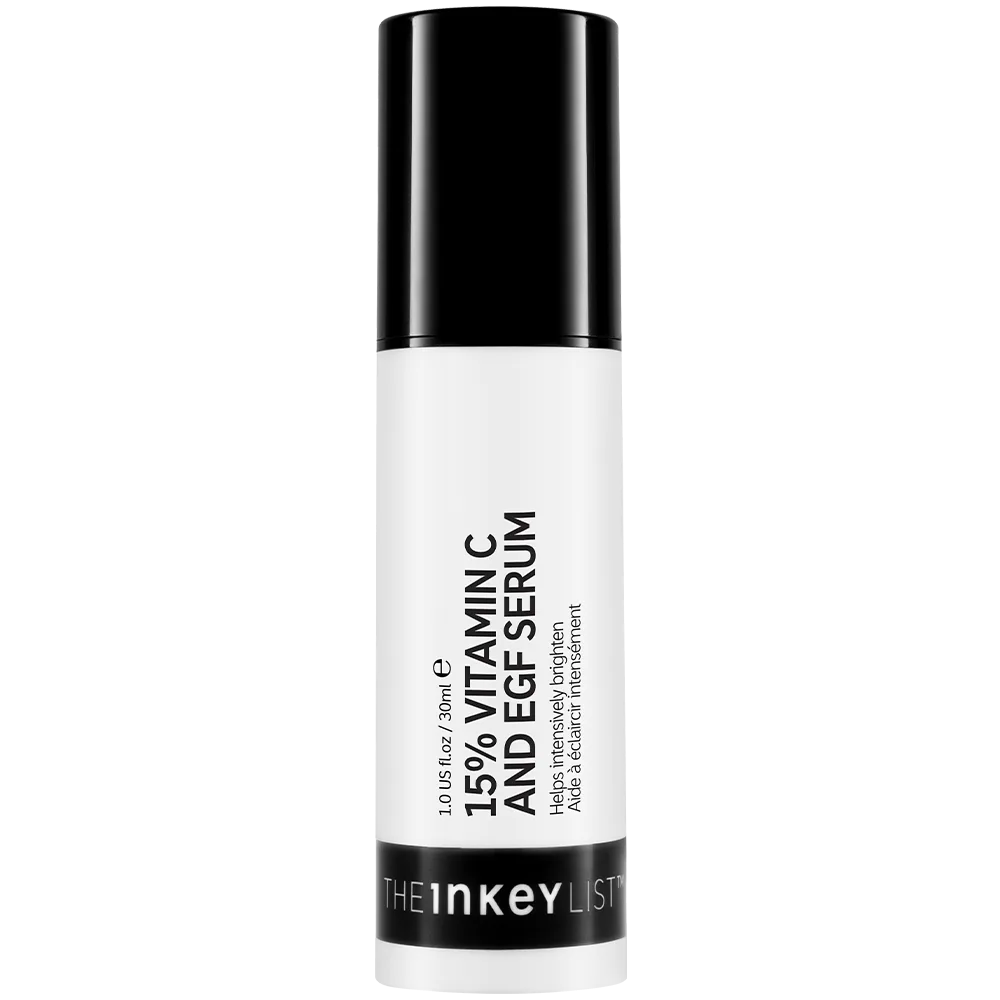
Opaque plastic pump tube in The INKEY List's signature minimalist black-and-white design. The opaque packaging protects the vitamin C from light degradation. Pump dispenser provides hygienic, measured doses.
The serum dispenses as a slightly thick liquid that takes a moment to spread. Most users experience no irritation — 87% in the brand's clinical trial reported no redness, stinging, or peeling. A subtle glow shows within the first week. If pilling occurs, use less product or adjust your layering technique.
2-3 months with daily morning use
6 months
All Year
The backstory.
This is The INKEY List's second-generation vitamin C product, replacing an original 30% L-ascorbic acid formula that was effective but caused irritation for many users. The reformulation dropped the concentration, switched to a gentler derivative, and added EGF peptide — a pivot from pure potency toward broader accessibility that reflects the brand's core philosophy of making effective skincare usable for everyone.
About The INKEY List
Emerging Brand (2–5 years)The INKEY List launched in the UK in 2018 to provide affordable, ingredient-transparent skincare. This reformulated vitamin C uses a gentler ascorbyl glucoside derivative instead of the original 30% L-ascorbic acid formula. Available at Sephora and Ulta.
Common myths.
Ascorbyl glucoside is not a "real" vitamin C because it's not L-ascorbic acid.
Ascorbyl glucoside converts to L-ascorbic acid via enzymes on the skin. This conversion rate makes it less potent than direct L-ascorbic acid, but it provides antioxidant and brightening activity with better stability and less irritation. Clinical studies show it reduces melanin production and improves skin tone.
Higher vitamin C concentrations do not always yield better results.
Research shows L-ascorbic acid yields diminishing returns above approximately 20% and increases irritation risk. For a stable derivative like ascorbyl glucoside, 15% balances efficacy and a gentle conversion rate. More is not always better in vitamin C formulation.
FAQ.
What type of vitamin C is in The INKEY List Vitamin C Serum?
This serum uses 15% ascorbyl glucoside, a stable vitamin C derivative that converts to L-ascorbic acid on contact with skin. It is gentler and more stable than pure L-ascorbic acid. This makes it suitable for sensitive skin and vitamin C beginners, though results develop more slowly.
Why does this serum pill under my moisturizer?
Pilling is the most common complaint with this product. To minimize it, use 2-3 drops, pat (don't rub) into skin, and wait 60 seconds for full absorption before applying moisturizer. Avoid other gel-textured products underneath. Some users get better results by switching their routine order.
Can I use this vitamin C serum with retinol?
Yes, but use them at different times. Apply this vitamin C serum in the morning for antioxidant protection and UV defense, then use retinol in the evening. This prevents interaction and maximizes the benefits of both ingredients.
Is this safe during pregnancy?
Yes — ascorbyl glucoside and oligopeptide-1 are safe during pregnancy and breastfeeding. The INKEY List confirms this product is pregnancy safe. Vitamin C serums are among the safest brightening options for expectant mothers treating hyperpigmentation.
How long does it take to see results?
Daily use shows a subtle glow within 1-2 weeks. Dark spots and uneven tone improve after 6-12 weeks of consistent morning application. Ascorbyl glucoside works slower than L-ascorbic acid serums; this trade-off provides gentleness and stability.
Community
What the community says.
"Visible brightening and a lit-from-within glow within the first few weeks of use"
"No stinging, redness, or peeling — gentle enough for sensitive skin and vitamin C beginners"
"No unpleasant oxidized vitamin C smell that plagues many competing serums"
"Lightweight texture that absorbs reasonably quickly on most skin types"
"Stable formulation in opaque packaging reduces degradation concerns"
"Pregnancy and breastfeeding safe — a rarity among effective brightening serums"
"Pilling under moisturizer and sunscreen is the most frequently cited issue"
"Texture can feel pasty or difficult to spread evenly on some skin types"
"Results are subtle and gradual — not as dramatically transformative as L-ascorbic acid serums"
"At 7 for 30 ml, pricier than other INKEY List serums without proportionally better results"
"Some users experienced slight stinging despite the gentler vitamin C derivative"
People also looked at.