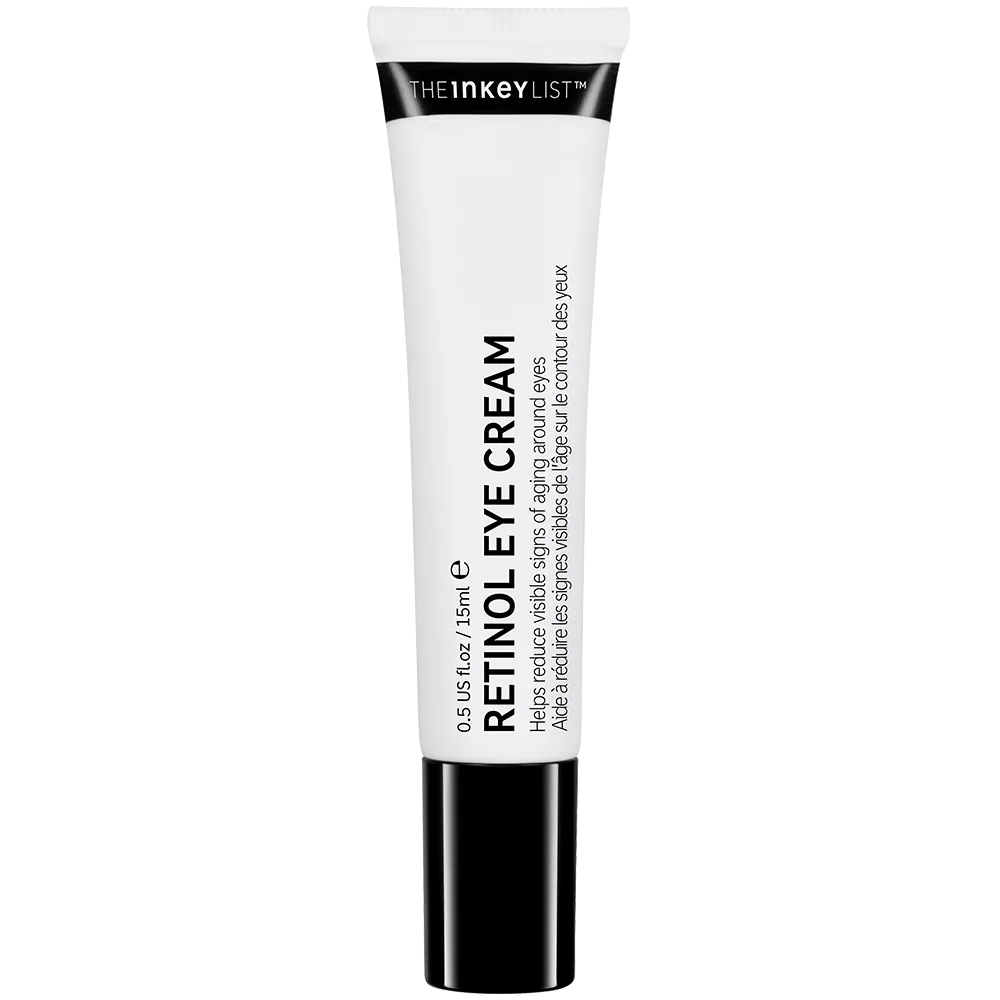
Retinol Eye Cream
Beginner Retinol Eye Pick
 Verified reviewer
Pros & cons.
- +Slow-release encapsulated retinol minimizes irritation on the delicate eye area
- +Excellent value at fifteen dollars for a retinol eye cream that lasts 3-4 months
- +Ethyl ferulate and vitamin E provide antioxidant stabilization uncommon at this price
- +Fragrance-free, silicone-free, vegan formula with minimal allergen risk
- +Ideal introduction to retinol for beginners nervous about the eye area
- +Allure Best of Beauty Award-winning formula validated by independent editors
- +Hydrating base prevents the dryness and tightness retinol can cause around eyes
- −Very low retinol concentration (0.09%) limits visible anti-aging results for many users
- −Too gentle for experienced retinol users seeking meaningful wrinkle reduction
- −Small 15mL tube can feel like insufficient product relative to price for some
- −Does not address dark circles or puffiness — purely an anti-aging and texture product
- −Minority of users report milia formation or eye area irritation despite gentle formulation
The full review.
The eye area is where most people’s retinol courage goes to die. They’ll slather 1% retinol across their forehead and cheeks without blinking — literally — but the moment someone suggests applying retinol near the eyes, suddenly everyone remembers that the periorbital skin is the thinnest on the body and starts having second thoughts. The INKEY List built an entire product around that hesitation.
The Retinol Eye Cream uses a technology called Vitalease — a system where retinol is encapsulated within carnauba wax microspheres. When applied to skin, these tiny wax capsules break down gradually, releasing retinol over hours rather than delivering the entire dose immediately. It’s the same slow-release principle used in pharmaceutical drug delivery, applied to a cosmetic context. The result is a retinol that’s present, working, but not throwing a tantrum on contact with the thinnest, most reactive skin on your face.
The actual retinol concentration is 0.09%. That’s the pure retinol content within a 3% Vitalease complex. To put that in perspective: most face retinol serums range from 0.25% to 1%. So this is approximately one-third to one-tenth the concentration of what you’d apply to your cheeks. For the eye area, where skin is thin and lacks the sebaceous gland density that provides some natural buffering, this gentleness is the point.
But gentleness comes with a trade-off that needs to be addressed honestly: many users report minimal visible improvement even after months of consistent use. The concentration may be too low to drive the kind of cell turnover that produces noticeable wrinkle reduction for some people. This is a product that works best for prevention — maintaining youthful eye-area skin — rather than remediation. If you have established crow’s feet or significant crepiness, you may need to graduate to a higher-concentration product eventually.
What elevates this formula above a simple “retinol-in-a-basic-cream” is the supporting ingredient strategy. Ethyl ferulate — an esterified form of ferulic acid — is an unusual choice at this price point. It functions as an antioxidant that helps stabilize the retinol against degradation while providing its own photoprotective benefits. Tocopherol (vitamin E) performs a similar stabilizing role. Together, they extend the retinol’s effective lifespan both in the tube and on the skin, which partially compensates for the low concentration by ensuring what’s there actually reaches skin cells intact.
The hydrating base is competent: caprylic/capric triglyceride and glycerin provide the primary moisture, shea butter esters add a light occlusive touch, and sodium hyaluronate contributes humectant properties. This matters because retinol, even at low doses, can contribute to dryness around the eyes if the delivery vehicle doesn’t provide adequate hydration. The formula gets this balance right — the eye area feels hydrated after application, not tight or depleted.
Texture-wise, the cream has a slight density to it — a faint yellow tone and a consistency that’s firmer than a serum but much lighter than a traditional eye cream. It warms on contact and absorbs within a minute. No fragrance, no discernible scent, no tingling on application. The experience is so uneventful that you might wonder if anything is happening at all. With retinol, uneventful is the goal.
The INKEY List, founded in 2018, positioned itself as the accessible alternative to ingredient-focused skincare. Their retinol eye cream extends this philosophy into a product category that was, until recently, almost exclusively prestige territory. At fifteen dollars for a tube that lasts three to four months, the barrier to trying retinol around the eyes essentially disappears. The product won an Allure Best of Beauty award, which speaks to its positioning as a smart entry-level option rather than a high-potency treatment.
The packaging is a simple squeeze tube with controlled dispensing — the right format for a retinol product that degrades with air and light exposure. It’s recyclable, portable, and functional. No complaints there.
Where I’d temper enthusiasm is in the disconnect between marketing language and realistic outcomes. The product page references “fine lines and wrinkles” as target concerns, but at 0.09% retinol, this cream is planting seeds rather than harvesting results. Think of it as the training wheels of retinol for the eye area. It builds tolerance, introduces your periorbital skin to vitamin A, and provides a foundation for potentially stepping up to stronger formulations later.
For retinol beginners, for those who’ve been burned by stronger products, or for anyone who simply wants to add a gentle layer of prevention to their nighttime routine without the anxiety that comes with more aggressive retinol concentrations, this cream makes quiet, practical sense. It’s not trying to be transformative. It’s trying to be approachable. At fifteen dollars, that approachability is its greatest asset.
Formula
About The INKEY List
The INKEY List, founded in 2018, positioned itself as the accessible alternative to ingredient-focused skincare.
Texture
Texture-wise, the cream has a slight density to it — a faint yellow tone and a consistency that’s firmer than a serum but much lighter than a traditional eye cream. It warms on contact and absorbs within a minute.
Scent
No fragrance, no discernible scent, no tingling on application.
Packaging
The packaging is a simple squeeze tube with controlled dispensing — the right format for a retinol product that degrades with air and light exposure. It’s recyclable, portable, and functional. No complaints there.
Best for
For retinol beginners, for those who’ve been burned by stronger products, or for anyone who simply wants to add a gentle layer of prevention to their nighttime routine without the anxiety that comes with more aggressive retinol concentrations, this cream makes quiet, practical sense.
Works for
It’s not trying to be transformative. It’s trying to be approachable.
Not ideal for
If you have established crow’s feet or significant crepiness, you may need to graduate to a higher-concentration product eventually.
Common Complaints
But gentleness comes with a trade-off that needs to be addressed honestly: many users report minimal visible improvement even after months of consistent use. The concentration may be too low to drive the kind of cell turnover that produces noticeable wrinkle reduction for some people.
Ingredient analysis.
Full INCI list
Water (Aqua/Eau), Caprylic/Capric Triglyceride, Glycerin, Butylene Glycol, Pentaerythrityl Distearate, Shea Butter Ethyl Esters, Cetearyl Olivate, Phenoxyethanol, Benzyl Alcohol, Sorbitan Olivate, Acrylates/C10-30 Alkyl Acrylate Crosspolymer, Sodium Hydroxide, Sodium Hyaluronate, Sodium Stearoyl Glutamate, Copernicia Cerifera Cera, Propanediol, Glycogen, Sodium Gluconate, Retinol, Polysorbate 20, Ethylhexylglycerin, Dehydroacetic Acid, Citric Acid, Helianthus Annuus Seed Oil, 1,2-Hexanediol, Caprylyl Glycol, Disodium Cocoamphodiacetate, Tocopherol, Xanthan Gum, Ethyl Ferulate, Humulus Lupulus Extract
Skin match.
The science.
The Science
Retinol is one of the most studied anti-aging ingredients in dermatology. Decades of research show it stimulates collagen synthesis, accelerates epidermal turnover, and reduces fine lines. Retinol converts to retinaldehyde and then to retinoic acid (tretinoin) in the skin. This activates retinoic acid receptors (RARs) to regulate gene expression for collagen production and cellular proliferation.
The encapsulated delivery system in this product is scientifically relevant. Traditional retinol formulations deliver the full active dose at once, causing a concentration spike the thin periorbital skin may not tolerate. Slow-release encapsulation — using carnauba wax microspheres here — extends retinol release over several hours to maintain a steadier cellular concentration. This approach reduces irritation while maintaining efficacy, a principle used in pharmaceutical controlled-release formulations.
Ethyl ferulate stabilizes retinol and acts as an independent antioxidant. Ferulic acid has UV-protective properties; the landmark 2005 study by Lin et al. in the Journal of Investigative Dermatology showed ferulic acid doubled the photoprotective capacity of a vitamin C and E combination. This eye cream uses an esterified form (ethyl ferulate) instead of free ferulic acid, but the antioxidant mechanism stabilizes retinol and provides complementary photoprotection.
At 0.09% retinol, this product uses a low clinically studied concentration. A systematic review by Zasada and Budzisz in Clinical, Cosmetic and Investigational Dermatology (2019) found retinol concentrations of 0.025% to 0.3% showed anti-aging effects in controlled studies, though higher concentrations generally produced more significant results. The slow-release delivery may increase the bioavailable dose compared to non-encapsulated retinol at the same concentration.
References
- Synthesis, stability, and activity of a new light-stable derivative of ferulic acid for use in dermatology — Journal of Investigative Dermatology (2005)
- Retinoids: active molecules influencing skin structure formation in cosmetic and dermatological treatments — Postepy Dermatologii i Alergologii (2019)
Dermatologist Perspective
Board-certified dermatologists generally support low-concentration retinol in the periorbital area for preventive anti-aging. Dermatologists note the encapsulated slow-release delivery system in this formula addresses a primary reason patients stop using retinol around the eyes: initial irritation. The 0.09% concentration is well below what most dermatologists prescribe for active wrinkle treatment, but it works as a first step for patients building retinol tolerance. Dermatologists emphasize that retinol use around the eyes requires rigorous sun protection, as retinol increases photosensitivity in an area many people fail to protect with sunscreen.
Where it fits in your routine.
Apply a tiny amount — half a pea-sized dot — to your ring finger. Gently pat it along the orbital bone in a half-moon shape from the inner corner outward. Do not apply it directly on the eyelid or near the lash line. Use it at night only, after cleansing and water-based serums. Use it every other night for the first two weeks, then use it nightly if tolerated. Follow with a hydrating eye cream or moisturizer if you want. Always apply broad-spectrum sunscreen in the morning — retinol increases photosensitivity.
At $15 for 15mL, this is one of the cheapest retinol eye creams available. One tube lasts about 3-4 months with nightly use, making the monthly cost under $5. For comparison, prestige retinol eye creams from Sunday Riley or Peter Thomas Roth cost $55-85 for similar volumes. The encapsulated delivery system and ethyl ferulate inclusion provide formulation value that exceeds this price. The brand's emerging heritage means you don't pay for decades of clinical validation, but at fifteen dollars, the financial risk of trying it is zero.
Retinol beginners want vitamin A for the eye area without irritation or high costs. This works for people in their mid-twenties to thirties focused on prevention, or anyone who stopped using higher-concentration retinol products because of eye sensitivity.
Experienced retinol users need a higher concentration for visible wrinkle reduction. Retinol is contraindicated for anyone pregnant or breastfeeding. This product does not address dark circles or puffiness. Users wanting immediate, dramatic eye results should use prescription retinoid options under dermatologist guidance.
Product details.
Light yellow cream with a slightly dense consistency that spreads and softens easily. It absorbs within a minute and leaves a smooth, non-greasy finish. The texture is firmer than a serum but lighter than traditional rich eye creams.
Fragrance-free with no discernible scent.
Slender white squeeze tube with small opening for controlled dispensing. Standard INKEY List minimalist black-and-white design. 100% recyclable packaging. The small tube format is portable and travel-friendly.
The cream feels lightweight and absorbs without residue on first application. Most users won't feel stinging, tingling, or burning because the encapsulated slow-release retinol minimizes initial irritation. The under-eye area feels slightly more hydrated, but visible changes aren't immediate. Some users report a subtle smoothing effect within the first two weeks, but meaningful retinol results require patience.
3-4 months with nightly use on both eyes
6 months
All Year
The backstory.
The INKEY List launched this retinol eye cream in 2020 as part of their mission to make active ingredient categories accessible at drugstore prices. Eye retinol products were traditionally a prestige-only category, with most options starting at forty dollars or more. By using an encapsulated retinol system at a gentle concentration, the brand created a low-risk entry point for the millions of consumers interested in retinol but intimidated by the eye area. The product won an Allure Best of Beauty Award, validating the approach.
About The INKEY List
Emerging Brand (2–5 years)Colette Laxton and Mark Curry co-founded The INKEY List in 2018 in Nottingham, UK. The brand aims to make effective skincare affordable and transparent. The INKEY List is Leaping Bunny certified and Vegan Society certified. Formulations use well-studied ingredient technologies, but the brand is not dermatologist-developed and lacks independent clinical validation for its specific products.
Common myths.
Any retinol product is too harsh to use around the eyes.
Periorbital skin is thinner and more sensitive. This formula uses 0.09% retinol in a slow-release encapsulation system. Most users tolerate this concentration and delivery format without irritation. Start slowly every other night before building up to nightly use.
A higher retinol percentage always means better results.
Stronger is not always better for the delicate eye area. High concentrations increase irritation risk without improving results proportionally. The slow-release system in this cream delivers retinol to skin cells over hours, making the effective dose more efficient than the 0.09% number suggests.
FAQ.
Is The INKEY List Retinol Eye Cream strong enough to make a difference?
This 0.09% pure retinol uses a slow-release system for a gentle, introductory-level retinol. It works for retinol beginners, preventive anti-aging, and early fine lines. Users with established wrinkles or previous retinol experience may find it too mild and can use a higher-concentration retinol product for the eye area.
Can I use this every night?
Apply every other night for the first two weeks to test skin tolerance. If you see no irritation, redness, or peeling, use it nightly. The slow-release encapsulation makes this gentler than many retinol products, but the eye area is thin and reactive — start cautiously.
Should I use this before or after my regular eye cream?
Apply this retinol eye cream first to clean skin around the orbital bone. Layer a thicker moisturizer or eye cream on top once the retinol absorbs if you want more hydration. The thinnest, most active product goes on first.
Is this retinol eye cream safe during pregnancy?
No. The INKEY List states this product is not for use during pregnancy or breastfeeding. Retinol is a vitamin A derivative. Topical retinoids are contraindicated during pregnancy because of potential teratogenic effects. Use a peptide or vitamin C eye cream during pregnancy instead.
Can I use this with vitamin C in my routine?
Yes, but not simultaneously. Use your vitamin C serum or eye product in the morning and this retinol eye cream at night. This prevents pH conflicts and irritation from layering both actives at once, while providing the benefits of each.
Why does the product look yellow?
The slight yellow tint comes from the retinol and the ethyl ferulate (ferulic acid derivative). This is normal and shows the actives are in the formula. If the product turns dark orange or brown, the retinol has likely degraded — store it in a cool, dark place to keep its potency.
How does this compare to prescription retinoid eye creams?
Prescription retinoids (tretinoin) work more strongly than the 0.09% OTC retinol in this cream. This product targets prevention and early fine lines. People with advanced aging concerns around the eyes should discuss prescription options with their dermatologist.
What the community says.
"Excellent value for a retinol eye cream at fifteen dollars"
"Gentle enough for retinol beginners with no irritation or stinging"
"Lightweight texture absorbs quickly without feeling heavy around the eyes"
"Fragrance-free and minimal ingredient list suitable for sensitive eye area"
"Visible improvement in fine lines with consistent long-term use"
"Very low retinol concentration may be too gentle for experienced retinol users"
"Some users saw minimal visible improvement even after months of consistent use"
"Small 15mL tube feels insufficient for the price relative to face products"
"A minority of users experienced eye area irritation, swelling, or milia"
"Dense texture can feel less elegant than competing eye serums"
Featured in.
People also looked at.