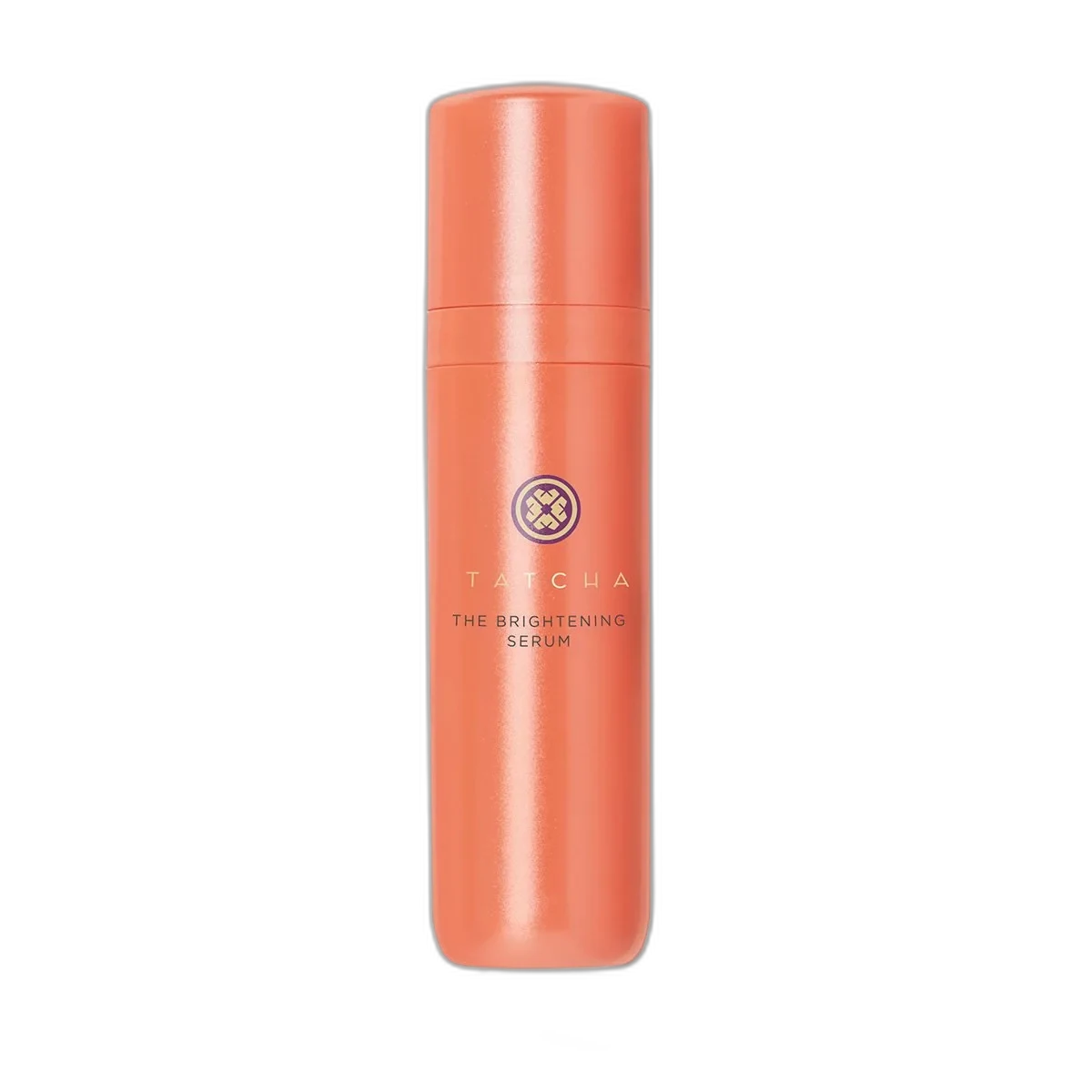
Violet-C Brightening Serum
Luxury Brightening Powerhouse
 Verified reviewer
Pros & cons.
- +Dual-form vitamin C at 20% provides comprehensive brightening across skin layers
- +Completely fragrance-free, alcohol-free, and silicone-free — rare for Tatcha
- +10% fruit AHAs add exfoliation for enhanced vitamin C penetration and dead cell removal
- +Licorice root and mulberry add additional brightening through complementary mechanisms
- +Stable vitamin C derivatives resist oxidation better than pure L-ascorbic acid
- +Lightweight, fast-absorbing texture with no residue or tackiness
- +Travel size available at $34 for low-commitment trial
- −Premium pricing at $89 for 30ml puts it at the high end of vitamin C serums
- −Vitamin C derivatives are gentler but less potent than pure L-ascorbic acid
- −10% AHA content means you cannot pair this with retinol or other exfoliants
- −Not suitable for sensitive skin due to the combined AHA and vitamin C concentration
- −Results for significant hyperpigmentation may be slower than with L-AA serums
The full review.
Tatcha has built its empire on sensory luxury — the weighted glass jars, the botanical fragrances, the ritual of application. So the Violet-C Brightening Serum is a fascinating anomaly: a product where the brand stripped away its usual sensory signatures and let the actives do the talking. No fragrance. No alcohol. No silicone. No essential oils. Just a concentrated, clinical-grade treatment in a purple bottle. It’s the closest Tatcha gets to saying, “Forget the experience. Here’s what works.”
The formula deserves close attention because it’s genuinely ambitious. Twenty percent vitamin C is delivered through two complementary forms: Bis-Glyceryl Ascorbate, a water-soluble derivative that targets the aqueous layers of the skin, and Ascorbyl Tetraisopalmitate, an oil-soluble form that penetrates the lipid-rich portions of the skin barrier. This dual-pathway approach means the vitamin C reaches different compartments of the skin simultaneously — a more sophisticated delivery strategy than the single-form approach most vitamin C serums take.
Layered on top of this is 10% fruit-derived AHAs from apple, grapefruit, orange, lemon, lime, hawthorn, and jujube extracts, supplemented with lactic acid. The combination is strategic: the AHAs remove the dead, pigmented surface cells that make skin look dull, while the vitamin C works beneath to interrupt the melanin production that creates new dark spots. Exfoliate the old damage, prevent the new — it’s a two-pronged brightening approach that’s architecturally sound.
The supporting cast is carefully chosen. Licorice root extract (Glycyrrhiza Glabra) contains glabridin, a well-studied tyrosinase inhibitor that adds a third brightening mechanism — it blocks the enzyme responsible for initiating melanin production. Scutellaria Baicalensis (Chinese skullcap) and mulberry root extract contribute additional antioxidant and skin-evening properties. Tatcha’s signature rice ferment filtrate sits third on the ingredient list, adding enzymatic brightening and amino acid nourishment. Sodium hyaluronate provides the hydration needed to counterbalance two potent active categories.
In use, the serum is thin and watery — almost surprisingly so given the concentration of actives. It absorbs within seconds, leaving no residue, tackiness, or film. There’s no discernible scent beyond the faintest botanical note. The first application may produce a mild tingle from the AHAs, which subsides quickly and tends to diminish with continued use. The immediate after-effect is a subtle luminosity that’s visible in the mirror — the kind of glow that makes you pause and think, “Okay, that’s doing something.”
The choice of vitamin C derivatives over pure L-ascorbic acid is a deliberate trade-off. L-ascorbic acid has the deepest body of clinical research, but it’s notoriously unstable, pH-dependent, and irritating at high concentrations. Bis-Glyceryl Ascorbate is significantly more stable and works at a broader pH range, which means the formula doesn’t need to be formulated at a skin-stinging acidic level to be effective. The trade-off is that derivatives generally need higher concentrations to match the efficacy of pure L-AA, which is why Tatcha pushed to a full 20%.
Here’s the honest limitation: even at 20%, stable vitamin C derivatives don’t deliver the same intensity of results as a well-formulated 15-20% L-ascorbic acid serum. They’re gentler, more stable, and more pleasant to use — but the clinical evidence for dramatic dark spot correction is stronger for pure L-AA. If you’re dealing with significant hyperpigmentation or melasma, you may need a stronger form. If you want effective, progressive brightening with minimal irritation, the Violet-C approach is sound.
The 10% AHA component adds a layer of caution to the usage instructions. This is not a serum you layer with retinol, other exfoliants, or additional vitamin C products. It’s a treatment that occupies the exfoliant and antioxidant slots in your routine simultaneously, which is efficient but demands that the rest of your routine be gentle and hydrating.
At $89 for 30ml, the Violet-C sits at the high end of the vitamin C serum market. The justification lies in the dual-form approach, the high concentration, the clean formula, and the supporting brightening botanicals. It’s a thoughtful, well-engineered product — arguably Tatcha’s best pure formulation — that suffers only from the comparison to its price tag. A travel size at $34 for 10ml offers a lower-commitment entry point.
The irony of the Violet-C is that it’s the Tatcha product that least feels like a Tatcha product. No ritual, no fragrance ceremony, no 23-karat gold. Just actives, delivery systems, and results. For a brand that usually sells the experience, this one sells the science. And the science is genuinely good.
Ingredient analysis.
Full INCI list
Aqua/Water/Eau, Bis-Glyceryl Ascorbate, Saccharomyces/Camellia Sinensis Leaf/Cladosiphon Okamuranus/Rice Ferment Filtrate, Propanediol, Butylene Glycol, Glycerin, Ascorbyl Tetraisopalmitate, Angelica Acutiloba Root Extract, Callicarpa Japonica Fruit Extract, Prunus Mume Fruit Extract, Crataegus Cuneata Fruit Extract, Pyrus Malus (Apple) Fruit Extract, Citrus Paradisi (Grapefruit) Fruit Extract, Citrus Aurantium Dulcis (Orange) Juice, Citrus Limon (Lemon) Juice, Citrus Aurantifolia (Lime) Juice, Glycyrrhiza Glabra (Licorice) Root Extract, Scutellaria Baicalensis Root Extract, Artemisia Capillaris Flower Extract, Morus Alba Root Extract, Ziziphus Jujuba Fruit Extract, Sodium Hyaluronate, Lactic Acid, Sodium Citrate, Dipotassium Glycyrrhizate, Ammonium Acryloyldimethyltaurate/Carboxyethyl Acrylate Crosspolymer, Disodium EDTA, PPG-6-Decyltetradeceth-30, Ethylhexylglycerin, Phenoxyethanol
Skin match.
The science.
The Science
The Violet-C serum's primary active, Bis-Glyceryl Ascorbate, is a relatively newer vitamin C derivative that converts to ascorbic acid in the skin. While it lacks the extensive clinical literature of L-ascorbic acid, studies have shown that ascorbyl derivatives at sufficient concentrations can stimulate collagen synthesis and inhibit tyrosinase activity — the enzyme responsible for melanin production. The oil-soluble complement, Ascorbyl Tetraisopalmitate, has been studied for its superior skin penetration compared to water-soluble forms; a study published in Skin Pharmacology and Physiology (2003) demonstrated that tetrahexyldecyl ascorbate (a closely related oil-soluble derivative) achieved higher tissue levels of vitamin C than L-ascorbic acid due to its lipophilic nature.
The 10% AHA component draws on well-established exfoliation science. Alpha hydroxy acids promote desquamation by weakening intercellular bonds in the stratum corneum, as detailed in a comprehensive 2018 review in Molecules (Tang & Yang, 2018). The strategic pairing with vitamin C is supported by the principle that exfoliation enhances the penetration of subsequently applied actives by reducing the barrier thickness of dead cells.
Glycyrrhiza Glabra (licorice root) is among the best-studied botanical brightening agents. Glabridin, its primary active compound, has been shown to inhibit tyrosinase activity and reduce UVB-induced pigmentation in both in vitro and in vivo models (Yokota et al., Journal of the European Academy of Dermatology and Venereology, 1998). Its inclusion alongside vitamin C creates complementary brightening through two distinct biochemical pathways — ascorbate interrupts melanin synthesis at the oxidation step, while glabridin blocks the enzymatic trigger.
References
- Dual Effects of Alpha-Hydroxy Acids on the Skin — Molecules (2018)
Dermatologist Perspective
Dermatologists would likely regard the Violet-C as a well-formulated vitamin C treatment for patients seeking brightening without the irritation profile of pure L-ascorbic acid. Board-certified dermatologists typically recommend vitamin C serums as a cornerstone of hyperpigmentation and anti-aging regimens, and the dual-form, high-concentration approach here aligns with evidence-based principles. The fragrance-free formula would be viewed favorably compared to other Tatcha products. However, dermatologists would caution that the combination of 20% vitamin C and 10% AHAs creates a moderately aggressive treatment — patients with sensitive skin, rosacea, or those using prescription retinoids should introduce this gradually or avoid it entirely. For significant melasma, dermatologists might still recommend a proven L-ascorbic acid formulation alongside prescription treatments.
Where it fits in your routine.
Apply 2-3 drops to clean, dry skin at night. Pat it onto the face and neck, but avoid the eye area. Wait 30-60 seconds for absorption before you apply moisturizer. Use it every other night for the first two weeks, then use it nightly as tolerated. Always apply broad-spectrum SPF 30+ the next morning — both AHAs and vitamin C increase photosensitivity. Do not use retinol, other AHAs/BHAs, or extra vitamin C products in the same routine.
At $89 for 30ml, Violet-C costs as much as top prestige vitamin C serums. The 10% AHAs, dual vitamin C forms, and selected botanical brighteners justify the price. The fragrance-free formula is clinical rather than luxury — an unusual choice for Tatcha. The $34 travel size (10ml) is a smart entry point. However, the price per milliliter exceeds comparable brightening serums with similar or stronger results. The value comes from the derivative stability, the multi-pathway brightening, and the clean formula — which offer a real but not dramatic advance over cheaper alternatives.
Use this if you want to treat dullness, uneven tone, dark spots, or post-inflammatory hyperpigmentation with a potent alternative to L-ascorbic acid serums that irritates less. It works for normal, combination, and oily skin types that tolerate active treatments.
People with sensitive skin, rosacea, or eczema, and those using prescription retinoids or other exfoliating treatments. The 20% vitamin C + 10% AHA concentration is too aggressive for compromised or reactive skin barriers.
Product details.
Fragrance-free — minimal scent beyond the faint notes of the botanical extracts
A frosted glass dropper bottle uses Tatcha's signature purple design. The opaque glass protects the vitamin C from light degradation. Finish lightweightfast-absorbingnon-greasy
The 10% AHA content may cause a mild tingling sensation during the first application, which usually stops within a minute. Vitamin C does not cause purging, but the AHAs may cause temporary purging for 1-2 weeks if comedones exist. Users often see a brightening glow after the first use.
2-3 months with nightly use
6 months
All Year
The backstory.
The Violet-C serum was Tatcha's answer to the challenge of creating a high-performance vitamin C treatment that maintained the brand's gentle Japanese philosophy. By choosing stable vitamin C derivatives over pure L-ascorbic acid, Tatcha avoided the irritation and oxidation problems that plague many vitamin C serums while still delivering a clinically relevant 20% concentration.
About Tatcha
Established Brand (5–20 years)Vicky Tsai founded Tatcha in 2009, using Japanese beauty rituals supported by the Tatcha Institute (est. 2014). The brand combines Japanese botanicals with modern skincare science and sells widely at Sephora. The Violet-C serum is Tatcha's first high-concentration active treatment.
Common myths.
Vitamin C derivatives work less effectively than pure L-ascorbic acid
L-ascorbic acid has the most clinical research, but derivatives like Bis-Glyceryl Ascorbate and Ascorbyl Tetraisopalmitate provide benefits with more stability and less irritation. The 20% concentration in this serum offsets the lower potency of derivatives compared to pure L-AA.
You can't use vitamin C and AHAs together
This formula combines them. The AHAs exfoliate the surface layer so the vitamin C penetrates more effectively. Both work at pH levels that prevent them from degrading each other.
FAQ.
Is Tatcha Violet-C Brightening Serum worth the price?
At $89 for 30ml, Violet-C is expensive but has high active concentrations: 20% vitamin C via two stable derivatives and 10% fruit AHAs. The fragrance-free, alcohol-free formula is cleaner than most Tatcha products. Value depends on your budget, but the active ingredient quality is strong.
Can I use Tatcha Violet-C with retinol?
Alternate evenings for best results. Using 20% vitamin C + 10% AHAs with retinol in one routine causes irritation, peeling, and sensitivity. Skip this serum on retinol nights and use a hydrating alternative instead.
How long does it take to see results from Tatcha Violet-C?
Most users see an immediate glow after the first application. Dark spots and hyperpigmentation improve after 4-6 weeks of consistent nightly use. Improvements continue through 8-12 weeks as the vitamin C and AHAs accelerate cell turnover and inhibit melanin production.
Is Tatcha Violet-C fragrance-free?
Yes — unlike most Tatcha products, the Violet-C Brightening Serum is fragrance-free, alcohol-free, oil-free, and silicone-free. This is Tatcha's cleanest formulation and works better for reactive skin than many other products from the brand.
Does the vitamin C in Tatcha Violet-C oxidize quickly?
The formula uses Bis-Glyceryl Ascorbate and Ascorbyl Tetraisopalmitate. Both stable vitamin C derivatives resist oxidation better than pure L-ascorbic acid. The opaque glass bottle helps, but store the product away from direct sunlight and heat.
Community
What the community says.
"Noticeable brightening effect within a few weeks"
"Fragrance-free and gentle for a high-concentration vitamin C"
"Lightweight watery texture absorbs quickly"
"Doesn't cause the stinging typical of L-ascorbic acid serums"
"Very expensive at $89 for 30ml"
"Some users report mild tingling from the AHA content"
"Results take several weeks to become apparent"
"Packaging could be more protective of the vitamin C"
Featured in.
People also looked at.