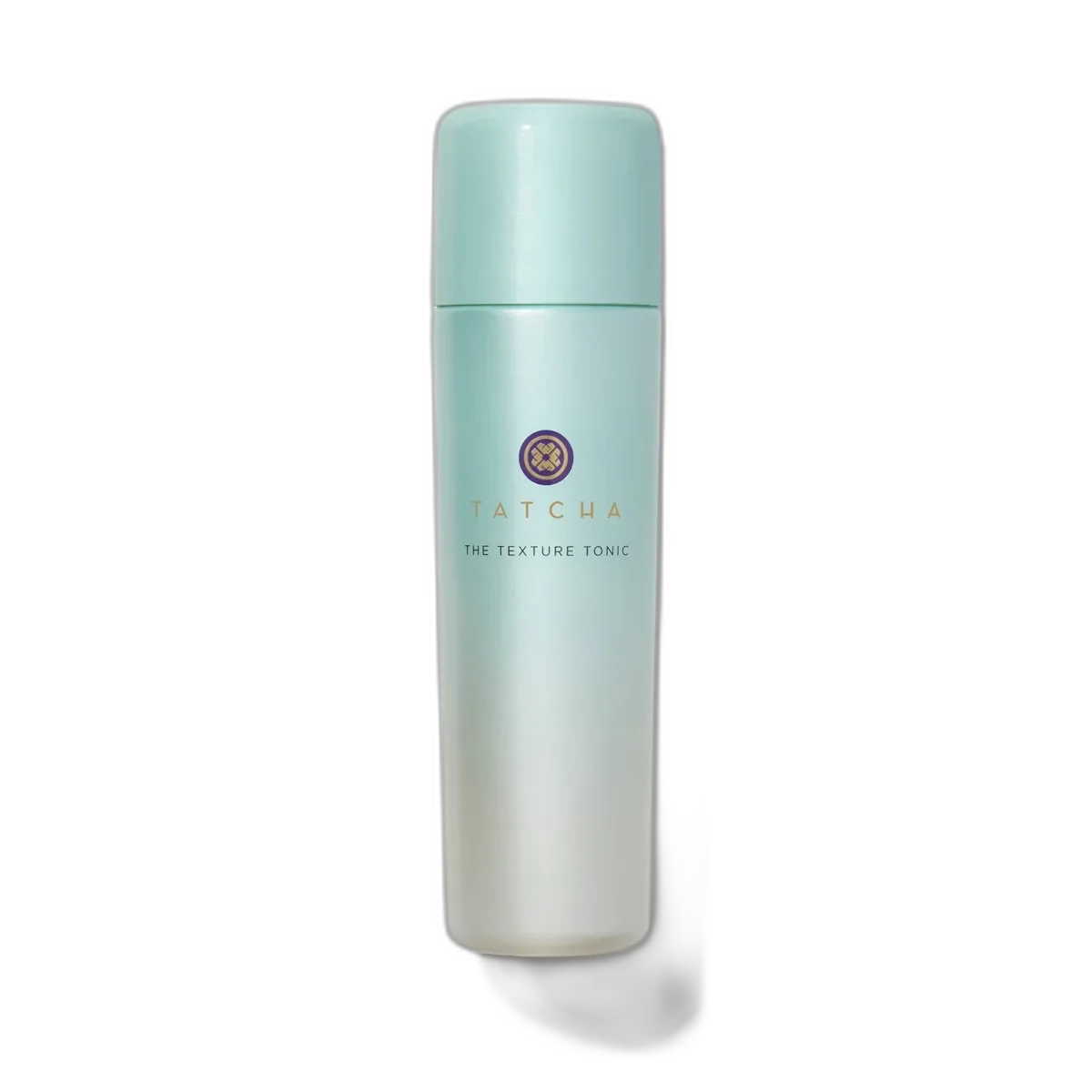
The Texture Tonic
Luxury J-Beauty Exfoliant
 Verified reviewer
Pros & cons.
- +Immediate visible glow and smoother texture after first application
- +Niacinamide and rice ferment filtrate provide brightening beyond just exfoliation
- +Gentle enough for AHA beginners who don't have sensitive skin
- +Beautiful packaging and thoughtful sensory experience elevate the routine
- +Cruelty-free, vegan, and comes in recyclable glass packaging
- +Japanese mugwort provides calming support to offset the exfoliation
- +Two size options available for those who want to try before committing
- −Multiple essential oils make this unsuitable for sensitive or reactive skin types
- −Contains alcohol which can further compromise barrier function during exfoliation
- −Fruit-derived AHAs are significantly gentler than pure glycolic or lactic acid
- −Premium pricing at $64 doesn't reflect the gentle potency of the formula
- −Strong herbal scent may be off-putting for those who prefer fragrance-free products
- −No specified AHA concentration makes it difficult to gauge exfoliating strength
The full review.
Centuries before AHAs became a skincare buzzword, geisha in Kyoto were rinsing their faces with the milky water left over from washing rice. That fermented liquid — rich in amino acids, vitamins, and organic acids — was credited with their famously luminous complexions. Tatcha’s founder Vicky Tsai built an entire brand around this tradition after discovering it firsthand in Japan, and The Texture Tonic is the most direct expression of that origin story: a liquid exfoliant that pairs rice ferment filtrate with fruit-derived alpha hydroxy acids.
The formula reads like a love letter to Japanese botanical philosophy. Seven fruit extracts — apple, grapefruit, orange, lemon, lime, hawthorn, and jujube — provide the AHA exfoliation, working gently to dissolve the protein bonds holding dead skin cells in place. Niacinamide sits prominently near the top of the ingredient list, contributing pore-tightening and oil-regulating benefits. Saccharomyces/Rice Ferment Filtrate adds enzymatic exfoliation and brightening. Japanese mugwort (Artemisia Princeps) and sodium hyaluronate round out the active lineup, offering calming and hydrating support respectively.
In practice, the Texture Tonic is a watery liquid that glides on easily, delivering a mild tingle that signals the fruit acids are at work. The sensation is brief and nowhere near the intensity you’d feel from a dedicated glycolic acid treatment. Within seconds, the skin feels noticeably smoother — a satisfying immediate payoff. The herbal scent is present and distinctive, a blend of lavender, eucalyptus, rosemary, and citrus that’s unmistakably botanical. It’s pleasant if you enjoy that aromatic profile, but it’s worth noting that this isn’t just for ambiance — those essential oils are functional irritants.
And here’s where the honest conversation begins. The Texture Tonic contains a substantial roster of essential oils: lavender, eucalyptus, rosemary, clary sage, palmarosa, fennel, mint, and ylang-ylang. It also contains alcohol, listed near the end of the ingredient list but present nonetheless. For oily and normal skin types without sensitivity issues, this likely won’t be a problem. For anyone with reactive skin, rosacea, or a compromised barrier, this formula is a minefield of potential triggers.
The exfoliation itself is genuine but gentle. Fruit-derived AHAs are inherently less concentrated and less pH-dependent than pure glycolic or lactic acid, which means the resurfacing effect is subtler. If you’re dealing with mild dullness, minor texture irregularities, or early signs of clogged pores, the Texture Tonic can deliver visible improvement over 4-6 weeks. If you’re fighting stubborn hyperpigmentation, significant sun damage, or deep textural concerns, you’ll likely need something with more exfoliating firepower.
The sensory experience is where Tatcha excels, and honestly, it’s where a significant portion of your $64 goes. The frosted purple glass bottle is genuinely beautiful. The application ritual feels considered and intentional. The way the product absorbs and leaves skin looking immediately dewy and refined is satisfying in a way that a clinical-looking bottle of glycolic acid toner simply isn’t. Whether that experience is worth the premium is a personal calculus.
Tatcha’s own clinical testing on 40 panelists showed promising results: 100% reported improved skin clarity, smoothness, and radiance after one use, and 100% showed a reduction in pore appearance after two weeks. These are brand-commissioned studies with relatively small sample sizes and short timescales, so they should be taken as encouraging rather than definitive.
The Texture Tonic works best as a maintenance exfoliant for skin that’s already in reasonably good shape. Think of it as the product you reach for when you want to keep your glow going rather than the one that rescues you from a texture crisis. Used 3-4 times a week in the evening, it maintains that fresh-faced clarity between more intensive treatments.
For the price, you’re buying into an entire philosophy — the ritual, the aesthetics, the Japanese botanical tradition — as much as you’re buying the active ingredients. The formula is well-constructed within its gentle framework, and the inclusion of niacinamide and rice ferment filtrate adds genuine value beyond simple exfoliation. But the essential oil load is a real limitation that narrows the audience for this product considerably, and the fruit AHAs, while pleasant, don’t deliver the kind of measurable results that make a $64 toner feel like an obvious investment.
Formula
### PM routineIngredient analysis.
Full INCI list
Aqua/Water/Eau, Butylene Glycol, Pentylene Glycol, Niacinamide, Saccharomyces/Rice Ferment Filtrate, Camellia Sinensis Leaf Extract, Cladosiphon Okamuranus Extract, Sodium Hyaluronate, Luffa Cylindrica Fruit/Leaf/Stem Extract, Salvia Sclarea (Clary) Oil, Foeniculum Vulgare (Fennel) Oil, Citrus Aurantifolia (Lime) Juice, Eucalyptus Globulus Leaf Oil, Rosmarinus Officinalis (Rosemary) Leaf Oil, Rosa Multiflora Fruit Extract, Citrus Aurantium Dulcis (Orange) Juice, Artemisia Princeps Leaf Extract, Cymbopogon Martini Oil, Citrus Medica Limonum (Lemon) Juice, Lavandula Angustifolia (Lavender) Oil, Mentha Arvensis Leaf Oil, Cananga Odorata Flower Oil, Crataegus Cuneata Fruit Extract, Ziziphus Jujuba Fruit Extract, Citrus Paradisi (Grapefruit) Fruit Extract, Pyrus Malus (Apple) Fruit Extract, Belamcanda Chinensis Root Extract, Eriobotrya Japonica Leaf Extract, Houttuynia Cordata Extract, 1,2-Hexanediol, PPG-6-Decyltetradeceth-20, PEG-30 Glyceryl Isostearate, PEG-50 Glyceryl Isostearate, Propanediol, Sodium Citrate, Pentasodium Pentetate, Citric Acid, Ethylhexylglycerin, Alcohol, Phenoxyethanol
Skin match.
The science.
The Science
The Texture Tonic uses alpha hydroxy acids from seven fruit sources instead of one purified AHA. A 2018 review in Molecules shows that AHAs promote desquamation of corneocytes by weakening intercellular cohesion in the stratum corneum and stimulate collagen synthesis in the dermis at appropriate concentrations (Tang & Yang, Molecules, 2018). Because the concentration and pH of fruit-derived AHAs in cosmetic formulations like this one are typically lower than clinical study levels, the resurfacing effect is milder.
Niacinamide adds value to this formula. A 2005 study in the International Journal of Cosmetic Science shows that topical niacinamide reduces fine lines, hyperpigmented spots, red blotchiness, and skin sallowness while improving elasticity (Bissett et al., International Journal of Cosmetic Science, 2005). Its high position in the Texture Tonic's ingredient list suggests a functional concentration; its ability to strengthen the skin barrier helps while the formula exfoliates.
The Saccharomyces/Rice Ferment Filtrate links the formula to traditional Japanese skincare. Fermented rice water contains ferulic acid, phytic acid, and amino acids that brighten and provide mild enzymatic exfoliation. While peer-reviewed research on this specific filtrate is limited compared to pure AHAs, this mechanism adds gentle resurfacing that works with the fruit acids.
The essential oil content needs scrutiny. Multiple studies show that common essential oils — especially lavender, eucalyptus, and citrus oils — cause contact sensitization and irritant contact dermatitis. In a formula that exfoliates and temporarily reduces barrier function, multiple essential oils add irritation risk that could undermine the formula's benefits.
References
- Dual Effects of Alpha-Hydroxy Acids on the Skin — Molecules (2018)
- Niacinamide: A B vitamin that improves aging facial skin appearance — International Journal of Cosmetic Science (2005)
Dermatologist Perspective
Dermatologists support AHA-based exfoliants to improve skin texture, reduce pore appearance, and promote cellular turnover. Dermatologists would likely view the Texture Tonic's gentle fruit acid approach favorably for patients with mild texture concerns starting chemical exfoliation. However, dermatologists would flag the significant essential oil content as a concern — board-certified dermatologists advise patients with sensitive or reactive skin to avoid products with multiple botanical oils, as these often cause cosmetic contact dermatitis. The low alcohol content adds more potential irritation to a product that already lowers skin defenses through exfoliation.
Where it fits in your routine.
After cleansing and drying your face in the evening, shake the bottle gently and pour a small amount into your palms or onto a cotton pad. Pat or sweep it across the face, avoiding the eye area and open wounds. Let it absorb for 30-60 seconds before your next skincare step. Use it 2-3 times per week, then increase to nightly as your skin adjusts. Always follow with moisturizer and use SPF the next morning, as AHAs increase sun sensitivity.
At $64 for 150ml (or $36 for the 75ml travel size), Texture Tonic is a luxury liquid exfoliant. The formula feels good and works, but the fruit-derived AHAs lack the measurable potency of cheaper AHA toners with specified concentrations. You pay for the Tatcha ritual, the beautiful packaging, and the Japanese botanical philosophy alongside the actives. The larger size has better per-unit value; at roughly $0.43 per ml, it is not the most expensive luxury exfoliant on the market. However, a gap exists between the price and the ingredient list, especially since the essential oil load limits safe users.
This works for oily, combination, or normal skin types wanting a gentle, ritual-focused exfoliant that keeps a healthy glow without aggressive resurfacing. It is a good entry point for AHA beginners who like luxury packaging and a sensory experience.
People with sensitive skin, rosacea, eczema, or a compromised moisture barrier should avoid this product because it contains high levels of essential oils and alcohol. The fruit AHAs are likely too gentle for those seeking strong exfoliation for stubborn texture or hyperpigmentation.
Product details.
A clear herbal-botanical blend smells of lavender, eucalyptus, rosemary, and citrus — present but not overwhelming.
Frosted glass bottle with a twist-off cap and controlled-pour opening, in Tatcha's signature purple-and-gold aesthetic. Recyclable. Finish glowylightweightfast-absorbing
The first application causes an immediate tingling sensation that lasts under a minute, leaving skin noticeably smoother. No purging occurs, but essential oils may cause redness in sensitive users. The herbal scent is present at application but fades fast.
3-4 months with nightly use on face
12 months
All Year
The backstory.
Tatcha's approach to exfoliation draws from the centuries-old Japanese practice of using fermented rice water to brighten and smooth the skin. The Texture Tonic was developed to bring this philosophy to a modern liquid exfoliant format, filling a gap in Tatcha's lineup for a product that addresses texture and pore concerns without the harshness of high-concentration acid treatments.
About Tatcha
Vicky Tsai founded Tatcha in 2009. The brand uses Japanese beauty rituals and the Tatcha Institute, which opened in 2014 to merge traditional ingredients with modern skin science. Tatcha sells widely at Sephora and has a large following, but its formulations prioritize sensory experience over clinical potency. *Established Brand (5–20 years)*
Common myths.
Fruit AHAs are just as strong as pure glycolic acid
Fruit-derived AHAs in this formula are gentler than concentrated glycolic acid. They exfoliate mildly to maintain skin clarity, but users with stubborn texture or significant sun damage may need a more potent AHA product.
Rice ferment filtrate is just a filler ingredient
Saccharomyces/Rice Ferment Filtrate is a complex mix of amino acids, vitamins, and organic acids from fermentation. It has been a staple of Japanese beauty for centuries and brightens, softens, and provides gentle enzymatic exfoliation.
FAQ.
How often should I use Tatcha The Texture Tonic?
Use 2-3 times per week in the evening after cleansing. If your skin tolerates it after two weeks, increase to nightly use. This formula uses gentler fruit-derived AHAs instead of concentrated glycolic acid, so most non-sensitive skin types can use it daily.
Can I use Tatcha The Texture Tonic with retinol?
Alternate nights instead of layering them. The fruit AHAs in this Texture Tonic increase sensitivity when used with retinol in one routine. Skip the Texture Tonic on retinol nights and use a hydrating toner instead.
Is Tatcha The Texture Tonic good for sensitive skin?
This product is not ideal for sensitive skin. The fruit AHAs are relatively gentle, but the formula contains alcohol and multiple essential oils (lavender, eucalyptus, rosemary, citrus). These ingredients cause irritation, redness, or reactions in reactive skin.
Does Tatcha The Texture Tonic help with acne?
It helps mild acne and blackheads by dissolving dead skin cell buildup in pores. niacinamide and wild rose extract also regulate oil production. For moderate to severe acne, a dedicated BHA (salicylic acid) product works better to penetrate pores.
What is the difference between Tatcha The Texture Tonic and a regular toner?
Unlike hydrating toners that only add moisture, the Texture Tonic is an active exfoliating treatment. It uses fruit-derived AHAs to chemically dissolve dead skin cells. It is a treatment step, not a prep or hydration step.
Is the Tatcha Texture Tonic worth the price?
At $64 for 150ml, this exfoliating toner costs a premium. The formulation works well for mild texture concerns, but the fruit AHAs are gentler than those in cheaper AHA toners with specified acid concentrations. Part of the price covers the luxury experience and Tatcha's Japanese-inspired botanical approach.
Does the Tatcha Texture Tonic contain fragrance?
'fragrance' is not listed as a standalone ingredient, but the formula uses multiple essential oils — lavender, eucalyptus, rosemary, clary sage, palmarosa, fennel, and ylang-ylang. These create a noticeable herbal-botanical scent and can sensitize reactive skin.
Community
What the community says.
"Instantly smoother and glowier skin"
"Pleasant lightweight texture"
"Visible pore refinement within weeks"
"Elegant packaging and sensory experience"
"Expensive for a toner-type product"
"Strong herbal scent from essential oils"
"Can cause irritation on sensitive skin"
"Results are subtle compared to stronger AHA products"
People also looked at.