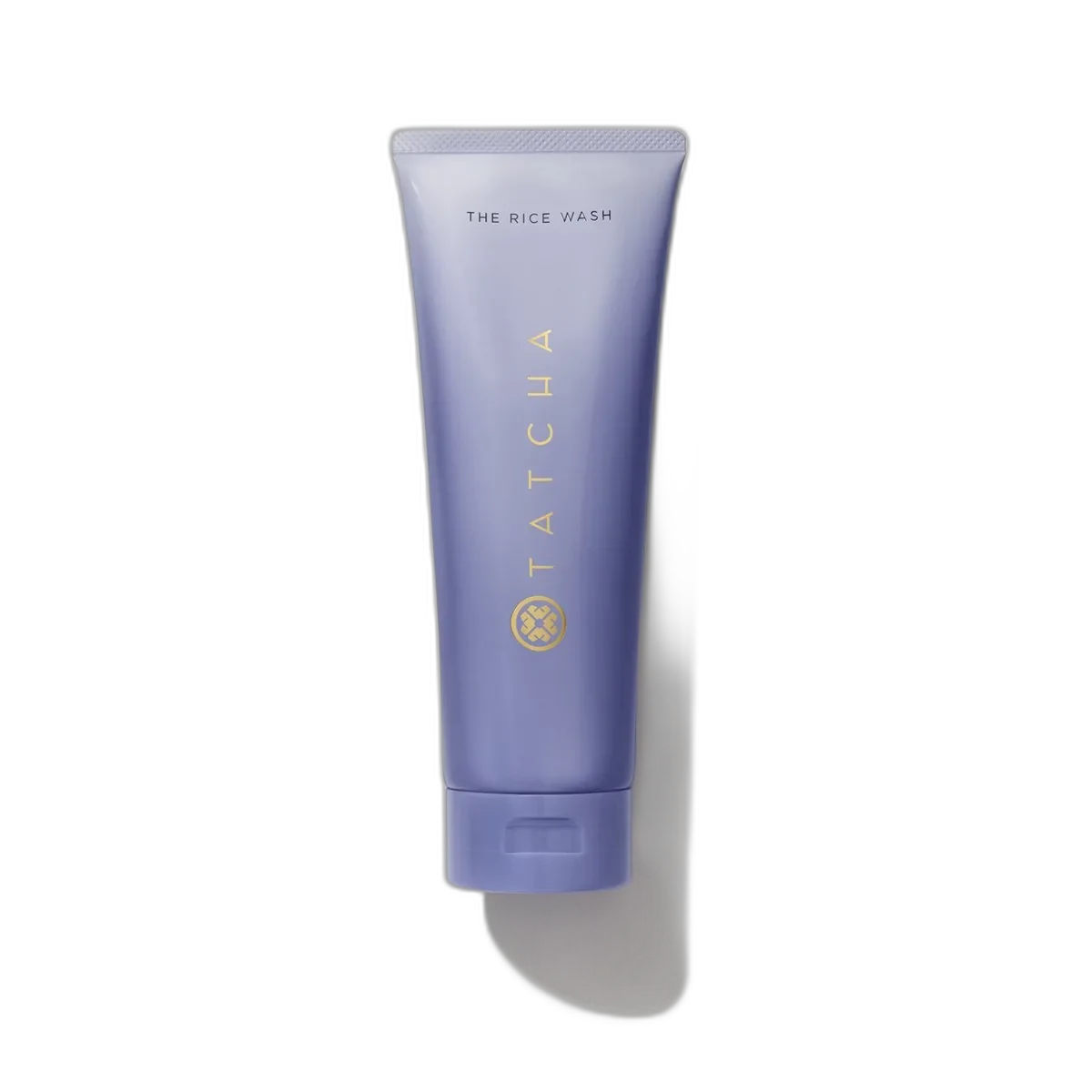
The Rice Wash
Gentle Daily Glow
 Verified reviewer
Pros & cons.
- +Amino acid surfactant system is genuinely among the gentlest cleansing bases available
- +Rice powder provides daily-safe physical exfoliation that dissolves during use
- +Leaves skin feeling soft and luminous rather than tight or stripped
- +Sulfate-free formula preserves the acid mantle and natural moisture barrier
- +Hyaluronic acid and glycerin actively hydrate during the cleansing process
- +Available in three sizes including a value-oriented 240 mL option
- +Practical squeeze tube packaging is travel-friendly and hygienic
- −Contains fragrance and a small amount of alcohol at the end of the ingredient list
- −At $40 for 120 mL, it is expensive for a wash-off product with brief skin contact
- −Will not remove heavy, waterproof, or long-wear makeup on its own
- −Rice powder exfoliation is very subtle — may disappoint those seeking visible sloughing
- −Hadasei-3 ferment has limited treatment potential in a short-contact wash-off format
- −Cream texture may feel insufficiently cleansing for very oily skin types
The full review.
Washing skin with rice water is an old beauty tradition that remains relevant. Dermatologists confirm rice water contains starches, amino acids, and antioxidants that benefit skin. Japanese beauty texts documenting geishas using cloudy rice water were recording an effective skincare step, not using poetic license.
Tatcha’s The Rice Wash translates this into a modern cleanser. It contains actual rice powder—finely milled Oryza sativa particles that feel like a gentle grit when you massage the cream onto damp skin. Unlike DIY rice water, this formula wraps the rice in an amino acid surfactant system that cleanses while the rice softens the skin.
The surfactant trio shows a commitment to gentleness over irritating cleansing agents. Sodium cocoyl glutamate comes from coconut fatty acids and glutamic acid and is one of the mildest surfactants available. Sodium caproyl methyltaurate adds moderate cleansing power without the stripping seen with sulfates. Coco-betaine provides the lather and foam. This surfactant system was engineered for skin that cannot tolerate aggression.
The rice powder is clever. Unlike scrub particles that stay abrasive, rice powder softens as it absorbs water during the massage. The first ten seconds provide light physical exfoliation to polish surface dullness and lift dead skin cells. By thirty seconds, the particles largely dissolve into a smooth cream. This de-escalation provides exfoliation without the risk of over-scrubbing, making it safe for daily use without the irritation common in dedicated exfoliating cleansers.
The Hadasei-3 ferment complex is also present—the same Saccharomyces ferment of green tea, rice, and mozuku algae used in the Tatcha line. In a wash-off product, contact time lasts perhaps sixty seconds, which questions how much conditioning the ferment delivers. The amino acids and organic acids in the ferment may marginally contribute to the soft, non-stripped feeling post-rinse, but significant treatment effects from a ferment in a cleanser require suspension of disbelief.
Sodium hyaluronate and glycerin have straightforward roles. Both are at meaningful concentrations and prevent surfactants from stripping natural moisture. The cleanser leaves skin feeling soft and hydrated rather than tight and squeaky. This distinction matters for dry and dehydrated skin types, where cheap sulfate-based cleansers almost always fail.
The texture is the product’s strongest point. The cream paste becomes a milky, soft lather with water, and the dissolving rice powder makes the sixty-second cleansing step feel more intentional. Skin feels smoother, softer, and has a subtle luminosity after rinsing. This likely results from physical exfoliation removing dullness and rice starch depositing a thin smoothing film.
The cleanser removes daily buildup, light makeup, and non-waterproof sunscreen. It is not an industrial-strength makeup remover; heavy or waterproof products require an oil cleanser first. It works well as a second cleanse or a morning wash.
Fragrance is listed ninth in the INCI. The scent is lighter than in other Tatcha products, but the cumulative fragrance exposure from twice-daily use is not trivial. Alcohol is at the end of the list, suggesting a minimal concentration—likely for the preservative system—but its presence concerns strict alcohol-avoiders.
Cleanser pricing is difficult because contact time is short. At $40 for 120 mL, you pay luxury pricing for a product that touches skin briefly before rinsing. The 240 mL Gratitude Size at $59 has better per-unit value. The amino acid surfactant system is gentler than most cleansers, and the rice powder adds functional exfoliation. Whether these features justify more than double the price of drugstore cream cleansers depends on your valuation of the texture and your skin’s surfactant sensitivity.
The Rice Wash is the most practical, defensible purchase in the Tatcha lineup. Unlike a $110 essence or a $55 primer, a gentle cleanser that leaves skin soft and luminous addresses a daily need. It will not transform your skin or replace actives. It makes twice-daily cleansing more pleasant and gentle than previous products, and for some, upgrading the foundation matters more than adding a serum.
Ingredient analysis.
Full INCI list
Aqua/Water/Eau, Microcrystalline Cellulose, Propanediol, Sodium Cocoyl Glutamate, Glycerin, Acrylates Copolymer, Sodium Caproyl Methyltaurate, Coco-Betaine, Parfum/Fragrance, Saccharomyces/Camellia Sinensis Leaf/Cladosiphon Okamuranus/Rice Ferment Filtrate, Oryza Sativa (Rice) Powder, Chondrus Crispus Extract, Sodium Hyaluronate, Betaphycus Gelatinum Extract, Lauryl Glucoside, Potassium Hydroxide, Polyquaternium-39, Disodium EDTA, Phenoxyethanol, Ethylhexylglycerin, Sodium Benzoate, Sodium Carbonate, Alcohol
Skin match.
The science.
The Science
The Rice Wash uses an amino acid-based surfactant system to cleanse effectively while preserving the skin's acid mantle. Sodium cocoyl glutamate, derived from coconut fatty acids and L-glutamic acid, has a critical micelle concentration close to the skin's physiological pH, which minimizes barrier disruption. Research comparing amino acid surfactants to traditional sodium lauryl sulfate shows less transepidermal water loss, less protein denaturation, and lower irritation potential.
Sodium caproyl methyltaurate, a taurine-derived surfactant, cleanses moderately without the lipid-stripping behavior of sulfate-based detergents. It combines with coco-betaine (an amphoteric surfactant that acts as a co-surfactant and foam booster) to create a system that foams well while remaining mild — meeting the consumer expectation for a cleanser that foams without sacrificing gentleness.
The rice powder (Oryza sativa) exfoliation component uses rice starch granules, which are softer and more water-soluble than mineral or synthetic scrub particles. A study in the Journal of Cosmetic Dermatology found that rice starch improves skin surface smoothness and barrier function. As rice powder dissolves during use, it creates a self-limiting exfoliation profile — the longer you massage, the gentler it becomes.
Sodium hyaluronate in a cleanser binds water to the skin surface during cleansing, creating a hydrating buffer between surfactant micelles and the stratum corneum. This reduces how much the surfactant solubilizes and removes the skin's natural lipids, the main cause of post-wash tightness. Research shows that humectants in cleanser formulations significantly reduce measurable moisture loss compared to surfactant-only systems.
Dermatologist Perspective
Dermatologists emphasize that the cleanser step sets the foundation for the rest of a skincare routine. Board-certified dermatologists would commend this formula's amino acid surfactant system, the gentlest class of cleansing agents available. The sulfate-free, amino acid-based approach works well for patients with dry skin, rosacea, or compromised barriers, where traditional surfactants trigger irritation and increase transepidermal water loss. The rice powder exfoliation is gentle enough for daily use — dermatologists would contrast it favorably with harsher physical exfoliants. The primary dermatological concern is the fragrance; even at a low concentration, it adds sensitization risk to a product used twice daily. Dermatologists would note that the Hadasei-3 ferment's benefit in a rinse-off product is minimal due to the brief contact time.
Where it fits in your routine.
Use a pea-to-almond-sized amount on your fingertips. Massage onto damp skin in circular motions for 30-60 seconds; the rice powder exfoliates lightly as it dissolves. Add water to create a soft lather. Rinse well with lukewarm water. Use morning and evening. If wearing makeup in the evening, use an oil or balm cleanser first, then use The Rice Wash as the second cleanse.
At $40 for 120 mL, The Rice Wash is premium-priced for a cleanser. The 240 mL 'Gratitude Size' at $59 ($0.25/mL vs $0.33/mL) offers substantially better value and is worth considering for committed users. A 50 mL travel size at $18 provides a reasonable trial investment. With twice-daily use, the standard size lasts 2-3 months — roughly $13-20 per month. The amino acid surfactant system and rice powder exfoliation add genuine formulation value, but effective gentle cleansers exist at every price point. The premium reflects the Hadasei-3 ferment, the rice powder texture experience, and the Tatcha brand. Among Tatcha products, this is arguably the most justifiable purchase — a good cleanser benefits every skin type, and the amino acid surfactant system represents real gentleness, not just marketing.
Use this if you want a gentle daily cleanser that leaves skin soft and luminous instead of tight. It works for dry to combination skin types needing mild daily exfoliation without a dedicated scrub product, and for skin that reacts poorly to sulfate-based or harsh cleansers.
Very oily skin types wanting a more stripping cleanse. Those on a strict budget for wash-off products — effective gentle cleansers exist at lower prices. Anyone who needs fragrance-free products for all skin contact. And those who expect a cleanser to remove heavy or waterproof makeup without a prior oil-cleansing step.
Product details.
A thick, creamy paste contains visible fine rice powder particles. Mixing it with water creates a soft, milky lather that feels gentle on skin. The rice granules dissolve during massage, moving from slight grittiness to nothing by the rinse step.
A light, clean fragrance has subtle floral-herbal notes. It is pleasant but present—less prominent than the scent in some other Tatcha products, but still detectable.
A squeezable white tube with a gold flip-top cap. Practical and travel-friendly — the tube format is more hygienic and portable than Tatcha's glass jars. Dispenses cleanser easily without waste.
The cream feels thick but not heavy on first use. Adding water and massaging creates a gentle lather and a faint textural sensation from the rice powder — a soft polish rather than a scrub. After rinsing, skin feels soft and smooth with a subtle luminosity that looks healthier. It leaves no tightness, dryness, or residue.
2-3 months with twice-daily use, using a pea-to-almond-sized amount per wash
12 months
All Year
The backstory.
The Rice Wash is inspired by the Japanese tradition of washing skin with rice water — a practice documented in Japanese beauty texts for centuries. Geisha were known to use the cloudy water left over from rinsing rice to cleanse and soften their skin before applying their iconic white makeup. Tatcha translated this into a modern cleanser by combining actual rice powder with their Hadasei-3 rice ferment filtrate, creating a formula that references the tradition while delivering through contemporary surfactant science.
About Tatcha
Established Brand (5–20 years)Vicky Tsai founded Tatcha in 2009, using traditional Japanese beauty rituals. Unilever acquired Tatcha in 2019. The brand uses Japanese botanical ingredients and fermentation science to build a loyal following, but relies on traditional knowledge instead of peer-reviewed clinical trials for its specific products.
FAQ.
Is Tatcha The Rice Wash good for sensitive skin?
The amino acid surfactant system (sodium cocoyl glutamate and sodium caproyl methyltaurate) is one of the gentlest available, and the rice powder exfoliation is mild. However, the formula has fragrance and a small amount of alcohol at the end of the ingredient list, which concerns some sensitive skin users. If fragrance is your primary trigger, this cleanser is not suitable. If your sensitivity is to harsh surfactants, this cleanser's gentle cleansing system works well.
Can Tatcha The Rice Wash remove makeup?
It removes light to moderate makeup, daily sunscreen, and surface buildup. Use an oil or balm cleanser first for heavy, waterproof, or long-wear makeup, then use The Rice Wash as your second cleanse. The gentle surfactant system preserves skin moisture instead of stripping it, trading maximum removal power for skin comfort.
What does the rice powder in Tatcha The Rice Wash do?
The finely milled rice powder has two functions: it provides gentle physical exfoliation as you massage the cleanser into skin (the particles soften and dissolve during use, making the exfoliation progressively gentler), and it deposits rice starch on the skin surface to create a soft, luminous feeling after rinsing. It is not a scrub — it is a daily-use gentle polish.
Is Tatcha The Rice Wash worth $40?
At $40 for 120 mL, this cleanser costs a premium, especially as a wash-off product with limited skin contact time. The amino acid surfactant system, rice powder, Hadasei-3 ferment, and hyaluronic acid are quality ingredients. A 240 mL 'Gratitude Size' at $59 has better per-unit value. However, cheaper options also provide gentle cleansing. The premium price pays for the rice powder texture, the Hadasei-3 ferment, and the Tatcha brand.
Can I use Tatcha The Rice Wash every day?
Yes — the gentle amino acid surfactants and soft rice powder exfoliation work for twice-daily use. Unlike exfoliating cleansers with acids or harsh scrub particles, the rice powder in this formula dissolves during use and does not over-exfoliate with daily application. Most users use it as a morning cleanser and a second-step evening cleanser.
Does Tatcha The Rice Wash contain sulfates?
No. The cleansing system uses amino acid-based surfactants (sodium cocoyl glutamate and sodium caproyl methyltaurate) and the amphoteric surfactant coco-betaine. These surfactants cleanse effectively and are gentler than SLS and SLES. They maintain the skin's natural moisture balance and acid mantle.
What the community says.
"Skin feels incredibly soft and luminous after every wash"
"Gentle enough for twice-daily use without any tightness or stripping"
"Rice powder provides just enough exfoliation without irritation"
"Beautiful creamy texture makes cleansing feel luxurious"
"Works well as both a morning cleanser and second cleanse at night"
"Expensive at $40 for a wash-off cleanser"
"Contains fragrance and a small amount of alcohol"
"May not remove heavy makeup or waterproof sunscreen alone"
"Rice powder exfoliation is too subtle for those wanting visible sloughing"
"Cream texture can feel insufficiently cleansing for very oily skin"
People also looked at.