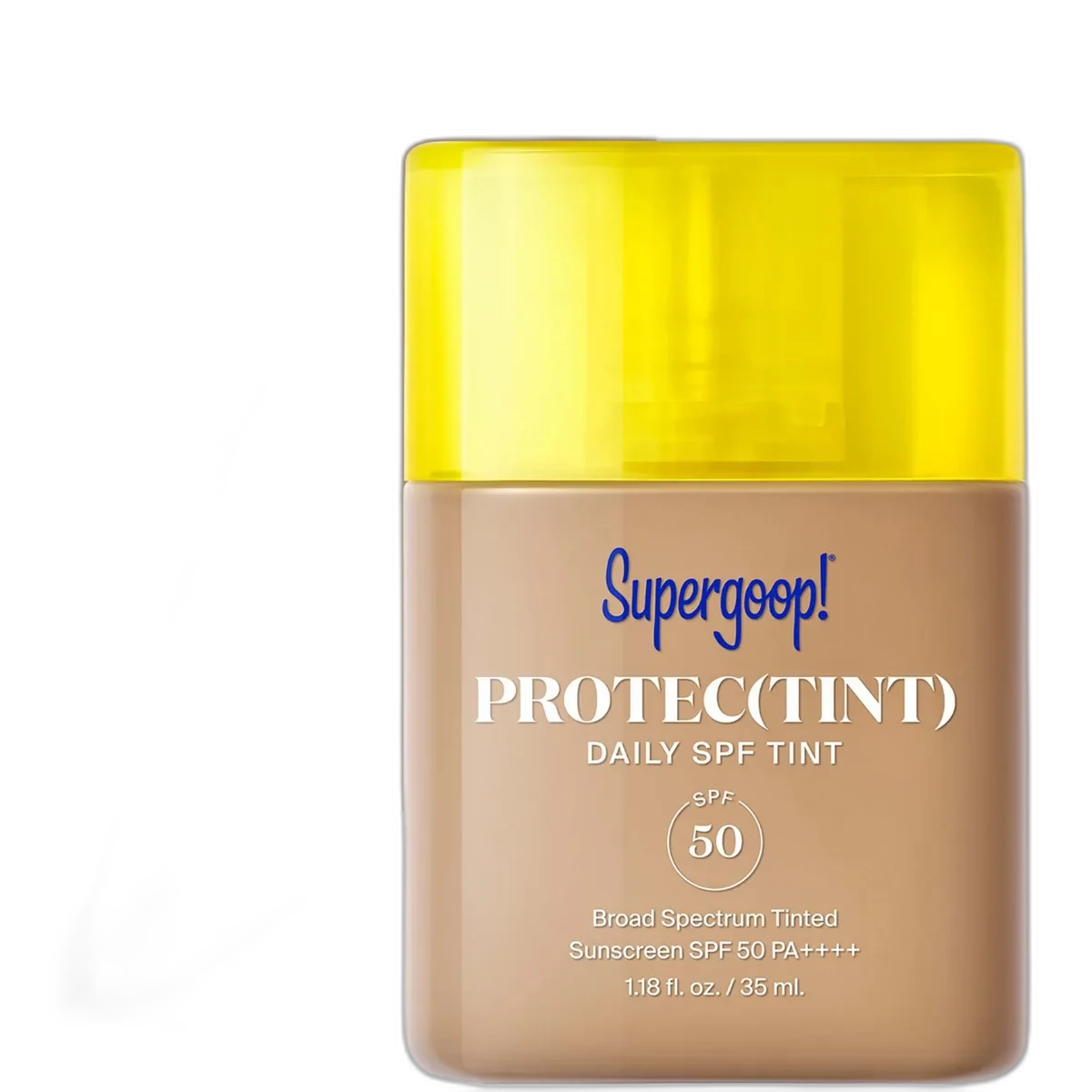
Protec(tint) Daily SPF Tint SPF 50
The Tinted SPF That Took 17 Years
 Verified reviewer
Pros & cons.
- +Hybrid mineral-chemical filter system achieves SPF 50 without the heavy texture of fully mineral formulas
- +Ectoin provides scientifically supported cellular-level photoprotection beyond standard UV filtering
- +Hyaluronic acid-infused bentonite clay simultaneously hydrates and controls oil — a genuine innovation
- +14 flexible shades across warm, neutral, and cool undertones eliminate white cast
- +Iron oxide tinting adds visible light and blue light protection relevant for melasma prevention
- +Fragrance-free, oil-free, silicone-free formula suitable for sensitive skin
- +Remarkably lightweight feel that reviewers describe as virtually undetectable on skin
- +8-11 hour wear time without setting spray is exceptional for a skin tint
- −Small 1.18 oz tube at $44 creates a steep annual cost for daily-use sunscreen
- −Light coverage only — does not conceal significant imperfections or scarring
- −Coverage begins visibly fading around the 5-hour mark with redness showing through
- −Shade range has gaps, particularly for deeper cool-toned complexions
- −Contains homosalate and octisalate, which some users prefer to avoid in a mineral-based product
- −Some patchiness reported around the nose requiring careful blending or primer
The full review.
When a brand that has sold nothing but sunscreen for seventeen years finally releases its first tinted product, you pay attention. Supergoop! could have introduced a skin tint at any point during its run — the tinted sunscreen market was already crowded when the brand launched in 2007 — but Holly Thaggard and her team waited until they had something worth the delay. Protec(tint) Daily SPF Tint SPF 50 arrived in March 2024, and it immediately won an Allure Best of Beauty award, which is either a coincidence or a verdict.
The formula is a hybrid — a combination of zinc oxide at 13.58% with two chemical filters, homosalate at 7% and octisalate at 5%. This approach is deliberate and intelligent. A fully mineral SPF 50 typically requires zinc oxide concentrations north of 20%, which virtually guarantees a heavy, chalky texture regardless of how much iron oxide tinting you throw at it. By supplementing with chemical UVB filters, Supergoop! achieves SPF 50 with a lower mineral load, giving the formula room to be lightweight and sheer while the zinc oxide still provides the broad-spectrum UVA coverage that chemical filters like homosalate and octisalate can’t match.
The most interesting ingredient on the label is ectoin. This is not a standard sunscreen additive. Ectoin is a natural compound produced by extremophilic microorganisms — bacteria that evolved to survive in environments so harsh they would destroy most organic molecules. Research published in Skin Pharmacology and Physiology (2004) demonstrated that ectoin prevents UVA-induced damage at multiple cellular levels, including protecting Langerhans cells (the skin’s immune sentinels) from UV destruction. A more recent study in the Journal of Cosmetic Dermatology (2024) showed that ectoin works synergistically with UV filters, enhancing overall photoprotection beyond what the filters achieve alone. In a tinted SPF designed for daily wear, this kind of cellular-level defense is the difference between a product that blocks UV and a product that actually protects skin.
The hyaluronic acid-infused bentonite clay is the other innovation that sets this formula apart. Traditional tinted moisturizers force a choice: hydrating formulas that go shiny by noon, or mattifying formulas that cling to dry patches by afternoon. Supergoop’s solution combines sodium hyaluronate for moisture retention with bentonite clay for sebum absorption in the same formula. In practice, this means the product hydrates without adding oil, and controls shine without drying — a balance that most skin tints claim but few deliver.
The coverage sits firmly in the light category. This is not foundation. It won’t conceal acne scarring or significant hyperpigmentation. What it does is even out skin tone, reduce the visual impact of redness, and give skin a polished, alive quality that reads as naturally good rather than made-up. The 14 shades across warm, neutral, and cool undertones blend and adapt to skin rather than sitting on top of it as a foreign layer. The iron oxide pigments that create these shades also provide visible light protection that untinted sunscreens miss entirely — relevant for anyone managing melasma or UV-triggered pigmentation.
The texture is a pleasant surprise. It emerges from the tube as a thick, cushiony emulsion that looks heavier than it should be. Within seconds of blending, it transforms into something nearly weightless. Reviewers consistently describe forgetting they’re wearing it, which is the highest compliment a daily-wear product can receive. The fragrance-free formulation means no scent competes for attention — just skin that looks like itself, but better rested.
Wear time is genuinely impressive. Multiple independent reviews document 8-11 hour wear without setting spray, which outperforms many traditional foundations. The visible tint does begin fading around the five-hour mark, with redness showing through in areas of high movement, but the overall finish maintains its integrity well into the evening. For UV protection purposes, the standard two-hour reapplication rule still applies during direct sun exposure — though the product’s light, layerable texture makes midday reapplication less disruptive than most foundations would be.
The limitation that will frustrate committed users is the tube size. At 1.18 fl oz for $44, this is a small product by sunscreen standards. When you apply it at the generous amount that dermatologists recommend for facial SPF — roughly a nickel-sized dollop — a tube lasts four to six weeks. That puts the annual cost of daily use around $380-570, which is luxury-tier pricing for what is essentially a tinted sunscreen. For a brand that built its reputation on making sun protection accessible and everyday, the price-to-volume ratio is the product’s most significant weakness.
The shade range, while better than many tinted SPFs, still has gaps. Users with deeper cool-toned skin have noted limited options, and the jump between some shades is large enough that in-between skin tones may not find a perfect match. This is a recognized first-generation challenge that Supergoop! will presumably address as the product line matures.
For what it is — a skin tint built by a company that thinks about sun protection more deeply than most — Protec(tint) represents genuine innovation. The ectoin, the hyaluronic acid-infused clay, the hybrid filter system, and the 14-shade range collectively solve problems that the tinted sunscreen category has accepted as inevitable. It’s not cheap, it’s not full-coverage, and it’s not perfect. But it might be the most thoughtfully formulated tinted SPF on the market, and when you’re wearing it on your face every single day, thoughtful formulation matters more than price per ounce.
Ingredient analysis.
Full INCI list
Active Ingredients: Zinc Oxide 13.58%, Homosalate 7.0%, Octisalate 5.0%. Inactive Ingredients: Aqua/Water/Eau, Isononyl Isononanoate, Butyloctyl Salicylate, Propanediol, Silica, Glycerin, 1,2-Hexanediol, Lecithin, Coco-Caprylate/Caprate, Cetearyl Alcohol, Lauryl Glucoside, Polyglyceryl-2 Dipolyhydroxystearate, Ammonium Acryloyldimethyltaurate/VP Copolymer, Ectoin, Coco-Glucoside, Polyhydroxystearic Acid, Citric Acid, Triethoxycaprylylsilane, Morinda Citrifolia Extract, Xanthan Gum, Sodium Phytate, Bentonite, Sodium Hyaluronate, Tocopherol. May Contain: CI 77891 (Titanium Dioxide), CI 77491, CI 77492, CI 77499 (Iron Oxides)
Skin match.
The science.
The Science
Protec(tint) uses ectoin, a cyclic amino acid derivative. Extremophilic bacteria (Halomonas elongata) produce ectoin to survive UV radiation, osmotic stress, and extreme temperatures. Buenger and Driller's 2004 research in Skin Pharmacology and Physiology shows ectoin prevents UVA-induced photoaging via several pathways: it inhibits second messenger release, blocks transcription factor AP-2 activation, prevents ICAM-1 expression, and protects against mitochondrial DNA mutation. One clinical study found 0.5% ectoin cream protected 100% of epidermal Langerhans cells from UV destruction.
Fontbonne and colleagues' 2024 work in the Journal of Cosmetic Dermatology shows ectoin works synergistically with conventional UV filters. An SPF 30 sunscreen with ectoin provided better in-vivo protection than an equivalent formulation without ectoin. This shows ectoin's benefits add to—rather than duplicate—traditional UV filtration.
The iron oxide pigments (CI 77491, 77492, 77499) provide both cosmetic and protective functions. Research shows iron oxides absorb visible light in the 400-700nm range, offering protection zinc oxide and titanium dioxide do not provide. This matters for melasma, where visible light—not just UV—triggers melanocyte activation and pigmentary recurrence despite UV protection. Studies show tinted sunscreens with iron oxides prevent visible light-induced pigmentation better than untinted mineral sunscreens.
Research in PMC (2023) supports the bentonite clay inclusion. Bentonite-containing formulations regulate sebum production while maintaining skin hydration. This validates that Protec(tint) controls oil and delivers moisture when combined with sodium hyaluronate.
References
- Ectoin: an effective natural substance to prevent UVA-induced premature photoaging — Skin Pharmacology and Physiology (2004)
- Positive and ecobiological contribution in skin photoprotection of ectoine and mannitol combined in vivo with UV filters — Journal of Cosmetic Dermatology (2024)
Dermatologist Perspective
Board-certified dermatologists favor Protec(tint)'s formulation. Dr. Marisa Garshick notes the broad-spectrum, oil-free formula works for daily wear across skin types, while Dr. Michele Green identifies ectoin as a key differentiating ingredient. Dermatologists increasingly recommend tinted sunscreens over untinted formulas for patients with melasma or hyperpigmentation because iron oxides provide visible light protection that mineral UV filters alone lack. Because of the hybrid mineral-chemical filter system, some dermatologists would note the chemical filter components (homosalate, octisalate) mean this is not a purely mineral product—a detail relevant for pregnant patients or those seeking mineral-only formulas.
Where it fits in your routine.
Apply a large amount (about a nickel-sized dollop) to a clean, moisturized face as your final skincare step. Blend using fingers, a sponge, or a brush; fingers work well because the texture is lightweight. Use thin layers for more coverage. Apply concealer on top for targeted spot coverage. Reapply every two hours during direct sun exposure. When reapplying over makeup, pat gently instead of rubbing to minimize disruption.
At $44 for 1.18 fl oz, the premium price makes annual daily use cost $380-570. No larger size exists to lower the per-unit cost. Value depends on if this replaces both a sunscreen ($30-40) and a light foundation ($30-50), which makes the combined cost comparable. The ectoin, hyaluronic acid-infused bentonite clay, and 14-shade development show R&D investment from an established brand. However, users frequently complain about the small tube size, and the pricing contradicts the brand philosophy that sunscreen should be used liberally.
This product combines sunscreen and skin tint for those who want one step without the heavy feel of traditional tinted moisturizers. It works for normal, combination, and dry skin types seeking natural, lightweight coverage. The iron oxides provide visible light protection beyond UV filtering, making it well-suited for melasma and hyperpigmentation management.
Users needing medium to full coverage should choose a traditional foundation over a separate sunscreen. The $44 price for 1.18 oz makes daily use difficult for budget-conscious users. Those seeking a mineral-only sunscreen should note this hybrid formula contains homosalate and octisalate alongside the zinc oxide.%20Daily%20SPF%20Tint%20SPF%2050)
Product details.
This thick, cushiony emulsion feels lightweight once blended into skin. The formula has initial viscosity from the tube, but it spreads easily and sets to a weightless feel within seconds.
Fragrance-free with no detectable scent. Clean, clinical feel.
Clear squeeze tube (approximately 3 x 2 inches) shows the tint shade through the packaging. Twist-and-click cap. Compact and portable. Thick plastic requires firm squeezing as the tube empties.
The first application shows a skin-like finish; the tint adapts to your skin tone instead of sitting on top. Bentonite clay prevents immediate shininess and hyaluronic acid stops skin from feeling dry. There is no adjustment period. The lightweight feel shows within seconds of blending. Most users find the product feels invisible despite visible coverage.
4-6 weeks with daily facial application at proper sunscreen amounts
12 months
All Year
The backstory.
After seventeen years of making untinted sunscreens, Supergoop! entered the tinted category with Protec(tint) in March 2024 — the brand's most ambitious product launch. Rather than simply adding pigment to an existing formula, they developed a hybrid UV system and introduced ectoin, a stress-response molecule from extremophilic bacteria, as a featured ingredient. The product won an Allure Best of Beauty award in its launch year, validating the brand's deliberate, late entry into a crowded category.
About Supergoop!
Established Brand (5–20 years)Supergoop! launched in 2007. The brand spent 17 years as an SPF-only brand before Protec(tint) became its first tinted product. Supergoop! has Leaping Bunny certification and the Allure Best of Beauty award for this product. A Blackstone majority stake exceeding $700 million backs the brand.
FAQ.
How much coverage does Supergoop Protec(tint) provide?
Light to light-medium coverage evens skin tone and reduces redness without hiding imperfections. It is a 'your skin but better' tint, not a foundation. You can build coverage with thin layers or use concealer for targeted spot coverage.
Does Supergoop Protec(tint) have white cast?
No. The iron oxide tinting across 14 shades eliminates white cast despite the 13.58% zinc oxide. This hybrid formula uses chemical filters, so it needs less total mineral concentration than fully mineral SPF 50 formulas.
Is Supergoop Protec(tint) a mineral or chemical sunscreen?
This hybrid formula combines zinc oxide (mineral) with homosalate and octisalate (chemical). This mix reaches SPF 50 using less mineral than fully mineral formulas. The result is a more cosmetically elegant texture that still provides mineral-based UVA coverage.
What is ectoin and why is it in this sunscreen?
Extremophilic microorganisms produce the natural compound ectoin to survive harsh environments. Research in Skin Pharmacology and Physiology (2004) shows ectoin prevents UVA-induced cellular damage, including Langerhans cell destruction. Ectoin works with UV filters to increase photoprotection and defends against blue light and pollution stress.
How long does Supergoop Protec(tint) last on the face?
Reviewers report the natural finish lasts 8-11 hours, but visible coverage fades around the 5-hour mark. Reapply UV protection every 2 hours during direct sun exposure, even if the tint looks fine. The wear time is impressive for a product without setting spray.
Is Supergoop Protec(tint) safe during pregnancy?
The formula uses zinc oxide (mineral, generally considered pregnancy-safe) with homosalate and octisalate (chemical filters, which some practitioners recommend avoiding during pregnancy as a precaution). Ask your healthcare provider for personalized guidance on the hybrid filter system. ---
What the community says.
"Extremely lightweight feel — like wearing nothing on skin"
"Natural your-skin-but-better finish that avoids looking made-up"
"No white cast despite 13.58% zinc oxide mineral filter"
"Blends effortlessly without clinging to dry patches or streaking"
"Holds up impressively for 8-11 hours without setting spray"
"Fragrance-free and comfortable even for sensitive skin"
"Small 1.18 oz tube runs out quickly when applying adequate sunscreen amount"
"Light coverage only — redness and imperfections still show through"
"Coverage fades noticeably after 5 hours requiring touch-ups"
"Some patchiness around the nose area during application"
"Shade range could be expanded, particularly for deeper cool-toned skin"
"Contains chemical UV filters (homosalate, octisalate) despite mineral base"
People also looked at.