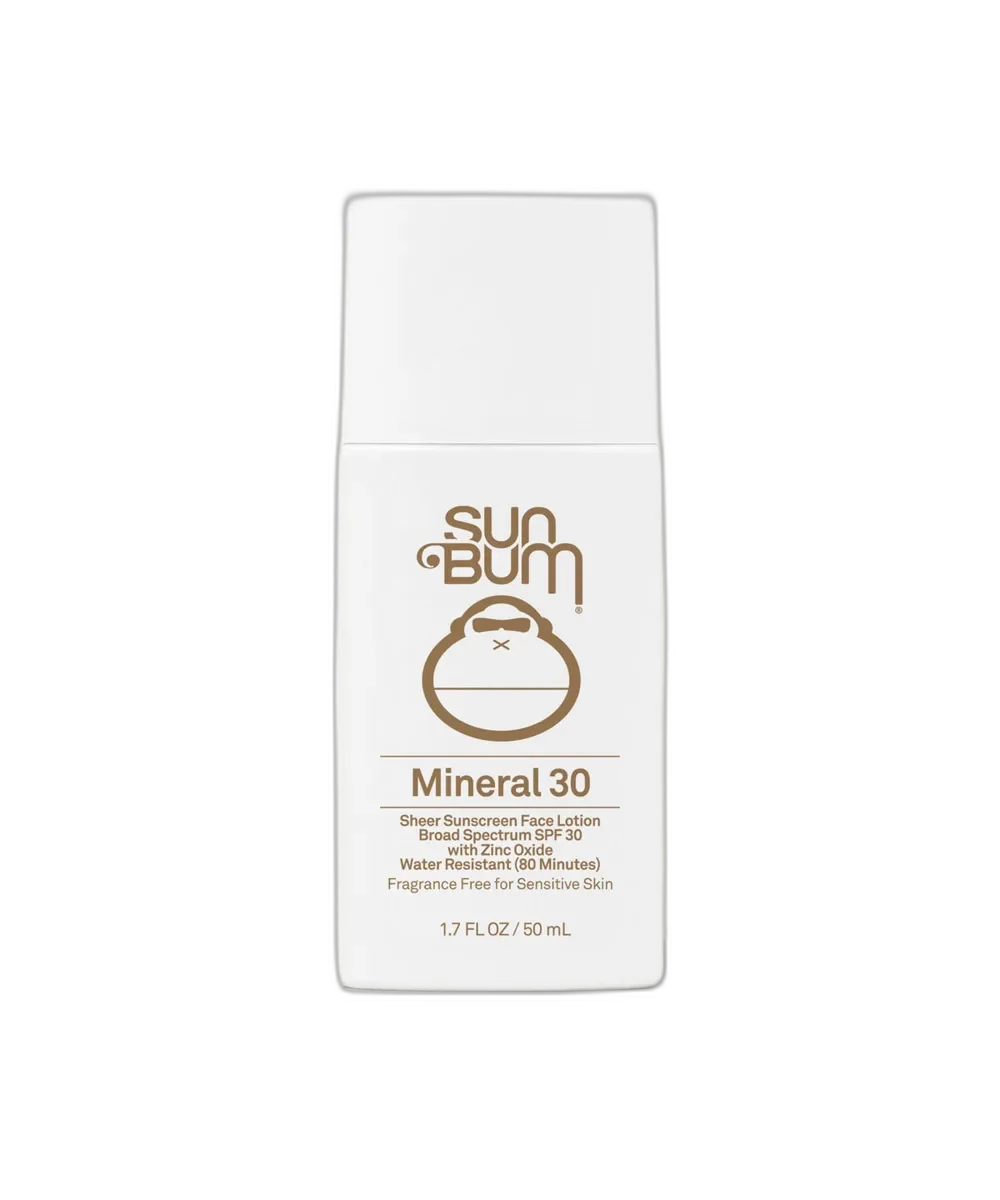
Mineral SPF 30 Sunscreen Face Lotion
Beach-Culture Mineral Shield
 Verified reviewer
Pros & cons.
- +Anhydrous silicone base provides primer-like elegance rare in mineral sunscreens at this price
- +Fragrance-free formulation suitable for sensitive and post-procedure skin
- +Matte velvety finish works well as a makeup primer base
- +Less white cast than traditional water-based mineral sunscreens
- +Antioxidant support from vitamin E, sunflower, and rice bran extracts
- +Hawaii Act 104 compliant — made without oxybenzone and octinoxate
- +PETA and Leaping Bunny dual cruelty-free certification
- −Isopropyl myristate (comedogenicity 5/5) makes this risky for acne and fungal-acne-prone skin
- −White cast persists on medium to dark skin tones despite improved blendability
- −Low zinc oxide at 2.4% raises questions about UVA protection adequacy
- −Expensive per ounce at $12.35/oz for a daily-use sunscreen in a small tube
- −Silicone-heavy formula can pill when layered under certain moisturizers or foundations
- −Mineral filter percentages total only 7.7% — lower than most mineral sunscreens
The full review.
Mineral sunscreen has an image problem. For decades, zinc oxide and titanium dioxide meant thick white paste that looked like 1987 lifeguard makeup. Ghostly white casts and heavy, draggy textures keep consumers choosing chemical sunscreens despite concerns about oxybenzone and octinoxate. Sun Bum’s Mineral SPF 30 Face Lotion solves this by abandoning conventional water-based emulsions.
This is an anhydrous sunscreen. The inactive ingredients list starts with cyclopentasiloxane — a volatile silicone that evaporates after application — followed by dimethicone crosspolymer, polysilicone-11, and hydrogen dimethicone. This formula contains no water. The mineral filters (titanium dioxide at 5.3% and zinc oxide at 2.4%) sit in a pure silicone matrix that spreads like a makeup primer and sets to a matte, velvety finish.
The texture is impressive for a mineral sunscreen at this price point. It glides on with a silky slip, unlike the chalky drag of conventional mineral formulas. Within one or two minutes, it sets to a smooth, matte finish that works as a decent foundation canvas. If you associate mineral sunscreen with heaviness and white-out, the first application of Sun Bum’s Mineral SPF 30 Face Lotion will change your expectations.
The white cast is improved but not gone. On lighter skin tones, a mild initial cast fades minutes after blending. On medium to dark skin tones, some visible cast remains — a shortcoming that limits universal appeal. Sun Bum offers a tinted version to fix this, but the non-tinted version reviewed here still has the mineral sunscreen’s original sin for anyone above a light-medium complexion.
One formulation concern needs discussion: isopropyl myristate. Listed as the second inactive ingredient by weight, isopropyl myristate has a comedogenicity rating of 5 out of 5 — the highest score. It is one of the most reliable pore-clogging ingredients in cosmetics. Its inclusion in an otherwise thoughtful formula is baffling. It likely acts as the primary emollient and helps the mineral filters disperse in the anhydrous base, but its presence means anyone with acne-prone, congestion-prone, or fungal-acne-prone skin is rolling the dice with this product.
The mineral filter percentages also need transparent discussion. Titanium dioxide at 5.3% and zinc oxide at 2.4% total 7.7% mineral content — lower than the 15-25% typical of many mineral sunscreens. The product passed FDA testing for SPF 30 and broad-spectrum designation, so the protection claims are verified. However, the lower mineral load means the protection works with tighter margins. In an anhydrous silicone base, mineral particles may disperse more efficiently than in water-based emulsions, which may explain how the protection level works with less mineral content. Still, some dermatologists and sunscreen enthusiasts remain skeptical about UVA robustness at only 2.4% zinc oxide.
The antioxidant support is a nice touch. Tocopherol (vitamin E), sunflower extract, rice bran extract, and rosemary leaf extract provide a secondary layer of free radical defense for UV exposure that passes the mineral barrier. These are supporting actors, not headliners, but they show formulation care beyond the SPF label minimum.
The fragrance-free formulation is a strength. Many sunscreens — including Sun Bum’s own original chemical line — use fragrance that can irritate sun-sensitized skin. This mineral face lotion skips fragrance, making it a reasonable option for sensitive and post-procedure skin.
The packaging is practical: a compact 1.7-ounce squeeze tube that fits in a bag and meets TSA carry-on requirements. But the size-to-price ratio is the product’s weakest economic point. At $20.99 for 1.7 ounces, you pay $12.35 per ounce for a sunscreen requiring reapplication every two hours during sun exposure. With proper application (about a quarter teaspoon for the face), this tube lasts roughly one month of daily single application — less if you reapply during the day. For a drugstore-tier brand, that is a steep daily cost.
Sun Bum’s Mineral SPF 30 Face Lotion fits a specific niche: it is the mineral sunscreen for people who avoid mineral sunscreen because of the feel. The anhydrous silicone base delivers a different textural experience that makes daily mineral SPF feel viable rather than punishing. But the isopropyl myristate compromise means this elegant texture costs acne-prone skin types too much, and the modest mineral percentages may leave protection purists wanting more zinc.
Ingredient analysis.
Full INCI list
Active Ingredients: Titanium Dioxide 5.3%, Zinc Oxide 2.4%. Inactive Ingredients: Cyclopentasiloxane, Isopropyl Myristate, Dimethicone Crosspolymer, Polyamide-5, Stearalkonium Hectorite, Polysilicone-11, Helianthus Annuus (Sunflower) Extract, Rosmarinus Officinalis (Rosemary) Leaf Extract, Tocopherol, Oryza Sativa (Rice) Bran Extract, Propylene Carbonate, Silica Silylate, Aluminum Hydroxide, Hydrogen Dimethicone
Skin match.
The science.
The Science
This sunscreen uses a dual mineral filter system — titanium dioxide (5.3%) and zinc oxide (2.4%) — in an anhydrous silicone vehicle. These two minerals provide complementary UV protection: titanium dioxide absorbs strongly in the UVB range (290-320 nm) and short-wave UVA (320-340 nm), while zinc oxide extends protection into the longer UVA range (340-400 nm). Together, they meet the broad-spectrum designation required by FDA regulations.
The anhydrous vehicle is a key formulation choice. Research in the International Journal of Cosmetic Science shows that the vehicle dispersing mineral UV filters affects both their protection factor and cosmetic acceptability. Silicone-based vehicles disperse mineral particles more uniformly than water-based emulsions, which can achieve equivalent protection at lower mineral concentrations. This explains how 7.7% total mineral content achieves SPF 30 — the silicone matrix forms a more even film on the skin surface.
Zinc oxide protects via both UV absorption and scattering. At 2.4%, the zinc oxide concentration is lower than what most mineral sunscreens use. A 2016 study in the Journal of the American Academy of Dermatology found that zinc oxide concentrations below 5% provide limited standalone UVA protection, though synergy with titanium dioxide partially compensates. The critical UVA wavelength test (required for broad-spectrum labeling) confirms adequate UVA protection, but the margin is thinner than in formulas with 10-20% zinc oxide.
Tocopherol provides antioxidant supplementation that research shows can enhance the photoprotective efficacy of sunscreen formulations. Studies in the Journal of Investigative Dermatology show that topical antioxidants applied with UV filters reduce UV-induced oxidative damage markers more than UV filters alone — justifying the vitamin E, sunflower extract, and rice bran extract in this formula.
Dermatologist Perspective
Board-certified dermatologists recommend mineral sunscreens as the safest option for sensitive skin, post-procedure recovery, and pregnancy; this product's fragrance-free, mineral-only formula follows that guidance. However, dermatologists reviewing the ingredient list would flag two concerns: the isopropyl myristate's high comedogenicity makes this a poor choice for acne patients, and the low zinc oxide concentration (2.4%) may not provide the robust UVA protection dermatologists prioritize for patients with melasma, hyperpigmentation, or photoaging concerns. For patients seeking strong UVA defense, dermatologists typically recommend formulations with higher zinc oxide content (10-20%). The anhydrous silicone base is cosmetically elegant but requires thorough double-cleansing to remove — a point dermatologists emphasize to prevent residue buildup.
Where it fits in your routine.
Apply liberally to face and neck after moisturizer absorbs as your last morning step. Use about a quarter teaspoon for the face (a two-finger-length strip). Wait 1-2 minutes for the silicone base to set before applying makeup. Reapply every 2 hours during prolonged sun exposure, or after swimming, sweating, or toweling off. Double cleanse in the evening to remove the silicone-based formula.
At $20.99 for 1.7 ounces ($12.35/oz), this sunscreen costs more than typical drugstore options. Daily facial use and proper reapplication means one tube lasts about a month, costing roughly $250 annually for sun protection. Comparable mineral face sunscreens from pharmacy brands have larger sizes and lower per-ounce prices. You pay for the anhydrous silicone vehicle that creates a primer-like texture—a rare innovation at this price point that cheaper mineral sunscreens lack. If cosmetic elegance prevents your daily mineral sunscreen use, the premium makes sense. If you already use standard mineral formulas, the value is harder to defend.
People who avoid mineral sunscreen because of texture will find this feels like a primer, making daily mineral SPF comfortable. It works well for sensitive and post-procedure skin needing fragrance-free mineral protection. It is ideal for pregnant women seeking the safest UV filter option.
Isopropyl myristate makes this highly comedogenic, so acne-prone and fungal-acne-prone skin types should avoid it. Users with medium to dark skin tones who want zero white cast should use tinted mineral or chemical alternatives. Daily sunscreen users on a budget will find better per-ounce value elsewhere.
Product details.
All Year Certifications Leaping Bunny CertifiedPETA CertifiedHawaii Act 104 CompliantVeganHypoallergenicGluten-FreeParaben-Free
The backstory.
Sun Bum developed their mineral line in response to growing consumer demand for reef-safe, chemical-filter-free sunscreens and Hawaii's Act 104 banning oxybenzone and octinoxate. The face lotion was designed as a bridge product for consumers who wanted mineral UV protection without sacrificing the cosmetic elegance they expected from chemical sunscreens — a challenge the brand addressed with the anhydrous silicone base.
About Sun Bum
Established Brand (5–20 years)Sun Bum launched in 2010 in Cocoa Beach, Florida. SC Johnson acquired the brand in 2019 for approximately $400 million. Sun Bum has PETA and Leaping Bunny cruelty-free certifications and uses dermatologist-tested claims, but a 2025 settlement addressed contested 'reef safe' advertising.
Common myths.
Mineral sunscreens always leave a thick, visible white cast.
The anhydrous silicone base spreads mineral filters more evenly. This reduces white cast compared to traditional water-based mineral sunscreens, but does not eliminate it. The cast is mild and fades within minutes on lighter skin tones, but stays more visible on deeper complexions.
The 2.4% zinc oxide concentration is too low for real UVA protection.
This product uses a dual-mineral system (titanium dioxide at 5.3% + zinc oxide at 2.4%). While 2.4% zinc oxide is lower than many mineral sunscreens, it meets FDA broad-spectrum requirements. The anhydrous base may disperse mineral particles more efficiently. However, higher zinc oxide concentrations provide stronger UVA protection.
FAQ.
Does Sun Bum Mineral SPF 30 Face Lotion leave a white cast?
A mild white cast appears initially but fades within minutes of blending on lighter skin tones. Some visible cast stays on medium to dark skin tones. The silicone base blends better than many mineral sunscreens, though it is not fully invisible. A tinted version exists for those wanting zero white cast.
Is Sun Bum Mineral SPF 30 good for acne-prone skin?
Use with caution. The mineral filters and fragrance-free formula are generally well-tolerated, but the formula contains isopropyl myristate — an ingredient with a comedogenicity rating of 5 out of 5. Acne-prone and fungal-acne-prone individuals may breakout. If you breakout easily, choose a mineral sunscreen without isopropyl myristate.
Is Sun Bum Mineral SPF 30 safe during pregnancy?
Yes — mineral sunscreens with zinc oxide and titanium dioxide are the safest sunscreen option during pregnancy. These mineral filters sit on the skin surface and have minimal systemic absorption, unlike chemical UV filters. Multiple dermatological sources name mineral filters the first-choice sun protection for pregnant women.
Is Sun Bum Mineral SPF 30 really reef-safe?
The formula lacks oxybenzone and octinoxate, so it meets Hawaii Act 104 standards. Sun Bum settled a 2025 lawsuit regarding 'reef safe' advertising claims, and the formula includes Polyamide-5, a microplastic with potential environmental concerns. It meets current regulatory standards for reef-friendly formulation, but 'reef safe' labeling remains contested industry-wide.
Can I use Sun Bum Mineral SPF 30 as a makeup primer?
Yes — the silicone-heavy base has a primer-like texture that creates a smooth, matte canvas for foundation. Apply after moisturizer, wait 1-2 minutes for it to set, then apply makeup as usual. Some water-based foundations or moisturizers pill when layered over this silicone base, so test your combination first.
What the community says.
"Lightweight silky texture that doesn't feel like typical thick mineral sunscreen"
"Acts as an effective primer under makeup with a matte finish"
"Fragrance-free and gentle enough for sensitive skin"
"Less white cast than many mineral sunscreens thanks to silicone base"
"Hawaii-compliant reef-friendly formula without oxybenzone or octinoxate"
"Doesn't sting eyes like many chemical sunscreens"
"Some white cast still visible, especially noticeable on medium to dark skin tones"
"Small 1.7 oz tube at $20.99 is expensive per ounce for daily use"
"Isopropyl myristate causes breakouts for acne-prone users"
"Low zinc oxide percentage (2.4%) raises UVA protection adequacy questions"
"Silicone-heavy formula can pill under some moisturizers or foundations"
"Mixed opinions on whether it feels matte or greasy"
Featured in.
People also looked at.