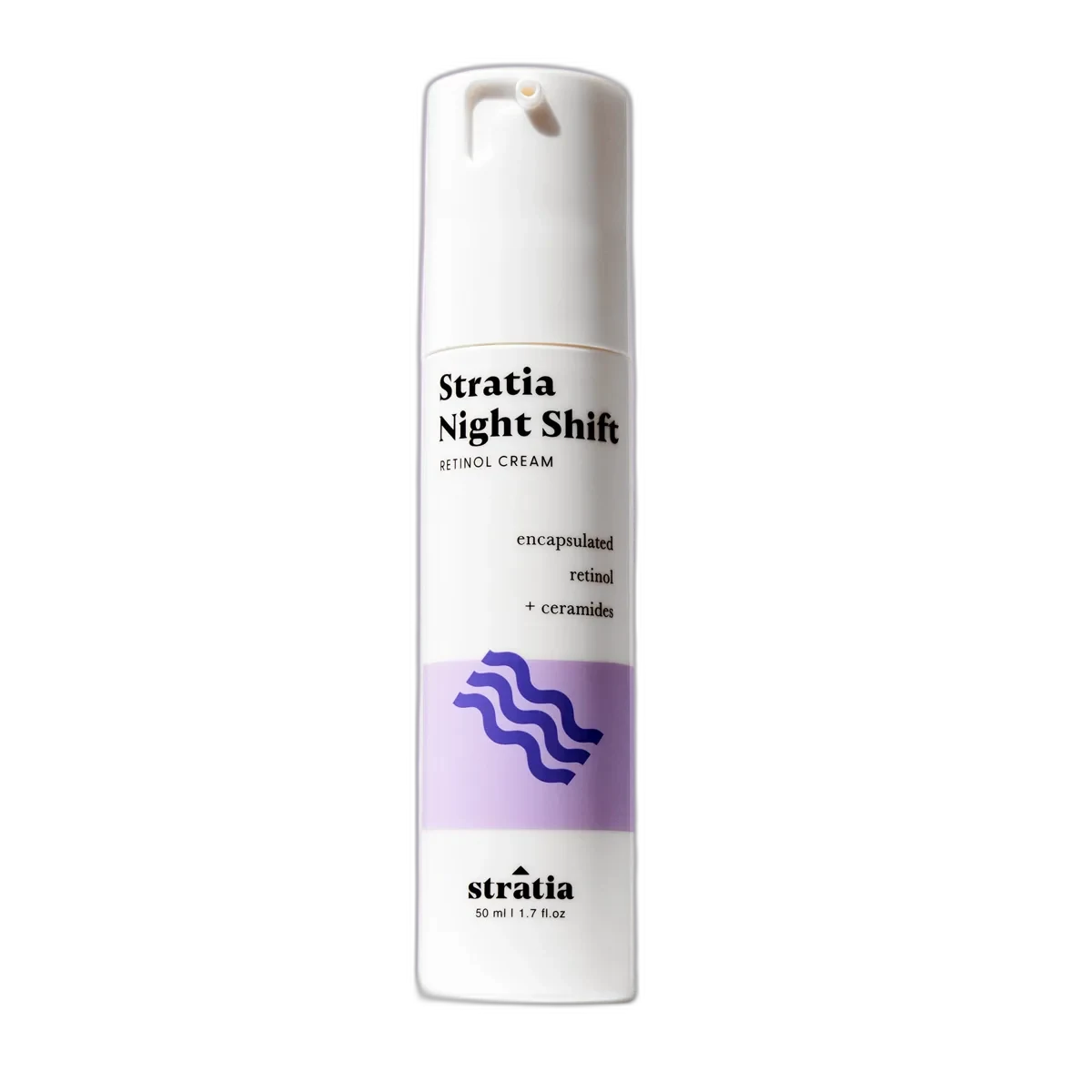
Night Shift Retinoid Night Oil
Gentle Retinoid Entry Point
 Verified reviewer
Pros & cons.
- +Anhydrous oil base keeps retinol stable across the life of the bottle
- +Multi-form retinoid stack spreads activity across multiple pathways
- +Bakuchiol complements the retinoids for enhanced efficacy with less irritation
- +Well-tolerated by first-time retinoid users and sensitive skin
- +Dewy finish with no morning flakiness for most users
- +Squalane base supports barrier function alongside the retinoid work
- −Not fungal-acne safe and too rich for oily skin types
- −Anhydrous format limits water-based active layering on top
- −Retinol percentage only approximated, not formally disclosed
- −30 ml bottle runs short for nightly users within 2 months
- −Results move slower than higher-percentage retinol serums
The full review.
Retinol has a problem most brands avoid. It is one of the most unstable molecules in cosmetic chemistry; oxygen, water, and light degrade it. The serum in your cabinet is often less potent than what the factory originally bottled. The industry usually adds antioxidants or uses airless pumps and hopes for the best. Stratia takes a more direct approach: remove the water. Night Shift uses an anhydrous oil base, so the retinol has no water to degrade in. This keeps the formula stable from the first drop to the last. This small decision changes how much retinoid you actually receive over the life of the bottle.
The oil stack is just as deliberate. The primary active is retinol at roughly 0.2%, a modest and well-tolerated concentration. Retinyl palmitate joins it; this gentler retinyl ester converts down the retinoid cascade in skin and adds activity without increasing total irritation. Bakuchiol at 1% also exists in the formula. Published studies suggest bakuchiol produces retinoid-like gene expression changes through a separate mechanism. This provides three ways to access retinoid benefits at lower doses, making overall tolerability better than a 0.5% single-retinol serum. Rosehip oil also contributes naturally occurring pro-retinoid compounds and linoleic acid for barrier support.
The format pays off during application. This is not a heavy oil. It is a light, silky liquid that disappears in minutes and leaves a dewy finish. The carrier is pure squalane-family triglycerides, so there is no pilling, no tackiness, and no scent. The first two weeks are usually uneventful; most users do not feel the tingling of a stronger retinoid. Some skin enters a mild adjustment period around week 3 or 4 with slight flaking or dryness, typically settling by week 6. By week 8, texture looks softer and the surface looks brighter and more refined. Collagen-driven benefits on fine lines emerge more slowly, in the 12–24 week window, which is normal for any retinoid at any concentration.
This is not the right product for every face. If your skin is oily, the oil base feels like too much. If you have acne-prone skin due to malassezia, the jojoba and caprylic triglycerides are not fungal-acne safe. If you want aggressive wrinkle correction quickly, a 0.5% or 1% retinol serum or a prescription tretinoin works faster. Night Shift is calibrated for people who want retinoid benefits without the irritation—specifically users who tried a harsh retinol, hated it, and quit. For them, it is a second chance with lower irritation.
Value is fair but not a bargain. Thirty milliliters for $42 is indie-tier pricing. A bottle lasts about three to four months if you use it three or four nights a week. The formulation quality justifies the price compared to similarly stabilized retinoid oils from larger clean-beauty brands that charge more for less disclosed composition. However, you will notice the price jump if you use a $25 drugstore retinol serum. You are paying for a formulation where every choice—the anhydrous base, the multi-form retinoid stack, the bakuchiol layer, and the modest concentration—is explained publicly by the founder and aligns with published retinoid research. For readers who want to know why the formula looks this way, that is worth the premium.
Ingredient analysis.
Full INCI list
Caprylic/Capric Triglyceride, Squalane, Tocopherol, Simmondsia Chinensis (Jojoba) Seed Oil, Bakuchiol, Rosa Canina Fruit Oil, Retinol, Retinyl Palmitate, BHT
Skin match.
The science.
The Science
Retinol is the most studied over-the-counter retinoid. Clinical trials show it improves photoaging, fine lines, and pigmentation over 12–24 week windows. It works by binding to retinoic acid receptors (RAR) to regulate gene expression for keratinocyte turnover, collagen synthesis, and melanocyte function. Oxidative degradation is a major formulation challenge; studies show retinol in water-based serums loses potency during months of storage. Anhydrous formats like oils reduce this degradation, which is why Night Shift uses this base. Bakuchiol has supporting data: a 2019 study in the British Journal of Dermatology (Dhaliwal et al.) compared 0.5% bakuchiol to 0.5% retinol over 12 weeks. Results showed comparable improvements in wrinkle depth and hyperpigmentation, but bakuchiol was better tolerated. Bakuchiol modulates some same downstream gene expression as retinoids without binding to RAR, explaining its retinoid-like benefits and milder irritation. Night Shift combines a modest retinol dose with bakuchiol; this strategy uses overlapping downstream effects so lower single-ingredient concentrations achieve additive results.
References
- Prospective, randomized, double-blind assessment of topical bakuchiol and retinol for facial photoageing — British Journal of Dermatology (2019)
Dermatologist Perspective
Dermatologists recommend retinol as the best-studied over-the-counter anti-aging active. Most board-certified derms suggest 0.2% retinol as a reasonable starting concentration for new users. Night Shift's anhydrous delivery format follows chemistry best practices, as retinol stability is a documented concern in water-based serums. Board-certified dermatologists note that bakuchiol, while not a true retinoid, has credible research supporting its use to enhance retinol tolerability. This multi-pathway approach works for patients with dry or sensitive skin who cannot tolerate higher-concentration retinol monotherapy. Oily or acneic patients may prefer a gel or lotion vehicle over this oil base.
Where it fits in your routine.
Apply 3–5 drops twice a week as the last step of your evening routine over moisturizer. After 2 weeks, use it 3 nights per week. Build to nightly use over 6–8 weeks as tolerated. Do not layer this oil over exfoliating acids or benzoyl peroxide; alternate nights instead. Always apply water-based serums before this oil because the anhydrous base blocks anything applied over it. Follow with a morning SPF 30+ daily without exception.
At $42 for 30 ml, Night Shift sits in the upper middle of the retinol market. You pay for a stable anhydrous delivery, a three-active retinoid stack, and a formulation rationale the founder documented publicly. It offers reasonable value compared to $65+ retinol oils from clean-beauty brands. It costs a clear premium compared to $25 drugstore retinol serums — a price that pays off if stability, gentleness, and a dry-skin-friendly base matter. For first-time retinoid users nervous about irritation, Night Shift costs less than buying a harsher product and abandoning it.
First-time retinoid users, dry or sensitive skin types avoiding harsh retinol serums, people wanting a stable retinoid format that resists degradation, and anyone seeking a gentler re-entry point after a bad experience with a stronger retinol.
Oily or acne-prone skin, users with malassezia folliculitis, and anyone wanting fast wrinkle correction who needs prescription tretinoin or a higher-percentage retinol serum.
Product details.
Light, fast-sinking oil with a silky slip
Faint natural oil smell, essentially fragrance-free
Amber glass dropper bottle that shields the retinoids from light
It feels silky and absorbs within minutes. Most users feel no sting or tingle. Mild dryness or flaking can appear around weeks 2–4 as skin adjusts to the retinoid — this is normal and typically resolves by week 6.
3–4 months at 3–4 nights per week
6 months
All Year
The backstory.
Stratia released Night Shift after years of requests for a retinoid companion to Liquid Gold. The founder chose an anhydrous oil format specifically to solve the retinol stability problem that plagues most water-based retinol serums, and added bakuchiol after its own published literature showed comparable benefits through a separate pathway.
About Stratia
Emerging Brand (2–5 years)Stratia launched in 2017 and focuses on research-first indie formulation. Night Shift uses a multi-form retinoid in an anhydrous oil base. This unusual format uses the founder's documented reasoning for stability and tolerability.
Common myths.
Retinol in an oil is weaker than retinol in a serum.
Retinoid efficacy depends on active concentration and stability, not the delivery medium. An anhydrous oil often delivers more functional retinol over time because the molecule does not degrade in oil like it does in water.
Bakuchiol is just a plant-based retinol marketing gimmick.
Bakuchiol works through a different mechanism than retinoids but shows comparable gene-expression effects in small published studies. It is not a replacement for retinol, but this product uses it as a legitimate complementary active.
FAQ.
Can beginners use Stratia Night Shift?
Yes — this is a strong beginner retinoid option. The oil base cushions the retinol and bakuchiol adds activity via a gentler pathway. Use it 2 nights a week for the first month, then build up slowly.
Is Night Shift good for acne-prone skin?
It works for occasional breakouts and adult hormonal acne in combination skin, but oily or actively acneic skin needs other options. The oil base isn't fungal-acne safe and feels heavy on sebum-prone faces. A water-based retinol or adapalene gel works better.
Can I use Night Shift with vitamin C or acids?
Apply vitamin C in the morning and Night Shift at night. Do not layer it with exfoliating acids or benzoyl peroxide in one routine; alternate nights instead. The anhydrous format prevents water-based actives from penetrating well over the oil, so apply those first.
How much retinol is in Night Shift?
Stratia says the retinol concentration is about 0.2%, plus retinyl palmitate and 1% bakuchiol. This multi-form approach makes total retinoid activity higher than a 0.2% single-retinol serum, but uses gentler pathways.
Is this safe during pregnancy?
No. All retinoids including retinol and retinyl palmitate are generally avoided during pregnancy and breastfeeding. Discontinue Night Shift if you become pregnant and ask a doctor about bakuchiol-only alternatives.
Why is it an oil instead of a serum?
Anhydrous oil formats keep retinol chemically stable. Retinol degrades fast when it meets water and oxygen. Stratia uses an oil base to preserve efficacy for the life of the bottle; the squalane base also works as a barrier-supporting emollient.
What the community says.
"Gentler than standalone retinol serums"
"Dewy finish with no morning flakiness"
"Stable formula that doesn't oxidize"
"Multi-retinoid approach feels well-thought-out"
"Pleasant lightweight oil texture"
"Not ideal for oily or acne-prone skin"
"30 ml is small for the price point"
"Anhydrous format means limited water-based active stacking"
"Retinol percentage not officially disclosed"
People also looked at.