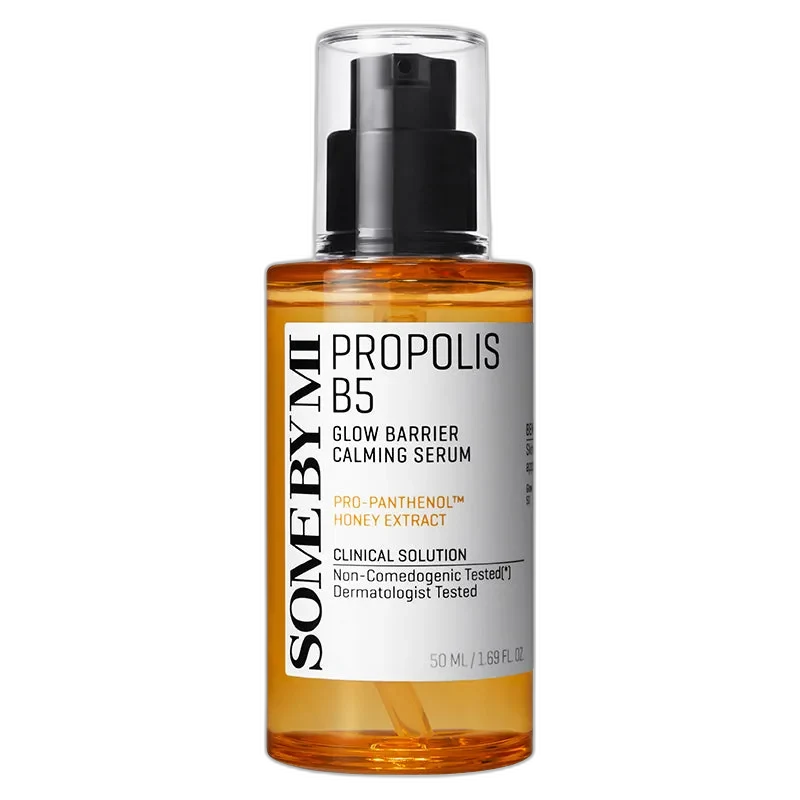
Vitamin B5 Calming Soothing Serum
Barrier Calm-Down Pick
 Verified reviewer
Pros & cons.
- +High-dose panthenol delivered through two complementary forms
- +Ceramides and cholesterol add real barrier-lipid support
- +Madecassoside provides targeted anti-redness action
- +Lightweight gel texture suitable for all skin types
- +Fragrance-free, alcohol-free, and fungal-acne safe
- +Plays well with retinol and exfoliating acids
- +Competitive pricing for the formulation quality
- −Not rich enough to replace a moisturizer on dry skin
- −Dropper applicator can drip during use
- −No brightening or anti-aging action
- −Brand still lacks decades-long clinical track record
The full review.
European pharmacy brands have dominated high-dose panthenol for years. La Roche-Posay’s Cicaplast B5 Serum is the standard dermatologist recommendation for calming over-exfoliated skin, and most B5 serum discussions assume a French product. Some By Mi’s Vitamin B5 Calming Soothing Serum challenges this orthodoxy. It is a K-beauty interpretation of the same thesis. The formulation is simple: use high panthenol, add support, and stay out of the way.
The formula uses 10% panthenol, a meaningful dose. The delivery is more interesting because it adds panthenyl triacetate—a lipid-soluble B5 that penetrates the stratum corneum more efficiently than water-soluble panthenol alone. This detail shows a formulator focused on bioavailability rather than just trends. You get B5 through two complementary routes, which matters for compromised skin. The tightness from an aggressive retinol night subsides faster with this serum than with single-route panthenol products.
The supporting ingredients form a sensitive-skin toolkit. Niacinamide reinforces the barrier and manages TEWL; stacking it with panthenol provides a second mechanism for the same result. Madecassoside, the most studied anti-inflammatory from centella, manages redness without the full TrueCICA complex. A small dose of Ceramide NP, cholesterol, and hydrogenated lecithin restores the lipid matrix needed for barrier repair, while polyglutamic acid—a humectant more hydrating than hyaluronic acid by weight—manages surface moisture. Beta-glucan and trehalose add hydration. The formula has no fragrance, no alcohol, no essential oils, and no fatty acid esters that trigger fungal acne. It reads like a sensitive-skin wishlist.
The texture is a lightweight gel-serum—watery, cool, and nearly weightless. It absorbs within thirty seconds, leaving a soft, hydrated finish that layers under any moisturizer or sunscreen. This texture is a win. 10% panthenol often feels heavy or sticky, but this formulation stays weightless enough for oily and combination skin to use year-round. It also works as a morning serum for minimal AM routines.
This serum does not transform skin dramatically. It is not a brightening, anti-aging, or resurfacing product. It hydrates and calms well, and the price makes it reasonable for daily use if you have sensitivity. If your skin is fundamentally dry rather than dehydrated, you still need a richer moisturizer on top. If you want to treat fine lines or hyperpigmentation, spend your money elsewhere.
This serum belongs in your medicine cabinet for use after procedures, bad reactions, aggressive retinol use, or on days when skin feels grumpy. It is also a daily option for chronic sensitivity, rosacea-prone redness, and unstable barriers. At around twenty dollars for 50ml, it costs less than most dermatology-brand B5 serums while matching their mechanism with more layered support. Some By Mi is an emerging brand without decades of clinical validation, but the formula is well-designed and the active is exactly what it claims.
Ingredient analysis.
Full INCI list · pH 5.5
Water, Panthenol, Glycerin, Dipropylene Glycol, Niacinamide, Butylene Glycol, 1,2-Hexanediol, Betaine, Cetyl Ethylhexanoate, Sodium Hyaluronate, Allantoin, Madecassoside, Polyglutamic Acid, Beta-Glucan, Trehalose, Panthenyl Triacetate, Ceramide NP, Hydrogenated Lecithin, Cholesterol, Arginine, Carbomer, Tromethamine, Xanthan Gum, Ethylhexylglycerin, Disodium EDTA
Skin match.
The science.
The Science
Panthenol — also known as provitamin B5 — is a well-studied humectant and wound-healing ingredient in dermatology. Once skin absorbs it, it converts to pantothenic acid. This precursor to coenzyme A helps fatty acid and protein synthesis. Research in the American Journal of Clinical Dermatology and the International Journal of Cosmetic Science shows panthenol improves stratum corneum hydration, reduces transepidermal water loss, and speeds epidermal repair after barrier disruption. A clinical study on panthenol-containing formulations showed skin barrier function improved within 7 days of consistent use.
This formulation uses two vehicles for B5. Water-soluble panthenol works mainly at the surface to hydrate and act as a humectant. Panthenyl triacetate is lipid-soluble and penetrates the stratum corneum more easily, acting as a slow-release depot that converts to pantothenic acid over time. This dual delivery distinguishes thoughtfully formulated B5 products from those using simple high-percentage dosing.
Madecassoside has strong evidence. Research in journals like Phytotherapy Research shows its anti-inflammatory effects on keratinocytes and fibroblasts, which targets redness and modulates the inflammatory response on reactive skin. Pairing it with panthenol gives this serum two mechanisms — lipid-based barrier repair and inflammation modulation — that both work toward the clinical goal of 'calming' the skin. Niacinamide's role in barrier support has decades of research, and the addition of ceramides, cholesterol, and lecithin aims to rebuild the barrier rather than just provide temporary hydration.
Dermatologist Perspective
Dermatologists often recommend high-dose panthenol serums for patients with barrier disruption, retinoid-related irritation, or those recovering from in-office procedures. Board-certified dermatologists note that clinical literature supports panthenol's wound-healing and humectant properties. Products pairing it with ceramides and madecassoside offer a more comprehensive repair profile than single-ingredient serums. Clinicians commonly suggest this type of gentle, fragrance-free, lightweight calming serum as a stand-alone hydration product for patients with chronic sensitivity or rosacea, or as an adjunct to retinoid therapy. This formulation meets the criteria clinicians typically look for in a soothing serum.
Where it fits in your routine.
Apply 3-4 drops to clean, damp skin after toner, morning and night. Pat it into the face and neck. Wait 30 seconds for absorption before layering other products. Follow with moisturizer — and sunscreen in the morning. It works well on nights you use retinol, exfoliating acids, or after in-office procedures. It is safe for use around the eye area. You can layer it with other serums; apply the thinnest textures first, then heavier products.
At around twenty dollars for 50ml, this costs less than most Western pharmacy-brand B5 serums. Cicaplast B5 Serum typically retails for roughly double this price with a similar core mechanism. You trade decades of clinical heritage for a layered K-beauty formulation that adds ceramides, madecassoside, and polyglutamic acid to the core panthenol dosing. The per-application cost is low for daily hydration and calming, and the formulation quality matches more expensive options. For an emerging-brand formulation, it is one of the strongest value picks in the category.
This lightweight daily serum hydrates and calms sensitive, reactive, or recently compromised skin. It works as a reliable buffer for retinoid users. It also serves as a K-beauty alternative to European pharmacy B5 serums for those with rosacea-prone or chronically tight skin.
This serum does not target brightening, anti-aging, or acne clearing; it is a support product rather than a transformational one. Very dry skin types will find it under-hydrating alone and must layer it under a thicker moisturizer or choose a denser B5 cream.
Product details.
Thin, watery-gel serum
Fragrance-free
Frosted glass bottle with dropper
It feels cool and weightless on application and absorbs within 20-30 seconds. Skin feels immediately plumped and less tight. Users with irritated skin often see visible reduction in redness within the first few uses.
2-3 months with twice-daily face use
12 months
All Year
The backstory.
Some By Mi developed this serum as a sibling to its snail and centella lines, targeting users who wanted pure hydration and barrier support without the characteristic snail mucin texture. It's positioned as the brand's 'entry point' into sensitive-skin care.
About Some By Mi
Emerging Brand (2–5 years)Some By Mi launched in 2017, focusing on acne and barrier-repair K-beauty formulations. Because the brand is emerging, ingredient analysis matters more than a long-term clinical track record.
Common myths.
Vitamin B5 is just another humectant.
Panthenol is a humectant that also shows anti-inflammatory and wound-healing effects at higher concentrations. This makes 10% panthenol serums feel different from plain glycerin.
FAQ.
How does this compare to La Roche-Posay Cicaplast B5 Serum?
Both use high-dose panthenol as the core active. This K-beauty option adds ceramides, polyglutamic acid, and a lipid-soluble panthenol derivative to a light, gel-textured base. Cicaplast is a dermatology heritage product; this one has more layers and follows K-beauty trends.
Can this replace my moisturizer?
No — it's a serum, not an occlusive moisturizer. You'll still need a cream or lotion on top to lock in the hydration this serum delivers, especially if your skin is dry or your barrier is compromised.
Is it safe to use with retinol?
Yes, and it is a strong pairing. Apply this serum after your retinol (or on retinol-free nights) to hydrate and soothe the skin while the retinoid works. Many users also apply it as a buffer under retinol.
Can I use it around the eyes?
Yes — the formula is fragrance-free and mild enough for the eye area. It is not a dedicated eye cream, but it helps with dehydration-related fine lines around the orbital area.
Is it fungal-acne safe?
Yes — the ingredient list lacks fatty acids, esters, or oils that trigger malassezia. This makes it suitable for people managing fungal acne and sensitivity.
What the community says.
"Lightweight but hydrating"
"Calms redness quickly"
"No sticky residue"
"Good for post-retinol nights"
"Not hydrating enough on its own for very dry skin"
"Dropper can be messy"
"Needs to be paired with a good moisturizer"
People also looked at.