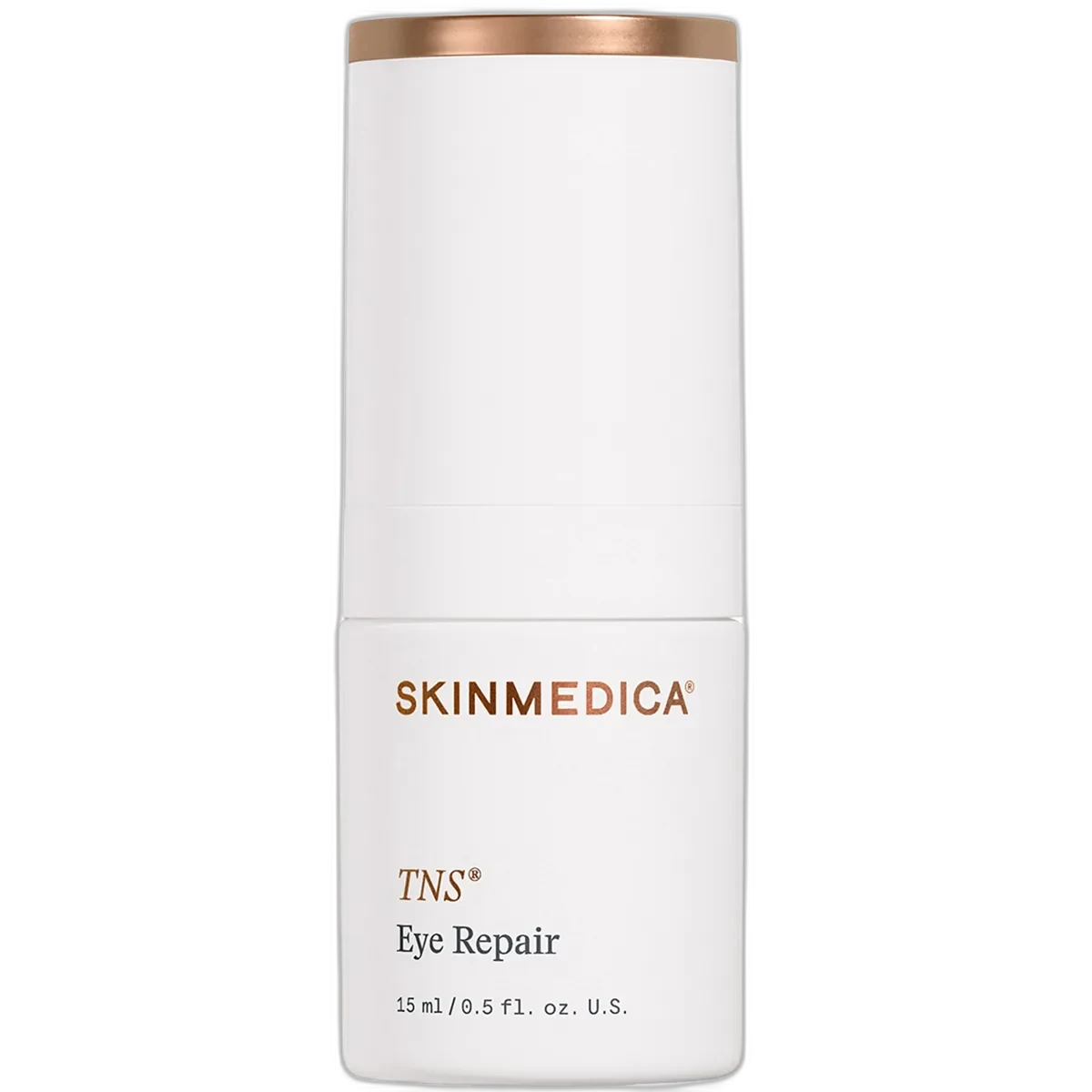
TNS Eye Repair
Brightening-and-Building Eye Cream
 Verified reviewer
Pros & cons.
- +Stable vitamin C ester in an unusually high formulation position delivers real antioxidant activity
- +Matrixyl peptide pair plus the TNS growth factor fraction for overlapping anti-aging pathways
- +Boron nitride gives a genuine instant soft-focus brightening effect
- +Fragrance-free, alcohol-free, rich emollient base tolerated by most skin types
- +Sits well under concealer without creasing
- +Over a decade of professional-channel use and thousands of retailer reviews
- −$106 for 0.5 oz is expensive even within the luxury eye cream category
- −Retinyl palmitate rules this out during pregnancy and breastfeeding
- −Limited impact on hereditary vascular dark circles
- −Uses the older TNS fraction rather than the updated TNS-MR from Advanced+
- −Only one size — no larger option for better per-ounce value
The full review.
Most eye creams pick one job. They either give you an instant soft-focus effect — a mineral that blurs fine lines and reflects light so the area looks brighter the moment you blend it out — or they focus on slower, ingredient-driven change through peptides, retinoids, or growth factors. The trade-off is usually: instant gratification with no real long-term payoff, or invisible slow-build work that makes the product feel like it isn’t doing anything. TNS Eye Repair, which has been quietly running in SkinMedica’s lineup since around 2010, is one of the few eye creams that actually tries to do both at once, and it is the reason the product has stayed in dermatology offices essentially unchanged while the rest of the brand’s catalog has been reformulated around it. Start with the formula, which is denser than you expect. Water is first. Tetrahexyldecyl ascorbate — a stable, oil-soluble vitamin C ester — is second, which is an extraordinary position for a vitamin C to hold in an eye cream and suggests real inclusion levels. Olive unsaponifiables and vitamin E come next, building an antioxidant shell around the delicate actives to follow. Then the emulsifier and barrier work: sunflower oil, dimethicone, shea butter, boron nitride for the optical lift, and a richer layer of behenyl alcohol and arachidyl alcohol. Further down the list, you hit the active backbone that gives the product its name: human fibroblast conditioned media (TNS), palmitoyl oligopeptide, and palmitoyl tetrapeptide-7, which is essentially the Matrixyl 3000 signal peptide pair. Chrysin, a passionflower flavonoid positioned for hereditary bilirubin-based dark circles, sits nearby. Retinyl palmitate — a weaker, ester form of vitamin A — is included as a supporting retinoid in a low enough position to avoid the worst of retinoid irritation. Hyaluronic acid, panthenol, allantoin, bisabolol, and phospholipids round out the barrier support. It is a dense list for a 0.5 oz tube, and it reflects an older SkinMedica formulation philosophy of including several actives at modest levels aimed at overlapping pathways. The texture makes the whole thing work. This is not a thin gel and it is not a heavy wax — it is a properly creamy emulsion that blends out in a few seconds, absorbs within a minute, and leaves a soft-focus satin finish that genuinely looks brighter under makeup. The boron nitride is doing honest work here. It diffuses light across the orbital bone, softens the appearance of fine vertical lines, and gives a subtle luminosity that is very hard to fake with a pure moisturizer. First-time users often report the wait-my-eyes-look-different moment within the first few applications, which is almost always the optical effect, not the slow actives. Those slow actives come in over the next six to twelve weeks. If you stick with the cream twice daily, most readers see meaningful smoothing of crepey texture, softening of fine crow’s feet lines, and some improvement in pigment-based dark circles. Vascular or hereditary shadowing is a harder target, and nothing topical is going to reliably erase it — if your dark circles are structural or caused by deep tear troughs, this cream can help with texture and tone, but the shadow itself needs filler or concealer. Be honest with yourself about which kind of dark circles you have before you spend $106. Tolerability is generally very good. The formula is fragrance-free, alcohol-free, and has enough emollient weight that sensitive skin usually does fine. The two ingredients worth flagging are the retinyl palmitate, which rules this out for pregnancy and breastfeeding, and the high-position vitamin C ester, which a very small subset of readers may find mildly stinging in the first week. Neither is a common complaint, but both are worth knowing. Price is the hard part. $106 for 0.5 oz works out to $212 per ounce, and that is before you factor in that the 0.5 oz is the only size available. You can assemble a DIY version — a stable vitamin C serum, a Matrixyl peptide serum, a basic rich moisturizer — for significantly less money and get most of the benefit. What you lose in the DIY route is the actual formulation work that makes TNS Eye Repair cosmetically elegant and targeted specifically for the eye area, and the brand pedigree that makes dermatologists comfortable recommending it. The best case for paying retail is if you are already embedded in the SkinMedica ecosystem — using TNS Advanced+ on your full face, paying for in-office procedures, getting the product recommended by your own dermatologist. The worst case is buying this as a random luxury eye cream because it sounded impressive online. In context, it is a genuinely considered product. Out of context, it is a very expensive way to buy a vitamin C and peptide eye cream.
Ingredient analysis.
Full INCI list
Water/Aqua/Eau, Tetrahexyldecyl Ascorbate, Olea Europaea Fruit Unsaponifiables, Tocopheryl Acetate, Cetyl Ethylhexanoate, Arachidyl Alcohol, Glycerin, Helianthus Annuus Seed Oil, Dimethicone, Butyrospermum Parkii Butter, Boron Nitride, Behenyl Alcohol, Polyacrylate-13, Human Fibroblast Conditioned Media, Palmitoyl Oligopeptide, Palmitoyl Tetrapeptide-7, N-Hydroxysuccinimide, Chrysin, Avena Sativa Kernel Extract, Stearyl Glycyrrhetinate, Camellia Oleifera Leaf Extract, Phytosterols, Tocopherol, Tocotrienols, Squalene, Oryza Sativa Bran Cera, Retinyl Palmitate, Allantoin, Panthenol, Sodium Hyaluronate, Bisabolol, Phospholipids, Butylene Glycol, Steareth-20, Polyisobutene, Polysorbate 20, Arachidyl Glucoside, Xanthan Gum, Disodium EDTA, Ethylhexylglycerin, Phenoxyethanol, Potassium Sorbate
Skin match.
The science.
The Science
The under-eye area has thinner skin, less subcutaneous fat, and different microcirculation than the rest of the face. This causes age-related thinning, fine lines, and pigment changes to appear earlier. Tetrahexyldecyl ascorbate is an oil-soluble vitamin C ester that converts to ascorbic acid in the skin; published research shows it has antioxidant and mild brightening effects. Matrixyl 3000 — the palmitoyl oligopeptide and palmitoyl tetrapeptide-7 combination used here — shows effects on collagen synthesis and wrinkle reduction in both supplier research and independent dermatology literature. SkinMedica's TNS growth factor platform has company-sponsored clinical data showing fine line and texture improvements over 12-24 weeks; eye-specific data is more limited than full-face data but matches the mechanism. Chrysin, a flavonoid in passionflower and other plants, may clear bilirubin in hereditary under-eye pigmentation, though clinical evidence is small and the mechanism works better for pigment-based shadows than vascular or structural ones. Boron nitride is an inert mineral that uses optical light-diffusing properties for a cosmetic effect; it softens the look of fine lines and discoloration without changing the skin. The retinyl palmitate in the formula is a weaker retinoid ester that needs several enzymatic steps to become active retinoic acid, so its contribution to cell turnover is modest at this concentration.
Dermatologist Perspective
Dermatologists often recommend dedicated eye creams like this one for patients with early fine lines, dehydration, and pigment-based dark circles, especially when used with a full-face growth factor or retinol regimen. Board-certified dermatologists note that hereditary under-eye shadowing often requires in-office treatment — typically hyaluronic acid filler in the tear trough or PRP — and that topical eye creams work best as support rather than a standalone solution. SkinMedica-stocking practices often position this cream as the eye-specific companion to TNS Advanced+, and dermatologists typically advise pregnant or breastfeeding patients to use a retinoid-free alternative.
Where it fits in your routine.
Apply a rice-grain amount to clean skin every morning and evening, after serums and before moisturizer. Tap the product along the orbital bone from the inner to the outer corner; do not rub. Keep the application away from the lash line so it does not migrate into the eye. Use SPF during the day because the vitamin C and growth factor actives oxidize when exposed to light. Use consistently for at least 12 weeks for best results. Do not use during pregnancy or breastfeeding because of the retinyl palmitate content.
At $106 for 0.5 ounces, this costs much more than average luxury eye creams and is one of SkinMedica's harder value propositions. The formulation is dense and well-constructed; it combines instant optical effects with long-term active work. Readers can build a comparable active story using mid-tier products — a stable vitamin C, a peptide serum, and a thick eye cream — for much less, though they lose some cosmetic elegance and targeted eye-area formulation. Paying full price works best as part of an integrated SkinMedica regimen recommended by a dermatologist. Otherwise, the math works less well.
Readers aged 30+ with early to moderate under-eye aging—fine lines, crepey texture, or pigment-based dark circles—who want an eye cream that provides immediate optical effects and long-term active results. This works well for readers already using SkinMedica full-face products or those whose dermatologist recommends the brand.
Pregnant or breastfeeding readers must skip this because of the retinyl palmitate. Skip this if your dark circles are hereditary and vascular instead of pigment-based—filler or concealer works better—or if your budget fits a strong full-face anti-aging routine better.
Product details.
Thick, creamy eye cream spreads easily and absorbs within a minute. It leaves a soft-focus matte-satin finish.
Essentially odorless, with a very faint neutral botanical note.
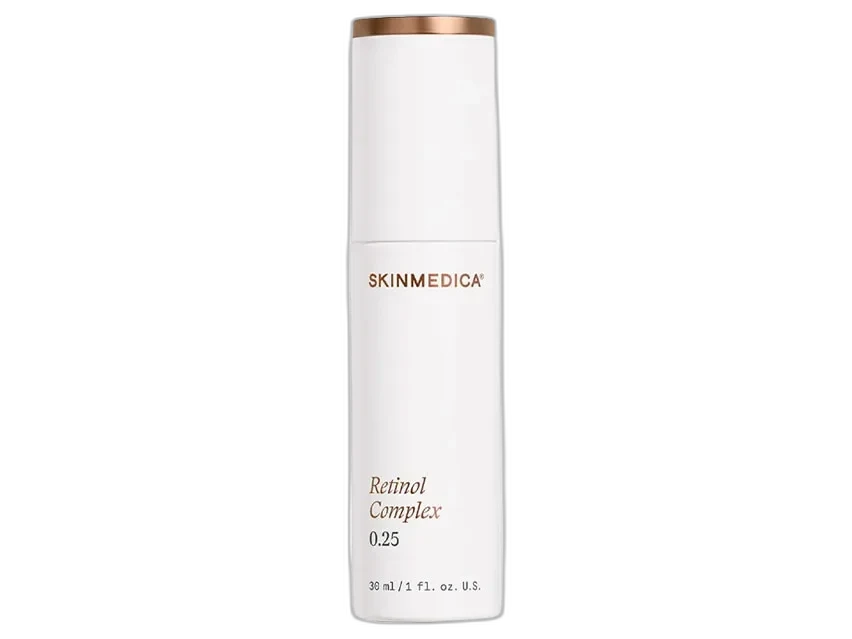
Small metal squeeze tube with a precision tip in a branded carton.
The first application shows visible brightening from boron nitride within seconds — this instant result hooks most new users. Slower ingredient-driven changes in fine lines and texture build over 6-12 weeks of consistent use. Some users feel light warming or tingling during the first few days as skin adjusts to the active load.
Roughly 3-4 months with twice-daily application to both eyes.
6 months
All Year
The backstory.
TNS Eye Repair launched around 2010 as an extension of the original TNS Recovery Complex platform, specifically formulated for the thinner, more reactive skin around the eyes. It predates the TNS Advanced+ reformulation and has been kept in the lineup essentially unchanged because dermatology offices consistently reorder it — an unusual level of stability for a product in this category.
About SkinMedica
Established Brand (5–20 years)Dermatologist Dr. Richard Fitzpatrick founded SkinMedica in 1999 using the original TNS growth factor platform. US dermatology practices distribute TNS products widely, and company-sponsored clinical studies show the technology works on wrinkle and texture endpoints.
Common myths.
Eye cream is a marketing gimmick — any moisturizer will do.
Under-eye skin is thinner than facial skin and displays fine lines and pigment differently. Dedicated formulas using targeted brightening, peptide, and growth factor actives like this one work differently than a plain moisturizer, though a good facial moisturizer is better than nothing.
This cream will erase hereditary dark circles.
Hereditary dark circles often involve vascular and structural factors that topical products cannot fully correct. TNS Eye Repair improves pigment and texture, but genetically shadowed eyes still show shadow — only in-office treatments or concealer fully address that discoloration.
FAQ.
How is TNS Eye Repair different from SkinMedica's TNS Advanced+ Serum?
TNS Advanced+ is a full-face serum using the updated TNS-MR growth factor platform and the Renessensce Advanced peptide complex. TNS Eye Repair is an older, eye-specific cream. It combines a high-position vitamin C ester, classic Matrixyl peptides, the original TNS fraction, and boron nitride for optical brightening. Many users apply both — TNS Advanced+ to the full face and TNS Eye Repair around the orbital bone.
Can I use TNS Eye Repair during pregnancy?
No — the formula contains retinyl palmitate, a vitamin A derivative most dermatologists recommend avoiding during pregnancy and breastfeeding. SkinMedica offers other eye treatments without retinoid components for pregnancy-friendly options.
Will it actually reduce my dark circles?
Results depend on the dark circle type. Vitamin C and chrysin work on pigment-based discoloration over 8-12 weeks. Hereditary vascular or structural shadows show modest improvement at best; these usually require in-office treatments like tear trough filler or concealer for full correction.
Is this cream safe for sensitive skin?
Mostly yes. The formula is fragrance-free, alcohol-free, and has a thick emollient base. The retinyl palmitate and high-position vitamin C ester can cause mild irritation in very reactive skin. Introduce it slowly and stop use if you see persistent redness or stinging.
Can I use it with concealer?
Yes — the soft-focus boron nitride finish helps concealer apply evenly and reduces creasing in fine lines. Wait 60 seconds for the cream to absorb before applying makeup.
Is 0.5 ounce enough to last a meaningful amount of time?
A 0.5 oz tube lasts 3-4 months with twice-daily use on both eyes. The tube dispenses a large amount per press; use a small rice-grain amount per eye to extend use.
What the community says.
"Instantly brightens the under-eye area"
"Visibly softens crepey texture over weeks"
"Rich but not heavy"
"Layers well under concealer"
"Fragrance-free and well tolerated"
"Very expensive for a 0.5 oz eye cream"
"Improvement on hereditary dark circles is limited"
"Contains retinyl palmitate, which is not ideal for pregnancy"
"Tube dispenses more product than needed"
Featured in.
People also looked at.