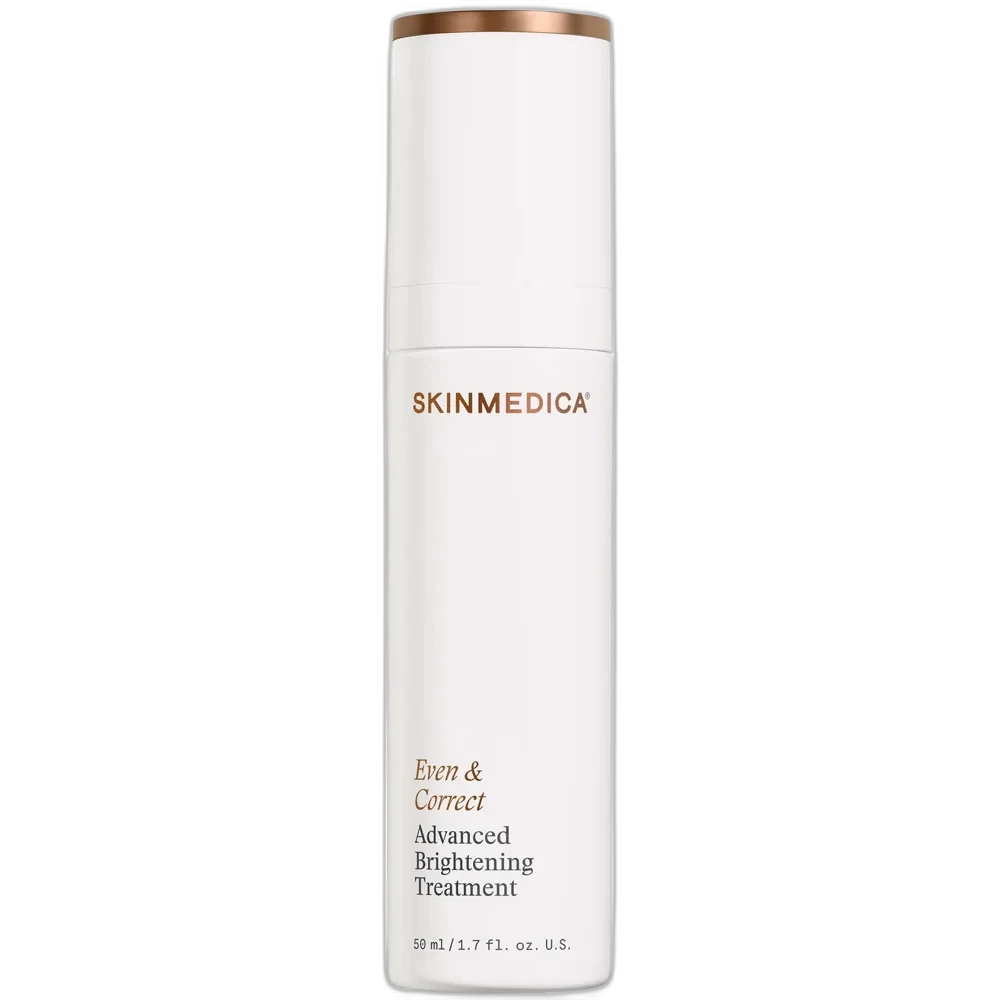
Even & Correct Advanced Brightening Treatment
Derm Office Staple
 Verified reviewer
Pros & cons.
- +Multi-pathway brightening stack addresses several pigmentation mechanisms
- +Hexylresorcinol and tranexamic acid combination is clinically validated
- +Effective on stubborn melasma where single-active serums plateau
- +Lightweight silky texture layers cleanly under SPF
- +Non-hydroquinone — safe for long-term maintenance use
- +Airless pump protects ingredient stability
- +Works alongside retinoids for accelerated results
- −Very expensive at $160 for 30ml
- −Contains fragrance — a drawback for the fragrance-reactive
- −Slow initial results require patience of 8-12 weeks
- −Not pregnancy-safe due to tranexamic acid
- −Requires strict daily sunscreen to be worth the investment
The full review.
Using a brightening serum for three months only to see dark spots stop fading means you hit the ceiling of single-active brighteners. This happens because pigmentation, especially melasma, involves multiple biological mechanisms. Melanocytes produce pigment via a tyrosinase-dependent enzymatic cascade, and melanosomes then transfer that pigment to keratinocytes. Inflammatory and vascular factors, common in hormone-driven melasma, also drive this process. A serum that only inhibits tyrosinase treats only one of three parts of the problem. This serum stacks multiple mechanisms in one formula to break that ceiling. The ingredient list combines hexylresorcinol—a clinically validated tyrosinase inhibitor compared favorably to low-dose hydroquinone in several studies—with phenylethyl resorcinol, which hits the same enzyme through a different binding mechanism for redundancy. Tranexamic acid addresses the inflammatory and vascular components of melasma specifically; this ingredient distinguishes the serum from standard brighteners and explains why it works for pigmentation resistant to single-active products. Niacinamide blocks melanosome transfer downstream, making it harder for finished pigment to reach the skin surface. Ascorbyl glucoside provides antioxidant support and a mild secondary tyrosinase-inhibiting effect. Centella asiatica, milk thistle, and grape seed extracts add anti-inflammatory and antioxidant activity. This is a layered stack, not a shotgun blast of unrelated ingredients. The serum has a lightweight silky texture, absorbs in under a minute, and layers cleanly under moisturizer and sunscreen. The light fragrance is a mild drawback for fragrance-sensitive users. The first few weeks are quiet; you will not see dramatic change by week two, so do not expect Instagram-style transformations then. The payoff arrives around the six-to-eight week mark as luminosity improves and stubborn spots fade. By twelve weeks, users with melasma or post-inflammatory hyperpigmentation that plateaued on other products typically see meaningful visible improvement. Results are incremental, not dramatic, but they are real and sustained. The multi-pathway approach avoids the rebound pigmentation long-term hydroquinone users sometimes encounter. Daily mineral sunscreen is a non-negotiable companion. Without it, you waste your money, as visible light and UV exposure will erase any brightening gains the next day. Dermatologists who recommend this product almost always pair it with SkinMedica’s Essential Defense Mineral Shield or a comparable iron-oxide mineral sunscreen. Patients who skip the sunscreen consistently report poor results that the product itself did not cause. Price and patience are the main frustrations. At one hundred and sixty dollars for thirty milliliters, this is expensive. A three-to-four-month supply costs roughly what a monthly dermatologist visit costs in some cities. For patients who failed on cheaper single-active brighteners, the math works; the incremental cost is worth the incremental effect on stubborn pigmentation. For mild, generalized dullness or early sun spots, a cheaper vitamin C serum or niacinamide-only product likely works for less money. Patience is also non-negotiable. This serum rewards long-term consistency, not short-term impatience; stopping at week four means missing the payoff. For patients with stubborn melasma, post-procedural hyperpigmentation, or sun damage resistant to easier interventions, this is one of the smartest non-hydroquinone choices in the professional-tier market. The multi-pathway formulation is an advance over the single-active brighteners that dominated the category a decade ago.
Ingredient analysis.
Full INCI list · pH 5
Water, Glycerin, Niacinamide, Butylene Glycol, Dimethicone, Caprylic/Capric Triglyceride, Hexylresorcinol, Tranexamic Acid, Phenylethyl Resorcinol, Ascorbyl Glucoside, Allantoin, Panthenol, Sodium Hyaluronate, Tocopherol, Centella Asiatica Extract, Silybum Marianum Extract, Vitis Vinifera (Grape) Seed Extract, Cetearyl Alcohol, Glyceryl Stearate, PEG-100 Stearate, Phenoxyethanol, Ethylhexylglycerin, Disodium EDTA, Fragrance
Skin match.
The science.
The Science
The formulation is built on multiple clinically supported mechanisms for pigmentation reduction. Hexylresorcinol has been studied as a tyrosinase inhibitor with efficacy comparable to 2% hydroquinone in some published comparisons, acting upstream in the melanin synthesis pathway. Tranexamic acid, originally a systemic antifibrinolytic medication, has a well-established topical role in melasma management — it addresses the vascular and inflammatory components that drive melasma progression, which are mechanistically distinct from pure melanocyte activity and which explain why standard tyrosinase inhibitors often plateau on hormonal pigmentation. Phenylethyl resorcinol is a more recent tyrosinase inhibitor with promising clinical data, and its inclusion alongside hexylresorcinol provides layered inhibition of the same enzyme through different binding approaches. Niacinamide has an independent evidence base for reducing hyperpigmentation, primarily through inhibition of melanosome transfer from melanocytes to surrounding keratinocytes — a downstream mechanism that complements the upstream tyrosinase inhibition of the resorcinol-based actives. Ascorbyl glucoside contributes antioxidant and secondary brightening activity. The scientific case for this formula therefore rests not on any single ingredient breakthrough but on the strategic layering of multiple validated mechanisms, which is the current gold standard approach for persistent pigmentation management in non-hydroquinone frameworks.
Dermatologist Perspective
Dermatologists frequently recommend this serum to patients with melasma, post-inflammatory hyperpigmentation, and chronic sun damage who have either plateaued on other brighteners or are not candidates for hydroquinone due to pregnancy planning, long-term use concerns, or rebound risk. Board-certified dermatologists note that the multi-pathway formulation is a meaningful improvement over single-active brighteners and is particularly useful for patients whose pigmentation has an inflammatory or vascular component. It is commonly recommended as part of a paired protocol with daily iron-oxide mineral sunscreen and, in many cases, a retinoid for accelerated results. Dermatology advice typically stresses patience, consistency, and strict sun protection as the three factors that determine whether this serum delivers on its promise.
Guidance
Where it fits in your routine.
Apply 2-3 drops to clean, dry skin every morning and night before moisturizer. Press it into the face and neck, targeting pigmented areas. Follow with moisturizer and, in the morning, a mineral sunscreen with iron oxides. Use twice daily for 8-12 weeks to see results. You can layer this with retinoids at night; introduce multiple actives slowly. Daily sunscreen is required for results.
At $160 for 30 milliliters, this serum sits at the high end of the professional skincare market. Users with mild hyperpigmentation or early dullness can get adequate results for less using niacinamide, vitamin C, or alpha arbutin. However, the multi-pathway approach justifies the premium for users with stubborn melasma or treatment-resistant pigmentation — patients who spent similar amounts on cheaper products that failed often find this serum finally works. No larger sizes exist, so long-term users stay locked into the premium pricing indefinitely.
This is for people with melasma, post-inflammatory hyperpigmentation, or stubborn dark spots who stopped seeing results from single-active brighteners. It works for patients who cannot use hydroquinone and anyone following a long-term non-hydroquinone pigmentation protocol with daily sunscreen.
Pregnant or breastfeeding users, people with mild early pigmentation who get results from cheaper products, fragrance-sensitive users, and anyone unwilling to use it daily with sunscreen for 8-12 weeks.
Product details.
This lightweight, silky serum has a slight milky appearance and absorbs in under a minute.
Light clean fragrance
Airless pump bottle
The first use feels like a standard lightweight serum — silky, absorbs fast, and has no tingle. The first 2-4 weeks show no dramatic visible change. You need patience. Around the 6-8 week mark, skin typically looks brighter and more even, and stubborn spots begin to fade by week 10-12.
3-4 months with twice-daily face application
12 months
All Year
The backstory.
SkinMedica's original Lytera serum was one of the first professional-tier non-hydroquinone brighteners to gain traction in dermatology offices. Even & Correct is the modern evolution of that approach, launched in 2021 with an expanded ingredient stack designed to address multiple points in the pigmentation pathway simultaneously — particularly for patients whose melasma had plateaued on earlier products.
About SkinMedica
Legacy Brand (20+ years)SkinMedica launched in 1999 and belongs to Allergan Aesthetics. The Lytera pigmentation line has occupied dermatology offices for over a decade; the Even & Correct line is the modern version using non-hydroquinone brightening pathways.
Common myths.
Non-hydroquinone brighteners don't really work
Modern non-hydroquinone actives like hexylresorcinol and tranexamic acid have solid clinical evidence for pigmentation reduction, especially when used together in this formula. They work slower than hydroquinone but avoid long-term safety concerns and rebound pigmentation risks.
Brightening serums work without sunscreen
They don't. UV and visible light exposure create fresh pigmentation that erases brightening gains without daily sun protection. This serum is only worth buying if you use daily mineral sunscreen.
FAQ.
How long until I see results?
Expect subtle brightness improvements around 4 weeks. Consistent twice-daily use shows visible dark spot reduction by 8-12 weeks. Stubborn melasma and deep post-inflammatory hyperpigmentation take 12-16 weeks to respond. Use daily sunscreen to maintain results.
Is this better than hydroquinone?
Hydroquinone works faster and is more potent, but its long-term safety profile and rebound pigmentation risks limit it to short-course prescription use. This serum uses non-hydroquinone actives that work more slowly but allow indefinite use without rebound concerns, making it a better long-term maintenance option.
Can I use it during pregnancy?
No — doctors do not typically recommend the tranexamic acid and multi-active brightening stack during pregnancy. Pregnant or breastfeeding users should wait until after weaning or ask a dermatologist about safer pregnancy-compatible brightening options.
Does it work on melasma specifically?
Yes — tranexamic acid targets the vascular and inflammatory components of melasma. This makes the serum more effective than single-active brighteners on hormonal pigmentation. Results require patience and strict sun avoidance.
Can I layer it with retinol?
Yes — the combination is synergistic. Retinol increases cell turnover and helps brightening actives reach fresh skin. If your skin is sensitive, use them at different times of day first, then layer them in the same routine.
Is it safe for sensitive skin?
Yes, though the fragrance inclusion is a minor drawback for the fragrance-reactive. Most sensitive users tolerate the formula well, but those with rosacea or highly reactive skin should patch test first.
Does it replace my vitamin C serum?
It uses a stable vitamin C derivative as a supporting ingredient, but it is not a dedicated antioxidant serum. For maximum benefit, many users pair this with a standalone vitamin C serum like SkinMedica Lumivive or another morning antioxidant.
What the community says.
"Visible brightening on stubborn dark spots"
"Evens out overall tone"
"Works on melasma where other serums failed"
"Lightweight texture layers well"
"Very expensive"
"Contains fragrance"
"Slow initial results"
"Small 30ml size"
Featured in.
People also looked at.