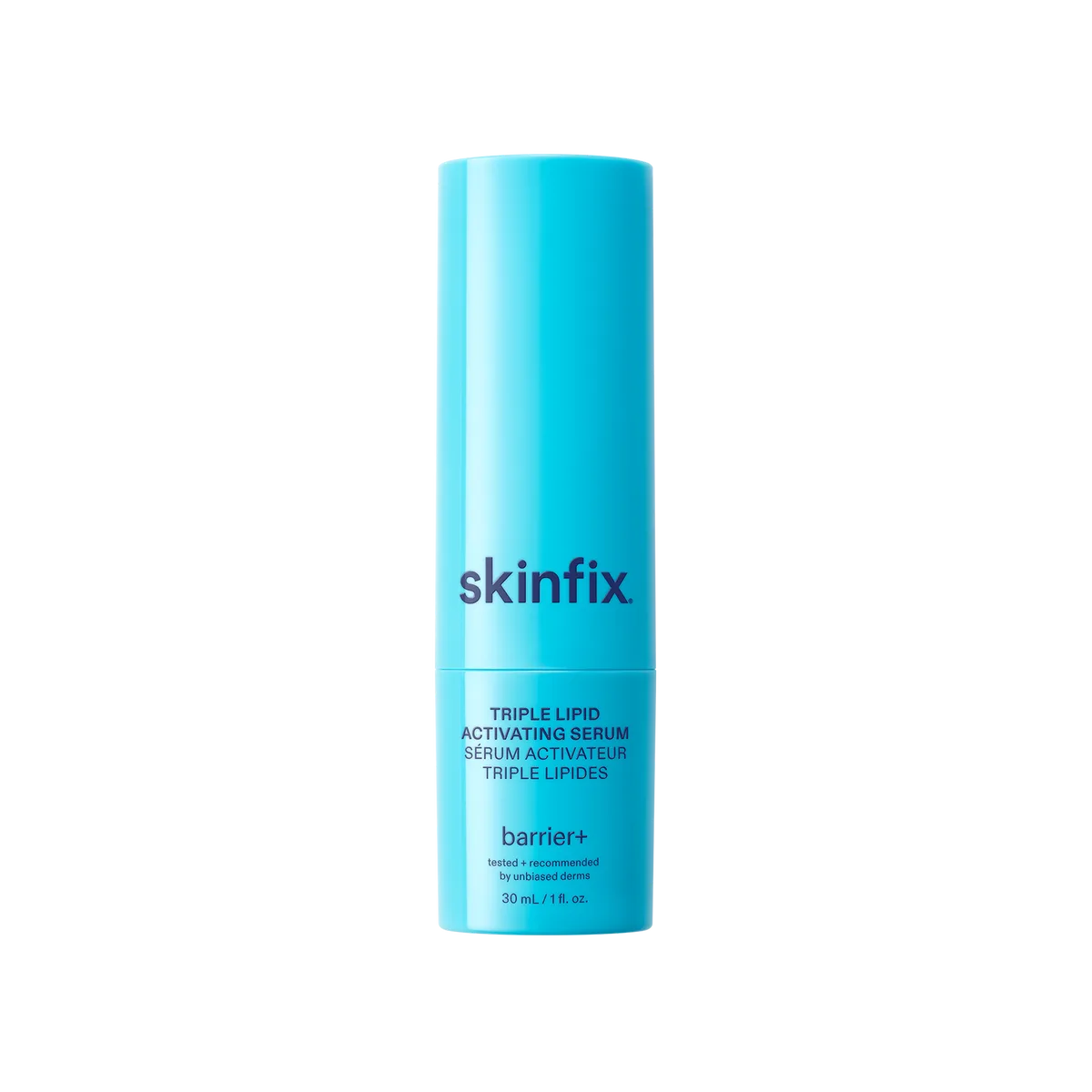
Barrier+ Triple Lipid Activating Serum
Multi-Peptide Barrier Serum
 Verified reviewer
Pros & cons.
- +Sophisticated 3% ceramide complex provides genuine barrier repair in a lightweight serum
- +Multi-peptide system at 5% adds anti-aging and firming benefits beyond basic hydration
- +Polyglutamic acid provides superior moisture retention compared to HA alone
- +Lightweight bouncy texture layers beautifully under any product and makeup
- +Three industry awards in its first year validate the formulation quality
- +Fragrance-free, silicone-free clean formulation suitable for sensitive skin
- +Refillable packaging with genuine sustainability benefits
- −$69 for 1 oz is a significant premium — bottle lasts only 4-6 weeks
- −Faint chlorine-like scent from peptide complex during application
- −Not hydrating enough on its own for very dry skin — needs a cream on top
- −Pump mechanism can be unreliable — product may not fully dispense
- −Not fungal acne safe due to macadamia oil and squalene
The full review.
The Skinfix Barrier+ Triple Lipid-Peptide Cream gained a following by doing one thing well: repairing damaged skin barriers with a ceramide-cholesterol-phytosphingosine system. But the cream’s thickness limited its use. Oily skin types felt shellacked. Combination skin types used it only in winter. Even dry skin users wanted a lighter morning layer. The Triple Lipid Activating Serum solves these issues—using the same barrier repair philosophy in a lightweight vehicle for nearly every skin type.
The formula is ambitious. Skinfix did not just dilute the cream; they built a serum with its own architecture: 3% barrier-identical lipids (the same ceramide NP, AP, EOP trio with cholesterol and phytosphingosine), 5% multi-peptide complex (growth-factor-mimicking oligopeptides plus the copper-binding tripeptide-1), 3% polyglutamic acid with hexapeptide-11 for deep hydration, and 2% niacinamide for brightening and barrier support. It functions like three separate serums in one.
The ceramide complex is the foundation, identical to the cream. Three ceramides, cholesterol, and phytosphingosine—the building blocks of the skin’s intercellular lipid matrix—are delivered in a ratio that integrates with and repairs the barrier instead of just sitting on the surface. In this serum, a lecithin and phospholipid delivery system suspends these lipids to help them penetrate without the cream’s heavy occlusive base.
The peptide system distinguishes this serum from the cream. Five peptides at meaningful concentrations—oligopeptides 1, 2, and 3 (growth-factor mimics), hexapeptide-11 (moisture-binding), and tripeptide-1 (copper-binding, collagen-supporting)—make this an anti-aging treatment alongside barrier repair. While the cream focuses on protection and repair, the serum adds regeneration.
Polyglutamic acid deserves its own paragraph. This fermentation-derived humectant holds moisture up to four times more effectively than hyaluronic acid by weight. At an estimated 3% concentration with sodium hyaluronate, it creates a dual-humectant system for immediate plumping and sustained hydration. Glycerin and red algae (lithothamnion calcareum) extract complete the hydration profile.
The texture is different from the watery serums common in the market. It is a lightweight milky emulsion with a bouncy, velvety feel—thicker than water, lighter than a cream. One to two pumps spread easily and absorb within thirty seconds, leaving a smooth, satin finish that works well under subsequent products. You can wear this serum under sunscreen, under makeup, or under the Barrier+ cream for a ceramide double-dose.
However, there is an issue. The peptide complex gives this serum a noticeable chlorine-like scent during application. It is faint, dissipates within seconds, and does not impact effectiveness—but it exists. Users expecting fragrance-free to mean scent-free will notice it. It is the olfactory signature of a product containing enough active peptides to be potent.
The 2% niacinamide concentration might disappoint those used to the 5-10% levels in dedicated niacinamide serums. But 2% is a sensible choice here. Niacinamide stimulates the skin’s own ceramide production, amplifying the topically applied ceramide complex rather than competing as a standalone active. Higher concentrations could also increase irritation risk in products for sensitive or barrier-compromised skin.
Results arrive in stages. The immediate effect—plumping, smoothing, and a visible glow—appears after the first application. Within the first week, hydration levels feel elevated throughout the day. By weeks two to three, skin texture and firmness improve, especially along the jawline and nasolabial folds. Barrier repair benefits—reduced sensitivity, less reactive skin, and fewer irritation-triggered breakouts—build more slowly, typically appearing around the four to six week mark.
The value proposition is the serum’s most contentious feature. It costs sixty-nine dollars for one ounce. At two pumps twice daily, the bottle lasts four to six weeks, requiring an annual commitment of roughly five hundred dollars. The $59 refill system helps slightly, but this remains a premium investment. The formulation justifies a higher price than a basic hyaluronic acid serum—five peptides, three ceramides, polyglutamic acid, and ferment lysates show genuine sophistication. Whether it justifies nearly seventy dollars for one ounce when individual components are cheaper is a personal calculation.
Skinfix earned three industry awards for this serum in its first year, showing its quality even to jaded beauty editors. The CEW Beauty Award, NewBeauty Award, and Men’s Health Best Hydrating Serum recognition show this product does not just rely on the cream’s reputation—it stands on its own.
If you want to add barrier repair to your routine without a heavy cream, or want a multi-functional serum for barrier health, hydration, and early aging, this is a thoughtfully formulated option. Just prepare for the price and the faint chlorine scent.
Ingredient analysis.
Full INCI list
Water/Aqua/Eau, Caprylyl Caprylate/Caprate, Propanediol, Jojoba Oil/Macadamia Seed Oil Esters, Niacinamide, Glycerin, Ammonium Acryloyldimethyltaurate/VP Copolymer, Squalene, Macadamia Integrifolia Seed Oil, Amylopectin, Lecithin, Phytosteryl Macadamiate, Hydrolyzed Vegetable Protein, Lithothamnion Calcareum Extract, Sodium Hyaluronate, Oligopeptide-3, Oligopeptide-2, Oligopeptide-1, Hexapeptide-11, Folic Acid, Bacillus/Soybean Ferment Extract, Lactic Acid, Phospholipids, Ceramide NP, Phytosterols, Phytosphingosine, Ceramide AP, Cholesterol, Myrica Cerifera (Bayberry) Fruit Extract, Akebia Quinata Stem Extract, Prunus Lannesiana (Cherry Blossom) Flower Extract, Saccharomyces Lysate, Lactobacillus Ferment Lysate, Tripeptide-1, Ceramide EOP, Polyglutamic Acid, Tocopheryl Acetate, Tocopherol, Butylene Glycol, Caprylyl Glycol, Sodium Lauroyl Lactylate, Ethylhexylglycerin, Hexylene Glycol, Pentylene Glycol, Acetyl Glutamine, Trisodium Ethylenediamine Disuccinate, Leuconostoc/Radish Root Ferment Filtrate, Sodium Benzoate, Hydroxyacetophenone, Xanthan Gum, Potassium Sorbate, Carbomer, 1,2-Hexanediol, Dextran, Phenoxyethanol
Skin match.
The science.
The Science
This serum uses well-researched skin science, focusing on barrier lipid repair and peptide-driven collagen support.
The 3% ceramide-cholesterol-phytosphingosine complex uses the three component classes the stratum corneum lipid barrier needs in specific ratios to function. A 2003 study by Chamlin et al. in the Journal of the American Academy of Dermatology shows that ceramide-dominant barrier repair formulations improve atopic dermatitis severity, proving the clinical value of topically applied barrier-identical lipids.
The multi-peptide system includes oligopeptide-1 (EGF-like), oligopeptide-2 (IGF-like), and oligopeptide-3 (FGF-like) — growth-factor-mimicking peptides studied for wound healing and skin cell renewal. Tripeptide-1 (GHK) is a highly researched peptide in dermatology; studies show it stimulates collagen synthesis, promotes wound healing, and has anti-inflammatory properties. A 2018 review in the International Journal of Molecular Sciences documented GHK's ability to increase collagen production and improve skin firmness.
Polyglutamic acid, a gamma-linked amino acid polymer from Bacillus subtilis fermentation, retains moisture more effectively than hyaluronic acid in comparative studies. Research in the Journal of Microbiology and Biotechnology shows PGA increases natural moisturizing factor (NMF) activity in the stratum corneum and inhibits hyaluronidase, the enzyme that degrades hyaluronic acid. This means it retains its own moisture and extends the lifespan of existing HA.
Niacinamide at 2% adds synergy. Research by Tanno et al. (2000) in the British Journal of Dermatology shows niacinamide stimulates de novo synthesis of ceramides in human keratinocytes, boosting the skin's own ceramide production alongside the topically applied ceramides in this formula.
References
- Ceramide-dominant barrier repair lipids alleviate childhood atopic dermatitis — Journal of the American Academy of Dermatology (2003)
- GHK Peptide as a Natural Modulator of Multiple Cellular Pathways in Skin Regeneration — International Journal of Molecular Sciences (2018)
Dermatologist Perspective
Board-certified dermatologists see this serum as a bridge between barrier repair and anti-aging — two categories often treated separately but fundamentally connected. Dermatologists note that a compromised barrier makes skin more vulnerable to premature aging from environmental stressors, so repairing the lipid matrix is an anti-aging strategy. Dermatologists recommend the serum format for patients needing barrier support who find rich creams too heavy — especially combination skin types and those in warmer climates. The clean formulation and low irritation potential make it suitable for post-procedure recovery and retinoid therapy.
Where it fits in your routine.
Use 1-2 pumps on clean hands. Apply to clean, slightly damp skin after cleansing and toning. Press and pat onto the face, neck, and decolletage; do not drag or rub. Follow with a moisturizer to seal in the actives. Use morning and evening. For maximum barrier repair, layer under the Skinfix Barrier+ Triple Lipid-Peptide Cream. This serum works with retinoids — apply it after your retinoid to buffer and support the barrier.
At $69 for 1 oz (refills at $59), this serum sits at the premium end of the barrier repair market. The formulation costs more than basic serums because five peptides, three ceramides, polyglutamic acid, and ferment lysates provide sophistication budget alternatives lack. However, the per-ounce cost is high; a bottle lasts 4-6 weeks with regular use, making the annual investment around $500. Skinfix has earned credibility through awards and dermatologist endorsement, and the refillable system shows a commitment to sustainability. But budget-conscious consumers can assemble individual components (ceramide serums, peptide serums, niacinamide) at a lower cost, sacrificing the all-in-one format.
This is for anyone wanting ceramide barrier repair in a lightweight format that layers well under other products. It works for combination and normal skin types who find barrier repair creams too heavy. It also suits anyone seeking a multi-functional serum that addresses barrier health, hydration, and early aging signs in one step.
Budget-conscious consumers can get similar results by layering cheaper, individual serums. Those with fungal acne should avoid this because of macadamia oil and squalene. Very dry skin types need this plus a cream; the serum alone lacks sufficient moisture.
Product details.
This formula is fragrance-free and has no added essential oils. The peptide complex has a faint chlorine or swimming pool-like scent that some users notice during application. This scent dissipates seconds after the product absorbs into the skin. ***
Frosted white airless pump bottle. The refillable design uses refill pods for $59 (uses 59% less plastic than repurchasing). The 100% FSC-certified paper box contains recycled fibers.
It plumps and smooths immediately on first application. The bouncy texture feels different from typical serums — substantial but not heavy. Some users notice a peptide-related scent on first use, but this dissipates quickly and most users stop noticing after a few applications. There is no purging or adjustment period.
4-6 weeks with twice-daily use (1-2 pumps per application) ***
12 months ***
All Year ***
The backstory.
Following the success of their Barrier+ Lipid-Peptide Cream, Skinfix developed this serum to serve a broader audience — people who loved the ceramide barrier repair concept but found the cream too rich for their skin type, or who wanted a lighter-weight product for warmer months and layering. It quickly earned three industry awards in its first year on market, establishing itself as a standalone hit rather than just a cream companion.
About SkinFix
Established Brand (5–20 years)Amy Gordinier relaunched Skinfix in 2014, using an 1870 Yorkshire healing balm heritage. This serum won a CEW Beauty Award (2024), NewBeauty Award (2023), and Men's Health Best Hydrating Serum (2023). Skinfix is the first natural brand dermatologists broadly accept.
Common myths.
Serums with ceramides fail because ceramides require a thick, occlusive vehicle.
Ceramides benefit from occlusive environments, but this serum uses lecithin and phospholipid delivery systems. These systems help the ceramide complex integrate with the skin's lipid matrix without heavy occlusion. Layering this serum under a moisturizer provides the best barrier repair.
The chlorine smell means the product has gone bad.
A faint chlorine or swimming pool scent is normal for certain peptide complexes. This does not mean the product has degraded. The scent vanishes seconds after application and does not change the product's efficacy or safety.
FAQ.
What's the difference between SkinFix Barrier+ serum and cream?
The serum is a lightweight emulsion with a higher peptide concentration (5% multi-peptide complex vs the cream's 3%), whereas the cream is thicker and more occlusive. Both use the same 3% ceramide complex. The serum works best for layering and combination skin; the cream works best for dry skin and intensive barrier repair. Use both together for maximum benefit.
Why does SkinFix Barrier+ serum smell like chlorine?
The peptide complex causes the faint chlorine-like scent, not added fragrance. This scent is a normal characteristic of certain peptide ingredients and does not mean the product has degraded. The scent disappears seconds after application.
Can I use SkinFix Barrier+ serum with retinol?
Yes — this serum works well for post-retinoid recovery. Apply your retinoid first, let it absorb, then layer this serum on top. The ceramide complex protects the barrier from retinoid-induced irritation and the peptides support skin renewal.
Is SkinFix Barrier+ serum worth $69?
The formulation is sophisticated: 3% ceramide complex, 5% multi-peptide system, polyglutamic acid, and ferment lysates in a fragrance-free format. Three industry awards in its first year show its quality. At $69, value depends on if you want all-in-one convenience and clean credentials or prefer buying similar ingredients from cheaper individual products.
Is SkinFix Barrier+ serum fungal acne safe?
No — this serum contains macadamia seed oil, squalene, and fatty acid esters that feed Malassezia yeast. If you have fungal acne, use a fungal acne-safe ceramide serum instead.
What the community says.
"Visibly plumps and firms skin, especially jawline and nasolabial area"
"Lightweight bouncy texture that absorbs quickly"
"Layers beautifully under other products and makeup"
"Non-irritating for sensitive skin"
"Noticeable hydration improvement within one week"
"Chlorine-like scent from the peptide complex despite being fragrance-free"
"Small 1 oz bottle doesn't last long with twice-daily use"
"$69 is steep for 1 oz with only 2% niacinamide"
"Pump mechanism can be unreliable — product doesn't fully dispense"
"May not feel hydrating enough for very dry skin without a cream on top"
People also looked at.