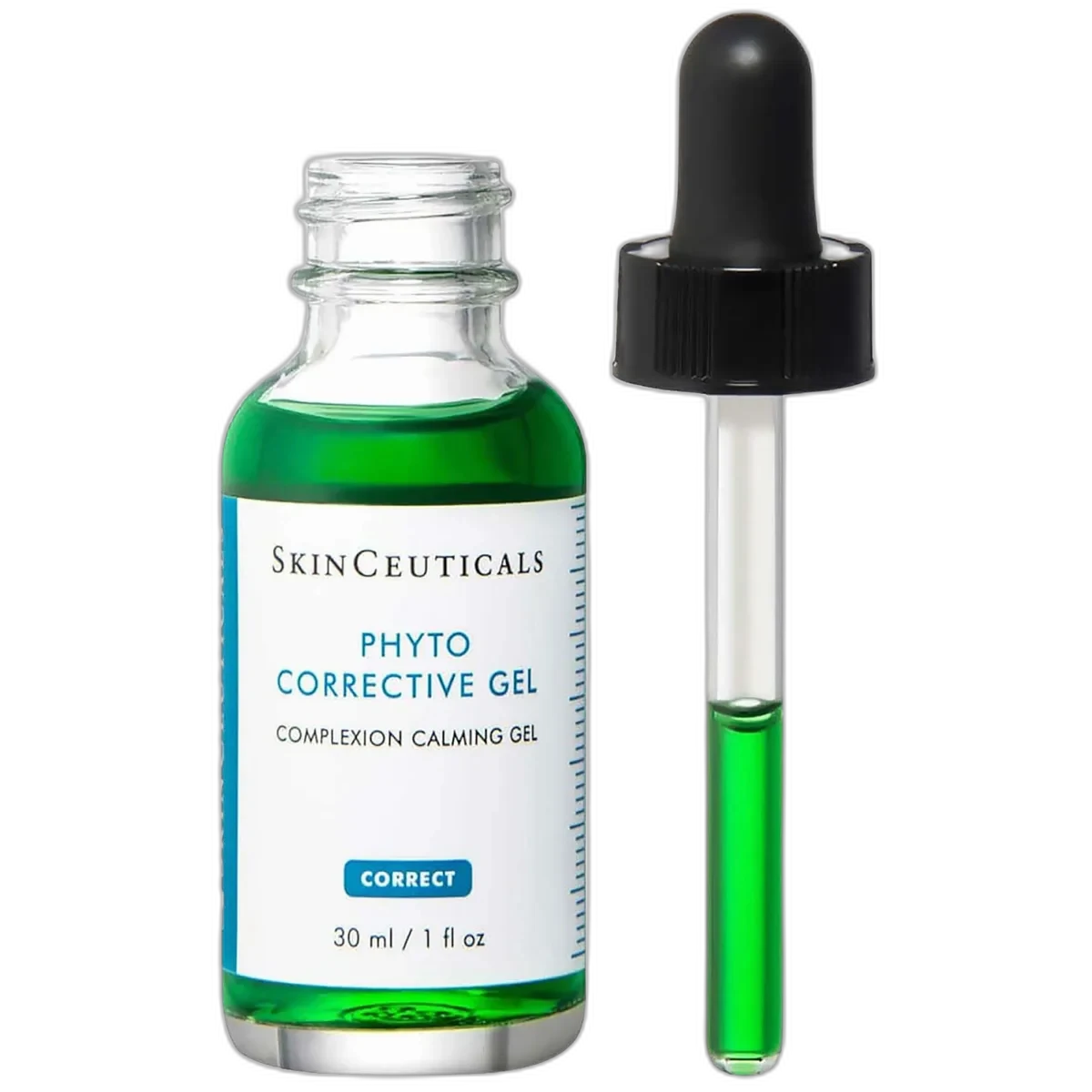
Phyto Corrective Gel
Rosacea-Skin Staple
 Verified reviewer
Pros & cons.
- +Multi-pathway botanical calming approach that works quickly on surface flushing
- +Dermatologist-office staple for post-procedure aftercare with 20-year track record
- +Fragrance-free, alcohol-free, and compatible with the most reactive skin
- +Layers well as a buffer under retinoids and vitamin C serums
- +Lightweight gel texture suitable for oily through dry skin types
- +Formula unchanged since 2006 — predictable and reliable
- −$82 for 1 oz is steep given the relatively simple formulation
- −Effects are subtle compared to prescription anti-inflammatories
- −Doesn't treat underlying rosacea — only transient flushing and inflammation
- −Lightweight gel won't replace a moisturizer for dry skin
- −Glass dropper can be awkward for precise dosing
The full review.
There’s a specific kind of respect reserved for skincare products that haven’t been reformulated in twenty years, and SkinCeuticals Phyto Corrective Gel has earned it. Walk into almost any board-certified dermatology office with a procedure room, open the recovery cabinet, and there’s a very good chance this small frosted bottle is sitting next to the post-laser aftercare kits and the sample-size tubes of CeraVe. It’s been there since 2006, quietly doing the same job for the same kind of patient, which is almost unheard of in a category where brands routinely overhaul their bestsellers to chase the latest trend cycle.
The formula is built around a specific thesis: calm reactive skin through multiple low-intensity anti-inflammatory pathways rather than a single strong one. Dipotassium glycyrrhizate from licorice root is the most clinically backed of the calming actives here and carries the bulk of the measurable redness reduction. Thyme and olive leaf extracts contribute polyphenol antioxidants that target oxidative inflammation, while cucumber extract delivers the immediate cooling sensation users feel on application. Hyaluronic acid and glycerin round things out with lightweight humectant hydration. Nothing in the ingredient list is expensive or exotic — the work is being done by the specific combination and the restraint of the formulator, not by a proprietary peptide or a tech-flagship delivery system.
Texture
The texture is almost aggressively unremarkable. It’s a clear gel, slightly viscous, that dispenses from a standard glass dropper and spreads across the face in one pass. Absorption is quick. There’s a faint cooling sensation from the cucumber and thyme extracts that sensitive-skin users tend to find immediately reassuring, especially when the skin is mid-flare or hot to the touch after a workout or a hot room.
Scent
The scent is essentially nothing, which is exactly right for the audience — fragrance is the single most common trigger for sensitive-skin reactions, and this formula wisely avoids it entirely.
Works for
Where this serum earns its reputation is in the population it was built for. Rosacea patients report that daily use noticeably reduces the duration and intensity of flushing episodes. Post-procedure patients use it in the days after a laser, peel, or microneedling session to cool angry-looking skin and support the barrier recovery phase. Actives-heavy routines lean on it as a buffer layer — applied first, it meaningfully reduces the irritation potential of a retinoid or a vitamin C serum applied on top without blocking their efficacy. It pairs particularly well with C E Ferulic and with prescription retinoids like tretinoin, which is why you see the two recommended together so often.
Not ideal for
The honest limitations are about proportion. Eighty-two dollars for a one-ounce bottle is steep for a formula whose ingredients, on paper, are fairly accessible. There are botanical calming serums from Paula’s Choice, The Ordinary, and several Korean brands that deliver overlapping benefits for a third of the price. What you’re paying for with Phyto Corrective is the specific blend, the quality control, and the reliability that comes from twenty years of formulation stability — real things, but not worth it to everyone. The effects are also subtle compared to prescription anti-inflammatories. Nobody should buy this expecting the kind of visible redness reduction that azelaic acid or metronidazole can produce in clinical rosacea; this is a supporting act, not the star.
Who Should Buy
Board-certified dermatologists tend to recommend this to two specific kinds of patients. The first is someone with sensitive or reactive skin who needs a hydrating serum that will never trigger a flare — a baseline product they can trust to always work. The second is someone running a more aggressive routine who needs a buffer layer to make retinoids, vitamin C, or post-procedure skin more tolerable. If either of those descriptions fits, this serum is a legitimate option worth the shelf space. If they don’t, and if the budget is tight, there are genuinely comparable alternatives worth exploring first.
Ingredient analysis.
Full INCI list · pH 5
Water/Aqua, Glycerin, Butylene Glycol, Dipropylene Glycol, Hydroxyethylcellulose, Mushroom Extract, Hyaluronic Acid, Thyme Extract, Olive Leaf Extract, Cucumber Fruit Extract, Dipotassium Glycyrrhizate, Zinc Acetate, Zinc Sulfate, Phenoxyethanol, Caprylyl Glycol, Tocopherol, Ethylhexylglycerin, Sodium Hyaluronate, Disodium EDTA
Skin match.
The science.
The Science
The calming claims rest on a stack of botanical and synthetic anti-inflammatories with different mechanisms. Dipotassium glycyrrhizate, the potassium salt of glycyrrhetinic acid derived from licorice root, has been studied since the 1980s for its ability to inhibit inflammatory mediators and has been shown in multiple peer-reviewed studies to reduce erythema and irritation at topical concentrations typical of leave-on cosmetic use. Thyme extract contains thymol and rosmarinic acid, both of which have documented anti-inflammatory and antioxidant activity in in vitro and ex vivo skin models. Olive leaf extract contributes oleuropein, a polyphenol studied for its ability to neutralize reactive oxygen species and dampen the NF-kB inflammatory cascade. The mushroom extract used in the formula provides beta-glucans, which have documented immunomodulatory effects at the skin surface. The specific combination of these ingredients creates a multi-pathway approach — attacking both the vascular flushing response that rosacea patients experience and the broader oxidative inflammation driven by UV exposure and environmental stress. This is one reason the product has remained popular in dermatology practice despite the availability of simpler single-ingredient alternatives; the redundancy of mechanisms tends to produce more consistent results across a varied patient population. The formulation is also notable for what it excludes: no fragrance, no drying alcohol, no essential oils, and no exfoliating acids, keeping the irritation risk profile unusually low.
Dermatologist Perspective
Dermatologists commonly recommend Phyto Corrective Gel for patients with rosacea, post-procedure skin, or a compromised barrier who need a reliable calming layer that won't trigger further reactivity. Board-certified dermatologists frequently use it in the days following in-office laser and peel treatments because its fragrance-free, alcohol-free profile is unlikely to provoke the kind of post-procedure irritation that some heavier calming creams can cause. It is also routinely suggested as a buffer layer for patients starting tretinoin or a high-strength vitamin C serum — applied underneath, it reduces perceived sting and redness without blunting the efficacy of the stronger active. Where dermatologists tend to steer patients to alternatives is when budget is a constraint, when the patient needs treatment for clinical rosacea rather than just flushing management, or when the patient's primary concern is a different issue like hyperpigmentation.
Where it fits in your routine.
Apply 4-6 drops to cleansed, dry, or slightly damp skin every morning and evening. Use this before heavier treatments and moisturizer. In the morning, this gel layers well under a vitamin C serum — apply this first, wait 30-60 seconds, then apply C E Ferulic or your preferred C serum. At night, apply before a retinoid to reduce sting and visible irritation. Avoid the immediate eye area. Store away from direct sunlight. For post-procedure use, follow your provider's aftercare protocol and wait until any raw areas have closed.
At eighty-two dollars per fluid ounce, this calming serum sits at a premium price. One ounce lasts about two to three months if used twice daily, making the annual cost for this single product roughly four hundred dollars. The 1.6 oz size has a slightly better per-ounce rate but remains expensive. Readers seeking calming benefits can find effective alternatives for twenty-to-forty dollars from brands like Paula's Choice, Naturium, and various K-beauty options. SkinCeuticals charges more for its specific blend, formulation track record, and dermatology-office pedigree. That premium works for patients using expensive procedural treatments or managing persistent reactivity who need a reliable product. For less demanding skin needs, other options work better.
Rosacea-prone, sensitive, or reactive skin needs a calming serum that layers well under other actives. This works for patients using in-office laser or peel treatments as aftercare, and for anyone using retinoids or vitamin C who wants a buffer layer to improve tolerance.
Budget-conscious users find similar benefits in cheaper alternatives from Paula's Choice, Naturium, or K-beauty brands. Clinical rosacea patients should use prescription treatments instead of cosmetic calming serums — this is a support, not a substitute. Dry skin needing hydration should pair this with a thicker moisturizer.
Product details.
Clear, slightly viscous gel that absorbs quickly
Essentially unscented — very faint botanical note
Frosted glass bottle with dropper
The thin gel dispenses and spreads easily. Cucumber and thyme extracts cause a gentle cooling sensation on application, not a reaction. It does not sting or tingle, even on reactive skin. After a few days, baseline redness often looks calmer.
Approximately 2-3 months with daily twice-a-day use
12 months
All Year
The backstory.
SkinCeuticals developed Phyto Corrective Gel in the mid-2000s as the calming counterpart to their C E Ferulic antioxidant serum — designed specifically for patients whose skin couldn't tolerate stronger actives or who needed something to lean on after in-office procedures like lasers and peels. It has remained largely unchanged for nearly twenty years, which is notable in an industry constantly reformulating.
About SkinCeuticals
Established Brand (5–20 years)SkinCeuticals launched in 1997, based on Dr. Sheldon Pinnell's antioxidant research at Duke University. Dermatologists widely use the brand's serums, which appear in peer-reviewed cosmetic dermatology literature for two decades.
Common myths.
This serum treats rosacea itself.
It reduces the transient flushing and inflammation from rosacea, but it does not replace prescription treatments like metronidazole, azelaic acid, or ivermectin for the underlying condition.
Botanical calming ingredients are interchangeable.
This formula uses a specific blend of dipotassium glycyrrhizate, thyme, and olive leaf to target different inflammatory pathways than a centella-based serum. Because of this, dermatologists often find it works for patients who did not respond to other calming options.
FAQ.
Does Phyto Corrective Gel help with rosacea?
The blend of dipotassium glycyrrhizate, thyme, and olive leaf extracts reduces visible flushing and transient redness from rosacea. It is not a treatment for the underlying condition — use it with prescription rosacea therapies when clinically warranted.
Can I use this with retinol or vitamin C?
Yes, and this is a common use case. Apply this gel first to calm the skin, then layer retinol or vitamin C on top. It buffers the irritation potential of both actives without blocking their activity.
Is it safe to use after laser or microneedling?
This gel is a frequent recommendation for post-procedure use. It is fragrance-free, alcohol-free, and targets inflammation. Wait for any open or weeping areas to close before application, and follow your dermatologist's aftercare instructions.
How is this different from the Phyto Corrective Masque?
The masque is a leave-on treatment. It has higher viscosity and extra cooling glycerin for short-term intensive calming. The gel is a daily-use serum that provides steady soothing ingredients throughout the entire routine.
Is it safe to use during pregnancy?
The ingredient list has no items on standard avoid-during-pregnancy lists. Many dermatologists recommend it for pregnant patients with flushing or sensitivity. Always confirm with your OB or dermatologist.
How long before I notice results?
Most users feel immediate cooling and see less flushing within the first few uses. Baseline redness and reactivity show lasting reductions after two to four weeks of twice-daily use.
Does it replace a moisturizer?
No. This water-based gel serum provides lightweight hydration but lacks the occlusive or lipid components that seal moisture. Use a moisturizer suited to your skin type afterward.
What the community says.
"Noticeably calms redness and flushing"
"Lightweight gel texture layers well"
"Tolerable on very reactive and rosacea-prone skin"
"Buffers retinol and vitamin C irritation effectively"
"Expensive for a calming serum"
"Subtle effects compared to prescription options"
"Can feel slightly sticky before moisturizer"
Featured in.
People also looked at.