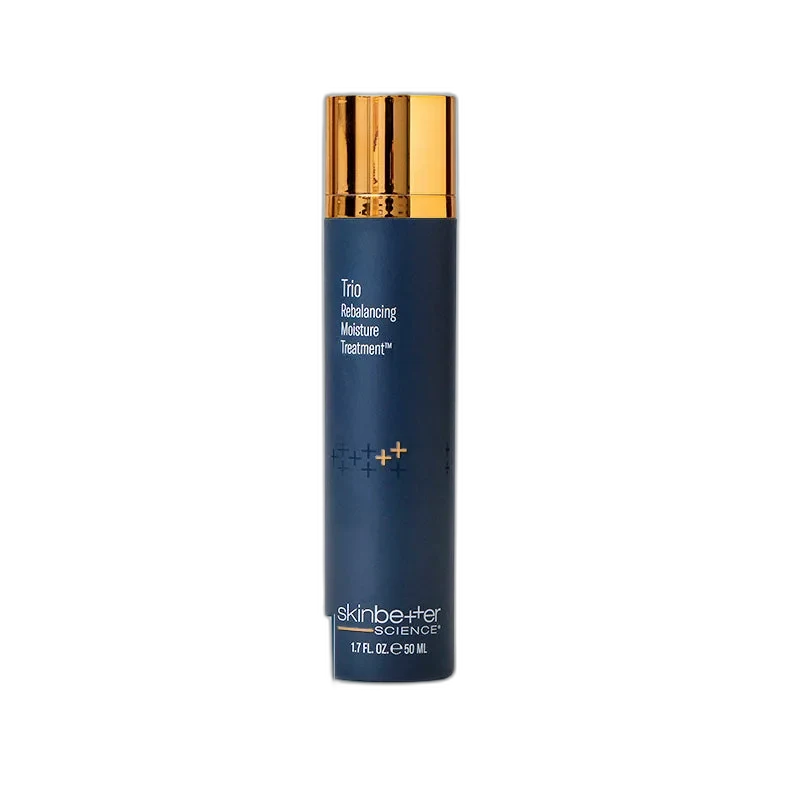
Trio Rebalancing Moisture Treatment
Post-Procedure Specialist
 Verified reviewer
Pros & cons.
- +Physiological three-ceramide complex modeled on the skin's own lipid composition
- +Niacinamide positioned high in ingredient list for meaningful barrier support
- +Soothing trio of bisabolol, licorice, and allantoin addresses visible redness
- +Fragrance-free execution appropriate for reactive and post-procedure skin
- +Light satin finish layers cleanly under SPF and makeup
- +Squalane-based emollient phase is biomimetic and non-comedogenic
- +Airless pump protects lipids and botanical extracts from oxidation
- +Broadly suitable across skin types including oily in colder months
- −$135 for 1.7 oz is a steep premium over drugstore ceramide alternatives
- −Only available through physician offices or authorized providers
- −Airless pump can be difficult to fully empty near the end
- −Not a dedicated anti-aging moisturizer — focused on barrier repair
- −No larger economy size offered to improve per-ounce value
The full review.
Dermatologists face a constant problem: patients undergo chemical peels or fractional laser treatments with perfect results, but aftercare fails because the prescribed barrier-repair ointments feel bad. Vaseline works, but patients stop using it by day three. Eucerin is fine, but its weight causes people to skip daytime use. The gap between “clinically effective” and “something you’ll actually reach for at 2 p.m.” ruins many post-procedure recoveries. Trio Rebalancing Moisture Treatment closes this gap; its presence in many med-spa aftercare kits proves it works.
The “Trio” name refers to the three-ceramide complex — ceramides NP, AP, and EOP — which SkinBetter pairs with cholesterol, phytosphingosine, and a physiological lipid architecture that mirrors the skin’s barrier. This follows established science; Peter Elias showed decades ago that barrier repair works best when topical lipids match the skin’s natural ratios. The execution is notable. Many ceramide-dense creams feel waxy and opaque, which suits nighttime but fails under daytime SPF. This formula carries the lipid load in a base that absorbs to a satin finish instead of a film. That is difficult to achieve.
Niacinamide sits high in the ingredient list, suggesting a 3-4% concentration. Niacinamide is one of the most independently validated ingredients for barrier repair, pigmentation, and reducing the inflammatory tone that causes reactive skin to cycle through breakouts and calming. Combining topical ceramides with niacinamide, which also stimulates internal ceramide synthesis, attacks the problem from two fronts. This is why the cream works quickly.
The soothing complex justifies the “rebalancing” claim. Bisabolol (the active sesquiterpene in chamomile), licorice root extract (containing glabridin for anti-inflammatory and mild pigment-calming activity), and allantoin reduce visible redness. Panthenol adds humectant support and wound-healing activity. Individually, these are not dramatic, but together they create the “my skin just feels calmer” sensation found in reviews. Compared to a standard ceramide cream, this hits the inflammation side of the barrier equation harder.
The emollient phase uses shea butter, squalane, and light sunflower and avocado oils. Squalane is biomimetic, non-comedogenic, and integrates with natural sebum without feeling occlusive. Dimethicone provides smoothing and slip under makeup. An amino acid NMF complex supports water-binding, while tocopherol and tocopheryl acetate provide antioxidant coverage. The formulation is coherent; no ingredients are wasted or added just to fill the label.
Texture
Ceramide creams often fail here. Trio Rebalancing has a medium-rich feel that spreads easily and sinks in to a satin finish within one or two minutes. It layers under sunscreen and makeup without pilling, which requires precise dimethicone and silicone-interaction chemistry. The fragrance-free formula suits post-procedure use and avoids the scent issues that affect other formulas.
Common Praise
Users consistently report immediate comfort and reduced reactivity within a week. This formula quickly addresses the tight, stinging, red skin caused by over-exfoliating or aggressive retinoid use. It is not an anti-aging cream—peptides and stronger actives belong in other products—but as a daily moisturizer for barrier work, it outperforms most competition.
Common Complaints
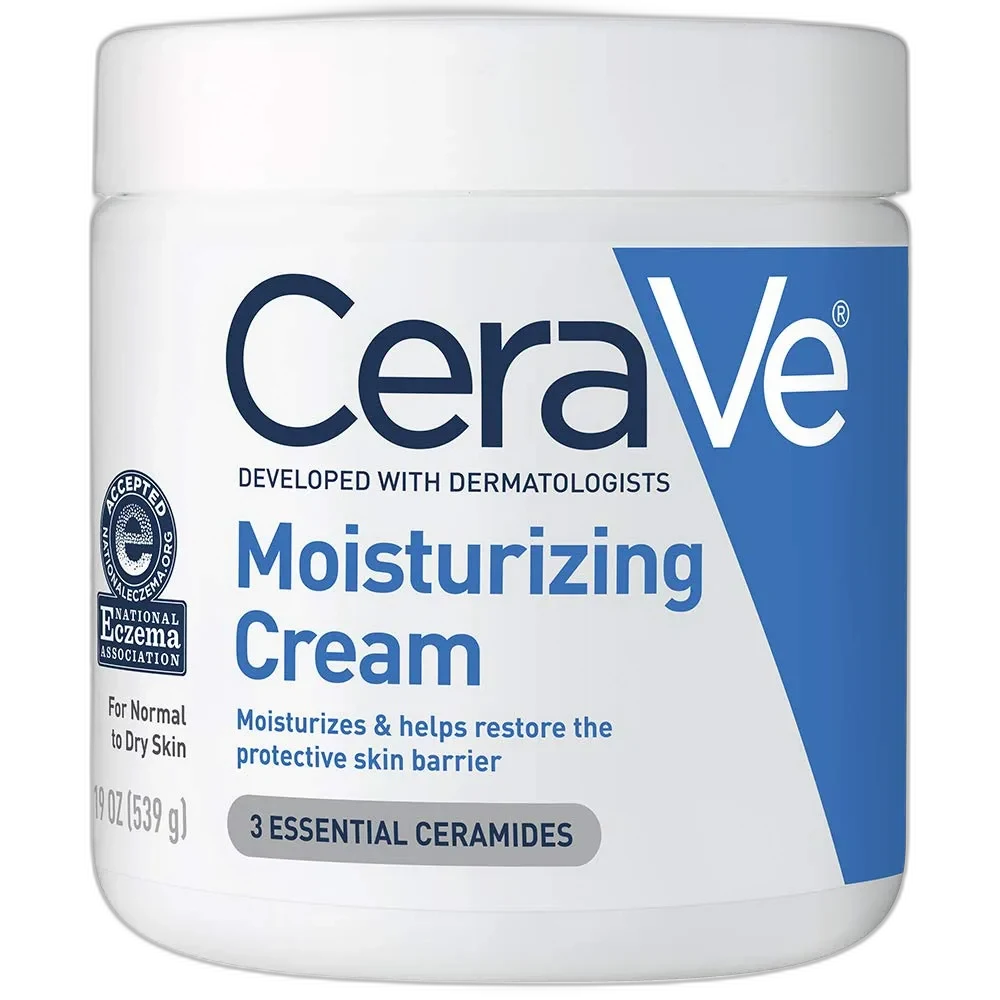
The price is the main issue. $135 for 1.7 ounces is expensive for a moisturizer, especially since CeraVe Moisturizing Cream costs about 10% of that and uses a similar ceramide-cholesterol-fatty acid approach. The upgrades are real—a better soothing complex, more elegant texture, and higher niacinamide—but whether they justify the cost depends on your current routine. For those whom drugstore options failed, or for patients undergoing in-office treatments where post-procedure comfort is vital, the premium is defensible. Otherwise, starting with a basic ceramide cream and upgrading only if necessary is the smarter financial choice.
Who Should Buy
anyone going through in-office treatments, patients actively ramping up retinoids, people whose skin has gotten reactive from over-exfoliation, and anyone who’s tried several drugstore ceramide creams without success.
Who Should Skip
budget-conscious shoppers for whom CeraVe or La Roche-Posay Toleriane would do the job, and anyone whose concerns are primarily about aging rather than barrier repair — there are better uses for $135 on that front.
Ingredient analysis.
Full INCI list
Water, Glycerin, Caprylic/Capric Triglyceride, Butyrospermum Parkii (Shea) Butter, Cetearyl Alcohol, Niacinamide, Glyceryl Stearate, PEG-100 Stearate, Squalane, Cetyl Alcohol, Dimethicone, Sodium Hyaluronate, Ceramide NP, Ceramide AP, Ceramide EOP, Phytosphingosine, Cholesterol, Sodium Lauroyl Lactylate, Carbomer, Xanthan Gum, Tocopheryl Acetate, Helianthus Annuus (Sunflower) Seed Oil, Persea Gratissima (Avocado) Oil, Panthenol, Allantoin, Bisabolol, Glycyrrhiza Glabra (Licorice) Root Extract, Camellia Sinensis Leaf Extract, Vitis Vinifera (Grape) Seed Extract, Tocopherol, Sodium PCA, Sodium Lactate, Arginine, Aspartic Acid, PCA, Glycine, Alanine, Serine, Valine, Proline, Threonine, Isoleucine, Histidine, Phenylalanine, Disodium EDTA, Sodium Hydroxide, Caprylyl Glycol, Phenoxyethanol, Ethylhexylglycerin, Chlorphenesin
Skin match.
The science.
The Science
This formulation uses decades of peer-reviewed research on epidermal barrier biology. In the 1990s and 2000s, Peter Elias and colleagues showed the stratum corneum's lipid lamellae contain roughly equimolar ratios of ceramides, cholesterol, and free fatty acids. They found topical barrier repair works best when these three lipids arrive together. The 3:1:1 ratio in this formula favors ceramides to match that research. Ceramides NP, AP, and EOP are different structural subtypes that organize the lamellae differently; using three reflects that the skin's natural ceramide pool is heterogeneous. Niacinamide has strong evidence: randomized studies in the International Journal of Cosmetic Science and the British Journal of Dermatology show topical niacinamide at 2-5% improves barrier function, reduces transepidermal water loss, and increases the skin's own ceramide synthesis via sphingolipid pathway upregulation. The synergy between topical ceramides and niacinamide-stimulated endogenous ceramide production helps this formula work faster than ceramides alone. Bisabolol has documented anti-inflammatory activity in dermatological literature, specifically for reducing erythema. Licorice extract's glabridin component shows tyrosinase inhibition and anti-inflammatory effects. The combination is not revolutionary, but every ingredient supports either barrier repair or soothing, showing formulation discipline.
Dermatologist Perspective
Dermatologists often recommend physiological lipid-based moisturizers for patients with compromised barriers from over-exfoliation, retinoid ramp-up, or post-procedure recovery. Board-certified dermatologists note that patient compliance with aftercare products largely determines recovery quality. Texture matters more than patients expect—a perfect cream does nothing if it sits unused. Trio Rebalancing is widely stocked in dermatology and medical aesthetic practices because it bridges the clinical-effectiveness gap and the sensory-pleasure gap, often appearing in post-procedure aftercare kits. Dermatologists commonly pair it with gentle cleansers and mineral sunscreens during recovery, and some recommend it long-term for rosacea-prone or chronically reactive skin. The fragrance-free, paraben-free, and soothing-focused formulation follows current dermatological guidance for sensitive skin management.
Where it fits in your routine.
Apply a nickel-sized amount to clean skin every morning and evening. In the morning, apply after antioxidant serums and before sunscreen. In the evening, use as the final leave-on step after treatments or retinoids — wait one or two minutes after applying retinoids before layering this on top to minimize interaction. For post-procedure recovery, apply more often throughout the day as your provider directs, sometimes every few hours during the first 48-72 hours. The airless pump delivers a consistent dose — one to two pumps usually covers the full face and neck.
At $135 for 1.7 ounces, this costs as much as professional moisturizers. The price makes sense compared to luxury department-store brands that charge similar or higher prices for less thoughtful formulations, but it loses to drugstore ceramide creams that use the same core idea for a tenth of the cost. The question is whether the added soothing complex, higher niacinamide, and more elegant texture justify the price. For patients undergoing in-office procedures or with reactive skin that hasn't responded to cheaper options, the answer is often yes. For a first-time buyer who hasn't tried CeraVe or La Roche-Posay Toleriane yet, start there and upgrade only if needed.
This works for patients undergoing active in-office procedures, those increasing retinoid use, and people with reactive barriers from over-exfoliation. It also suits shoppers whose skin hasn't stabilized on drugstore ceramide creams, or rosacea-prone and chronically sensitive skin types needing a daily moisturizer that soothes.
Budget-conscious shoppers can use CeraVe Moisturizing Cream or La Roche-Posay Toleriane for less money. People prioritizing anti-aging over barrier repair find better results with peptide- or retinoid-driven options at similar prices.
Product details.
Medium-rich cream with a soft cushiony feel that absorbs to a satin finish
Unscented
An airless pump bottle protects the lipids and botanical antioxidants from oxidation.
The bisabolol and allantoin calm skin immediately upon application. You feel comfort within minutes. There is no tingling or breaking-in period. Skin feels softer and less reactive after the first few days.
Approximately 2-3 months with twice-daily full-face application
12 months
All Year
The backstory.
Trio Rebalancing launched as one of SkinBetter's early flagship moisturizers, designed for patients undergoing active treatments like chemical peels, microneedling, or aggressive retinoid use. The 'rebalancing' name nods to the reality that most cosmetic procedures temporarily compromise the barrier, and post-procedure compliance is easier when the moisturizer also feels pleasant to wear.
About SkinBetter Science
SkinBetter Science launched in 2016 and sells only through licensed dermatologists and medical aesthetic providers. The brand has built professional credibility and sits alongside long-established clinical lines in dermatology offices.
Common myths.
Ceramide creams always feel thick and greasy.
This formula shows ceramide-rich doesn't mean heavy. The squalane and dimethicone base carries physiological lipids in a texture that absorbs cleanly. It works under sunscreen and makeup.
Expensive moisturizers are just marketing hype.
Price often reflects marketing, but here the ingredient density and physiological lipid ratio show formulation choices rare at lower price points. Whether the premium is worth it depends on if cheaper ceramide options already work for you.
What the community says.
"Calms redness and irritation quickly"
"Non-greasy despite rich feel"
"Compatible with retinoid and acid routines"
"Expensive for the size"
"Only available through providers"
"Pump dispenser can be finicky near the end"