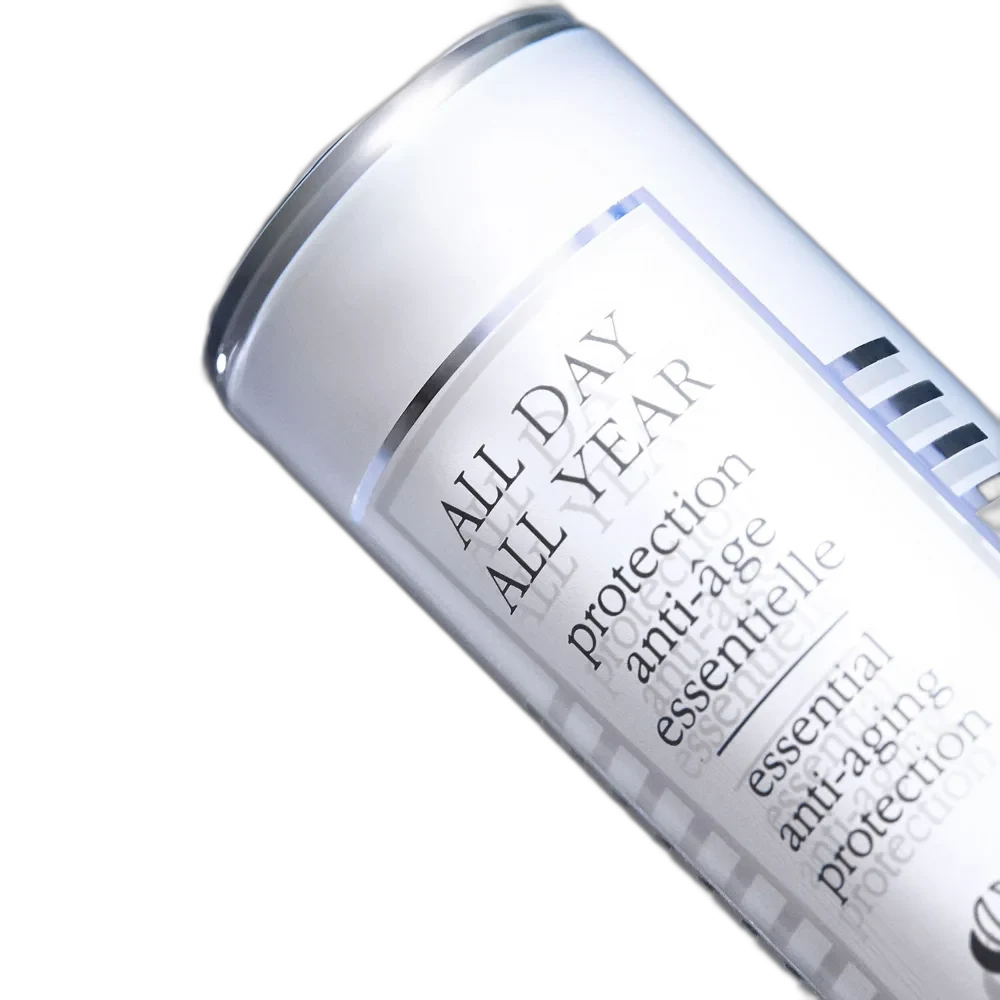
All Day All Year Essential Anti-Aging Protection SPF 30
Luxury With a Confidence Problem
 Verified reviewer
Pros & cons.
- +Modern broad-spectrum UV filter system including Tinosorb S
- +Photo-stable avobenzone stabilization through octocrylene and Tinosorb S
- +Elegant, lightweight cream texture that layers well under makeup
- +Minimal white cast on most skin tones
- +Plant-derived antioxidant support including green tea and grape seed extracts
- +Suitable as a combined moisturizer and SPF step for normal to dry skin
- −Extraordinary price that's not justified by the filter system alone
- −SPF 30 is modest for a luxury-tier day cream — SPF 50 would be more defensible
- −Strong fragrance that will alienate fragrance-sensitive users
- −Small 50ml size means the per-month cost is punishing
- −No meaningful formulation advantage over SPF creams at 10% of the price
The full review.
We must address luxury sunscreen first, or the rest of this review lacks context. Sunscreen is the one category where standardized, regulated active ingredients drive performance. A sunscreen’s filter system absorbs or reflects UV radiation. Everything else—texture, fragrance, supporting antioxidants, and “anti-aging protection” claims—is just the supporting cast. A cream using Tinosorb S, avobenzone, octocrylene, and ethylhexyl salicylate to reach broad-spectrum SPF 30 provides the same photoprotection whether it costs $30 or $500. You aren’t paying for sun protection; you are paying for the cream around it.
Sisley’s All Day All Year Essential Anti-Aging Protection SPF 30 is a good sunscreen. By luxury-SPF standards, it is relatively modern. Including Tinosorb S (bis-ethylhexyloxyphenol methoxyphenyl triazine) upgrades it over older luxury sunscreens that relied only on unstable avobenzone, which gave the category a reputation for being worse than drugstore options. Tinosorb S is a broad-spectrum filter that also photo-stabilizes avobenzone, so UVA protection lasts through a typical wear day instead of degrading in hours. Combined with homosalate, ethylhexyl salicylate, and octocrylene, the filter stack produces genuine, well-rounded SPF 30 protection with strong UVA coverage. It works from a photoprotection standpoint.
The supporting formula is also fine. Green tea extract, grape seed extract, and alpha-glucan oligosaccharide provide antioxidant and soothing activity that complements the UV filter system. Antioxidants pair well with sunscreen because they catch free radicals that pass the filter layer and cause oxidative damage beneath the protective barrier. Sisley includes a respectable set of plant-derived antioxidants at unknown concentrations. Vitamin E adds more antioxidant support. This isn’t groundbreaking, but it isn’t wrong. For a day cream with antioxidant positioning, this supporting cast makes sense.
The texture and experience differentiate Sisley, and the texture is unambiguously good. The cream is thick but lightweight, absorbs within a couple of minutes, leaves a natural satin finish, and layers well under makeup. It doesn’t pill, it doesn’t leave a white cast on most skin tones, and it feels more elegant than many mid-range SPF creams. The fragrance is distinctly Sisley—a floral-herbal note that fans love and fragrance-averse users will avoid. If you enjoy the luxury skincare ritual, this cream delivers. The tube, the cream, and the experience are all elegant. That matters.
But there is a problem: at $495 for 50ml, this cream costs roughly ten to fifteen times what an equivalently formulated SPF 30 broad-spectrum cream costs from a more sensibly priced brand. You can buy a modern Tinosorb S and avobenzone-based day cream from a European pharmacy brand or a Korean cosmetics brand for $25-40. Those provide photoprotection indistinguishable from this one, with better fragrance, larger sizes, and better value. You are paying for the Sisley brand, the Sisley texture experience, and the Sisley fragrance. If those matter to you—if the ritual of applying a beautifully textured luxury cream is why you buy skincare—this is a competent purchase. If you pay for sun protection, you are paying fifteen times the market rate for context.
The SPF 30 rating is another drawback. At this price, and since the brand calls this “anti-aging protection,” SPF 50+ would be more defensible. Modern dermatological guidance favors SPF 50 for serious photoprotection. Asking customers to pay $495 for an SPF 30 cream when $30-50 mid-market brands offer SPF 50 broad-spectrum coverage is hard to defend. SPF 30 isn’t inadequate—it blocks about 97% of UVB compared to SPF 50’s 98%—but “adequate” is a strange ceiling for the luxury tier. There is no reason this couldn’t be an SPF 50 product except the brand’s choice.
The verdict is honest: this is a well-formulated luxury SPF moisturizer. Its filter system earns its technical score, its price earns none, and its target audience knows what they are buying. For the Sisley loyalist who loves the texture and fragrance and views skincare as a lifestyle, it is a reasonable addition. For anyone deciding based on ingredient quality per dollar, it is indefensible. We would send you to a pharmacy shelf instead.
Formula
Ingredient analysis.
Full INCI list
Aqua, Homosalate, Ethylhexyl Salicylate, Octocrylene, C12-15 Alkyl Benzoate, Butyl Methoxydibenzoylmethane, Glycerin, Dimethicone, Cetyl Alcohol, Bis-Ethylhexyloxyphenol Methoxyphenyl Triazine, Ethylhexyl Methoxycrylene, Polymethylsilsesquioxane, PEG-100 Stearate, Glyceryl Stearate, Camellia Sinensis Leaf Extract, Vitis Vinifera (Grape) Seed Extract, Alpha-Glucan Oligosaccharide, Tocopheryl Acetate, Phenoxyethanol, Parfum, BHT
Skin match.
The science.
The Science
The UV filter system is the most important part of any sunscreen, and this one is genuinely well-built by current best-practice standards. Bis-ethylhexyloxyphenol methoxyphenyl triazine — commercially known as Tinosorb S — is a modern organic filter that provides broad-spectrum UVB and UVA coverage. Research published in Photochemical and Photobiological Sciences has documented its excellent photostability and its ability to stabilize other filters in a formulation, particularly avobenzone (butyl methoxydibenzoylmethane), which is the primary UVA filter in this cream. Avobenzone alone photodegrades significantly under UV exposure, losing its UVA protection within a few hours; the addition of Tinosorb S and octocrylene, both of which stabilize avobenzone, is what allows this formulation to provide sustained UVA coverage throughout a typical wear day.
Homosalate is a UVB-primarily filter that has been the subject of ongoing regulatory review in both the EU and US due to concerns about systemic absorption. Current FDA guidance permits its use up to 15% concentration, and most dermatological authorities consider it safe at typical use levels, though the EU has lowered the permissible concentration in recent years. Ethylhexyl salicylate provides additional UVB coverage and contributes to the overall photostability of the filter blend.
The SPF 30 rating represents a 97% UVB block, compared to SPF 50's 98% block. In absolute terms the difference is small, but the residual UVB exposure is 50% higher at SPF 30 than SPF 50 (3% vs 2% transmitted), which matters for cumulative lifetime exposure. Current dermatological consensus generally favors SPF 50+ for daily use, particularly for photoaging prevention, though SPF 30 is considered the minimum effective level for broad-spectrum protection.
The antioxidant supporting cast — green tea polyphenols, grape seed extract, and vitamin E — has documented activity against UV-induced free radicals in the skin, though the clinical significance of topical antioxidants in a sunscreen formulation at unknown concentrations is debatable. Research has shown that topical antioxidants can provide additional photoprotection when paired with a conventional sunscreen, but the effect size is modest and concentration-dependent.
Dermatologist Perspective
Dermatologists generally view luxury SPF moisturizers with a degree of skepticism, not because the products themselves are ineffective but because the price-to-benefit ratio is typically poor relative to pharmacy and mid-market alternatives with equivalent filter systems. This Sisley product tends to be acknowledged by dermatologists as a competent SPF 30 formulation — the filter stack is modern and well-chosen — but the same dermatologists typically point out that patients seeking maximum daily photoprotection would be better served by an SPF 50 broad-spectrum cream at a fraction of the price. Board-certified dermatologists also note that at the luxury tier, fragrance content and SPF 30 (rather than SPF 50) are questionable formulation choices given the price point and the positioning as 'anti-aging protection.' For patients who value the Sisley texture and ritual, it's not an actively bad product; it's just not a value-driven one.
Where it fits in your routine.
Apply a generous amount—about a half-teaspoon for face and neck—after your morning serums. A thin layer fails to provide the SPF 30 protection on the label; use enough product to reach the tested dose. Let the cream set for one to two minutes before applying makeup. Reapply every two hours during active sun exposure.
At $495 for 50ml, the value assessment is difficult to write diplomatically. The filter system is modern and well-constructed, but equivalent broad-spectrum SPF 30 formulations using Tinosorb S, avobenzone, and octocrylene cost $25-50 at pharmacies. You pay roughly ten to fifteen times the market rate for a product with sun protection that is not ten to fifteen times better than alternatives. You pay for the Sisley brand, texture, and fragrance. If those factors drive your skincare purchases, this cream delivers that experience. If you buy sunscreen based on ingredient quality per dollar, this is one of the least defensible purchases in the SPF category. No amount of polite framing changes that math.
Sisley loyalists love the brand's texture and fragrance and view morning skincare as a lifestyle investment. This also suits anyone who values the luxury experience of a well-crafted day cream and has the budget to buy without comparison shopping.
Choose this if you prioritize ingredient quality per dollar or maximum daily photoprotection. A pharmacy or mid-range SPF 50 broad-spectrum cream with the same filter class provides better protection for much less money. Fragrance-sensitive users should look elsewhere.
Product details.
Rich but lightweight cream with a silky glide
Distinct Sisley floral-herbal fragrance
White tube with minimalist Sisley branding
Spreads smoothly and absorbs within minutes. It leaves a natural satin finish that layers well under makeup. Normal skin feels no stinging or tingling, but the fragrance is noticeable upon application.
Use daily on the face and neck for about 3 months with appropriate SPF application amounts
12 months
All Year
The backstory.
Sisley built its 'All Day All Year' positioning on the premise that daily environmental damage — UV, pollution, free radicals — accumulates throughout the day and requires a single protective cream to counter it. The 2016 reformulation upgraded the UV filter system to include Tinosorb S, bringing the product closer to what a genuinely modern broad-spectrum SPF should be.
About Sisley
Established Brand (5–20 years)Hubert d'Ornano founded Sisley Paris in 1976. He belongs to the family behind Orlane and Jean d'Albret. The brand uses plant-based 'phytocosmetology' and has occupied the luxury skincare category for about five decades, even if its claims exceed the available independent clinical literature.
Common myths.
A $500 sunscreen works better than a $30 one.
The filter system determines actual sun protection. A modern pharmacy or mid-range sunscreen using the same filter combination — Tinosorb S, avobenzone, octocrylene — provides equivalent SPF 30 broad-spectrum coverage for much less. You pay for texture, fragrance, branding, and the Sisley experience, not better photoprotection.
FAQ.
Is this cream worth the price?
That depends on what you buy. The UV filter system is modern and effective, but mid-range brands offer equivalent SPF 30 broad-spectrum protection for 10-20% of the price. You pay for the Sisley texture, fragrance, and brand experience, not better photoprotection.
Is it a sunscreen or a moisturizer?
Both — this SPF 30 daily moisturizer replaces two morning routine steps. The cream base provides lightweight to moderate hydration for normal to dry skin.
Does it leave a white cast?
It leaves minimal white cast. The filter system uses mostly organic filters, including Tinosorb S at a concentration that rarely shows a cast on most skin tones.
Is it pregnancy safe?
The filter system uses homosalate and octocrylene, both of which the EU regulates. Ask your OB if you want to avoid these filters during pregnancy.
Can sensitive skin tolerate it?
The fragrance is noticeable. The filter system uses organic filters that can irritate reactive skin. Sensitive skin types may prefer a mineral-filter alternative from a less fragranced brand.
What the community says.
"Elegant cream texture"
"Invisible finish under makeup"
"Comfortable on normal to dry skin"
"Extraordinarily expensive"
"SPF 30 is modest for the price"
"Fragrance is strong"
People also looked at.