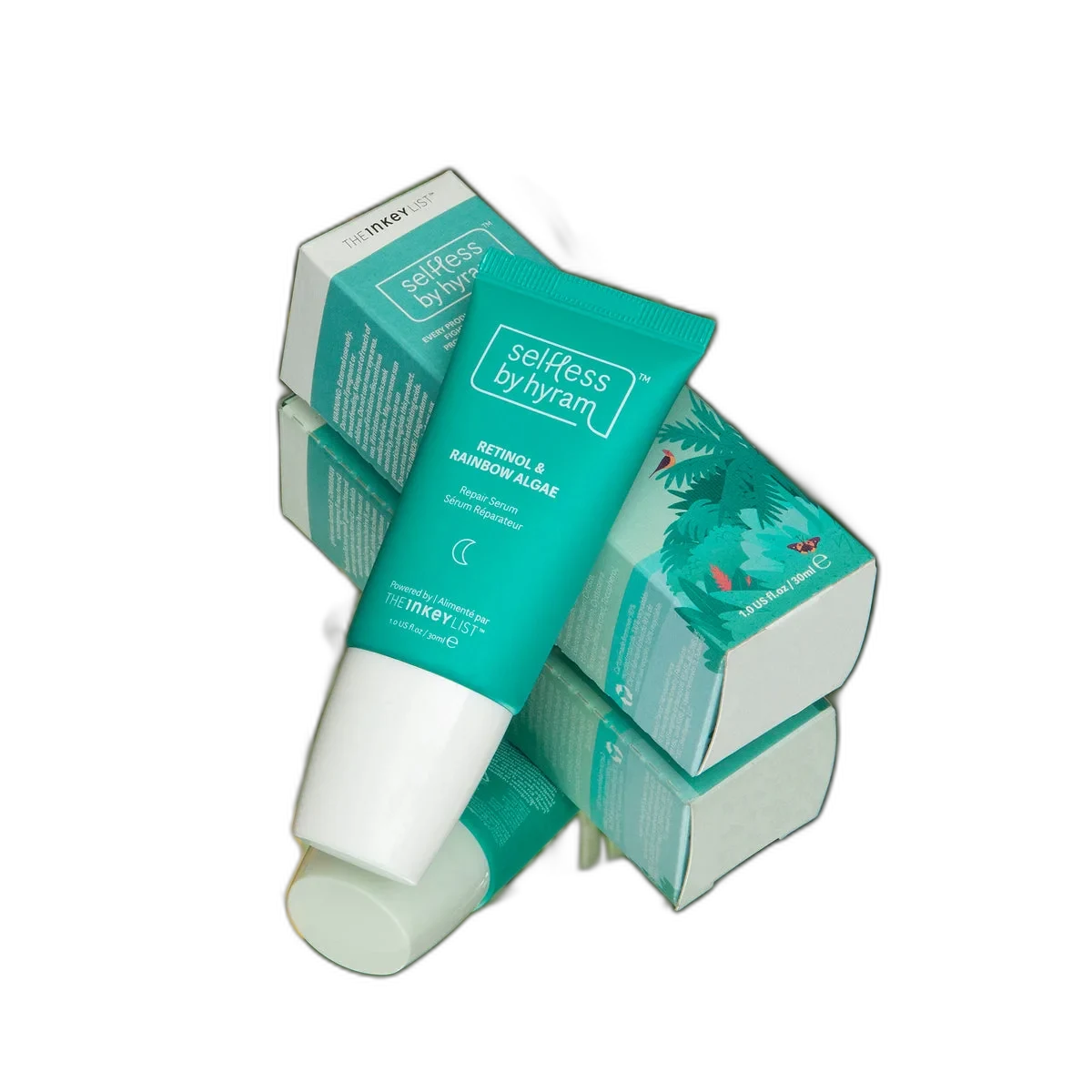
Retinol & Rainbow Algae Repair Serum
Beginner-Friendly Retinol
 Verified reviewer
Pros & cons.
- +Encapsulated 0.2% retinol is genuinely beginner-friendly
- +2% tranexamic acid adds direct post-acne mark fading
- +Squalane-heavy base buffers irritation effectively
- +Fragrance-free, vegan, and cruelty-free
- +Visible post-acne mark fading within 6-8 weeks
- +Layers cleanly under barrier moisturizer as a nighttime step
- +Reasonable mid-tier pricing for the encapsulated formulation
- +Free of essential oils and denatured alcohol
- −Only 30ml size, smaller than some competitors at the same price
- −Dropper bottle is not ideal for retinol long-term stability
- −Not pregnancy- or breastfeeding-safe
- −Contains benzyl alcohol preservative some users avoid
- −Beginners may still see mild flaking in the first 1-2 weeks
- −Price premium over cheaper encapsulated retinols from drugstore brands
The full review.
Most retinol serums force a choice. You either pick traditional free-retinol for collagen turnover and accept peeling, or you pick vitamin C, tranexamic acid, or alpha arbutin for brightening and pigmentation. Selfless by Hyram’s Retinol & Rainbow Algae Repair Serum does both. It combines 0.2 percent pure retinol, encapsulated in phospholipids for slow release, with 2 percent tranexamic acid. The retinol works on long-term collagen and texture, while the tranexamic acid targets post-acne marks and hyperpigmentation. This is not a massive chemistry innovation, but for a $28 drugstore-adjacent serum for retinol beginners, it is unusual.
The encapsulation is the technical mechanism. Free retinol at 0.2 percent in a typical water-based serum stings, flakes, and reddens skin during the first two to three weeks. Phospholipid encapsulation wraps individual retinol molecules in lipid structures. These release contents gradually over hours instead of all at once. This means skin receives retinol in smaller doses over a longer period, which reduces initial irritation without reducing long-term efficacy. Studies on encapsulated retinoid delivery have existed for nearly two decades; the approach is well-established in cosmeceutical science but remains underused at this price point.
The supporting ingredients are strategic. Squalane is the number two ingredient, acting as the emollient backbone to cushion the retinol and reduce transepidermal water loss during nighttime retinization. Triolein, a natural triglyceride, adds conditioning. Glycerin acts as a humectant. Rainbow algae extract — Cystoseira tamariscifolia, a French-sourced brown algae — provides antioxidant support without adding irritation and gives the formula its brand identity. Tocopherol completes the antioxidant profile. The formulation is fragrance-free, alcohol-minimal (the benzyl alcohol is a preservative, not an ethanol drying agent), and vegan.
The first application tests the encapsulation. For most users, it works — there is no sting, warming, or flaking on day one. A faint tingle is normal during the first few uses and settles quickly. Most beginners can reach nightly use within two to three weeks without the classic retinol peeling phase. Very reactive skin types may see mild flaking in the first one to two weeks; this is normal and manageable by using it every other night.
Performance happens in stages. Over two to four weeks, you see mild smoothing and subtle tone improvements as the retinol increases cell turnover and the tranexamic acid targets surface pigment. Over six to eight weeks, post-acne marks and post-inflammatory hyperpigmentation fade noticeably due to the tranexamic acid. Over twelve weeks, you see the full retinol collagen benefit: softer fine lines, even texture, and more light-reflective skin. These results are not dramatic. They are sustained improvements that accumulate over months.
The limitations are clear. The 30ml dropper bottle is small and the price is mid-tier. You pay roughly the same as you would for a similar CeraVe or The Inkey List retinol serum, making the premium for Selfless by Hyram’s formulation debatable. Dropper bottles offer less long-term retinol stability than airless pumps; use the serum within six months of opening to maintain potency. Benzyl alcohol is a preservative and is generally well-tolerated, but a small minority of sensitive users may react. Because this contains retinol, it is not pregnancy-safe and requires daily SPF the next morning.
Who should buy it
retinol beginners moving beyond The Ordinary Granactive, users with post-acne marks or mild hyperpigmentation wanting both retinol and tranexamic acid in one step, and fans of Hyram Yarbro’s ingredient-literate approach.
Who should skip it
anyone pregnant or nursing, people with severely compromised barriers or active rosacea flare-ups, and experienced retinol users wanting a higher percentage in a purer vehicle. For a first-to-second-step retinol journey, this serum is a thoughtfully built option in its price range.
Formula
Ingredient analysis.
Full INCI list
Aqua (Water), Squalane, Triolein, Glycerin, Glyceryl Oleate Citrate, Tranexamic Acid, Caprylic/Capric Triglyceride, Magnesium Aluminum Silicate, Phenoxyethanol, Xanthan Gum, Benzyl Alcohol, Phospholipids, Retinol, Sodium Gluconate, Sodium Citrate, Citric Acid, Ethylhexylglycerin, Cystoseira Tamariscifolia Extract, Tocopherol
Skin match.
The science.
The Science
The formulation science behind this serum rests on two well-established actives and a delivery technology worth understanding. Retinol's efficacy in stimulating collagen synthesis, normalizing keratinocyte turnover, and improving photoaged skin is one of the most thoroughly validated facts in cosmetic dermatology. Studies have repeatedly demonstrated meaningful clinical effects at concentrations ranging from 0.05 percent to 1 percent, with irritation rising sharply as concentration increases. The limiting factor for most consumers is not efficacy but tolerability. Phospholipid encapsulation addresses this tolerability gap by enclosing retinol molecules in lipid vesicles that gradually release their contents as the vesicles break down on contact with skin. Published research on liposomal and phospholipid-based retinoid delivery has shown equivalent or superior clinical benefit compared to free retinol at matched concentrations, with significantly reduced irritation markers. Tranexamic acid is a synthetic lysine derivative that inhibits plasminogen activation in keratinocytes, which reduces the melanocyte response to inflammation and UV exposure. Clinical studies have demonstrated topical tranexamic acid's effectiveness for melasma and post-inflammatory hyperpigmentation at concentrations of 2-5 percent, which is exactly the range used here. The combination of retinol and tranexamic acid is complementary rather than redundant — retinol works upstream on skin turnover and collagen, tranexamic acid works downstream on melanocyte behavior, and together they address both the texture and the pigmentation aspects of post-acne skin.
Dermatologist Perspective
Dermatologists commonly recommend encapsulated retinol formulations for patients who cannot tolerate free retinol at equivalent concentrations. Board-certified dermatologists note that phospholipid or liposomal encapsulation reduces the acute irritation phase of retinoid use while preserving long-term benefits, making this approach useful for retinol beginners and sensitive-skin patients. Tranexamic acid is increasingly cited in dermatology literature as a safer and better-tolerated alternative to hydroquinone for mild to moderate hyperpigmentation, and its combination with retinol in one serum reflects current cosmetic dermatology best practice. Dermatologists caution that retinol should not be used during pregnancy or breastfeeding regardless of encapsulation, and that even encapsulated retinols can cause irritation in compromised skin barriers. Patients with active rosacea or eczema should consult their dermatologist before starting any retinoid.
Where it fits in your routine.
Apply at night only, after cleansing and any hydrating toner. Press 3-4 drops from a clean fingertip into the face and neck, avoiding the lips and immediate eye area. Use a barrier-supporting moisturizer to buffer irritation. Start with every third night for 2 weeks, then every other night for 2 weeks, then nightly as tolerated. Always wear broad-spectrum sunscreen the next morning. Do not use on the same night as AHAs, BHAs, benzoyl peroxide, or other retinoids. Stop use if persistent redness, peeling, or burning occurs, then reintroduce slowly.
At $28 for 30ml, this serum is a mid-tier indie retinol product. The 30ml bottle provides 60-80 nightly doses, lasting 2-3 months. This makes the monthly cost about $9-14. It costs more than The Ordinary's retinol or Granactive Retinoid options at $10-15, but the encapsulation technology and added tranexamic acid justify the price. It offers clear value against prestige retinol serums at $80 and up. Only one size exists. This is a minor limitation, but appropriate since the product needs use within six months of opening to maintain retinol potency.
Retinol beginners starting a real retinoid, users with post-acne marks or mild hyperpigmentation wanting retinol and tranexamic acid in one step, fans of ingredient-literate influencer brands, and anyone moving up from The Ordinary retinol products. The formula also works for combination and oily skin prone to post-inflammatory hyperpigmentation.
Skip this if you are pregnant or breastfeeding, have active rosacea or a severely compromised barrier, or want a higher percentage retinol. It is not for budget shoppers seeking cheaper retinol from The Ordinary or CeraVe. Do not use if you cannot use daily sunscreen the next morning.
Product details.
Fragrance-free with only a faint neutral note.
30ml opaque glass dropper bottle — this protects the retinol from light and air, but dropper bottles offer less retinol stability than true airless pumps.
Most users feel no stinging on first application because of the phospholipid encapsulation. A faint warming sensation during the first two or three uses is normal as skin adjusts. Most beginners see no visible peeling, though some users see light flaking in the first one to two weeks. Always wear SPF the morning after use.
2-3 months with nightly use — the 30ml bottle delivers roughly 60-80 doses.
6 months
All Year
The backstory.
When Selfless by Hyram launched in 2021, the Retinol & Rainbow Algae Repair Serum was positioned as the brand's hero active treatment. Hyram had spent years on YouTube warning his audience about harsh retinoids and marketing-only ingredient claims; the encapsulation approach was chosen specifically to deliver a clinically meaningful retinol dose that his beginner-heavy audience could actually use. The rainbow algae extract — a less common ingredient — was added for its antioxidant profile and to give the formula a brand-specific identity.
About Selfless by Hyram
Emerging Brand (2–5 years)Selfless by Hyram launched in 2021 as a collaboration between YouTube skincare educator Hyram Yarbro and The Inkey List's parent company. The brand promises affordable, sustainability-focused, and ingredient-transparent formulations. Independent clinical validation is limited, but established indie cosmetic chemists develop the formulations.
Common myths.
All 0.2% retinol serums cause flaking and peeling.
Encapsulation changes the delivery profile. This serum's phospholipid-encapsulated retinol releases slowly, letting the skin adapt. Most beginners tolerate this 0.1 percent concentration better than a free-retinol product.
Tranexamic acid and retinol should not be used together.
These ingredients complement each other. Tranexamic acid treats existing hyperpigmentation, while retinol improves cell turnover and long-term collagen. They use different mechanisms and combine safely at the concentrations in this serum.
FAQ.
Is this serum good for first-time retinol users?
Yes — it is designed for beginners. The phospholipid encapsulation slows retinol release, and the high squalane placement buffers irritation. Use it every third night, then move to nightly use over 2-3 weeks.
Does it really help with post-acne dark spots?
Yes. The 2 percent tranexamic acid targets post-inflammatory hyperpigmentation based on studies, and the retinol supports cell turnover. Most users see visible mark fading within 6-8 weeks.
Can I use it with niacinamide or hyaluronic acid?
Yes. Both pair safely and beneficially with retinol. Apply hyaluronic acid or niacinamide serum first, then follow with this retinol serum. You can also use a barrier moisturizer on top to buffer.
Can I use it with vitamin C?
Don't use them together. Use vitamin C in the morning and this retinol serum at night. This prevents irritation and efficacy loss from pH conflicts.
How long does a 30ml bottle last?
Nightly use lasts two to three months and provides roughly 60-80 doses. Use a pea-sized amount for the full face.
How does it compare to The Ordinary's Granactive Retinoid?
Granactive Retinoid uses a different molecule (hydroxypinacolone retinoate) that is naturally gentler. This serum uses encapsulated retinol for controlled release. Both work for beginners, but Selfless by Hyram adds tranexamic acid for pigmentation, which The Ordinary's version lacks.
What the community says.
"Gentle enough for retinol beginners"
"Visible reduction in post-acne marks"
"Fragrance-free formula"
"Cruelty-free and vegan"
"Encapsulated retinol minimizes stinging"
"Only one size, small 30ml"
"Mid-tier pricing for a simple serum format"
"Contains benzyl alcohol preservative"
"Not pregnancy safe"
People also looked at.