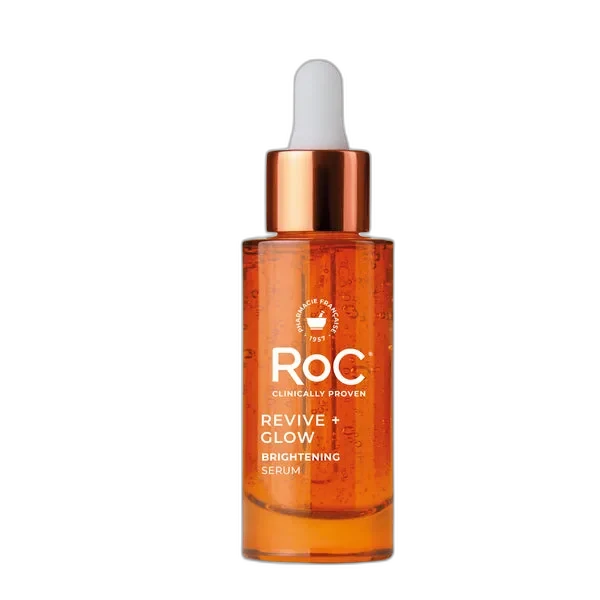
Multi Correxion Revive + Glow Vitamin C Serum
Drugstore Glow Getter
 Verified reviewer
Pros & cons.
- +10% 3-O-ethyl ascorbic acid provides stable, effective vitamin C with proven brightening activity
- +Nonapeptide-1 adds a second melanin-inhibiting pathway beyond vitamin C's mechanism
- +Clinical testing shows 100% of subjects had visibly brighter skin within 4 weeks
- +Exceptional value at under $27 for a concentrated vitamin C serum with peptide technology
- +Lightweight gel texture absorbs instantly without stickiness or pilling
- +Widely available at every major drugstore and mass retailer in the US
- −Heavy fragrance load including bergamot, lemon, and orange peel oils — potential photosensitizers
- −Contains limonene, linalool, and citral — common contact allergens
- −Unnecessary Yellow 6 dye adds no benefit
- −May be insufficient for stubborn or deep hyperpigmentation requiring stronger interventions
- −Not cruelty-free or vegan certified
- −Scent may be overpowering for fragrance-sensitive individuals
The full review.
The vitamin C serum market lacks transparency. A $60 serum with 20% L-ascorbic acid sounds impressive, but if the packaging, pH, or stabilization system fails, the formula oxidizes three weeks after opening. You then apply an expensive orange-brown liquid with little activity. RoC’s Multi Correxion Revive + Glow serum avoids this by using 3-O-ethyl ascorbic acid—a derivative that trades the raw potency of pure L-ascorbic acid for reliability.
3-O-ethyl ascorbic acid is an interesting vitamin C derivative for formulators. The ethyl group on the molecule’s third carbon prevents the oxidation that affects L-ascorbic acid, yet the compound penetrates skin effectively and converts to active ascorbic acid intracellularly via enzymatic cleavage. Clinical studies show brightening and antioxidant activity comparable to L-ascorbic acid at similar concentrations, without shelf-stability issues. At 10%, this concentration is meaningful—strong enough for visible results and moderate enough for most skin types.
The formula adds brightening technology around the vitamin C core. Nonapeptide-1 is a biomimetic peptide that inhibits alpha-MSH (melanocyte-stimulating hormone), reducing the signal for melanocytes to produce melanin. This mechanism differs from vitamin C’s tyrosinase inhibition, creating a two-pathway brightening approach that mirrors pharmaceutical strategies of targeting multiple biological steps.
Kakadu plum (Terminalia ferdinandiana) fruit extract adds natural vitamin C and polyphenol antioxidants to complement the synthetic derivative. Troxerutin, a flavonoid with vasoprotective and anti-inflammatory properties, reduces redness and supports the formula’s promised luminosity. Together, these form RoC’s patent-pending vitamin C blend.
The clinical data is encouraging. In manufacturer-funded testing, 94% of subjects showed improved luminosity and elasticity minutes after the first application, due to the hydrating glycerin base and the golden formula’s light-reflecting properties. More importantly, 97% showed visibly improved skin texture within one week, and 100% showed visibly brighter, tighter skin within four weeks. These are strong numbers, even with the optimistic framing typical of manufacturer studies.
Texture
The texture is a lightweight, water-based gel with a faint golden tint—the Yellow 6 dye is unnecessary and mildly annoying, but cosmetically inert. The serum absorbs in seconds and layers cleanly under moisturizer and sunscreen. The application is pleasant and efficient, suited for a fast morning routine.
Common Praise
User reviews on Amazon, CVS, Target, and Walmart echo the clinical findings. Most praise centers on visible glow improvement—the luminosity that makes skin look healthy and awake. Dark spot fading is reported over 8-12 weeks, consistent with what any topical melanin inhibitor achieves. The price point generates enthusiasm—at under $27, this is one of the most affordable vitamin C serums with disclosed concentration, clinical data, and a complementary peptide.
Scent
The fragrance profile requires honest accounting. The INCI list shows not just “Fragrance (Parfum)” but individual citrus essential oils—bergamot peel oil, lemon peel oil, and orange peel oil—plus allergens: limonene, linalool, and citral. Including bergamot oil in a serum for morning use before sun exposure is concerning. Bergamot contains bergapten, a furocoumarin that causes phototoxic reactions. While the concentration is likely minimal, the principle is questionable—a pharmaceutical-heritage brand should know that photosensitizing ingredients in a morning serum undermine the product’s value.
The fragrance also adds limonene, linalool, and citral—three common cosmetic contact allergens—to a formula applied to the face daily. At this price point, the fragrance likely enhances the user experience (the citrus scent is pleasant). However, the risk-benefit calculation does not favor fragrance in a treatment serum, and it narrows the audience.
Packaging
At $26.99 for 1 fl oz, the value is strong despite the fragrance. A six-to-eight-week supply of 10% stabilized vitamin C with a brightening peptide and clinical backing from a legacy pharmaceutical brand is competitive at any price—and exceptional at drugstore pricing. Users who tolerate the fragrance get genuine treatment efficacy for a fraction of the cost of prestige brands with comparable formulations.
Summary
The RoC Multi Correxion Revive + Glow Vitamin C Serum is a product at war with itself. The formula is smart: stable vitamin C, a complementary peptide, clinical validation, and accessible pricing. The fragrance load is not smart: unnecessary allergens and potential photosensitizers in a morning treatment serum. If RoC made a fragrance-free version, it would be an easy drugstore recommendation. As it stands, it is an excellent value with a caveat that some users can ignore and others cannot.
Ingredient analysis.
Full INCI list
Water (Aqua/Eau), Propanediol, PPG-24-Glycereth-24, Glycerin, 3-O-Ethyl Ascorbic Acid, Troxerutin, Cistus Monspeliensis Flower/Leaf/Stem Extract, Nonapeptide-1, Polygonum Aviculare Extract, Terminalia Ferdinandiana Fruit Extract, PEG-40 Hydrogenated Castor Oil, Sodium Polyacryloyldimethyl Taurate, PPG-26-Buteth-26, Maltodextrin, Caprylyl Glycol, Potassium Sorbate, Sodium Phosphate, Sodium Benzoate, 1,2-Hexanediol, Tetrasodium EDTA, Disodium Phosphate, Citric Acid, Caprylhydroxamic Acid, Fragrance (Parfum), Citrus Aurantium Bergamia (Bergamot) Peel Oil, Linalyl Acetate, Linalool, Citrus Limon (Lemon) Peel Oil, Pinene, Limonene, Citral, Citrus Aurantium Peel Oil, Yellow 6 (CI 15985)
Skin match.
The science.
The Science
3-O-ethyl ascorbic acid's efficacy is supported by research published in the International Journal of Cosmetic Science demonstrating that it penetrates skin comparably to L-ascorbic acid while maintaining significantly greater stability over time. The ethyl modification at the C-3 position prevents the oxidation cascade that rapidly degrades L-ascorbic acid, while intracellular esterases cleave the ethyl group to release active ascorbic acid in situ.
Nonapeptide-1's mechanism of action centers on competitive inhibition of alpha-MSH binding to the MC1R receptor on melanocytes. Research published in Pigment Cell & Melanoma Research has demonstrated that blocking this signaling pathway reduces melanin synthesis through a mechanism independent of tyrosinase inhibition — the pathway targeted by the vitamin C component. This dual-mechanism approach reduces the likelihood of compensatory upregulation that can limit single-agent brightening treatments.
Terminalia ferdinandiana (Kakadu plum) contains the highest recorded natural concentration of ascorbic acid of any fruit — up to 5.9% w/w in fresh fruit — along with ellagic acid and other polyphenol antioxidants. Research in Food Chemistry has documented its potent antioxidant capacity, providing broad-spectrum free radical scavenging that complements the targeted activity of the 3-O-ethyl ascorbic acid.
Troxerutin, a semi-synthetic flavonoid derived from rutin, has documented anti-inflammatory and vasoprotective properties. Studies in the European Journal of Pharmacology have shown its ability to reduce oxidative stress and improve microcirculation — relevant mechanisms for improving the dull, uneven appearance of chronically sun-stressed skin.
References
- Stability and skin penetration of 3-O-ethyl ascorbic acid — International Journal of Cosmetic Science (2013)
- MC1R antagonism as a strategy for melanin reduction — Pigment Cell & Melanoma Research (2010)
Dermatologist Perspective
Dermatologists view 3-O-ethyl ascorbic acid as a legitimate and effective vitamin C derivative, noting that its stability advantage addresses one of the biggest practical challenges with vitamin C serums — oxidation. Board-certified dermatologists frequently recommend this product as an affordable entry point for patients who need antioxidant protection and brightening but are not ready for a $60+ investment. The primary clinical concern is the fragrance profile: the presence of bergamot peel oil in a morning serum raises questions about phototoxicity, and the allergens (limonene, linalool, citral) are known contact sensitizers. Dermatologists recommend patch testing for patients with any history of fragrance sensitivity.
Where it fits in your routine.
Apply 4-6 drops to clean, dry skin every morning after cleansing and toning. Smooth over the face and neck, but avoid the eye area. Let it absorb for one minute, then apply moisturizer and a broad-spectrum SPF 30+ sunscreen — sunscreen is required when using vitamin C to treat hyperpigmentation. Use in the evening before moisturizer for extra brightening support.
At $26.99 for 1 fl oz, the Revive + Glow offers high value for a vitamin C serum. One bottle lasts about 6-8 weeks with daily morning use, making the monthly cost roughly $14-18. Prestige brands sell comparable 10% vitamin C serums for $50-150. The nonapeptide-1 brightening peptide, clinical backing, and RoC's 67-year pharmaceutical heritage provide more value than the price suggests. The fragrance load is the only drawback; some consumers will pay more for a fragrance-free alternative.
This serum works for anyone seeking affordable, stable vitamin C to treat dullness, uneven tone, and mild hyperpigmentation. It is an excellent entry point for vitamin C beginners wanting clinical backing without premium pricing. It suits budget-conscious consumers who use the savings to buy daily sunscreen — this combination delivers better results than an expensive serum alone.
People with fragrance sensitivity or contact dermatitis should avoid this formula because bergamot, lemon, and orange peel oils contain allergens. Those with stubborn melasma or deep hyperpigmentation may require stronger treatments like prescription-strength options or L-ascorbic acid at 15-20%. Users seeking the highest potency should use pure L-ascorbic acid serums and manage the stability themselves.
Product details.
This lightweight, water-based gel serum has a slight golden tint from Yellow 6 dye. It absorbs fast without residue, stickiness, or pilling under subsequent products.
Bergamot and lemon peel oils create a noticeable citrus fragrance. Some users like it; others find the scent too strong for a treatment serum.
A glass dropper bottle with a golden cap. The amber-tinted glass protects the vitamin C from light, but 3-O-ethyl ascorbic acid is more stable than L-ascorbic acid.
This lightweight, slightly golden gel absorbs in seconds. It shows an immediate luminosity boost from the first use. Some users feel mild tingling during initial applications; this is normal with 10% vitamin C and subsides with continued use. The citrus fragrance is noticeable immediately.
6-8 weeks with daily morning application
6 months
All Year
The backstory.
The Revive + Glow line represents RoC's expansion beyond retinol into the vitamin C space. Rather than competing with luxury serums using unstable L-ascorbic acid at premium prices, RoC chose a stable derivative (3-O-ethyl ascorbic acid) that delivers consistent results without the oxidation anxiety that plagues pure ascorbic acid formulas. The addition of nonapeptide-1 as a complementary brightening peptide differentiates this from generic vitamin C serums.
About RoC
Legacy Brand (20+ years)RoC was founded in 1957 by French pharmacist Dr. Jean-Charles Lissarrague. The brand is recognized for pioneering stabilized retinol and broad-spectrum sunscreen. Their Revive + Glow line uses a patent-pending 10% active vitamin C blend, with clinical testing showing visible brightening in 100% of subjects within 4 weeks.
Common myths.
Only L-ascorbic acid 'works' — vitamin C derivatives do not work.
Clinical studies show 3-O-ethyl ascorbic acid penetrates skin and converts to active ascorbic acid intracellularly. This stability keeps the ingredient potent throughout the product's shelf life, whereas L-ascorbic acid oxidizes and loses effectiveness within weeks of opening.
Vitamin C serums need to be expensive to be effective.
The efficacy of a vitamin C serum depends on the form, concentration, and stability of the vitamin C — not the price tag. At 10% 3-O-ethyl ascorbic acid with clinical testing backing, this $27 serum delivers comparable brightening results to serums costing $50-150.
FAQ.
Does the RoC Vitamin C Serum really work for dark spots?
Yes — 10% 3-O-ethyl ascorbic acid inhibits melanin production and nonapeptide-1 blocks melanocyte-stimulating hormone signaling. Clinical testing showed 100% of subjects had visibly brighter skin in 4 weeks. For stubborn or deep hyperpigmentation, pair this with other treatments.
Can I use the RoC Vitamin C Serum with retinol?
Yes, but use them at different times — vitamin C in the morning for antioxidant protection and brightening, retinol in the evening for cell turnover and collagen stimulation. Using both in the same routine can cause irritation, especially for sensitive skin.
Why does this vitamin C serum contain bergamot and lemon peel oils?
These fragrance components add scent. They are the formula's main weakness. Citrus oils contain potential photosensitizers and allergens (limonene, linalool, citral), which is a concern for a product designed for morning use before sun exposure. Users with fragrance sensitivity or allergy-prone skin should be cautious.
Is 3-O-ethyl ascorbic acid as effective as L-ascorbic acid?
3-O-ethyl ascorbic acid is more stable and penetrates skin well, converting to active ascorbic acid inside cells. Pure L-ascorbic acid has slightly stronger immediate antioxidant activity, but 3-O-ethyl ascorbic acid stays potent for the product's entire shelf life.
Can I use this RoC serum if I have sensitive skin?
Use with caution. The 10% vitamin C is moderate and usually tolerable, but the fragrance load (bergamot oil, lemon oil, limonene, linalool, citral) risks irritation for sensitive or allergy-prone skin. Patch test first. If you react, use a fragrance-free vitamin C serum instead.
How long does the RoC Vitamin C Serum last?
The 1 oz bottle lasts about 6-8 weeks if applied every morning. 3-O-ethyl ascorbic acid is more stable than L-ascorbic acid, so the serum stays potent. Check the period-after-opening (PAO) symbol — use within 6 months of opening.
What the community says.
"Noticeable glow and improved luminosity from the first week of use"
"Excellent value for a 10% vitamin C serum at drugstore pricing"
"Lightweight gel texture absorbs quickly without stickiness"
"Visible improvement in dark spots and skin texture over time"
"Gentle enough for most skin types without causing breakouts"
"Widely available at every major drugstore and mass retailer"
"Contains fragrance including bergamot and lemon peel oils — potential photosensitizers"
"May not be potent enough for stubborn hyperpigmentation or advanced aging"
"Citrus-scented fragrance is strong and off-putting for some users"
"Contains Yellow 6 dye — unnecessary in a treatment product"
"Some users report mild stinging on first application"
Featured in.
People also looked at.