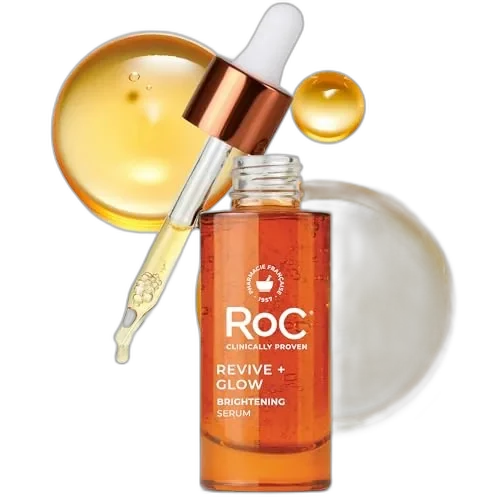
Multi Correxion Revive + Glow Daily Serum
Drugstore Daily Glow Pick
 Verified reviewer
Pros & cons.
- +Stable ascorbyl glucoside won't oxidize or sting like L-ascorbic acid
- +Instant soft-focus glow from silicone-based optical blurring agents
- +Pairs vitamin C derivative with niacinamide for broader tone benefits
- +Opaque airless-style pump protects actives from light and air
- +Layers smoothly under moisturizer, SPF, and makeup without pilling
- +Affordable pharmacy-brand pricing under $30
- +Pregnancy-safe actives with no retinoids or acids
- −Added fragrance and multiple known sensitizers limit sensitive-skin use
- −Ascorbyl glucoside works slower and milder than L-ascorbic acid
- −Only available in a 1 oz size — no value tier
- −Day-one glow is cosmetic, not proof of active efficacy
- −Tinted with cosmetic dyes some users prefer to avoid
The full review.
Throughout the 1990s and 2000s, RoC did what most drugstore brands failed to do: they stabilized retinol enough for dermatologists to mention it in consultations. Evaluate Revive + Glow Daily Serum through this pharmacy-brand lens. RoC isn’t chasing vitamin C trends; it applies a stability-first philosophy to a notoriously unstable active. The ingredient list proves this.
RoC uses ascorbyl glucoside instead of L-ascorbic acid, which oxidizes fast and stings at effective concentrations. This water-stable derivative undergoes enzymatic conversion to active vitamin C in the skin, providing a lower, more consistent dose without pH issues. Niacinamide shifts the formula from a “vitamin C serum” to a “general radiance and tone product,” while adenosine aids smoothing and vitamin E completes the antioxidant network. This coherent pairing resembles what a European derm office might recommend to a patient who disliked the burn of an ascorbic acid serum.
The experience is immediate and theatrical. The peachy-tinted gel has a primer-like slip. Silicones and optical blurring agents do the heavy lifting on day one, making skin look softer and more even seconds after application. This is clever cosmetics, not the vitamin C working. The ascorbyl glucoside provides brightening after 4-8 weeks of daily use, and the shift is gentle rather than dramatic. This distinction matters; many online reviews credit the “instant glow” to the active, but it comes from optical tricks. Both effects work, but on different timelines.
Texture and wear are strengths. It dries fast, does not pill under moisturizer or SPF, and works well with makeup. The silicone-blurring base suits daily AM use. The opaque tube with a precision pump protects ascorbyl glucoside from air and light. RoC avoided the mistake of using a clear glass dropper bottle.
The fragrance is a weakness. Added parfum plus linalool, geraniol, citronellol, and benzyl salicylate adds significant sensitizer real estate to an otherwise gentle list. If your skin is reactive, rosacea-prone, or post-procedure, skip this; fragrance-free ascorbyl glucoside options exist. For normal, combination, or oily skin without fragrance sensitivities, the scent is pleasant, dissipates quickly, and is not a dealbreaker. The 1 oz size is also small; daily use lasts roughly 2-3 months, and RoC lacks a larger value option.
At under $30, Revive + Glow is a well-formulated drugstore vitamin C serum. It won’t replace a 15% L-ascorbic acid serum for maximum pigment correction, nor does it compete with prestige-tier antioxidant formulas. But for those wanting an affordable, stable, non-stinging option for an AM routine under SPF, it is a smart pick from a brand with a long history of pharmacy-grade stability. RoC has the track record.
Ingredient analysis.
Full INCI list
Water, Butylene Glycol, Glycerin, Dimethicone, Ascorbyl Glucoside, Polymethylsilsesquioxane, Polysilicone-11, Niacinamide, Peg-10 Dimethicone, Nylon-12, Phenoxyethanol, Ammonium Acryloyldimethyltaurate/VP Copolymer, Fragrance, Disodium EDTA, Ethylhexylglycerin, Dimethiconol, C13-14 Isoparaffin, Caprylyl Glycol, Laureth-7, Hexylene Glycol, Polyacrylamide, Tetrasodium EDTA, Tocopheryl Acetate, Sodium Hydroxide, Adenosine, Linalool, Citronellol, Hexyl Cinnamal, Alpha-Isomethyl Ionone, Butylphenyl Methylpropional, Hydroxycitronellal, Geraniol, Limonene, Benzyl Salicylate, Citric Acid, Ci 19140 (Yellow 5), Ci 15985 (Yellow 6)
Skin match.
The science.
The Science
Ascorbyl glucoside is a vitamin C derivative designed to fix the stability and tolerance issues of L-ascorbic acid. Pure vitamin C needs a low pH (below 3.5) to penetrate and oxidizes quickly; ascorbyl glucoside is water-soluble, pH-neutral, and alpha-glucosidase on the skin converts it to active ascorbic acid. Topical vitamin C research shows it works as an antioxidant to neutralize reactive oxygen species, supports collagen synthesis as a cofactor for prolyl and lysyl hydroxylase enzymes, and inhibits tyrosinase to lower melanin production. Derivatives trade off dose: conversion is imperfect, so the clinical effect is usually gentler than the same concentration of pure ascorbic acid. The niacinamide pairing is well-established—niacinamide has strong evidence for reducing hyperpigmentation by blocking melanosome transfer from melanocytes to keratinocytes, which complements vitamin C's tyrosinase inhibition via a different mechanism. Adding vitamin E (tocopheryl acetate) provides a secondary antioxidant that regenerates oxidized vitamin C, a pairing documented in photoprotection literature. The silicones and optical diffusers are cosmetic choices, not biological ones, making this a practical daytime product to wear under SPF and makeup.
Dermatologist Perspective
Dermatologists view vitamin C derivatives like ascorbyl glucoside as a good entry point for patients who cannot tolerate L-ascorbic acid or want daytime antioxidant protection without the stinging and oxidation of classic formulas. Board-certified dermatologists note that derivative serums produce milder, slower results, and that combining them with niacinamide—as this formula does—adds a complementary pigment-modulating mechanism. For patients with rosacea, eczema, or fragrance sensitivities, dermatologists typically recommend a fragrance-free vitamin C option, as added parfum and sensitizing fragrance components can trigger flares in reactive skin. The clinical view is that any well-formulated daytime antioxidant layered under broad-spectrum SPF is better than none, and RoC's legacy as a stable-formulation pharmacy brand makes this serum a trusted choice.
Where it fits in your routine.
Apply a pea-to-dime-sized amount to clean, toned skin every morning. Pat it onto your face and neck, but avoid the immediate eye area. Wait 30 seconds for the silicone base to set. Layer your moisturizer and broad-spectrum SPF on top. You must use sunscreen with any vitamin C product because the antioxidant benefits work with daily UV protection. Use it every morning for 6-8 weeks to see brightening effects on tone. Do not layer with benzoyl peroxide in the same routine, as benzoyl peroxide degrades vitamin C. Store the tube upright, away from heat and direct sunlight.
At about $29 for 1 oz, this sits at the high end of drugstore vitamin C prices but stays well below prestige antioxidant serums. The value is fair for a stable derivative, a niacinamide and vitamin E pairing, and packaging that protects the actives. The 1 oz size is the main issue; daily use means replacing it every 2-3 months, and RoC does not offer a larger tube. Compared to the $80-plus prestige vitamin C market, Revive + Glow is a better deal if you do not need a high-percentage L-ascorbic acid formula. You trade maximum active strength for gentleness and convenience.
Normal, combination, or oily-skinned users on a drugstore budget want daytime antioxidant support, gentle gradual brightening, and an immediate cosmetic glow under makeup. This works for people who find L-ascorbic acid serums too stinging or unstable to use.
People with sensitive skin, rosacea, eczema, or fragrance allergies should avoid this — the added parfum and multiple sensitizers disqualify it. Users wanting maximum pigment correction need a higher-strength L-ascorbic acid formula instead.
Product details.
This lightweight, peachy-tinted gel-serum has a silicone-smooth slip and dries to a soft-focus finish.
Light floral fragrance typical of RoC's Multi Correxion range.
An opaque tube with a precision pump protects ascorbyl glucoside from light and air.
The first use shows instant blurring and glow from the silicone and optical diffusers, not the vitamin C. It does not sting or tingle. Tonal changes take several weeks of daily use.
Roughly 2-3 months with once-daily morning application.
12 months
All Year
The backstory.
RoC built its reputation in the 1990s and 2000s as one of the first mass-market brands to stabilize retinol. The Multi Correxion range extended that pharmacy-brand approach into targeted concerns, and the Revive + Glow serum was RoC's answer to the vitamin C category boom — aimed at users who wanted drugstore pricing without the stinging reputation of traditional ascorbic acid serums.
About RoC
Legacy Brand (20+ years)RoC launched in 1957 in France as a pharmacy skincare brand. It was among the first mass-market lines to use stabilized retinol. Peer-reviewed retinol research references RoC, and the brand is a long-standing drugstore dermatology staple.
Common myths.
This is as strong as a 15% L-ascorbic acid serum.
Ascorbyl glucoside is gentler and acts slower. It converts to active vitamin C on the skin, but delivers a lower effective dose to gain better stability and tolerance.
The instant glow proves the vitamin C is working.
Silicone-based optical diffusers cause the day-one radiance, not the ascorbyl glucoside. Real brightening benefits show up at 4-8 weeks.
FAQ.
Is RoC Revive + Glow a true vitamin C serum?
Yes, but it uses ascorbyl glucoside — a stable water-soluble derivative — instead of L-ascorbic acid. This makes it gentler and more shelf-stable, though brightening works more slowly than a 10-20% pure vitamin C formula.
Can I use this with retinol?
Yes. Ascorbyl glucoside is non-acidic, so it layers with retinol if you use both in one routine. RoC recommends using this serum in the morning and retinol products at night to manage irritation.
Does the fragrance make it unsafe for sensitive skin?
The formula contains added fragrance and known sensitizers like linalool and geraniol. We recommend a fragrance-free vitamin C derivative serum for reactive or rosacea-prone users.
Is the instant glow from the vitamin C?
No — silicone-based optical blurring agents in the formula provide day-one radiance. These deliver immediate soft-focus, while ascorbyl glucoside works on pigment over 4-8 weeks.
Is it pregnancy-safe?
The actives in this serum — ascorbyl glucoside, niacinamide, and adenosine — are safe during pregnancy. The added fragrance is a matter of personal preference, but it is not restricted.
How does it compare to RoC's retinol serums?
This is a daytime antioxidant and radiance product. RoC's retinol serums are night-use treatments for wrinkles and texture. Many users pair them: Revive + Glow in the AM and a retinol formula at night.
What the community says.
"immediate radiant finish"
"affordable daily vitamin C option"
"non-sticky silicone-like slip"
"works under makeup"
"noticeable fragrance"
"uses a vitamin C derivative rather than L-ascorbic acid"
"small 1 oz size"
"dye-tinted formula"
People also looked at.