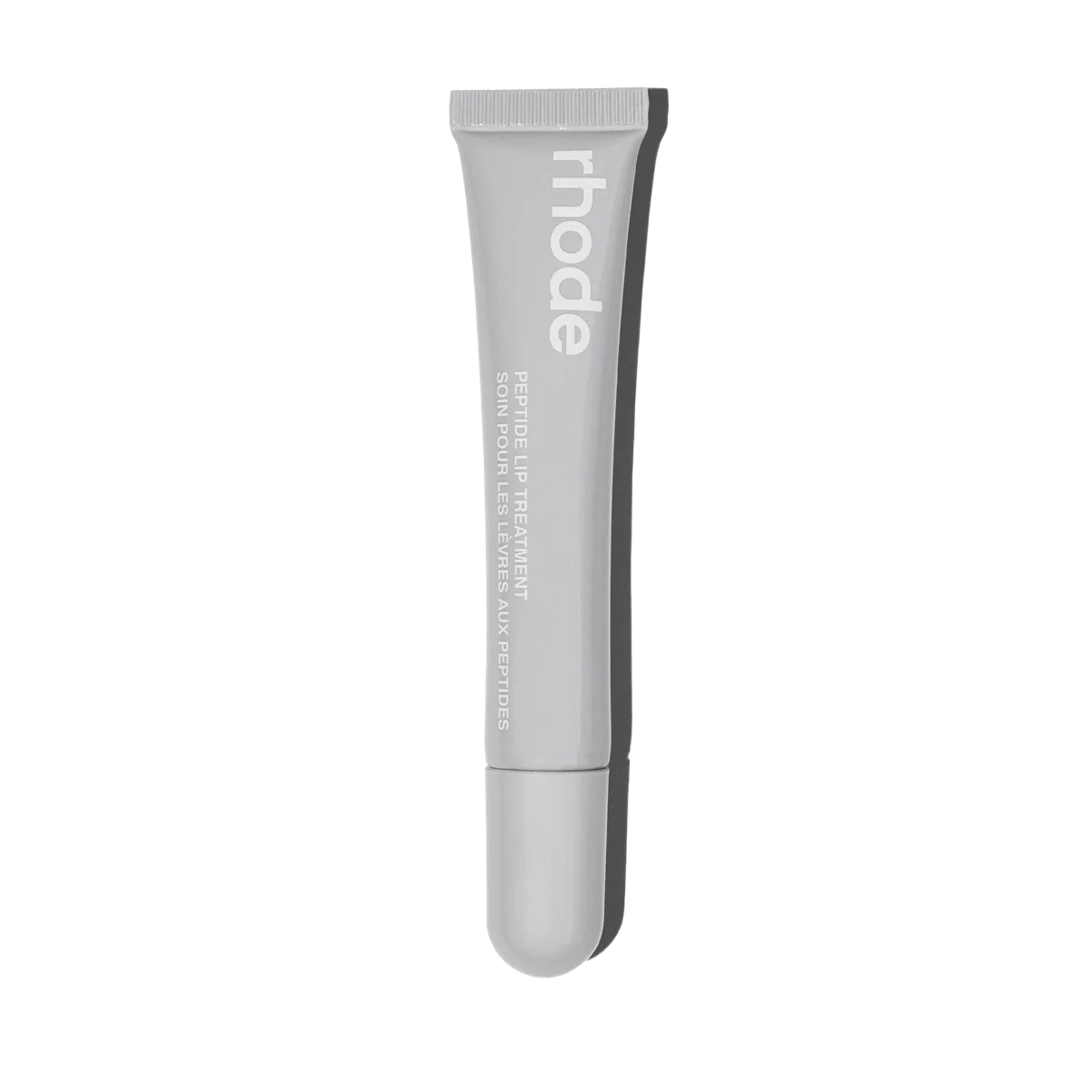
Peptide Lip Treatment
The Lip Balm That Built a Billion-Dollar Brand
 Verified reviewer
Pros & cons.
- +Exceptional hydration from a dual-butter system with cumulative conditioning benefits over time
- +Vitamin C + E antioxidant pair provides genuine protection for chronically exposed lip tissue
- +Non-sticky, glossy finish that sits between balm and oil for a natural glazed look
- +Silicone-free, fragrance-free formula suitable for sensitive lips
- +Clean 22-ingredient INCI with meaningful skincare actives beyond basic occlusion
- +Excellent overnight lip mask performance with occlusive matrix sealing in actives
- +Massive review volume (17,000+) and years of market data validate real-world performance
- −Persistent graininess issue from wax crystallization despite reformulation efforts
- −Wear time of 2-3 hours requires frequent reapplication throughout the day
- −Small applicator tip requires multiple passes for full lip coverage
- −Premium $20 pricing in a category with effective options at lower price points
- −Peptide efficacy at undisclosed concentrations remains unverifiable
The full review.
One version of this story says Rhode’s Peptide Lip Treatment is just a lucky lip balm with a famous founder. But four years later, with over 17,000 reviews, multiple reformulations, and a ten-figure brand valuation, something more happened. This lip balm rewired consumer expectations for the category.
Rhode launched in June 2022 with three products, and the Peptide Lip Treatment was the breakout. It sold out in three days. The waitlist hit 440,000 names. It generated ten million dollars in revenue in eleven days. These numbers match tech launches or limited-edition sneakers, not lip balm. The cultural moment was real, but the question for buyers today is whether the formula earns this attention.
The answer is mostly yes.
The INCI list has 22 ingredients, which is concise for a product with this much marketing. The base uses hydrogenated polyisobutene and diisostearyl malate—synthetic emollients that provide a smooth, non-waxy glide unlike petroleum-jelly-based balms. Shea butter is third on the list at a meaningful concentration, acting as the emollient backbone. Cupuacu butter adds a second layer of moisturization; it can absorb up to 240% of its weight in water, making it an effective botanical butter for sustained hydration. Babassu oil adds lightweight conditioning without grease.
The skincare focuses on three ingredients: Palmitoyl Tripeptide-1, tetrahexyldecyl ascorbate (vitamin C), and tocopherol plus tocopheryl acetate (dual-form vitamin E). This trio works well. The lipid-soluble vitamin C derivative penetrates the lip’s lipid-rich epithelium. The dual-form vitamin E provides immediate and sustained antioxidant activity while regenerating the oxidized vitamin C, extending the protective window for both. The peptide stimulates collagen synthesis to support the lip tissue the antioxidants protect.
This is more sophisticated than it looks. Most lip balms only provide occlusion—they seal moisture in but do not actively treat lip tissue. Rhode’s formula provides occlusion (the butters and synthetic emollients), humectant attraction (the cupuacu butter’s water-binding capacity), and active treatment (the antioxidant pair plus peptide). It uses a three-pronged approach where most competitors use one.
The experience on the lips is distinctive. The balm glides on with a cushiony slip, not a traditional waxy feel. The finish is glossy and glazed—more like a lip oil than a standard balm, but without the runny quality of most oils. Lips look plumper and healthier immediately; this effect is hydration-driven and visible. The non-sticky claim is mostly true, though very heavy application can feel slightly tacky.
The hydration performance earns the product’s reputation. Lips feel softer and better-conditioned during wear and after the product fades. Consistent users report cumulative improvements in lip texture and moisture retention over days and weeks. As an overnight lip mask applied thickly, it is particularly effective. The occlusive butter matrix seals in the actives and prevents overnight moisture loss; many users wake up with the product still present.
The graininess issue is worth noting. Since launch, some users have experienced a gritty, crystallized texture when microcrystalline and synthetic waxes undergo phase transitions during temperature changes. Rhode reformulated to address this, and the current version carries a “lasting smooth texture” claim, but complaints continue. It is not a safety concern and warming the tube fixes it, but for a $20 product, this quality-control gap should not persist in year four.
Wear time is a practical limit. Expect two to three hours of visible glossy coverage, less if eating or drinking. The hydrating feel lasts longer than the shine, but the product requires reapplication. The slim, portable packaging acknowledges this, and the Rhode Lip Case phone accessory turns reapplication into a lifestyle statement. Whether this is charming or inconvenient depends on your preference.
The scented variants—Salted Caramel, Watermelon Slice, Strawberry Glaze, and Vanilla—add dessert-inspired flavors. Some users like them; others do not. The unscented original is the purest formula and the only safe choice for sensitive lips.
At $20 for 10 mL, the Peptide Lip Treatment is at the top of the lip balm market. It does not compete with drugstore balms; it sits in the “treatment lip glaze” category it helped create. In that context, the price-to-quality ratio is fair. The vitamin C + E + peptide formulation, the dual-butter hydration system, and the silicone-free construction show genuine formulation investment. You are not paying $20 for Vaseline in a cute tube.
Four years after launch, the Rhode Peptide Lip Treatment has a reputation the product supports. It is not the most potent lip treatment available, and peptide concentrations may not be clinically meaningful. But as a daily-use hydrating lip balm with legitimate skincare ingredients, a nice texture, and the sustained satisfaction shown by 17,000+ positive reviews, it has earned its place. The hype launched it. The formula kept it there.
Formula
Ingredient analysis.
Full INCI list
Hydrogenated Polyisobutene, Diisostearyl Malate, Butyrospermum Parkii (Shea) Butter, Polybutene, Microcrystalline Wax (Cera Microcristallina), Synthetic Wax, Octyldodecanol, Polyglyceryl-2 Triisostearate, Hydrogenated Poly(C6-14 Olefin), Tocopherol, Tocopheryl Acetate, Tetrahexyldecyl Ascorbate, Palmitoyl Tripeptide-1, Orbignya Oleifera Seed Oil, Theobroma Grandiflorum Seed Butter, Lactic Acid, Tribehenin, Phytosteryl/Isostearyl/Cetyl/Stearyl/Behenyl Dimer Dilinoleate, Ethylhexyl Palmitate, Sorbitan Isostearate, Synthetic Fluorphlogopite, Disteardimonium Hectorite
Skin match.
The science.
The Science
The Peptide Lip Treatment's formula architecture is built around three complementary mechanisms: occlusive barrier protection, humectant moisture attraction, and active antioxidant treatment.
The occlusive layer combines shea butter (rich in stearic, oleic, and linoleic fatty acids) with hydrogenated polyisobutene and synthetic wax. Shea butter's anti-inflammatory properties have been documented in multiple studies, with its cinnamic acid esters providing mild photoprotective activity. Cupuacu butter (Theobroma grandiflorum) adds an unusual humectant dimension — research on this Amazonian butter has demonstrated water-absorption capacity up to 240% of its weight, significantly exceeding shea butter's capacity. This dual-butter approach creates both a moisture-sealing barrier and an active moisture-attracting layer.
Tetrahexyldecyl ascorbate (THD ascorbate) is the formula's most sophisticated ingredient choice. This lipid-soluble vitamin C ester penetrates cell membranes more readily than water-soluble L-ascorbic acid, making it well-suited for the lip's lipid-rich epithelium. A study by Min et al. published in the Journal of Cosmetic Dermatology (2024) confirmed that THD ascorbate significantly improved photoaging markers and pigmentation. The lip epithelium, which lacks melanocytes in the vermilion border, is particularly vulnerable to UV-induced oxidative damage — making lipophilic antioxidant delivery especially relevant.
The dual-form vitamin E strategy (tocopherol + tocopheryl acetate) follows established antioxidant synergy principles. Natural tocopherol provides immediate free radical scavenging, while tocopheryl acetate serves as a reservoir that hydrolyzes to active tocopherol over time. Importantly, vitamin E regenerates oxidized vitamin C, a mechanism documented in research by Sheldon Pinnell that demonstrated the synergistic protective effect exceeds the sum of either antioxidant alone.
Palmitoyl Tripeptide-1 rounds out the active trio. This lipopeptide is best studied as half of the Matrixyl 3000 complex (paired with Palmitoyl Tetrapeptide-7), where clinical trials demonstrated statistically significant reductions in wrinkle depth and improvements in skin thickness. As a standalone ingredient, Palmitoyl Tripeptide-1 acts as a collagen fragment mimic, signaling fibroblasts to upregulate collagen and glycosaminoglycan production. A review published in PMC (PMC8400021) details the mechanism by which palmitoyl peptides interact with growth factor receptors to stimulate matrix synthesis. However, clinical data specific to lip tissue application — with its distinct epithelial structure — is absent from the published literature.
References
- Synthetic Peptides for Skin Care and Cosmetic Applications — A Review — Molecules (MDPI) (2021)
- Tetrahexyldecyl Ascorbate Improves Photoaging and Pigmentation — Journal of Cosmetic Dermatology (2024)
- Stability and Stabilization of Tetrahexyldecyl Ascorbate in Cosmetic Formulations — Cosmetics (MDPI) (2021)
Dermatologist Perspective
Dermatologists widely regard the Peptide Lip Treatment as one of the better-formulated mass-market lip products available. Board-certified dermatologists particularly appreciate the lipophilic vitamin C derivative, noting that the lip's thin, melanocyte-poor epithelium is uniquely vulnerable to UV damage yet rarely receives antioxidant protection. The dual-form vitamin E adds meaningful antioxidant depth. Dermatologists recommend the unscented version for patients with a history of lip sensitivity or allergic contact cheilitis. The emollient-heavy, fragrance-free formula is frequently suggested for patients experiencing medication-induced lip dryness (from isotretinoin, for example) or environmental chapping. While dermatologists caution against expecting the peptide to deliver visible lip augmentation, they view it as a reasonable conditioning ingredient that contributes to the overall treatment profile.
Where it fits in your routine.
Apply a small amount using the slanted applicator tip across both lips. One to two passes creates a comfortable, glossy layer for everyday wear. For intensive overnight treatment, apply a thick layer before bed; the occlusive butter base seals in moisture and actives while you sleep. Use it as a base under lipstick, a topper over lip color, or alone for a no-makeup glazed look. Reapply every 2-3 hours during the day, or after eating and drinking. If graininess develops, warm the tube in your hands for 30 seconds before applying.
At $20 for 10 mL ($2/mL), the Peptide Lip Treatment has premium pricing. The formulation justifies this: the vitamin C + E antioxidant pair, Palmitoyl Tripeptide-1, and the dual-butter (shea + cupuacu) system use more expensive ingredients than basic petroleum-and-wax balms. Daily users lasting 2-3 months per tube spend roughly $7-10/month — similar to other premium lip care. The product's 4-year track record and 17,000+ reviews show the formula delivers its hydration promise. However, consumers seeking only moisture without the skincare angle can find effective alternatives at lower prices.
This balm works for anyone seeking daily lip hydration beyond simple moisture sealing. It suits chronically dry lips, overnight lip care enthusiasts, and users wanting a glossy, non-sticky finish that acts as a treatment. The unscented version suits sensitive lips and fragrance-averse users.
Bargain shoppers who see lip balm as a commodity find effective basic balms for less. People who need long-lasting lip coverage without reapplication. Users who want to avoid the graininess found in wax-based balms. Those seeking visible color—this is untinted and purely functional.
Product details.
The unscented version is fragrance-free and has no detectable scent. Scented variants sell separately.
Slim, soft squeeze tube has a matte silicone-like exterior and a slanted plastic applicator tip that follows lip contours. It uses post-consumer recycled materials. The tube fits Rhode's MagSafe Lip Case phone accessory. It is compact enough for a pocket or small clutch.
The first application gives an immediate glossy, glazed finish for healthy, plump-looking lips. The balm feels cushiony and hydrating on the first swipe, unlike traditional waxy lip balms. It causes no tingling, burning, or adjustment period. Many users see improved lip softness within the first few days of consistent use.
2-3 months with daily use (2-3 applications per day)
12 months
All Year
The backstory.
The Peptide Lip Treatment was one of Rhode's three debut products when Hailey Bieber launched the brand in June 2022. It sold out in three days, generated a waitlist of 440,000 people, and earned $10 million in its first 11 days — numbers that would eventually contribute to Rhode's $1 billion acquisition by e.l.f. Beauty in 2025. The product has been reformulated at least once since launch to address early graininess complaints, with the current version described as having a 'lasting smooth texture.'
About Rhode
Emerging Brand (2–5 years)Rhode launched in June 2022 with the Peptide Lip Treatment as one of three debut products. The Peptide Lip Treatment made $10 million in sales in its first 11 days and built a 440,000-person waitlist after selling out in 3 days. e.l.f. Beauty acquired Rhode in May 2025 for approximately $1 billion.
Common myths.
This lip balm will make your lips permanently plumper
Research shows the peptide (Palmitoyl Tripeptide-1) stimulates collagen, but intermittent application of undisclosed concentrations to lips won't cause permanent volumizing. The plumping users see comes from sustained hydration — well-moisturized lips look fuller. The effect fades if you stop using the product.
The graininess means your tube has gone bad
Some users see a grainy texture because wax crystallizes when temperatures change. This is a physical process, not product degradation. Rhode reformulated to minimize this. Warming the tube in your hands or in warm water usually fixes it.
FAQ.
Is Rhode Peptide Lip Treatment worth $20?
At $20, this lip balm is premium. But the formula works. The vitamin C + E + peptide combination, dual-butter hydration system, and silicone-free construction show more formulation investment than typical balms. With 17,000+ reviews averaging 4.5 stars and nearly 4 years of market validation, the results are real. It is worth it if you value the skincare-treatment angle over simple moisture.
What's the difference between Rhode Peptide Lip Treatment and Peptide Lip Tint?
The Lip Treatment is untinted. It hydrates and conditions with a glossy finish. The Lip Tint uses a similar base formula but adds sheer, buildable color in multiple shades. Both contain the peptide, vitamin C + E, and dual-butter system. Use the Lip Treatment for overnight care and no-color days; use the Lip Tint for hydration with a hint of color.
Can I use Rhode Peptide Lip Treatment as an overnight lip mask?
Yes — this works well for this purpose. Apply a thick layer before bed. The shea and cupuacu butter base forms an occlusive seal that locks in the vitamin C, peptide, and moisture overnight. Many users report waking up with softer, smoother lips. The balm's staying power lasts longer overnight (when you're not eating or drinking) than during the day.
Why does my Rhode Lip Treatment feel grainy?
Microcrystalline and synthetic wax crystallization causes the grainy texture when temperature fluctuations occur. Rhode reformulated to reduce this, but it still happens. Warm the tube in your hands for 30 seconds or use warm water briefly to smooth the texture. The product is not expired or bad.
Is Rhode Peptide Lip Treatment pregnancy safe?
Yes — the formula lacks retinoids, salicylic acid, or other pregnancy-flagged ingredients. The peptide, vitamins C and E, shea butter, cupuacu butter, and babassu oil are safe during pregnancy and breastfeeding. Lactic acid exists in trace amounts as a texture agent. Always confirm with your healthcare provider.
Which Rhode Lip Treatment scent is best?
The unscented version works best for sensitive lips and fragrance-averse users. Salted Caramel and Strawberry Glaze are the most popular scented variants. Watermelon Slice is lighter and more refreshing. Scented versions add flavor that may irritate very sensitive lips; if in doubt, use unscented.
What the community says.
"Extremely hydrating with moisture that lasts for hours"
"Beautiful glossy finish without feeling sticky or tacky"
"Lips feel noticeably softer and more plump with continued use"
"Sleek portable packaging perfect for on-the-go reapplication"
"Works well under and over lipstick as a versatile lip base"
"Grainy or gritty texture from wax crystallization in temperature changes"
"Small applicator tip makes full lip coverage require multiple passes"
"Longevity is limited to 2-3 hours requiring frequent reapplication"
"Price of $20 feels high for a lip balm category product"
"Some users with sensitive lips report mild irritation"