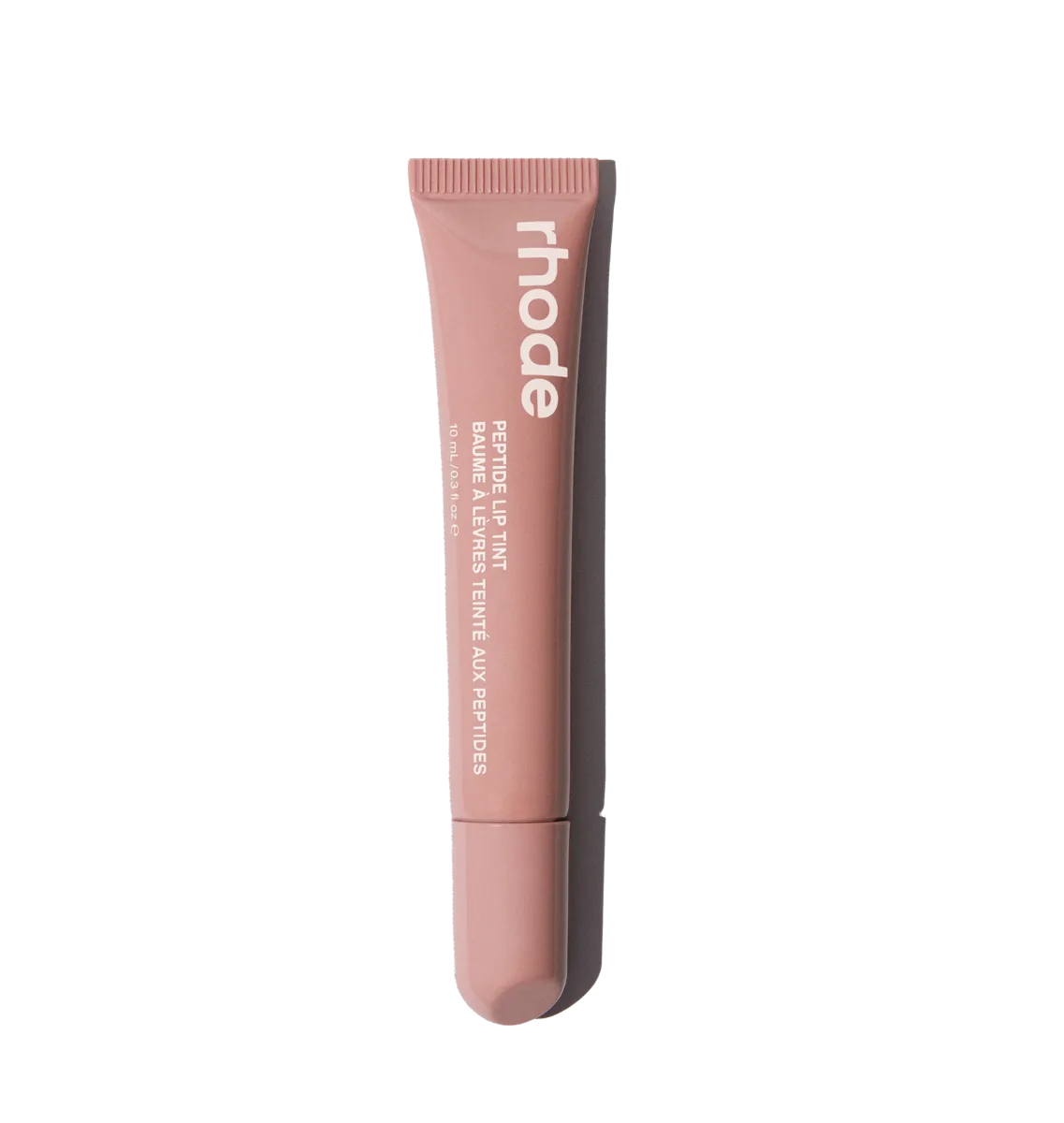
Peptide Lip Tint
Glazed Lip Cult Favorite
 Verified reviewer
Pros & cons.
- +Non-sticky, cushiony texture that genuinely feels like a balm while looking like a gloss
- +Vitamin C + E antioxidant pair is a smart skincare inclusion for a color lip product
- +Shea and cupuacu butter base delivers real hydration that persists after color fades
- +Buildable sheer color creates a natural enhanced lip look across 7+ shades
- +Portable packaging with doe-foot applicator makes reapplication easy and hygienic
- +Fragrance-free formula in the standard version minimizes irritation risk
- +Vegan, cruelty-free, Clean at Sephora with recycled packaging
- −Recurring graininess issue from wax crystallization in temperature fluctuations
- −Very sheer color payoff may barely register on deeper skin tones
- −Wear time of only 1-3 hours requires frequent reapplication throughout the day
- −Price premium at $20 for a sheer tinted balm with modest product volume
- −Lighter shades add minimal visible color enhancement
The full review.
In September 2023, Rhode released a tinted lip balm and somehow made it feel like a cultural event. The Peptide Lip Tint didn’t invent the tinted balm category, but it did something arguably more impressive: it made tinted balms aspirational. Between the glazed-lip aesthetic Hailey Bieber had been cultivating for years, the viral phone case designed to hold it, and the kind of organic social media saturation that advertising budgets can’t manufacture, the Peptide Lip Tint became less of a product and more of a shorthand for a certain kind of effortless beauty. Two and a half years later, the hype has settled enough to evaluate what’s actually in the tube.
The formula is more interesting than a tinted balm needs to be. Hydrogenated polyisobutene and diisostearyl malate form the base, creating the smooth, non-sticky glide that distinguishes this from the syrupy lip glosses it’s meant to replace. Shea butter and cupuacu seed butter provide the emollient depth — two butters that work slightly differently, with the shea creating a protective film and the cupuacu absorbing more readily for immediate softness. It’s a smart pairing that gives the product both instant and lasting hydration.
The skincare angle is where Rhode differentiates from the competition. Palmitoyl Tripeptide-1 makes its appearance as the peptide that gives the entire Rhode lip lineup its name. More interesting is the inclusion of tetrahexyldecyl ascorbate, a lipid-soluble vitamin C derivative, paired with tocopherol (vitamin E). This vitamin C + E antioxidant duo is a combination well-studied in skincare serums, where vitamin E regenerates oxidized vitamin C, extending the protective window of both. Putting this pair in a lip product makes scientific sense — lips are constantly exposed to UV and environmental stressors but are rarely given antioxidant protection. Whether the concentrations here are sufficient for meaningful benefit is unknowable without disclosure, but the formulation logic is sound.
The texture is the product’s strongest suit. It glides on from the doe-foot applicator with the ease of a gloss but sits on the lips like a balm — cushiony, comfortable, and resolutely non-sticky. You can wear this without your hair getting glued to your mouth in the wind, which sounds like a low bar but is genuinely a differentiator in the lip product world. The finish is glossy and glazed without being reflective or glitter-infused — it looks like healthy, well-hydrated lips rather than lacquered ones.
The color is intentionally sheer. One swipe deposits a whisper of tint that enhances your natural lip color without transforming it. This is the product for people who describe their makeup philosophy as “my face but better.” You can build the color with multiple layers, but even at maximum saturation, you’re getting a medium-sheer wash rather than full pigment. The shade range — from Ribbon’s baby pink through Espresso’s deep brown — covers the neutral spectrum well, though users with deeper skin tones have noted that lighter shades barely register.
The graininess issue deserves frank discussion. A consistent minority of users report a gritty texture that appears seemingly at random. This is caused by wax crystallization — the microcrystalline and synthetic waxes in the formula can form granules when exposed to temperature swings. It’s not dangerous and can usually be reversed by warming the tube, but it’s an annoying quality control issue for a $20 product. It happens with other wax-based balms too, but the frequency of complaints suggests Rhode could improve the stabilization of its wax system.
Wear time is the other honest limitation. Plan on one to three hours of visible color before the tint fades, with eating and drinking cutting that window shorter. The hydrating feel persists longer — lips still feel soft and moisturized even after the color has departed. This is a product that requires reapplication as a feature, not a bug. The portable packaging and Rhode’s whole phone-case-accessory ecosystem lean into this reality: the tint is designed to be applied, enjoyed, and reapplied throughout the day.
The value calculation at $20 for 10 mL depends on what you’re comparing it to. Against traditional lip glosses with comparable ingredients, it’s competitive. Against drugstore tinted balms that deliver more pigment and similar hydration, it’s premium. The peptide and vitamin C inclusion, the non-sticky texture, and the shade curation represent genuine formulation effort. You’re also paying for the design — the packaging is beautiful, the applicator is well-shaped, and the whole product feels considered in a way that cheaper alternatives often don’t.
The Peptide Lip Tint’s real achievement is experiential. It changed what people expect from a lip product by combining the ease of a balm, the finish of a gloss, and the ingredient philosophy of a treatment. It’s not trying to be full-coverage, long-wearing, or dramatically transformative. It’s trying to be the lip product equivalent of good skin — something that looks effortless, feels comfortable, and rewards the people around you with a vague sense that you just look really healthy today. On those terms, it delivers.
For the Rhode devotee who already owns the Glazing Fluid and the Lip Treatment, this is the natural color step. For the practical makeup user who wants value per dollar in pigment and longevity, it’s a hard sell at $20 for a sheer balm. For everyone in between, it’s a genuinely enjoyable product that does one specific thing — the glazed, hydrated, effortlessly tinted lip — better than almost anything else on the market.
Formula
Ingredient analysis.
Full INCI list
Hydrogenated Polyisobutene, Diisostearyl Malate, Butyrospermum Parkii (Shea) Butter, Polybutene, Microcrystalline Wax (Cera Microcristallina), Synthetic Wax, Octyldodecanol, Polyglyceryl-2 Triisostearate, Hydrogenated Poly(C6-14 Olefin), Tocopherol, Tocopheryl Acetate, Tetrahexyldecyl Ascorbate, Palmitoyl Tripeptide-1, Orbignya Oleifera Seed Oil, Theobroma Grandiflorum Seed Butter, Lactic Acid, Tribehenin, Stevioside, Phytosteryl/Isostearyl/Cetyl/Stearyl/Behenyl Dimer Dilinoleate, Ethylhexyl Palmitate, Sorbitan Isostearate, Synthetic Fluorphlogopite, Disteardimonium Hectorite, Titanium Dioxide (CI 77891), Red 28 Lake (CI 45410), Red 7 (CI 15850), Yellow 5 Lake (CI 19140), Blue 1 Lake (CI 42090). May Contain: Iron Oxides (CI 77491, 77499)
Skin match.
The science.
The Science
The Peptide Lip Tint's most interesting scientific feature is its vitamin C + E + peptide combination — a trio more common in facial serums than lip color.
Tetrahexyldecyl ascorbate is a lipid-soluble vitamin C ester. It penetrates cell membranes more easily than water-soluble L-ascorbic acid. Research in the Journal of Investigative Dermatology shows this derivative converts to active ascorbic acid in the skin after penetration, providing antioxidant protection at the cellular level. Its lipophilic nature suits a lip product, as the thin, lipid-rich epithelium allows better absorption than the thicker stratum corneum of facial skin.
Pairing it with tocopherol (vitamin E) follows antioxidant synergy research. A Sheldon Pinnell study in the Journal of the American Academy of Dermatology shows vitamins C and E work synergistically — vitamin E scavenges lipid peroxyl radicals, and vitamin C regenerates the oxidized vitamin E, extending the protective capacity of both. This research used higher concentrations than this formula, but the mechanistic principle remains.
Palmitoyl Tripeptide-1 completes the active trio. This lipopeptide signals fibroblasts to increase collagen production by mimicking collagen fragment structures. The lip's thin epithelium may allow better peptide penetration than facial skin, though specific studies on lip-applied peptide absorption are lacking. The peptide's collagen-stimulating effect theoretically complements the vitamin C's role in collagen synthesis, as ascorbic acid is a required cofactor in the hydroxylation of proline and lysine during collagen formation.
The wax crystallization reported by some users involves the microcrystalline wax and synthetic wax in the formula. These waxes undergo polymorphic phase transitions during temperature cycling — melting partially at high temperatures and recrystallizing into larger, grittier crystals when cooling. This is a known formulation challenge in anhydrous lip products and does not mean the product has degraded.
Dermatologist Perspective
Dermatologists view the Peptide Lip Tint as a well-formulated tinted lip product with real skincare benefits. Board-certified dermatologists note the vitamin C + E antioxidant combination provides protection for the lip epithelium, which faces UV radiation but rarely receives targeted antioxidant care. The fragrance-free formula suits patients with sensitive skin or contact dermatitis histories. Dermatologists appreciate that it lacks common lip irritants like menthol, camphor, or phenol. For patients with chronic lip dryness, the shea and cupuacu butter base provides effective occlusive hydration. However, dermatologists caution that the peptide content will not deliver visible lip augmentation and recommend managing patient expectations.
Where it fits in your routine.
Apply using the doe-foot applicator to bare or balm-prepped lips. Use one swipe for sheer color, or add layers for more intensity. For a complete look, line lips with Rhode Peptide Lip Shape, then apply the Lip Tint. Reapply as needed; the portable squeeze tube works for on-the-go touch-ups. If the formula feels grainy, warm the tube in your hands for 30 seconds before use.
At $20 for 10 mL ($2/mL), the Peptide Lip Tint costs more than most tinted balms. Palmitoyl Tripeptide-1, tetrahexyldecyl ascorbate, and tocopherol—ingredients usually found in treatment serums—explain the premium price. The formula is high quality: it is non-sticky, provides long-lasting hydration, and has a thoughtful shade range. However, high color payoff means you get less visible product per dollar than a traditional lipstick or full-coverage gloss. For best value: one application daily makes a tube last 2-3 months at $7-10/month—a reasonable price for a daily-use lip product with skincare benefits.
The 'no-makeup makeup' enthusiast who wants a lip product that looks like naturally beautiful lips rather than applied color. Ideal for anyone who finds traditional glosses too sticky, lipsticks too dry, and wants a single product that hydrates while adding a glazed, tinted finish. Perfect for daily, low-maintenance lip wear.
This product is deliberately sheer for those seeking bold, visible color payoff. It lacks the long-lasting lip color that survives meals without reapplication. It avoids the grainy texture found in wax-based balms. It is for shoppers who prioritize pigment-per-dollar value in their lip products.
Product details.
The balm-like consistency glides on smoothly via a doe-foot applicator. It sits between a lip balm and a lip gloss—cushiony and thick but not sticky or gloopy. Some users report occasional graininess from wax crystallization during temperature fluctuations; warming the tube briefly fixes this.
The standard version is fragrance-free and has no detectable scent. Scented variants are sold separately in dessert-inspired flavors (vanilla soft serve, creme brulee, tiramisu, raspberry).
Slim squeeze tube uses a slanted doe-foot applicator color-coordinated to each shade. It uses post-consumer recycled materials. It works with Rhode's MagSafe snap-on Lip Case phone accessory. It has 7+ permanent shades, limited editions, and scented variants.
The first application gives an immediate glossy, glazed finish with a hint of color. The balm feels cushiony and hydrating but not sticky — unlike traditional tinted glosses. Color is sheer on the first swipe and builds when layered. It causes no tingling, burning, or adjustment period.
2-3 months with daily use
12 months
All Year
The backstory.
Rhode's Peptide Lip Tint launched in September 2023 as the brand's first color product, bridging the gap between their cult-favorite Peptide Lip Treatment and actual makeup. The product became a commercial juggernaut, driving the 'glazed lip' trend that dominated social media throughout 2024. Its cultural impact extended beyond skincare into accessories — the Rhode Lip Case, a phone case with a built-in slot for the Lip Tint, became a viral product in its own right.
About Rhode
Emerging Brand (2–5 years)Hailey Rhode Bieber founded Rhode in 2022. e.l.f. Beauty acquired the brand in May 2025 for approximately $1 billion. Products have Leaping Bunny and PETA certifications and are dermatologist-tested. The Peptide Lip Tint has been one of the brand's most successful products since its September 2023 launch.
Common myths.
The peptide in this tint will visibly plump lips over time
Research shows Palmitoyl Tripeptide-1 stimulates collagen, but it sits low on the INCI list and is applied intermittently. The shea and cupuacu butters provide the actual plumping effect through immediate hydration. Treat the peptide as a conditioning bonus, not a filler alternative.
The graininess means the product has gone bad
Temperature fluctuations cause wax crystallization, which creates the grainy texture some users experience. This is not product degradation. Warming the tube in your hands or briefly in warm water usually fixes it. Natural wax-based lip formulas have this issue.
FAQ.
What is the best Rhode Peptide Lip Tint shade for my skin tone?
Ribbon (baby pink) and Toast (rosy taupe) enhance fair skin most naturally. Toast, Raspberry Jelly, or Salty Tan pair well with medium skin tones. Espresso, PBJ, or Raspberry Jelly show the most color on deeper skin tones. All shades are sheer and buildable, so most tones work across the range — the difference is how much color shows on the first swipe.
Why does my Rhode Peptide Lip Tint feel grainy?
Wax crystallization causes the grainy texture. This happens when temperature fluctuations, like hot cars or cold weather, affect the product. The waxes in the formula harden into small granules. Warming the tube in your hands for 30 seconds or in warm water for a minute fixes this. The product is not bad; crystallization is reversible.
How long does Rhode Peptide Lip Tint last on lips?
Visible color lasts 1-3 hours before fading, depending on eating and drinking. The hydrating feel outlasts the color; lips stay moisturized after the tint wears off. This product prioritizes comfortable reapplication over long wear. The portable packaging and doe-foot applicator make touch-ups easy.
Is Rhode Peptide Lip Tint worth $20?
At $20 for 10 mL, the Peptide Lip Tint costs about the same as other premium tinted balms. The formula works well — the peptide, vitamin C, vitamin E, shea butter, and cupuacu butter blend provides hydration. The price is reasonable if you like the non-sticky, glossy-balm texture and reapply often. If you want intense, long-lasting color payoff, the Peptide Lip Tint underdelivers for the cost.
What's the difference between Rhode Peptide Lip Tint and Peptide Lip Treatment?
The Peptide Lip Treatment is an untinted hydrating balm that focuses on moisture and barrier repair. It is a skincare product for lips. The Peptide Lip Tint adds sheer buildable color and a glossier finish but keeps the hydrating benefits. The Peptide Lip Tint contains vitamin C and cupuacu butter, which The Peptide Lip Treatment lacks. Use The Peptide Lip Treatment for overnight care and The Peptide Lip Tint as a daytime color-with-benefits option.
Is Rhode Peptide Lip Tint pregnancy safe?
Yes — the formula lacks retinoids, salicylic acid, or other ingredients flagged during pregnancy. The peptide, vitamins C and E, shea butter, and natural oils are safe during pregnancy and breastfeeding. Always confirm with your OB-GYN.
What the community says.
"Non-sticky formula that feels like a balm but looks like a gloss"
"Beautiful glazed dewy finish that makes lips look healthy and plump"
"Lips feel genuinely hydrated even after the product wears off"
"Buildable sheer color that looks natural and elevated"
"Sleek portable packaging compatible with Rhode phone lip case"
"Grainy or gritty texture develops from temperature-related wax crystallization"
"Sheer color payoff may be too subtle especially on deeper skin tones"
"Wear time is short requiring frequent reapplication throughout the day"
"Price feels high for the amount of tint and product delivered"
"Some shades barely add visible color"