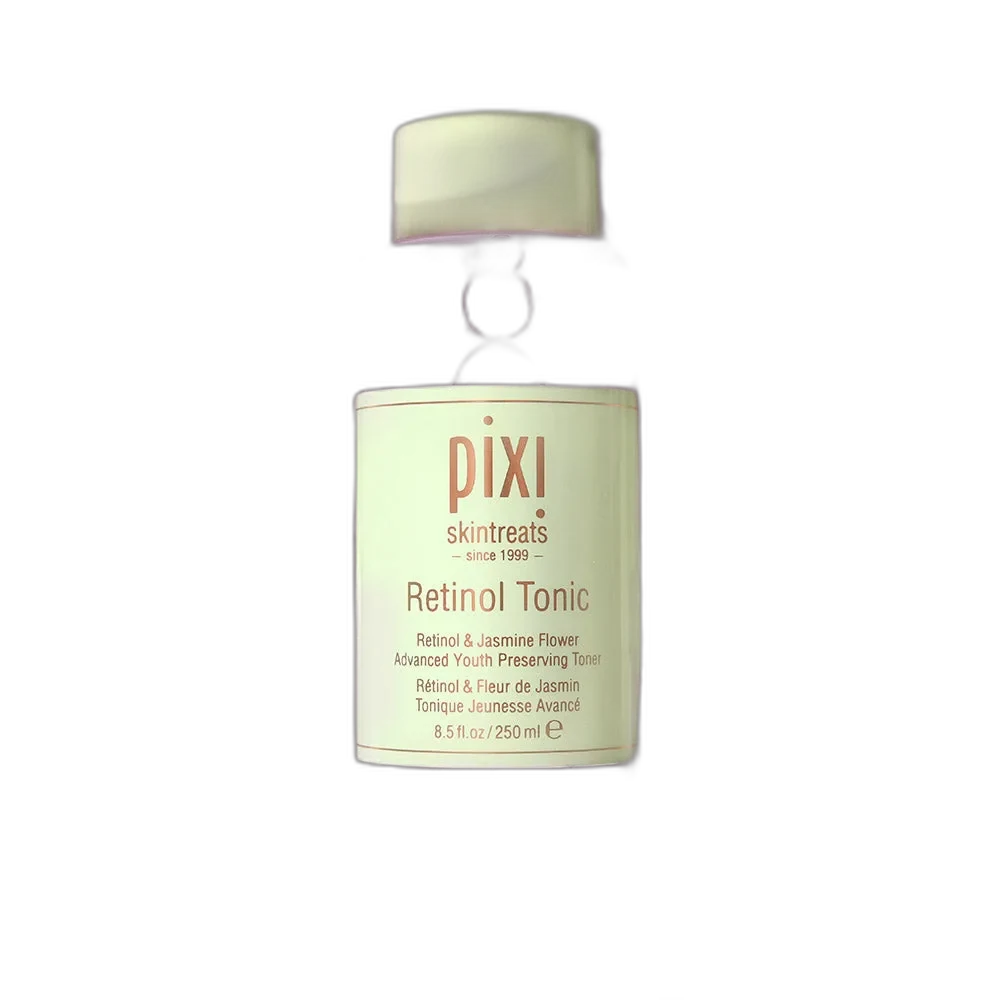
Retinol Tonic
Retinol Gateway Toner
 Verified reviewer
Pros & cons.
- +Cyclodextrin-encapsulated retinol provides time-release delivery that minimizes irritation
- +Multi-active formula combines retinol, peptide, vitamin C, and hyaluronic acid in one step
- +Virtually weightless texture absorbs instantly with zero residue
- +Three size options ($5 mini, $15 travel, $29 full) lower the barrier to trying retinol
- +No synthetic fragrance — scent comes only from botanical extracts
- +Panthenol and hyaluronic acid counterbalance retinol's potential drying effects
- +Alcohol-free formula suitable for most skin types
- −Retinol concentration undisclosed — likely very low based on INCI position
- −Clear plastic bottle exposes retinol to light degradation despite cyclodextrin protection
- −Lavender and clove extracts contain potential sensitizers (linalool, eugenol)
- −Too gentle for experienced retinol users seeking visible anti-aging results
- −Not fungal acne safe due to PEG-40 Hydrogenated Castor Oil and Polysorbate 20
The full review.
Pixi launched the Retinol Tonic in 2018 with a provocative idea: retinol doesn’t have to feel like medicine. Traditional retinol experiences—thick creams, careful application, and the anxiety of overusing the ingredient—make one of skincare’s most effective tools intimidating. Pixi put it in a toner. It uses the same effortless, cotton-pad-swipe format as their Glow Tonic, but loads it with anti-aging actives.
The format requires honest interrogation. A toner sits on the skin for seconds before you layer other products on top. Contact time is brief, the liquid is thin, and the concentration—which Pixi declines to disclose—is likely modest. This sounds like a recipe for underwhelming results, but Pixi uses smart formulation chemistry to compensate.
The retinol is encapsulated in hydroxypropyl cyclodextrin, a ring-shaped sugar molecule that acts as a molecular cage. The retinol sits inside this cage and releases gradually as the cyclodextrin interacts with your skin’s natural chemistry. This time-release mechanism means the retinol works long after the toner dries and you apply moisturizer. It also reduces the irritation spike caused by applying free retinol to bare skin. This elegant delivery solution makes the toner format more viable than naked retinol.
The supporting actives show the formulation’s ambition. Palmitoyl Tripeptide-27 is a signal peptide that stimulates collagen production through a different pathway than retinol. While retinol works through retinoid receptors to accelerate cell turnover, this peptide directly encourages fibroblasts to produce new collagen. Clinical studies on palmitoyl tripeptide formulations show measurable reductions in wrinkle surface area and depth after two months of use. Having both actives in one product creates a two-pronged anti-aging approach unusual at this price point.
Magnesium ascorbyl phosphate, a stable vitamin C derivative, provides antioxidant coverage without the instability of mixing pure ascorbic acid with retinol. Sodium hyaluronate delivers hydration, and panthenol supports the skin barrier that retinol’s accelerated turnover can temporarily weaken. The botanical extracts—jasmine, lavender, evening primrose, hibiscus, and grape—contribute antioxidant support, though lavender and clove extracts bring potential sensitizing compounds (linalool and eugenol, respectively).
Texture
The texture is water with a barely perceptible slip. You could apply this with your eyes closed and not feel it on your face. It absorbs in seconds, leaves zero residue, and layers invisibly. For people intimidated by the thick, sometimes sticky textures of traditional retinol creams, this removes a psychological barrier to consistent use. Consistency drives retinol’s real results.
Scent
The scent comes entirely from the botanical extracts; there is no added fragrance. Most users describe a mild floral-herbal aroma that fades quickly. However, some reviewers note batch-to-batch variation in scent intensity, suggesting the botanical extraction process isn’t perfectly standardized. It is not a dealbreaker, but worth noting.
Works for
Performance follows the gentle-and-gradual curve expected from low-concentration retinol. The first two weeks bring hydration and subtle smoothing—primarily from the hyaluronic acid, panthenol, and glycerin. By week four to six, users typically notice improved radiance and texture. Real retinol benefits—softened fine lines and more even skin tone—emerge at the eight to twelve week mark with consistent nightly use.
Not ideal for
Experienced retinol users will find this too subtle. If you use 0.5% or 1% retinol serums, the Retinol Tonic feels like a step backward. It is not designed for you. It is designed for the person in the Target skincare aisle who knows retinol is important but won’t commit to a $60 serum and a complicated protocol. For that person, this is a nearly perfect product.
Packaging
The packaging is the biggest miss. Retinol degrades with light exposure; this is basic photochemistry. Pixi packages this in a clear plastic bottle. While cyclodextrin encapsulation provides some protection, an opaque container works better. Competitor products largely use airless pumps and opaque bottles for retinol formulations. Pixi’s clear-bottle aesthetic prioritizes shelf appeal over ingredient integrity.
Best for
At $29 for 250ml, the value is strong. Three to four months of nightly use from one bottle means you pay less than $10 a month for a retinol, peptide, and vitamin C treatment. Three sizes are available—a $5 mini, a $15 travel size, and the full 250ml—offering thoughtful tiering for a category where people want to test before investing.
The Retinol Tonic doesn’t revolutionize what retinol can do. It removes every excuse not to use it. The format is effortless, the irritation risk is minimal, and the price is accessible. For the retinol-curious, this is a zero-friction entry point that delivers modest, real results with almost no learning curve.
Ingredient analysis.
Full INCI list · pH 5
Aqua/Water/Eau, Rosmarinus Officinalis Leaf Water, Glycerin, Propanediol, Methyl Gluceth-20, PEG-8, Panthenol, Magnesium Ascorbyl Phosphate, Sodium Hyaluronate, Lecithin, Oenothera Biennis (Evening Primrose) Flower Extract, Hibiscus Rosa-Sinensis Flower Extract, Sodium Acrylates Copolymer, Palmitoyl Tripeptide-27, Hydroxypropyl Cyclodextrin, Retinol, Phenoxyethanol, Caprylic/Capric Triglyceride, Jasminum Officinale (Jasmine) Flower/Leaf Extract, Lavandula Angustifolia (Lavender) Flower/Leaf/Stem Extract, Eugenia Caryophyllus (Clove) Flower Extract, Vitis Vinifera (Grape) Fruit Extract, Sodium Citrate, PEG-40 Hydrogenated Castor Oil, Disodium EDTA, Citric Acid, Polysorbate 20, Ethylhexylglycerin
Skin match.
The science.
The Science
The retinol delivery system in this toner uses hydroxypropyl cyclodextrin, a cyclic oligosaccharide that forms inclusion complexes with hydrophobic molecules like retinol. This encapsulation protects retinol from oxidative degradation in this water-based toner and provides time-release delivery to reduce the concentration spikes that cause retinol-induced irritation. Research on cyclodextrin-retinol complexes shows improved stability and bioavailability over free retinol in aqueous formulations.
Kang et al. published a landmark study in Archives of Dermatology (2007) showing that topical retinol significantly improves fine wrinkles in naturally aged skin by inducing glycosaminoglycan synthesis and increasing collagen production. This proves even over-the-counter retinol concentrations produce meaningful histological changes in human skin.
Palmitoyl Tripeptide-27 is a signal peptide that stimulates procollagen synthesis in dermal fibroblasts. Clinical studies on related palmitoyl tripeptide formulations show measurable wrinkle reduction; one study showed a 36% reduction in wrinkle surface area and a 27% reduction in wrinkle depth after two months of twice-daily application. The peptide uses a different mechanism than retinol, so the combination is synergistic rather than redundant.
Magnesium ascorbyl phosphate is a phosphorylated vitamin C derivative that stays stable in aqueous formulations at the pH 5 of this toner. It provides antioxidant protection and mild tyrosinase inhibition for brightening, complementing the retinol's cell turnover acceleration without the pH incompatibility issues seen when mixing pure ascorbic acid with retinol.
References
- Improvement of naturally aged skin with vitamin A (retinol) — Archives of Dermatology (2007)
- Retinoids in the treatment of skin aging: an overview of clinical efficacy and safety — Clinical Interventions in Aging (2006)
Dermatologist Perspective
Dermatologists generally view retinol toners as appropriate introductory vehicles for patients new to retinoids, though they note that limited contact time and likely low concentration may produce slower results than leave-on retinol serums or creams. Board-certified dermatologists recommend that patients who tolerate a retinol toner well may eventually graduate to higher-concentration leave-on formulations for more pronounced anti-aging benefits. Dermatological literature recognizes cyclodextrin encapsulation technology as a legitimate approach to improving retinol stability and reducing irritation, making this a reasonable entry point under clinical guidance.
Guidance
Where it fits in your routine.
Apply the toner with a cotton pad or pat it onto skin with clean hands after cleansing. Use in the evening only because retinol increases photosensitivity. Use every other night for the first 2 weeks, then use nightly as tolerated. Follow immediately with a hydrating serum and moisturizer to support the skin barrier. Use SPF 30+ every morning. Do not use other retinoids, benzoyl peroxide, or aggressive AHA/BHA products in the same routine.
The Retinol Tonic costs $29 for 250ml and lasts three to four months with nightly use — about $7-10 per month for a multi-active retinol treatment. Three sizes exist: a $5 mini (40ml), a $15 travel size (100ml), and the full 250ml. The 250ml size has the best per-ml value. Clinical brand retinol serums usually cost $30-60 for 30ml, so the Retinol Tonic has better per-use economics, even if the retinol concentration is likely lower. Pixi has a 25+ year track record.
Retinol beginners who want a zero-friction entry point into vitamin A — the toner format makes it nearly impossible to overthink or over-apply. Also ideal for minimalists who want anti-aging benefits without adding a heavy serum or cream to their routine.
Experienced retinol users wanting aggressive anti-aging results will find this too mild. People with fragrance sensitivities should note the botanical extracts contain natural sensitizing compounds. Those with fungal acne should avoid this because of the PEG and polysorbate content.
Product details.
This lightweight, watery liquid feels almost like water on the skin. It absorbs instantly without sticky or tacky residue.
Jasmine, lavender, and clove extracts provide a mild floral and herbal aroma. There is no added synthetic fragrance. Some users like the scent, though some batches vary in intensity.
Clear plastic bottle with Pixi's signature mint-green screw cap. The plastic gives the bottle a slight purple tint, not the product. It comes in 40ml mini, 100ml travel, and 250ml full sizes. There is no pump; it uses a controlled-pour opening.
Most users see immediate hydration and subtle smoothing after the first use. Retinol beginners won't experience irritation at this concentration; the formula is gentler than expected. Mild sensitivity typically starts after 1-2 weeks of daily use and resolves within a few days as skin adjusts.
3-4 months with nightly use (250ml size)
12 months
All Year
The backstory.
After the Glow Tonic became one of the most imitated toners in skincare, Pixi applied the same liquid-toner format to retinol — a category traditionally dominated by heavier creams and serums. The Retinol Tonic launched in 2018 as a lightweight alternative for consumers who wanted anti-aging benefits without the heavy textures and complicated routines associated with traditional retinol products.
About Pixi
Established Brand (5–20 years)Swedish makeup artist Petra Strand founded Pixi in 1999 in London. The Retinol Tonic moves the brand's signature toner format — proven by the cult-status Glow Tonic — into anti-aging. Pixi lacks dermatologist development but has 25+ years of consistent formulation quality.
Common myths.
Retinol in a toner is too diluted to be effective
Cyclodextrin encapsulation in this formula enables sustained-release delivery. This means the retinol absorbs gradually over time instead of all at once. This improves bioavailability compared to a higher-concentration product that sits on the surface.
You should never use retinol with vitamin C
This formula pairs retinol with Magnesium Ascorbyl Phosphate, a stable vitamin C derivative that works well at the toner's pH 5. The combination provides complementary benefits — retinol for turnover and vitamin C for brightening — without the instability of mixing pure ascorbic acid with retinol.
FAQ.
How much retinol is in Pixi Retinol Tonic?
Pixi does not disclose the exact retinol concentration. Its INCI position (16th of 27 ingredients) and gentle, beginner-friendly profile suggest a low concentration. Cyclodextrin encapsulates the retinol for time-release delivery, which increases effectiveness despite the likely modest percentage.
Can I use Pixi Retinol Tonic every day?
Most skin types tolerate daily evening use. Use it every other night for the first two weeks to check tolerance, then use nightly if no irritation occurs. The cyclodextrin-encapsulated retinol and hydrating base make this gentler than most retinol products.
Should I use Pixi Retinol Tonic before or after serum?
Apply the Retinol Tonic immediately after cleansing and before serums. As a toner, this is the first treatment step. It prepares the skin and delivers retinol when the skin is clean and receptive. Follow with a hydrating serum and moisturizer.
Can I use Pixi Glow Tonic and Retinol Tonic together?
You can, but use them in separate routines rather than layering both in the same application. A common approach is Glow Tonic (glycolic acid) in the morning and Retinol Tonic in the evening, or alternate nights. Using both simultaneously may over-exfoliate, especially for sensitive skin.
Is Pixi Retinol Tonic pregnancy-safe?
No — this toner contains retinol. Do not use retinol during pregnancy or breastfeeding. Switch to a retinol-free toner like the Pixi Glow Tonic (glycolic acid is generally pregnancy-safe at low concentrations) after you consult your healthcare provider.
What the community says.
"Gentle enough for retinol beginners and even sensitive-leaning skin"
"Noticeably smoother, brighter skin within the first few weeks"
"Visible improvement in fine lines with consistent use"
"Non-drying formula that feels hydrating rather than stripping"
"Good value for a multi-active retinol product at 250ml"
"Retinol concentration not disclosed, leaving efficacy uncertain"
"Clear plastic bottle is not ideal for retinol stability"
"Some users experienced breakouts during adjustment period"
"Scent from botanical extracts can be inconsistent between batches"
"Results may be too subtle for experienced retinol users"