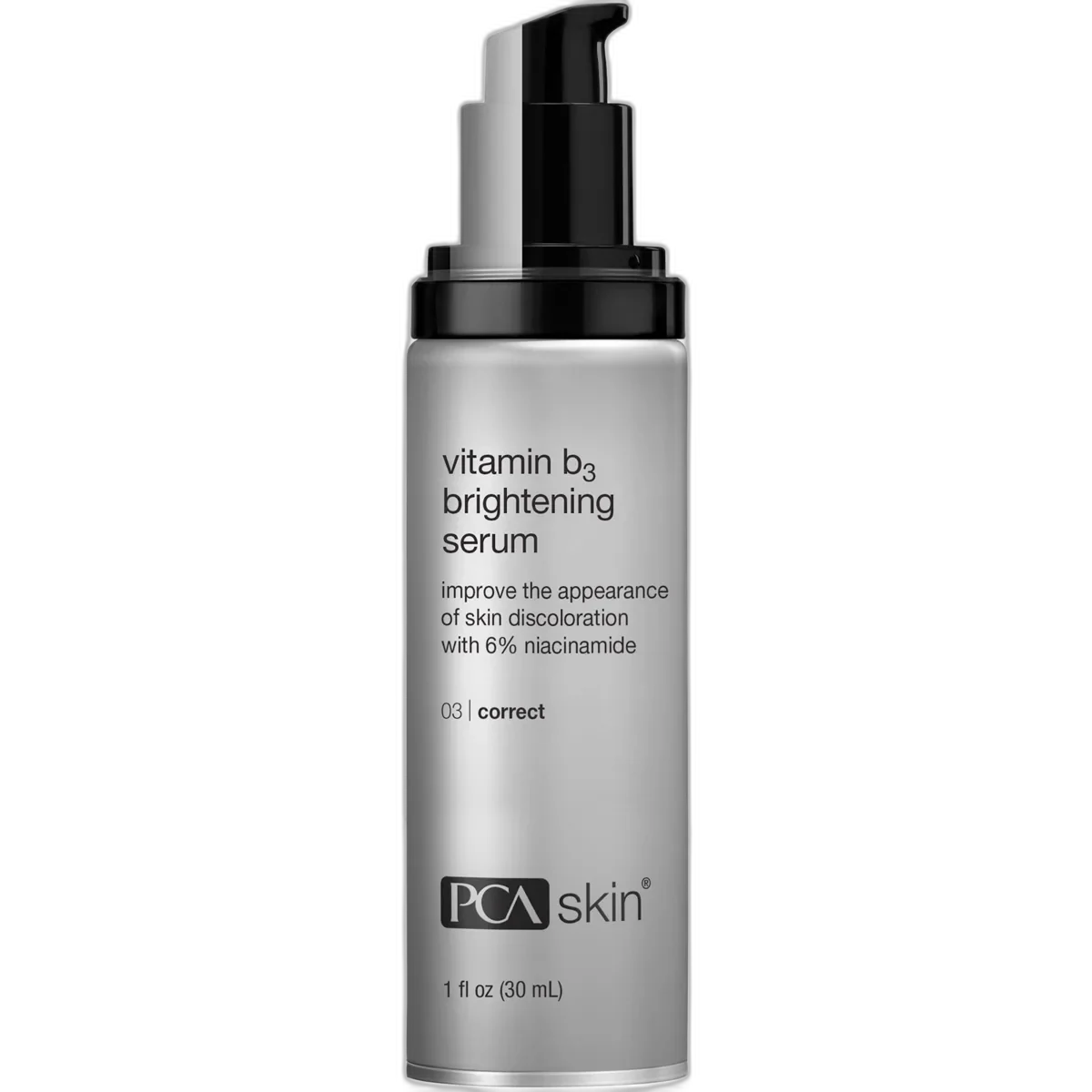
Vitamin B3 Brightening Serum
Pro-Grade Brightener
 Verified reviewer
Pros & cons.
- +Multi-pathway brightening approach targeting melanin production, transfer, and oxidation simultaneously
- +Exceptionally gentle — no stinging, purging, or adjustment period even on sensitive skin
- +6% niacinamide at a clinically validated concentration for barrier repair and brightening
- +Silky silicone-based texture layers beautifully under sunscreen and makeup
- +Safe during pregnancy and suitable for post-procedure skincare regimens
- +Antioxidant support from green tea extract and unique microalgae-derived oils
- +Airless pump packaging protects active ingredients from degradation
- −30 for 1 oz is extremely expensive for a niacinamide-based serum
- −Silicone-heavy base may feel coated or heavy for those preferring water-based textures
- −Dark spot fading is gradual — requires 8-12 weeks for significant visible improvement
- −Only available in one size with no larger, better-value option
- −Brightening effects are subtle rather than dramatic compared to prescription treatments
The full review.
Skincare brands build trust when they sell primarily through professionals. PCA Skin’s Vitamin B3 Brightening Serum gained popularity not from TikTok influencers, but because estheticians use it after peels and laser sessions. They give it to clients with compromised, freshly treated skin and say: use this twice a day, it won’t sting, and your pigmentation will fade. The formulation backs up this professional confidence.
The 6% niacinamide concentration anchors the formula. This number matters; it sits at the threshold where clinical studies show meaningful effects on hyperpigmentation and barrier function. A landmark 2003 study by Hakozaki et al. showed that 5% niacinamide significantly reduced hyperpigmentation and increased skin lightness over 8 weeks. PCA Skin goes slightly above that benchmark to provide more efficacy without the flushing some people experience with niacinamide above 10%.
This serum uses more than just niacinamide. The mulberry leaf extract (Morus Alba) adds a second brightening pathway by directly inhibiting tyrosinase—the enzyme responsible for the first step in melanin production. While niacinamide works downstream by blocking melanosome transfer to skin cells, mulberry extract works upstream by reducing melanin production. Oligopeptide-51, a signaling peptide, targets the melanogenesis pathway at a third point. These three mechanisms target three stages of the pigmentation process. This strategic layering separates this professional formulation from a simple niacinamide in water.
The texture is typical PCA Skin—a silky, silicone-based slip used across much of its serum range. It applies with a velvety glide like a primer, leaving skin smoother and softer without stickiness or film. This silicone-forward base works well for some users. It sits under makeup and sunscreen and does not interfere with layering other products. For users who prefer the water-like feel of a hyaluronic acid serum, the dimethicone-heavy base may feel coated.
The supporting ingredients add value. Dicrateria Rotunda and Ruttnera Lamellosa—two microalgae species—provide omega-rich oils with antioxidant properties. Microalgae-derived lipids have researched anti-inflammatory and skin-barrier-supporting properties, adding a dimension most brightening serums lack. Green tea extract provides antioxidant coverage via EGCG polyphenols, while sodium ascorbate (a stable vitamin C salt) adds a final brightening note.
This serum is gentle in daily use. There is no adjustment period—no tingling, purging, dryness, or peeling. This fits its professional context. Products recommended for post-procedure use cannot cause additional inflammation on sensitized skin. Consequently, even rosacea-prone and highly reactive skin types typically tolerate this brightening serum without incident.
Results build steadily. The initial effect is cosmetic; the silicone base and glycerin hydration make skin look smoother and more luminous. Genuine brightening surfaces around the four to six week mark as dark spots and uneven tone appear less prominent. By eight to twelve weeks, the multi-pathway approach shows visible improvement in radiance and dark spot reduction. This is not a dramatic product, but a steady worker that rewards patience.
The price is $30 for a single ounce, making this one of the more expensive niacinamide serums. You pay $30 per ounce for a product where the primary active, niacinamide, is available in effective concentrations from brands charging $15 for the same or larger size. The mulberry, oligopeptide-51, and microalgae oils add formulation value, and the professional-channel credibility carries weight. However, the gap between the ingredients and the price is wider than necessary. If you are budget-conscious and focused on hyperpigmentation, you can build an effective brightening routine for less.
The price is justifiable for the specific contexts PCA Skin designed for: post-procedure care, extremely sensitive skin that reacts to most brightening products, or layering into a professionally guided skincare regimen where an esthetician has determined this multi-pathway approach is warranted. In those cases, the tolerability and formulation sophistication justify the premium. For others, it depends on how much you value the silky texture, professional pedigree, and three-mechanism approach over cheaper niacinamide options.
Formula
Ingredient analysis.
Full INCI list
Water, Glycerin, Dimethicone, Niacinamide, Butylene Glycol, Diphenylsiloxy Phenyl Trimethicone, Microcrystalline Cellulose, PEG-9 Polydimethylsiloxyethyl Dimethicone, Polymethylsilsesquioxane, Dimethicone/PEG-10/15 Crosspolymer, Phenoxyethanol, Sodium Chloride, Dimethicone/Phenyl Vinyl Dimethicone Crosspolymer, Sodium Citrate, Caprylyl Glycol, Disodium EDTA, Cellulose Gum, Chlorphenesin, Camellia Sinensis Leaf Extract, Morus Alba Leaf Extract, Oligopeptide-51, Dicrateria Rotunda Oil, Ruttnera Lamellosa Oil, Lecithin, Sodium Ascorbate
Skin match.
The science.
The Science
Dermatological literature documents how niacinamide brightens skin. In an 8-week double-blind, randomized controlled trial, Hakozaki et al. (2002) published in the British Journal of Dermatology that 5% topical niacinamide significantly decreased hyperpigmentation and increased skin lightness. The mechanism differs from traditional brighteners. Instead of inhibiting tyrosinase like hydroquinone, niacinamide blocks melanosome transfer from melanocytes to surrounding keratinocytes, reducing visible pigmentation without affecting melanin production.
This serum adds mulberry extract to that mechanism. Research shows Morus Alba acts as a tyrosinase inhibitor, with active compounds suppressing melanin synthesis at the enzymatic level. Lee et al. (2002) confirmed mulberry extract's dose-dependent inhibition of tyrosinase activity in the Journal of Cosmetic Science. This formula targets the pigmentation cascade at two control points: downstream melanosome transfer inhibition (niacinamide) and upstream tyrosinase inhibition (mulberry).
The 6% niacinamide concentration also improves barrier function. Tanno et al. (2000) showed in the British Journal of Dermatology that niacinamide increases ceramide and fatty acid synthesis in the stratum corneum, strengthening the lipid barrier and reducing transepidermal water loss. This dual action—brightening and barrier repair—suits post-procedure use when barrier compromise and pigmentation risk coexist.
References
- The effect of niacinamide on reducing cutaneous pigmentation and suppression of melanosome transfer — British Journal of Dermatology (2002)
- Niacinamide increases biosynthesis of ceramides as well as other stratum corneum lipids — British Journal of Dermatology (2000)
Dermatologist Perspective
Board-certified dermatologists often recommend niacinamide as a first-line brightening ingredient due to its safety profile and multi-functional benefits. At 6%, this serum matches concentrations used in peer-reviewed clinical trials for hyperpigmentation efficacy. Dermatologists note niacinamide lacks the ochronosis risk of hydroquinone and adds barrier-strengthening properties. Dermatology practices often recommend this product in maintenance protocols after in-office brightening treatments like chemical peels, IPL, and laser therapy. Combining niacinamide with tyrosinase inhibitors and antioxidants reflects the dermatological consensus that targeting multiple steps of the melanogenesis pathway yields better outcomes than single-agent therapy.
Where it fits in your routine.
Cleanse the skin (and tone if desired), then apply 1-2 pumps evenly to the face and neck. Use morning and evening. In the morning, follow with moisturizer and broad spectrum sunscreen SPF 30 or higher; sun protection is essential when using any brightening product. At night, apply this before retinoids or moisturizer. Let the serum absorb for 1-2 minutes before layering other products. Use year-round.
At 30 for 1 fluid ounce, this costs more than most professional skincare. The per-ounce price exceeds niacinamide serums from Paula's Choice or The Ordinary, which provide effective niacinamide concentrations for much less. You pay extra for the multi-pathway formulation (mulberry, oligopeptide-51, microalgae oils), professional-channel credibility, and the silicone-based delivery vehicle built for post-procedure tolerance. No alternative sizes exist to lower the cost. The premium works for patients on a dermatologist or esthetician targeted pigmentation protocol. For general brightening, the price-to-ingredient ratio is difficult to justify.
This serum works best for hyperpigmentation, dark spots, or post-inflammatory marks in sensitive or reactive skin. It suits users who cannot tolerate hydroquinone, high concentrations of vitamin C, or acid-based treatments. Post-procedure patients following their provider's recommendation will find it gentle.
Budget-conscious consumers seeking niacinamide benefits can find effective alternatives for less. Those who dislike silicone-based textures or prefer minimalist water-based serums may find the dimethicone-heavy base uncomfortable for daily wear.
Product details.
Fragrance-free with no detectable scent.
An airless pump bottle uses PCA Skin's signature clean, clinical design. The pump dispenses controlled amounts and protects active ingredients from air.
Applies smoothly with a silky slip. No tingling, burning, or adjustment period. Skin immediately feels softer and more hydrated. The brightening effects build gradually over weeks — this is a slow-burn product, not an instant-gratification one.
2-3 months with twice-daily face application
12 months
All Year
The backstory.
PCA Skin developed this serum as part of their professional brightening protocol, designed to be dispensed by estheticians and dermatologists as a daily-use complement to in-office treatments like chemical peels and laser therapy. The 6% niacinamide concentration was chosen to match clinical study dosing while remaining gentle enough for post-procedure use.
About PCA Skin
Legacy Brand (20+ years)An aesthetician founded PCA Skin in 1990, developing it with a dermatologist. For over 35 years, the brand has supplied professional-grade skincare through licensed skincare professionals and dermatology offices, using formulations from an in-house PhD chemist.
Common myths.
Niacinamide and vitamin C cancel each other out, so do not use them together.
This formula contains both niacinamide and sodium ascorbate (a vitamin C derivative). The outdated claim used a study with conditions not found in skincare. Modern formulation science shows they are complementary and can be safely combined.
Effective brightening serums tingle or sting.
This serum works via enzyme inhibition and cellular signaling instead of acid exfoliation. The lack of irritation is a feature, not a weakness. This means the formula works consistently without causing inflammation that worsens pigmentation.
FAQ.
What percentage of niacinamide is in PCA Skin Vitamin B3 Brightening Serum?
This serum contains 6% niacinamide. This concentration exceeds the 2-5% range used in clinical studies to improve hyperpigmentation and barrier function. The 6% niacinamide concentration brightens skin and remains well-tolerated on sensitive skin.
Can I use PCA Skin Vitamin B3 Brightening Serum with retinol?
Yes — niacinamide works well with retinol. The 6% niacinamide in this serum buffers retinol irritation, while the glycerin and silicone base supports the barrier. Apply this serum first, then follow with your retinoid product.
How long does PCA Skin Vitamin B3 Brightening Serum take to show results?
Most users see initial brightness improvements after 4-6 weeks of consistent twice-daily use. Dark spot fading typically takes 8-12 weeks. The triple-pathway approach targets melanin production, transfer, and oxidation to accelerate results compared to single-ingredient serums.
Is PCA Skin Vitamin B3 Brightening Serum safe during pregnancy?
Yes. This formula lacks retinoids, hydroquinone, or other pregnancy-contraindicated ingredients. Dermatologists consider niacinamide safe during pregnancy. This makes the formula a good brightening option for expectant mothers with melasma or pregnancy-related pigmentation changes.
Can I use PCA Skin Vitamin B3 Brightening Serum on sensitive skin?
Yes — this brightening serum works well for sensitive skin. The 6% niacinamide strengthens the skin barrier and reduces redness. The formula has no acids, fragrances, or common irritants. Doctors frequently recommend it for post-procedure use on compromised skin.
What makes PCA Skin Vitamin B3 Brightening Serum different from other niacinamide serums?
Besides niacinamide, this formula uses mulberry extract (a tyrosinase inhibitor), oligopeptide-51 (a melanogenesis-targeting peptide), and plankton-derived microalgae oils for antioxidant support. This multi-pathway approach targets pigmentation from several angles, unlike single-ingredient niacinamide serums.
What the community says.
"Noticeably brighter and more even skin tone"
"Smooth velvety texture absorbs quickly"
"Gentle enough for sensitive skin"
"Visible results within 4-6 weeks"
"Helps reduce redness and post-inflammatory marks"
"Very expensive at 30 per ounce"
"Dark spot fading can be slow for deep pigmentation"
"Silicone base may not suit those who prefer lightweight water-based serums"
"Only available in one size"
People also looked at.