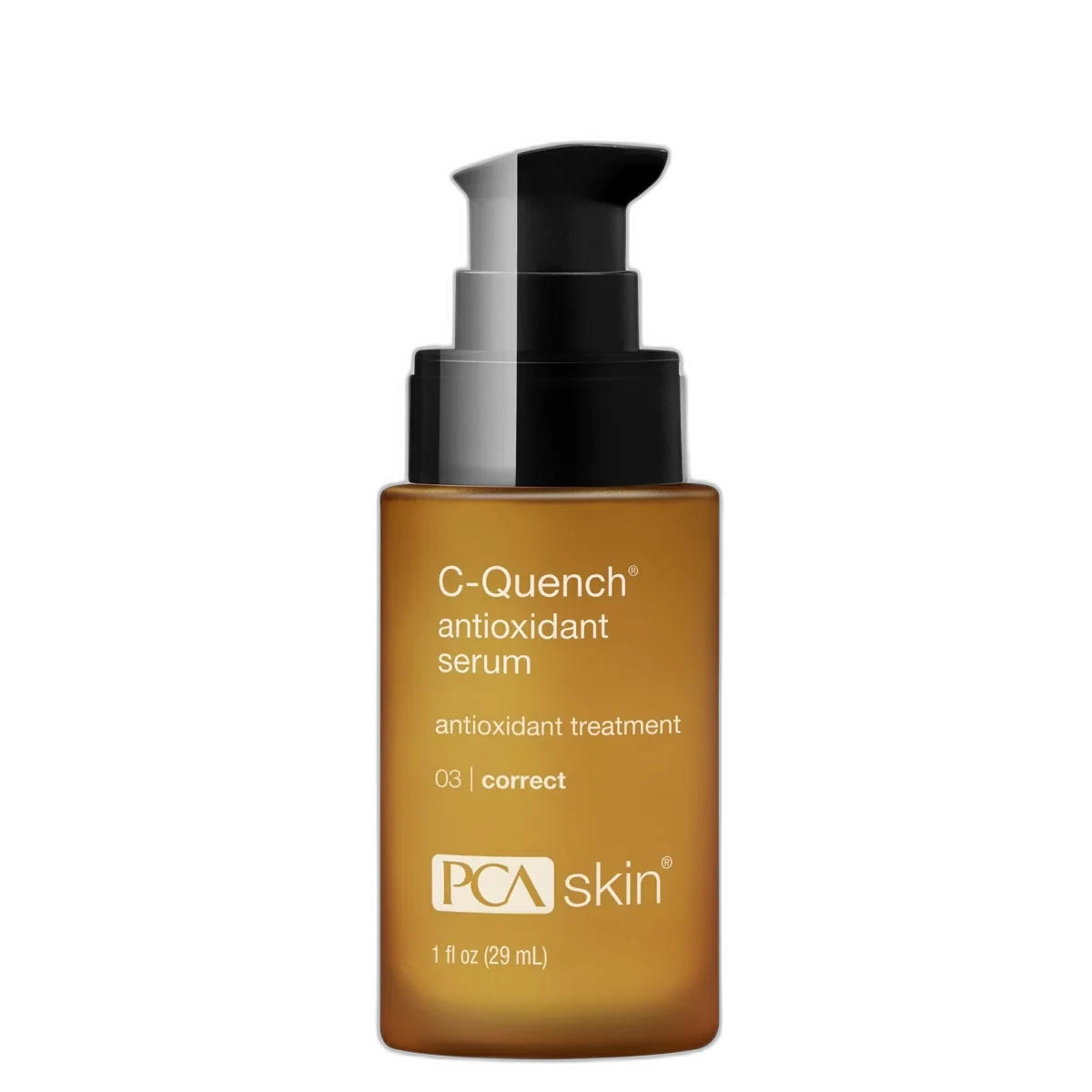
C-Quench Antioxidant Serum
Professional-Grade Antioxidant Shield
 Verified reviewer
Pros & cons.
- +Five-antioxidant formula provides multi-pathway protection beyond standard vitamin C serums
- +Glutathione actively recycles oxidized vitamin C extending the serum's protective window
- +15% L-ascorbic acid at a clinically relevant concentration for collagen stimulation
- +Silky-smooth texture absorbs instantly without tackiness or residue
- +Dual-form vitamin E with both tocopherol and tocotrienols for comprehensive lipid protection
- +Ergothioneine offers rare deep-cellular antioxidant defense not found in most competitors
- +Airless pump packaging protects light-sensitive vitamin C from oxidation
- +Long track record with decades of loyal professional and consumer use
- −Denatured alcohol high on the INCI list can strip barrier lipids and sensitize over time
- −Witch hazel water as the second ingredient adds unnecessary irritation potential
- −Citrus essential oils contribute fragrance but are known contact sensitizers
- −Premium $135 price yields only about two months of supply with twice-daily use
- −Not suitable for sensitive, rosacea-prone, or barrier-compromised skin types
- −Can compound irritation when layered with prescription retinoids
The full review.
Most vitamin C serums follow a simple pattern: dissolve ascorbic acid, add a stabilizer, and stop. PCA Skin’s C-Quench uses a more ambitious approach, combining five distinct antioxidants in one pump bottle. The science is compelling. The glutathione in this formula does more than sit alongside the vitamin C; it regenerates oxidized ascorbic acid back to its active form. This gives your antioxidant protection a longer window than standard vitamin C serums. With resveratrol targeting reactive oxygen species through a separate pathway, ergothioneine accumulating in cells under high oxidative stress, and dual-form vitamin E protecting lipid membranes, this is a layered defense system rather than a single-ingredient play.
At 15% L-ascorbic acid, C-Quench hits the research-backed sweet spot—high enough for collagen stimulation and brightening, but low enough to avoid pure irritation. The formulation also includes sodium hyaluronate and squalane for hydration and barrier support, showing focus on the complete user experience beyond active percentages.
But C-Quench gets complicated. Denatured alcohol is fourth on the INCI list, meaning its concentration is functionally significant. Witch hazel water is second. Orange and grapefruit peel oils add to the potential irritant roster. For a brand built on professional treatment rooms where post-procedure skin is often compromised, this vehicle choice is surprising. These ingredients can strip lipids, trigger inflammation, and sensitize skin over time—the exact issues you avoid when protecting against environmental damage.
The texture is silky-smooth. C-Quench absorbs within seconds and leaves a subtle dewy finish without tackiness or residue. It layers well under moisturizer and sunscreen. The citrus scent is light and pleasant if you are not sensitive to fragrance—though those same oils causing the scent also raise irritation flags.
Performance shows real, visible brightening. Long-term users—some reporting 15 to 20 years of consistent use—describe sustained improvements in skin clarity, tone evenness, and radiance. The multi-antioxidant approach delivers more cumulative protection than simpler formulas, which aligns with science on antioxidant synergy. Fine lines show visible softening after 8 to 12 weeks, especially around the eyes and forehead.
The limitation is that this serum excludes much of the skincare market. Anyone with sensitive, reactive, rosacea-prone, or barrier-compromised skin will likely find the alcohol and citrus oils problematic. Users combining C-Quench with prescription retinoids report more dryness and irritation—not because vitamin C and retinoids are incompatible, but because the vehicle pushes the sensitivity threshold.
At $135 for one ounce—roughly a two-month supply—C-Quench is a premium product. The antioxidant complex justifies part of that price; the formulation is more sophisticated than most drugstore or mid-range vitamin C serums. However, the vehicle undermines the value for anyone needing cautious use or experiencing irritation that requires less frequent application.
PCA Skin has clinical credibility from more than three decades of work, and the antioxidant science in C-Quench reflects that expertise. The brand knows how to formulate effective actives. The disconnect lies in the delivery system—a vehicle designed for cosmetic elegance rather than skin tolerance. If your skin handles it, the results speak for themselves. If it cannot, no amount of antioxidant sophistication compensates for a formula your skin fights.
Ingredient analysis.
Full INCI list
Water/Aqua/Eau, Hamamelis Virginiana (Witch Hazel) Water, Ascorbic Acid, Alcohol, Hydroxyethyl Acrylate/Sodium Acryloyldimethyl Taurate Copolymer, Glycerin, Squalane, Maltodextrin, Sodium Citrate, Ribes Nigrum (Black Currant) Seed Oil, Pseudoalteromonas Ferment Extract, Phytosterols, Cassia Angustifolia Seed Polysaccharide, Glutathione, Resveratrol, Xanthan Gum, Tocopherol, Tocotrienols, Citrus Aurantium Dulcis (Orange) Peel Oil, Citrus Grandis (Grapefruit) Peel Oil, Oryza Sativa (Rice) Bran Wax, Squalene, Caprylyl Glycol, Syringa Vulgaris (Lilac) Leaf Cell Culture Extract, Ethylhexylglycerin, Sodium Hyaluronate, Alanine, Proline, Serine, Sodium Phosphate, Sodium Hydroxide, Ergothioneine
Skin match.
The science.
The Science
C-Quench relies on antioxidant synergy. This principle states that multiple antioxidants using different mechanisms offer better protection than a single agent at a higher concentration. The 15% L-ascorbic acid falls within the range from the 2001 Pinnell et al. study in Dermatologic Surgery. That study shows topical vitamin C at 10-20% provides photoprotection and collagen synthesis when the pH is below 3.5.
The glutathione inclusion is interesting biochemically. Glutathione works in the ascorbate-glutathione cycle, donating electrons to turn dehydroascorbic acid back into active ascorbic acid. A 2017 study in the Journal of Clinical and Aesthetic Dermatology shows topical glutathione reduces melanin index and improves skin lightening, adding a brightening pathway beyond vitamin C alone.
Resveratrol adds stilbenoid antioxidant activity. Research in the Journal of Cosmetic Dermatology (2011) shows topical resveratrol provides photoprotection by reducing UV-induced oxidative stress markers. In this formula, it complements the ascorbic acid by scavenging a different subset of reactive oxygen species.
Ergothioneine is the most novel inclusion. This natural amino acid has a unique mechanism: it accumulates in cells exposed to high oxidative stress via the OCTN1 transporter. A 2020 review in the International Journal of Molecular Sciences highlights how ergothioneine protects mitochondrial DNA from oxidative damage, offering deeper cellular protection than surface-level antioxidants. The dual-form vitamin E—both tocopherol and tocotrienols—protects cell membrane lipids from peroxidation. Some research shows tocotrienols have higher antioxidant activity than tocopherols alone.
References
- Topical L-ascorbic acid: percutaneous absorption studies — Dermatologic Surgery (2001)
- Glutathione and its antiaging and antimelanogenic effects — Journal of Clinical and Aesthetic Dermatology (2017)
- Ergothioneine: a diet-derived antioxidant with therapeutic potential — International Journal of Molecular Sciences (2020)
Dermatologist Perspective
Dermatologists often recommend vitamin C serums for anti-aging and photoprotection. C-Quench's 15% concentration matches the evidence for efficacy. Board-certified dermatologists note the multi-antioxidant approach—specifically the glutathione-ascorbic acid recycling mechanism—is a more sophisticated strategy than single-antioxidant formulas. However, dermatologists specializing in sensitive skin or rosacea would likely flag the alcohol, witch hazel, and citrus oils as unnecessary irritants for daily use. This formula offers meaningful protection for patients with resilient skin concerned about photoaging and environmental damage. For patients on prescription retinoids or those with skin reactivity, dermatologists typically recommend a vitamin C serum with a less sensitizing vehicle.
Where it fits in your routine.
Shake gently before each use. After cleansing and toning, apply one to two pumps evenly to the face and neck. Use twice daily — morning and evening — for maximum antioxidant protection. In the morning, follow with a broad-spectrum SPF 50 and moisturizer. In the evening, apply before your nighttime moisturizer. Do not apply over broken skin, active breakouts, or freshly treated areas. If using with retinoids, apply C-Quench in the morning and retinoid at night to minimize irritation overlap.
At $135 for 1 fl oz, C-Quench costs more because of its multi-antioxidant complexity. The combination of glutathione, ergothioneine, resveratrol, and L-ascorbic acid is more sophisticated than most serums at this price. However, one bottle lasts two months, so this single product step costs about $810 annually. PCA Skin's three-decade clinical reputation and professional-grade positioning add credibility, but alcohol and citrus oils can undermine the actives. You pay for excellent antioxidant science in a vehicle that could be better.
This serum works best for normal to combination skin seeking professional-grade antioxidant protection against photoaging, dullness, and uneven tone. C-Quench delivers for users who tolerate active ingredients and want more sophistication than basic vitamin C.
People with sensitive, rosacea-prone, or barrier-compromised skin should avoid this — the alcohol, witch hazel, and citrus oils make it a poor fit. If you use prescription retinoids and have dryness or irritation, the sensitizing vehicle worsens those issues.
Product details.
This lightweight, silky serum has a slightly watery consistency. It glides on smoothly and feels neither tacky nor heavy.
Orange and grapefruit peel oils create a light citrus scent. It is noticeable on application but fades within minutes.
An airless pump bottle protects the vitamin C from oxidation and ensures precise dosing.
A 15% L-ascorbic acid serum causes a slight tingling sensation on first use. The serum absorbs fast and leaves a subtle dewy glow. Introduce the serum gradually if using with retinoids to avoid more irritation. The citrus scent is noticeable but fades fast.
Apply 1-2 pumps to face and neck twice daily for about 2 months
6 months
All Year
The backstory.
PCA Skin built its reputation in the professional treatment room, where estheticians needed products that could deliver visible results between peel sessions. C-Quench was designed as a daily antioxidant defense that could maintain the brightening and anti-aging results achieved during professional treatments, making it a bridge product between the treatment chair and the bathroom counter.
About PCA Skin
Established Brand (5–20 years)An aesthetician founded PCA Skin in 1990, developing it with dermatologists. PCA Skin is the number-one professional chemical peel brand among estheticians, with over one million peels performed globally each year. PhD chemists develop its formulations in-house.
Common myths.
Do not use Vitamin C serums with retinol because they cancel each other out.
Vitamin C and retinol use different mechanisms and can complement each other. But C-Quench uses an alcohol and witch hazel base. Layering C-Quench with prescription retinoids causes excessive dryness and irritation. This happens because the vehicle is already sensitizing, not because the actives conflict.
A tingling sensation means the product damages your skin.
A 15% L-ascorbic acid serum causes mild tingling as the low-pH active absorbs. Persistent burning, redness, or stinging lasting more than a few seconds signals irritation—likely from the alcohol or citrus oils instead of the vitamin C itself.
FAQ.
What percentage of vitamin C is in PCA Skin C-Quench?
C-Quench contains 15% L-ascorbic acid. This falls within the 10-20% clinically studied range that provides antioxidant protection and collagen stimulation. This concentration works for most non-sensitive skin types.
Can I use PCA Skin C-Quench with retinol?
Vitamin C and retinol are not chemically incompatible, but C-Quench's alcohol and witch hazel base has irritation potential. If you use retinol, apply C-Quench in the morning and retinol at night to avoid layering sensitizing ingredients.
Is PCA Skin C-Quench good for sensitive skin?
C-Quench is not ideal for sensitive skin. The formula uses denatured alcohol, witch hazel, and citrus essential oils, which are known irritants. People with reactive or easily flushed skin should choose vitamin C serums with gentler vehicles and no fragrant oils.
How should I store PCA Skin C-Quench Antioxidant Serum?
Store in a cool, dark place away from direct sunlight. The airless pump protects the L-ascorbic acid from oxidation, but heat and UV exposure still degrade the vitamin C over time. If the serum turns dark orange or brown, it has oxidized and you must replace it.
Why does PCA Skin C-Quench tingle when I apply it?
The 15% L-ascorbic acid causes the tingling because it needs a low pH to penetrate the skin. This sensation is normal and usually stops within 30-60 seconds. If the sensation persists or burns, the alcohol and citrus oils may irritate your skin; stop use.
How long does a bottle of PCA Skin C-Quench last?
With the recommended twice-daily application of 1-2 pumps, a 1 oz bottle typically lasts about 2 months. At $135 per bottle, this works out to roughly $2.25 per day for twice-daily use — a consideration worth noting at this price point.
What makes PCA Skin C-Quench different from other vitamin C serums?
C-Quench uses a five-antioxidant approach: L-ascorbic acid, glutathione, resveratrol, ergothioneine, and dual-form vitamin E. The glutathione recycles oxidized vitamin C, which extends the serum's protective activity compared to formulas using only ascorbic acid.
Community
What the community says.
"Leaves skin visibly brighter and more radiant"
"Non-greasy, silky-smooth texture that absorbs quickly"
"Long-term users report sustained improvement in skin clarity"
"Pleasant light citrus scent"
"Effective at evening out skin tone over time"
"Contains alcohol which can cause dryness for some skin types"
"Premium price point at $135 for 1 oz"
"May tingle or sting on application especially with compromised barrier"
"Bottle lasts only about 2 months with twice-daily use"
"Not ideal when combined with prescription retinoids"
People also looked at.