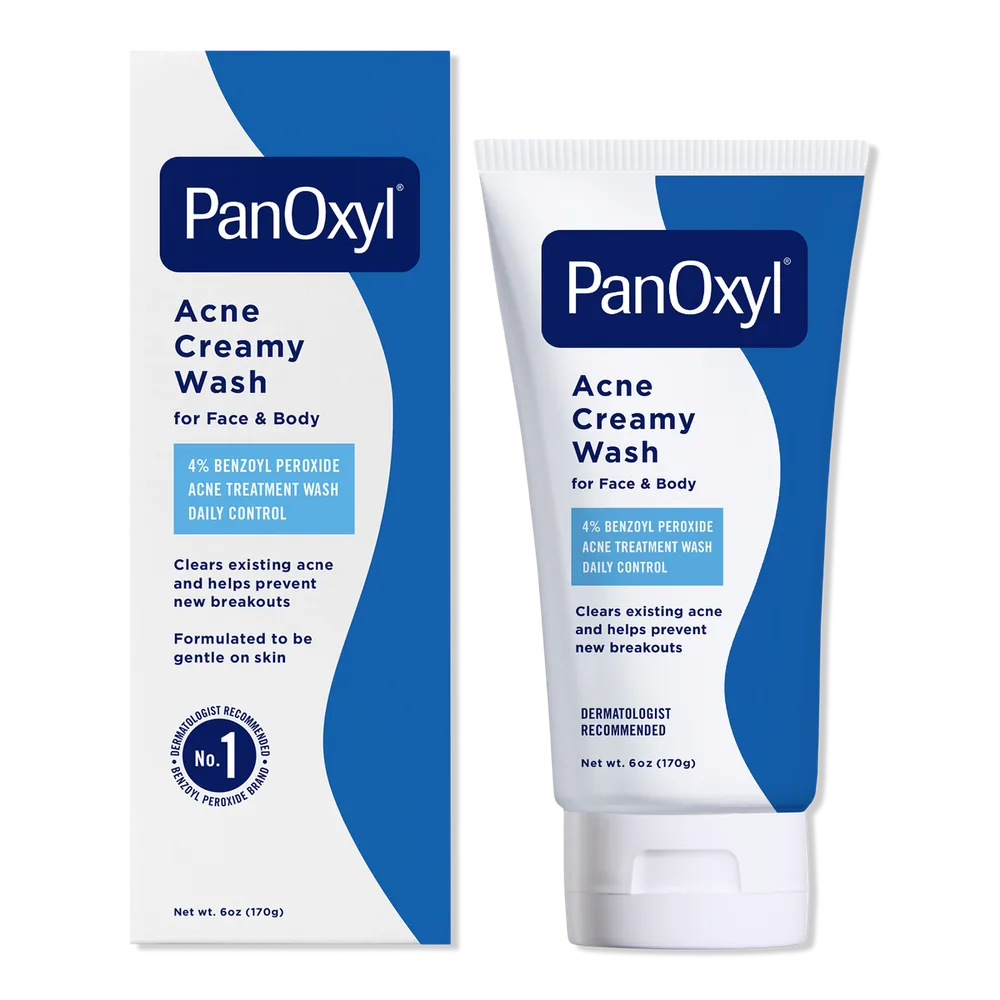
Acne Creamy Wash 4% Benzoyl Peroxide
Derm Gold Standard
 Verified reviewer
Pros & cons.
- +4% benzoyl peroxide at the dermatologist-recommended concentration for daily use
- +Kills 99% of acne bacteria within 15 seconds
- +Reformulated 2023 with moisturizing base that reduces dryness
- +Incredible value at under $11 for 6 oz
- +Fragrance-free and sulfate-free
- +HSA/FSA eligible
- +Bacteria cannot develop resistance to benzoyl peroxide
- −Bleaches towels, pillowcases, and clothing on contact
- −Can still cause dryness — moisturizer is essential
- −4% may be insufficient for severe cystic acne
- −Creamy texture doesn't foam like traditional face washes
- −Not cruelty-free
The full review.
Dermatologists have recommended benzoyl peroxide for acne since the 1960s, and PanOxyl is their top recommendation. It works. It provides the predictable, evidence-backed reliability most skincare products lack. The 4% Creamy Wash is the daily-use face version, and at under eleven dollars, it is likely the best value in the acne treatment market.
Benzoyl peroxide kills Cutibacterium acnes bacteria by oxidatively destroying their cell membranes. This mechanism is direct—like using a fire extinguisher on a grease fire. Within 15 seconds of contact, BP eliminates 99% of the bacteria that cause inflammatory acne. Unlike antibiotics, bacteria do not develop resistance to BP’s oxidative mechanism. This product remains as effective on day one thousand as it is on day one.
The 4% concentration is the dermatological sweet spot for the face. Research comparing 2.5%, 5%, and 10% benzoyl peroxide shows similar bacterial kill rates across concentrations, but higher percentages increase irritation. The 4% in this wash provides clinically effective antibacterial action with less dryness, redness, and peeling than the 10% Foaming Wash. Most dermatologists recommend this concentration for the face.
The 2023 reformulation fixed PanOxyl’s historical weakness: the old formula was harsh. Pure BP in a basic cleanser base stripped skin, caused severe dryness, and made daily use uncomfortable. Crown Laboratories (which acquired the brand in 2018) rebuilt the formula with glycerin, sorbitol, dimethicone, and propanediol—a moisturizing system that lets BP kill bacteria without punishing the skin. The difference is immediate: the reformulated wash leaves skin clean but not tight or stripped.
The fragrance-free, sulfate-free formulation is uncomplicated. It has twenty ingredients, each with a clear purpose. There are no botanical extracts with unproven benefits, no essential oils that cause irritation, and no fragrance to mask the faint clinical scent of benzoyl peroxide. It is a medical product that stays honest about its function.
The creamy texture differs from traditional foaming face washes, which may surprise new users. It produces little lather and feels more like a cream cleanser than a soap. This is intentional—the gentle surfactants (decyl glucoside, sodium laurylglucosides hydroxypropylsulfonate) clean without the stripping action of SLS. The BP does the work, not the foam.
HSA/FSA eligibility is a practical benefit. Because acne is a medical condition, using pre-tax healthcare dollars to buy effective treatment reduces the financial barrier. For a product that costs about as much as a sandwich, this makes it essentially free for budgeting.
The bleaching issue requires discussion. Benzoyl peroxide stains dark towels, colored pillowcases, and any clothing it touches. This is inherent to the chemistry—the oxidative mechanism that kills bacteria also oxidizes fabric dyes. Use white towels, rinse thoroughly, and use white pillowcases. This is the one significant lifestyle adjustment BP treatment requires, and it is manageable.
For mild to moderate inflammatory acne, this wash often works as a standalone treatment when used with a non-comedogenic moisturizer and sunscreen. For severe acne, dermatologists often combine it with topical retinoids (applied at different times) and oral medications. The wash format helps BP treat the entire face, neck, and shoulders—not just visible pimples—to prevent new breakouts in unspotted areas.
The texture takes adjustment. The creamy, low-lather formula feels different from the foaming face washes most people use. There is no sudsy satisfaction or rich foam. But cleaning happens at the molecular level—BP’s oxidative mechanism does not require lather, and the gentle surfactants (decyl glucoside, sodium laurylglucosides hydroxypropylsulfonate) clean more gently than traditional sodium lauryl sulfate. Once you stop equating foam with clean, the creamy format makes sense for daily use on potentially irritated skin.
The reformulated PanOxyl has strong reviews from the adult acne community—people in their 20s, 30s, and 40s with persistent breakouts who have outgrown harsh, drying teen products. The moisturizing base is tolerable for adult acne concerns like concurrent dryness, sensitivity, and early aging that react poorly to aggressive stripping.
While $40 serums and $60 moisturizers market themselves as acne solutions, the PanOxyl Creamy Wash 4% is a reality check. The most effective OTC acne treatment costs less than a movie ticket, works within days, and has more clinical evidence than almost anything else on the shelf. If your acne routine fails, this is where a dermatologist would tell you to start.
Formula
Ingredient analysis.
Full INCI list
Active Ingredient: Benzoyl Peroxide 4%. Inactive Ingredients: Carbomer Homopolymer Type B, Carbomer Interpolymer Type A, Decyl Glucoside, Dimethicone, Dioctyl Sodium Sulfosuccinate, Glycerin, Palmitic Acid, Polyacrylate Crosspolymer-6, Polyoxyl 40 Stearate, Propanediol, Purified Water, Silica, Sodium Chloride, Sodium Citrate, Sodium Hydroxide, Sodium Laurylglucosides Hydroxypropylsulfonate, Sorbitan Stearate, Sorbitol, Stearic Acid, T-Butyl Alcohol, Xanthan Gum
Skin match.
The science.
The Science
Benzoyl peroxide works by generating free radical oxygen species that oxidize bacterial proteins and cell membranes. A 2010 review in the Journal of the American Academy of Dermatology confirmed that BP reduces Cutibacterium acnes populations by over 98% within 7 days of twice-daily application. Decades of clinical use show no bacterial resistance, a unique advantage over topical antibiotics.
Studies show how concentration affects efficacy. A landmark randomized controlled trial in the Journal of the American Academy of Dermatology (1986) by Mills et al. showed that 2.5% BP gel reduces inflammatory and non-inflammatory acne lesions as well as 5% and 10% formulations, but causes less irritation. This is why dermatologists prefer lower-concentration BP products for the face.
The reformulated moisturizing base solves a known problem. Research in the British Journal of Dermatology (2009) shows that combining BP with emollients improves treatment adherence by reducing the dryness and irritation that cause patients to stop BP therapy. Glycerin's humectant properties and dimethicone's occlusive barrier function counter BP's keratolytic drying effects.
Dermatologist Perspective
Board-certified dermatologists use benzoyl peroxide as a first-line treatment for mild to moderate acne and often prescribe it with retinoids and antibiotics for severe cases. Dermatologists mostly recommend the 4% facial wash for daily use; the wash-off format limits contact time and reduces irritation compared to leave-on BP products. The reformulated moisturizing base improves the formula, as treatment adherence has historically been the main barrier to BP efficacy.
Where it fits in your routine.
Wet your face with lukewarm water. Put a nickel-sized amount on your hands and massage it into your skin for 1-2 minutes so the BP contacts the skin. Rinse well. Use once or twice daily. Always follow with non-comedogenic moisturizer and SPF in the morning. Use white towels to avoid bleaching.
At $10.49 for 6 oz, this offers the best value in the acne treatment market. The per-use cost is low, clinical research proves its efficacy over decades, and HSA/FSA eligibility lowers the effective price. No acne serum, light therapy device, or subscription treatment plan matches this value-to-efficacy ratio.
People with mild to moderate acne seeking the most proven, affordable OTC treatment. Use on face, neck, chest, and back. Works for all acne types, including hormonal and inflammatory.
People with very dry or eczema-compromised skin (BP may worsen dryness), anyone who wants to avoid fabric-bleaching, and those with a known allergy to benzoyl peroxide.
Product details.
Smooth, thick formula with low foam. It feels more like a cream cleanser than a traditional face wash.
Fragrance-free. Benzoyl peroxide has a faint clinical or medicinal scent.
Standard squeeze tube. Nothing fancy — functional and practical.
Skin feels clean but not stripped after the first use. Most users feel no immediate stinging. Active breakouts reduce within 3-5 days of daily use. Some mild dryness occurs initially — use a moisturizer.
3-4 months with daily face and neck use
12 months
All Year
The backstory.
PanOxyl's benzoyl peroxide heritage dates to 1966, when Stiefel Laboratories pioneered BP-based acne treatment. For decades, PanOxyl was the go-to prescription-adjacent acne wash, recommended by dermatologists across the country. Now under Crown Laboratories, the 2023 reformulation modernized the formula with moisturizing ingredients while maintaining the antibacterial efficacy that earned the brand its #1 dermatologist-recommended status.
About PanOxyl
Legacy Brand (20+ years)PanOxyl's benzoyl peroxide roots go back to 1966 via Stiefel Laboratories. It is the #1 dermatologist-recommended benzoyl peroxide brand with over 50 years of clinical use. Crown Laboratories owns the brand now; they reformulated it in 2023 with added moisturizers. The Foaming Wash is the #1 best-selling acne wash in the U.S.
Common myths.
Higher percentage benzoyl peroxide works better
Research shows 2.5-4% BP kills acne bacteria as well as 10% but causes less irritation. The 4% concentration in this wash provides maximum antibacterial benefit for the face without the severe dryness of higher concentrations.
Benzoyl peroxide makes acne worse before it gets better
Benzoyl peroxide kills bacteria directly and does not cause purging like retinoids and BHAs. If acne worsens with benzoyl peroxide, you have irritant contact dermatitis instead of a normal adjustment. Use benzoyl peroxide less often and add moisturizer.
FAQ.
What's the difference between PanOxyl 4% Creamy Wash and 10% Foaming Wash?
The 4% Creamy Wash is a gentle, moisturizing formula for daily facial use. The 10% Foaming Wash is maximum strength for body acne (back, chest) or severe facial acne. Research shows 4% kills facial acne bacteria as effectively as 10% with less irritation.
Can I use PanOxyl Creamy Wash every day?
Yes — the 4% concentration and reformulated moisturizing base work for daily use. Some users wash twice daily (AM and PM). Always follow with moisturizer and SPF.
Does PanOxyl bleach towels?
Yes — benzoyl peroxide bleaches fabrics at any concentration. Use white towels and pillowcases, and rinse the product fully before you towel off. This is an inherent property of benzoyl peroxide, not a product defect.
Is PanOxyl Creamy Wash safe during pregnancy?
Topical benzoyl peroxide is generally safe during pregnancy. The FDA classifies it as Category C, and most dermatologists view 4% wash-off BP as low-risk. Consult your OB-GYN for personalized guidance.
Can I use PanOxyl with retinol?
Yes, but use them at different times — BP in the morning, retinol at night. Using both together causes excessive irritation. Some dermatologists recommend alternating days instead of same-day use for sensitive skin.
What the community says.
"Highly effective at clearing breakouts"
"Gentle enough for daily facial use"
"Reformulated formula doesn't strip skin"
"Incredibly affordable"
"Fragrance-free and sulfate-free"
"Bleaches towels, clothing, and sheets"
"4% may be too mild for severe cystic acne"
"Creamy texture doesn't foam like some users expect"
"Can still cause dryness with overuse"
People also looked at.