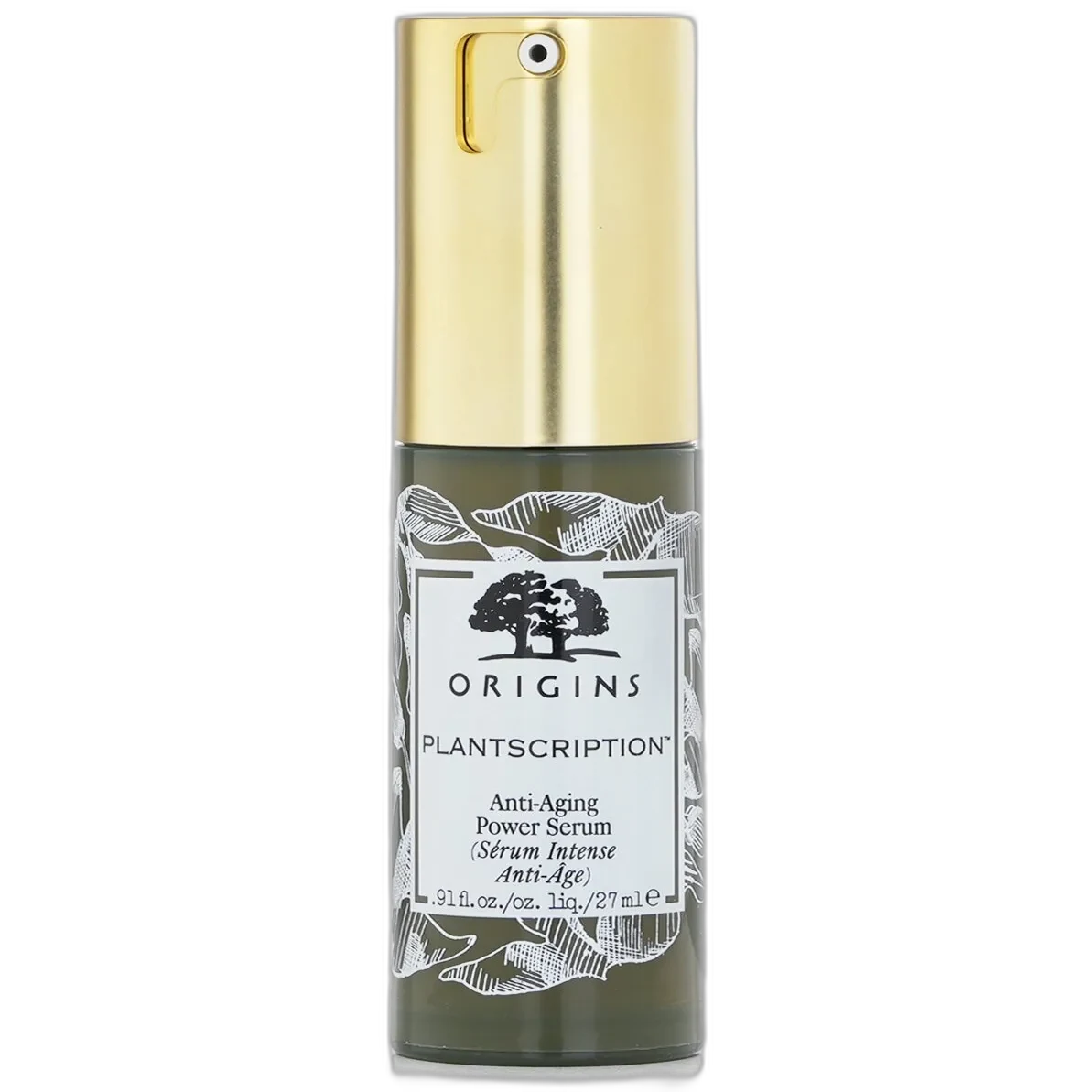
Plantscription Anti-Aging Power Serum
Botanical Anti-Aging Pioneer
 Verified reviewer
Pros & cons.
- +Unique Anogeissus bark extract targets fibrillin — a structural protein most serums ignore
- +Multi-pathway anti-aging approach combining botanical, peptide, and vitamin C strategies
- +Exceptionally silky, lightweight texture that absorbs quickly without tackiness
- +Retinoid-free formula suitable for those who cannot tolerate retinol
- +Phytosphingosine strengthens the skin barrier alongside anti-aging actives
- +Elegant pump packaging protects photosensitive ingredients and minimizes waste
- +Over a decade of market history with consistently positive consumer feedback
- −Heavy essential oil load includes multiple known fragrance allergens
- −Key actives like the peptide and vitamin C appear low on the INCI list
- −At $77 for 1.7 oz, the value proposition is moderate given active concentrations
- −Deep wrinkle results require 6-8 weeks of patience
- −Not suitable for fungal acne-prone skin due to multiple plant oils
- −Glass bottle is heavy and less practical for travel
The full review.
In 2014, while most anti-aging serums were locked in an arms race over retinol concentrations and vitamin C stability, Origins went to West Africa. Specifically, to the Anogeissus Leiocarpus tree — a species whose bark had been used in traditional medicine for centuries but had never been formulated into a prestige skincare serum. The bet was unusual: instead of targeting collagen directly, Origins focused on fibrillin, the structural glycoprotein that creates the scaffolding elastin needs to keep skin bouncy. It was a quieter, nerdier approach to anti-aging, and more than a decade later, the Plantscription Anti-Aging Power Serum remains the flagship product built around that insight.
The formulation is genuinely layered. At its core is the Anogeissus bark extract, supported by Acetyl Hexapeptide-8 — better known as Argireline — which addresses expression lines through a completely different mechanism than the bark extract. Where Anogeissus builds structural support from below, the peptide works to relax the muscle contractions that create dynamic wrinkles at the surface. Add in tetrahexyldecyl ascorbate, an oil-soluble vitamin C derivative that plays nicely with the serum’s silicone-rich base, and you have a three-pronged anti-aging strategy that covers firmness, expression lines, and oxidative damage without relying on a single retinoid molecule.
The texture is one of its strongest selling points. It dispenses as a lightweight, slightly gel-like serum that feels immediately silky on contact. The dimethicone and jojoba ester base create a soft-focus effect on the skin — pores look blurred, fine lines appear shallower, and there is a subtle satin finish that works beautifully under makeup. It absorbs in under a minute without that tacky residue some peptide serums leave behind. For a product packed with over fifty ingredients, it wears remarkably light.
Performance-wise, this serum delivers on texture and luminosity faster than it delivers on deep wrinkles. Within the first two weeks, skin looks smoother and more energized — the caffeine and vitamin C derivative contribute to that brightened quality. Fine lines, particularly around the eyes and forehead, start to soften around the three-week mark. Deeper wrinkles and true firmness improvements are a longer game, requiring six to eight weeks of consistent use. This is not a product for people who want overnight drama. It is a product for people who understand that structural skin changes happen slowly and are willing to commit.
The ingredient list is both a strength and a weakness. On the strength side, the supporting cast of over twenty botanical extracts — including bamboo, cucumber, apple, and scutellaria — provides a broad antioxidant shield. Phytosphingosine reinforces the skin barrier, and sodium hyaluronate handles hydration duties. On the weakness side, the formula includes a significant number of essential oils. Rosa damascena, lavender, bergamot, lemon, orange, mandarin, nutmeg, and anise all make appearances, along with the fragrance allergens limonene, linalool, geraniol, and citronellol. For those who enjoy aromatherapeutic skincare, the scent is genuinely lovely — spa-like and calming. For those with any history of fragrance sensitivity, this is a legitimate concern. The essential oils are not window dressing; they are present in meaningful quantities, as evidenced by their position in the middle of the INCI list.
Packaging is elegant and functional — a frosted glass bottle with a pump dispenser that delivers a consistent amount without waste. The green-toned Origins branding is immediately recognizable, and the pump mechanism remains reliable down to the last drops. Glass is heavier than plastic alternatives, which makes it less travel-friendly, but it protects the light-sensitive vitamin C derivative better than transparent packaging would.
The value proposition requires honest assessment. At $77 for 1.7 ounces, this lands in the mid-luxury tier. The Anogeissus extract is genuinely unique — you cannot find it in drugstore formulas — and the peptide-plus-vitamin C supporting cast adds real value. However, both the Argireline and tetrahexyldecyl ascorbate appear in the bottom half of the ingredient list, suggesting concentrations that may be more supportive than starring. You are paying partly for the Anogeissus research, partly for the elegant cosmetic experience, and partly for the Origins brand heritage as an Estée Lauder company. Whether that calculus works depends on how much you value the botanical approach over higher-concentration synthetic alternatives.
This is a serum for the person who wants science-backed anti-aging without retinoids, who values a luxurious daily ritual, and who does not have fragrance sensitivities. It will not replace a well-formulated retinol for someone targeting deep wrinkles, but it fills a real gap for those who cannot tolerate retinoids or prefer plant-derived actives. Over a decade of market history suggests Origins found something genuinely worth building a line around — even if the full formulation could stand to lose a few of those essential oils.
Ingredient analysis.
Full INCI list
Water, Butylene Glycol, Dimethicone, Jojoba Esters, Glycerin, Rosa Damascena Flower Oil, Lavandula Angustifolia (Lavender) Oil, Pelargonium Graveolens Flower Oil, Illicium Verum (Anise) Fruit/Seed Oil, Citrus Aurantium Bergamia (Bergamot) Fruit Oil, Carthamus Tinctorius (Safflower) Seed Oil, Myristica Fragrans (Nutmeg) Kernel Oil, Citrus Aurantium Dulcis (Orange) Peel Oil, Citrus Nobilis (Mandarin Orange) Peel Oil, Citrus Limon (Lemon) Peel Oil, Litsea Cubeba Fruit Oil, Hibiscus Abelmoschus Extract, Limonene, Linalool, Geraniol, Citronellol, Sigesbeckia Orientalis (St. Paul's Wort) Extract, Prunus Amygdalus Dulcis (Sweet Almond) Seed Extract, Anogeissus Leiocarpus Bark Extract, Pisum Sativum (Pea) Extract, Bambusa Vulgaris (Bamboo) Extract, Crithmum Maritimum Extract, Centaurium Erythraea (Centaury) Extract, Laminaria Digitata Extract, Coffea Arabica (Coffee) Seed Extract, Rosmarinus Officinalis (Rosemary) Leaf Extract, Rubus Idaeus (Raspberry) Leaf Extract, Polymethylsilsesquioxane, Cucumis Sativus (Cucumber) Fruit Extract, Pyrus Malus (Apple) Fruit Extract, Commiphora Mukul Resin Extract, Scutellaria Baicalensis Root Extract, Dicaprylyl Carbonate, Acetyl Hexapeptide-8, Caffeine, Phytosphingosine, Sodium Hyaluronate, Lecithin, Methyl Trimethicone, Glucosamine Hcl, Hydrogenated Vegetable Oil, Hydrolyzed Algin, Micrococcus Lysate, Carbomer, Caprylic/Capric Triglyceride, Ammonium Acryloyldimethyltaurate/Vp Copolymer, Caprylyl Glycol, Tetrahexyldecyl Ascorbate, Polysilicone-11, Tromethamine, Sodium Phytate, Hexylene Glycol, Silica, Phenoxyethanol
Skin match.
The science.
The Science
Anogeissus Leiocarpus bark extract forms the scientific basis of this serum. Origins helped move this ingredient from traditional African medicine into cosmetic science. It works via fibrillin-1, a glycoprotein that forms the microfibrils needed for elastic fiber assembly in the dermis. Most anti-aging ingredients target collagen synthesis or degradation, but Anogeissus extract stimulates fibrillin production to support the structural scaffolding elastin needs for skin elasticity. A US patent (US20120244135A1) filed by Estée Lauder describes using Anogeissus extract for fibrillin production in skin and shows in-vitro evidence of increased fibrillin expression in treated fibroblasts.
The extract also inhibits matrix metalloproteinase (MMP) — specifically MMP-2 and MMP-9, the enzymes that degrade collagen and elastin in photoaged skin. This dual mechanism builds new structural proteins and protects existing ones from enzymatic breakdown, offering a more complete approach than single-pathway ingredients.
Acetyl Hexapeptide-8 (Argireline) adds a neuromuscular dimension. Research in the International Journal of Cosmetic Science (2002) shows this peptide can reduce wrinkle depth by up to 30% over 30 days. It works by modulating SNARE complex formation to reduce the muscle contraction intensity that forms expression lines. This formula does not disclose the concentration, so we cannot directly extrapolate from clinical studies.
Tetrahexyldecyl ascorbate, the vitamin C derivative here, works well in a silicone-based formula. Its oil solubility lets it penetrate lipid-rich cell membranes more effectively than water-soluble forms. Research in the Journal of Cosmetic Dermatology (2005) showed it stimulates collagen synthesis and reduces melanin production, though the concentration in this specific product is undisclosed.
References
- Use Of Anogeissus Extract For Fibrillin Production In Skin — US Patent Application (2012)
Dermatologist Perspective
Retinoids and vitamin C dominate anti-aging discussions, leaving fibrillin-targeting ingredients underexplored in clinical practice. Board-certified dermatologists agree that Anogeissus bark extract offers a theoretically sound approach by supporting the elastic fiber network instead of just boosting collagen. However, most dermatologists note the evidence is primarily in-vitro and brand-sponsored, lacking the independent, large-scale clinical trials that support retinoids. The essential oil content is another point dermatologists consistently flag: bergamot, lemon, and lavender oils are common contact allergens in cosmetics. Dermatologists often recommend this serum as a complementary product for patients who cannot tolerate retinoids, but they advise patch testing due to the fragrance load.
Where it fits in your routine.
Press 2-3 pumps onto fingertips and press into clean, toned skin. Apply to face, neck, and décolleté, but avoid the immediate eye area. Use morning and evening before moisturizer. In the AM, always follow with broad-spectrum SPF. Wait 30-60 seconds for absorption before layering other products. The silicone base works well as a primer under makeup.
Origins Plantscription costs $77 for 1.7 oz (a 0.91 oz size is also available), placing it in the mid-luxury tier. The Anogeissus bark extract justifies the premium price because drugstore formulations do not use it. However, the peptide and vitamin C derivative sit low on the INCI list, meaning concentrations are modest compared to serums in this price range that lead with high-percentage actives. As an Estée Lauder brand with over three decades of heritage, Origins has credibility newer brands lack, and the elegant formulation and packaging show that pedigree. The value is highest for users seeking a retinoid-free, plant-focused anti-aging strategy.
Ideal for those wanting a sophisticated, retinoid-free anti-aging serum with a thick texture. It works best for normal to dry skin types who prefer botanical-forward formulations and want a sensorial skincare experience with visible results from consistent use.
This is not for fragrance-sensitive individuals because the essential oil load is substantial. People with oily or fungal acne-prone skin should avoid it. Results may be too gradual for the price if you expect retinoid-level wrinkle reduction on a tight timeline.
Product details.
This lightweight, silky serum has a slight gel-like consistency. It glides on smoothly and absorbs fast, leaving a soft, semi-matte finish.
A blend of rose, lavender, citrus, and herbal essential oils smells like a spa. Those sensitive to fragrance should patch test.
A frosted glass bottle uses a pump dispenser and sits in Origins' signature green-toned recyclable packaging
The hyaluronate and silicone base provides immediate silkiness and slight plumping. The botanical scent is noticeable when applied. There is no typical adjustment period, but those with fragrance sensitivity should patch test first. Smoothing shows within the first two weeks.
2-3 months with twice-daily use on face and neck
12 months
All Year
The backstory.
Origins launched the Plantscription line to prove that plant science could rival synthetic actives in anti-aging performance. The hero ingredient, Anogeissus bark extract, was sourced from an African tree traditionally used in healing and repurposed through modern extraction techniques to target fibrillin — a structural protein most anti-aging products overlook in favor of collagen alone.
About Origins
Origins launched in 1990 as part of the Estée Lauder Companies. It uses nature-powered formulations backed by modern science. The brand tests clinically and has a long history in the prestige skincare market. *Established Brand (5–20 years)*
FAQ.
What does Anogeissus bark extract do in Origins Plantscription serum?
Anogeissus Leiocarpus bark extract is the main active in this serum. It clinically stimulates fibrillin production, a structural protein that scaffolds elastin in the skin. This targets firmness loss differently than collagen-focused ingredients. It works with the peptide and vitamin C derivative in this formula for multi-pathway anti-aging.
Is Origins Plantscription serum good for sensitive skin?
Results depend on your specific sensitivities. The formula is paraben-free and alcohol-free, but contains essential oils like bergamot, lemon, and lavender, plus allergens limonene and linalool. Patch test if your skin reacts to fragrance or essential oils.
Can I use Origins Plantscription serum with retinol?
Yes — this serum lacks retinoids, so you can layer it with retinol products. The phytosphingosine and hyaluronate in the formula help buffer retinol irritation. Apply Plantscription first, let it absorb, then use your retinol product in your PM routine.
How to Use
How long does Origins Plantscription serum take to show results?
The silicone and hyaluronate base provides immediate smoothing and light plumping. Fine line softening shows within 2-3 weeks. Anogeissus extract and peptide drive full firmness and texture improvements after 6-8 weeks of consistent twice-daily use.
Is Origins Plantscription serum worth the price?
At $77 for 1.7 oz, it costs mid-luxury prices. The Anogeissus extract and peptide complex justify the premium over drugstore serums, but the INCI list shows modest concentrations of high-cost actives like the vitamin C derivative and peptide. It is a solid option for botanical fans, but more potent alternatives exist at this price point.
Scent
Does Origins Plantscription serum contain fragrance?
Yes — it uses a blend of essential oils like rose, lavender, bergamot, orange, lemon, and nutmeg, plus fragrance components limonene, linalool, geraniol, and citronellol. The scent is pleasant and spa-like, but this is not a fragrance-free product.
Who Should Buy
Can I use Origins Plantscription serum during pregnancy?
This serum is pregnancy-safe because it lacks retinoids, salicylic acid, or other commonly flagged ingredients. It does contain multiple essential oils, including bergamot and lavender. Consult your healthcare provider if you have concerns about essential oil exposure during pregnancy.
What the community says.
"Silky, lightweight texture that absorbs quickly"
"Noticeable improvement in skin firmness after several weeks"
"Pleasant natural scent from botanical oils"
"Smooths fine lines without heaviness"
"Essential oil fragrance may irritate sensitive skin"
"Price point feels high for the concentration of actives"
"Results take time — not an overnight transformation"
"Bottle runs out quickly with twice-daily use"
People also looked at.