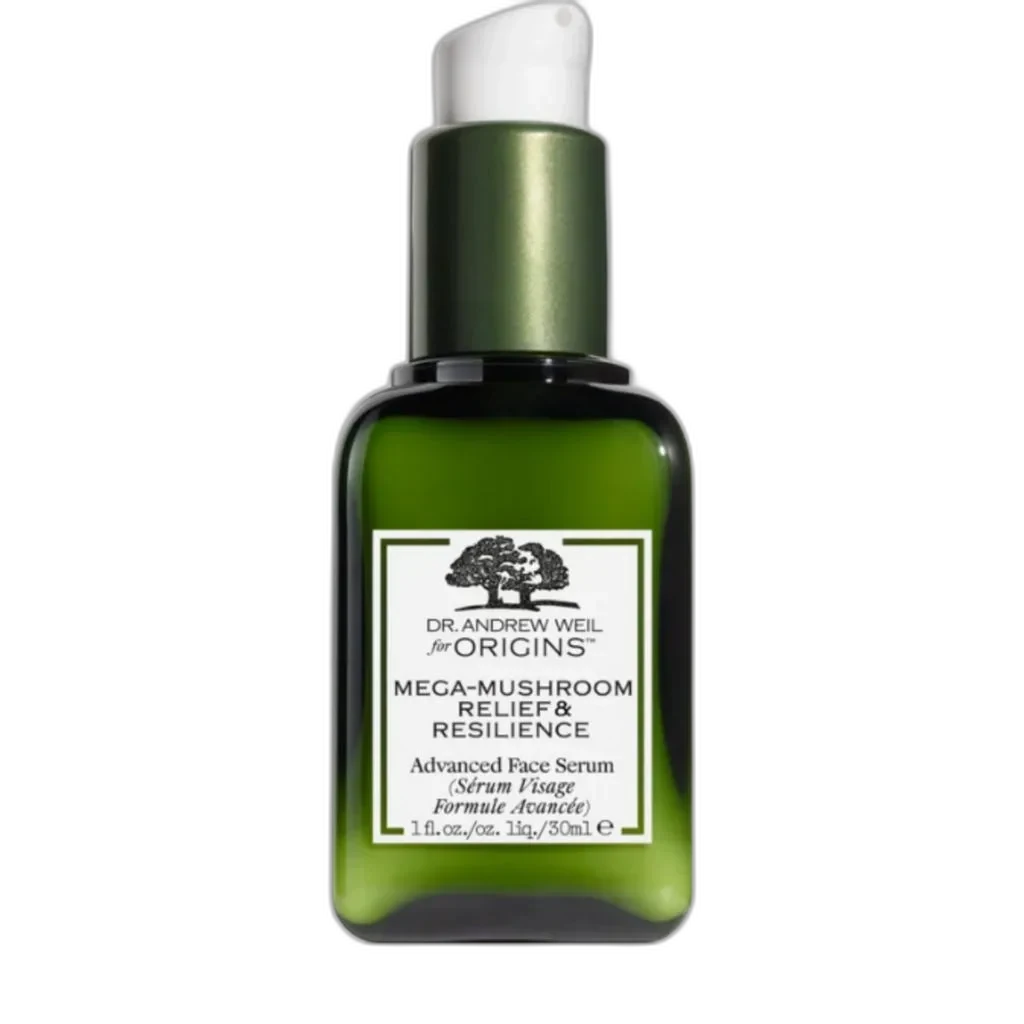
Mega-Mushroom Relief & Resilience Advanced Face Serum
Redness-Relief Powerhouse
 Verified reviewer
Pros & cons.
- +Triple-mushroom complex (reishi, chaga, cordyceps) provides a genuinely unique multi-pathway anti-inflammatory approach
- +Turmeric, ginger, and sea buckthorn add independently proven anti-inflammatory and antioxidant support
- +Oil-serum base delivers actives effectively while providing barrier-repair emollients
- +Visible redness reduction reported by many users after the first application
- +Co-developed with Dr. Andrew Weil, lending integrative medicine credibility to the formula
- +Cholesterol, linoleic acid, and phytosterols actively support skin barrier reconstruction
- −Six essential oils and four fragrance allergens in a serum marketed for sensitive skin is contradictory
- −At $69 for 1.7 oz, the price is high for ingredients with less clinical data than mainstream alternatives
- −Oil-rich texture may feel too heavy for oily or acne-prone skin types
- −Mushroom extract skincare research is emerging — less validated than centella or niacinamide
- −Contains olive fruit oil which can be comedogenic for some users
The full review.
The Origins and Dr. Andrew Weil partnership is an unusual prestige beauty collaboration. Weil, a Harvard-trained physician and face of integrative medicine, brought his interest in adaptogenic mushrooms to a botanical-focused brand. This created the Mega-Mushroom line, with this Advanced Face Serum acting as its most concentrated version. The product relies on the premise that mushrooms treat irritated skin as they have treated stressed bodies in traditional medicine for centuries.
The formula’s core mushroom trinity is distinctive. Ganoderma lucidum — reishi, known in traditional Chinese medicine as the mushroom of immortality — provides beta-glucans and ganoderic acids, which have documented anti-inflammatory activity. Fuscoporia obliqua — chaga — has one of the highest antioxidant concentrations of any natural source, based on its ORAC value. Cordyceps sinensis adds adaptogenic properties linked to cellular energy and oxygen metabolism. Together, these three mushroom extracts form a multi-pathway anti-inflammatory and antioxidant complex that no other major skincare line replicates.
The supporting botanicals are also notable. Curcuma longa (turmeric) delivers curcumin, a highly studied natural anti-inflammatory compound that inhibits NF-kB signaling — a key inflammatory pathway in skin. Zingiber officinale (ginger), a relative of turmeric, provides gingerols with complementary anti-inflammatory and antioxidant action. Hippophae rhamnoides (sea buckthorn) adds omega-7 fatty acids, carotenoids, and flavonoids with proven anti-inflammatory activity. Ocimum sanctum (holy basil) adds another adaptogenic layer.
The vehicle is an oil-serum base of jojoba seed oil, olive fruit oil, shea butter, and mango seed butter. This base is thicker than the aqueous serums common in the market. This lipid-rich base helps the mushroom and botanical extracts penetrate the skin barrier more effectively while providing barrier-repair emollients. Cholesterol, linoleic acid, and phytosterols reinforce this barrier support. Sodium hyaluronate adds humectant hydration beneath the lipid layer.
The skin experience is immediate. The golden-tinted serum feels between a traditional serum and a facial oil — silky, not greasy, with enough slip to massage into the skin without tugging. It absorbs within minutes and leaves a subtle dewy finish. The herbal-earthy scent from patchouli, lavender, and frankincense is either calming or medicinal depending on the user. It is an experience product designed to make application feel as therapeutic as the ingredients.
Redness reduction is the main claim, and it works for many users. Skin reactive to weather, harsh products, or hormonal fluctuations often shows visible calming after one application. Over weeks, the cumulative anti-inflammatory support builds a more resilient baseline — skin that flares less and recovers faster. The clinical claim that 87% of participants reported less dull skin after one use is plausible due to the immediate emollient and anti-inflammatory action.
The essential oil paradox is a major issue. A serum marketed for sensitive, redness-prone skin contains six essential oils and four identified fragrance allergens (limonene, linalool, geraniol, citronellol). This is a significant concern. Lavender oil and citrus oils are established contact sensitizers that can trigger the inflammation this product aims to calm. For users with cosmetic sensitivity — reacting to weather but not fragrance — this may not matter. For clinically sensitive skin, rosacea, or fragrance allergy, these essential oils risk worsening the condition.
Origins uses these oils for the aromatherapeutic experience, and the herbal scent does add to the ritual’s calming quality. However, prioritizing sensory experience over clinical suitability in a sensitive-skin product is questionable, especially since the mushroom and botanical actives are strong enough to work alone.
At sixty-nine dollars for 1.7 ounces, this is a premium investment. Mushroom research is promising but younger than ingredients like niacinamide or centella asiatica, which have decades of clinical data. You pay for a unique approach to skin soothing that no other major brand replicates at this level of botanical complexity. Whether this justifies the price depends on your skin’s response to the mushrooms and your tolerance for essential oils.
Formula
Ingredient analysis.
Full INCI list
Water/Aqua/Eau, Simmondsia Chinensis (Jojoba) Seed Oil, Glycerin, Olea Europaea (Olive) Fruit Oil, Caprylic/Capric/Myristic/Stearic Triglyceride, Hydrogenated Lecithin, Butyrospermum Parkii (Shea Butter), Citrus Aurantium Dulcis (Orange) Oil, Lavandula Angustifolia (Lavender) Oil, Pogostemon Cablin (Patchouli) Oil, Citrus Nobilis (Mandarin Orange) Peel Oil, Pelargonium Graveolens Flower Oil, Boswellia Carterii (Olibanum) Oil, Geraniol, Linalool, Citronellol, Limonene, Hippophae Rhamnoides Extract, Ganoderma Lucidum (Reishi Mushroom) Extract, Ocimum Sanctum Leaf Extract, Zingiber Officinale (Ginger) Root Extract, Curcuma Longa (Turmeric) Root Extract, Cordyceps Sinensis Extract, Mangifera Indica (Mango) Leaf Extract, Oenothera Biennis (Evening Primrose) Oil, Helianthus Annuus (Sunflower) Seed Oil, Citrus Grandis (Grapefruit) Peel Extract, Rosmarinus Officinalis (Rosemary) Leaf Extract, Silybum Marianum Fruit Extract, Mangifera Indica (Mango) Seed Butter, Yeast Extract/Faex/Extrait De Levure, Cholesterol, Linoleic Acid, Dimethicone, Sodium Hyaluronate, Butylene Glycol, Squalane, Hordeum Vulgare (Barley) Extract, Triticum Vulgare (Wheat) Germ Extract, Elaeis Guineensis (Palm) Oil, Tocotrienols, Cellulose, Xanthan Gum, Fuscoporia Obliqua Extract, Tocopherol, Squalene, Phytosterols, Sodium Hydroxide, Magnesium Aluminum Silicate, Sorbic Acid, Chlorphenesin, Phenoxyethanol
Skin match.
The science.
The Science
Ganoderma lucidum (reishi) contains bioactive polysaccharides — mostly beta-glucans — and triterpenes called ganoderic acids. A 2012 study in BMC Complementary and Alternative Medicine shows reishi extract inhibits cyclooxygenase-2 (COX-2) expression and suppresses inflammatory cytokine release in cellular models. Topically, these beta-glucans form a film on the skin surface to retain moisture and protect against environmental insult.
Fuscoporia obliqua (chaga) has high concentrations of melanin and betulinic acid. In-vitro studies show chaga extract has high free radical scavenging activity, with ORAC values exceeding most known natural sources. Research in the Journal of Ethnopharmacology (2011) confirms chaga modulates immune responses and reduces oxidative stress markers.
Curcumin from Curcuma longa is a widely studied natural anti-inflammatory compound. A 2016 review in the Journal of Medicinal Food shows curcumin inhibits NF-kB — a transcription factor central to inflammatory gene expression. Controlled studies show topical curcumin reduces erythema and improves skin barrier function.
Sea buckthorn (Hippophae rhamnoides) provides palmitoleic acid (omega-7), which supports skin barrier integrity and wound healing, per research in the Journal of Ethnopharmacology. The extract also provides superoxide dismutase activity that complements the antioxidant action of the mushroom complex.
The lipid-rich vehicle — jojoba oil, shea butter, cholesterol, linoleic acid, phytosterols — mirrors the composition of the stratum corneum intercellular lipids. Research by Elias and colleagues shows topical application of these barrier lipids accelerates recovery from barrier disruption. This matters for sensitive and redness-prone skin where barrier function is often compromised.
Dermatologist Perspective
Board-certified dermatologists see growing evidence for mushroom-derived ingredients in topical skincare, especially reishi's beta-glucans for anti-inflammatory activity. However, dermatologists note clinical evidence for topical mushroom extracts is less robust than for established soothing ingredients like centella asiatica, niacinamide, or azelaic acid. The essential oil content is the primary concern dermatologists raise — for patients with diagnosed rosacea or contact dermatitis, the fragrance allergens risk exacerbating the symptoms the product targets. Dermatologists typically recommend patch testing and suggest patients with clinically sensitive skin may prefer fragrance-free soothing serums with more extensively validated ingredients.
Where it fits in your routine.
Cleanse and tone first. Press 2-3 drops into palms and press onto the face, targeting redness. Let it absorb for 1-2 minutes before applying moisturizer. Use morning and evening. In the AM, follow with moisturizer and SPF. Mix with moisturizer to dilute the application. For localized redness, apply an extra drop directly to affected areas.
At $69 for 1.7 oz, this serum is a premium option. A 1 oz size costs less for those who want to trial it. Using it twice daily makes the full size last about 2-3 months. The ingredients are high quality; the triple-mushroom complex, turmeric, sea buckthorn, and barrier-repair lipids create a comprehensive formulation. However, niacinamide or centella asiatica serums cost less and reduce redness similarly. The value is highest for users who find mushroom-based skincare works for their sensitivity and value the integrated Dr. Weil wellness approach.
This serum works for stress-reactive skin, seasonal sensitivity, or environmental redness seeking botanical alternatives to standard soothing ingredients. If you use integrative medicine principles, enjoy aromatherapeutic skincare, and your skin tolerates essential oils, the Mega-Mushroom Serum offers a unique, effective calming routine.
Skip this if you have a clinically diagnosed fragrance allergy or contact dermatitis — the six essential oils and four fragrance allergens pose a risk. Avoid this if you have oily, acne-prone skin (the oil-rich base can cause breakouts) or if you prefer serums with transparent, well-established active concentrations over botanical-blend approaches.
Product details.
This lightweight oil-serum hybrid has a silky, slightly golden-tinted consistency. It absorbs well without a heavy residue.
Earthy-herbal notes of patchouli, lavender, and frankincense create a grounding, aromatherapeutic scent.
Frosted glass bottle with dropper, available in 1 oz and 1.7 oz sizes
The first drop shows an oil-serum texture that feels thicker than typical serums but absorbs well. The herbal scent is strong and grounding. Skin looks calmer and more hydrated immediately. Users with visible redness often report a noticeable reduction after the first application. No adjustment period is needed.
2-3 months with twice-daily use (1.7 oz size)
12 months
All Year
The backstory.
The Mega-Mushroom line was born from a collaboration between Origins and Dr. Andrew Weil, the integrative medicine physician known for his work on the body's natural healing capacity. Weil's interest in adaptogenic mushrooms — particularly reishi, which has centuries of use in traditional Chinese medicine — led to a skincare line that brings functional mushroom science to prestige beauty. The Advanced Face Serum is the flagship product, representing the most concentrated expression of the mushroom complex.
About Origins
Leonard Lauder founded Origins in 1990 under The Estee Lauder Companies. The Mega-Mushroom line comes from a co-development with integrative medicine pioneer Dr. Andrew Weil. It is the brand's most science-forward franchise and combines adaptogenic mushroom extracts with traditional botanical medicine.
Common myths.
Adaptogenic mushroom skincare works like mushroom supplements.
Internal adaptogens affect the body via the immune and endocrine systems. Topical mushroom extracts work locally on skin cells using different mechanisms — mainly the anti-inflammatory and antioxidant properties of beta-glucans and triterpenes. They do not 'adapt' the skin like internal adaptogens modulate stress responses.
Essential oils in a soothing serum use aromatherapy to increase the calming effect.
The aromatherapeutic scent may help you relax, but the essential oils (lavender, patchouli, citrus) contain fragrance allergens that trigger skin irritation in sensitive individuals. Mushroom extracts and turmeric provide the soothing benefits, not the fragrance. Fragrance-free alternatives work better for clinically sensitive skin.
FAQ.
Is Origins Mega-Mushroom Serum good for rosacea?
The anti-inflammatory mushroom complex and turmeric calm rosacea-related redness. However, the formula contains essential oils and multiple fragrance allergens that trigger rosacea flares in some patients. If you have rosacea, patch test first and decide if a fragrance-free alternative is safer for long-term use.
Can I use Origins Mega-Mushroom Serum with retinol?
Yes — this serum pairs well with retinol. It provides soothing and barrier-support benefits that buffer retinol irritation. Apply the Mega-Mushroom Serum first, let it absorb, then apply your retinol treatment. The anti-inflammatory properties help mitigate retinol-associated redness and dryness.
Why does Origins Mega-Mushroom Serum contain essential oils if it's for sensitive skin?
This criticism is valid. Essential oils provide the serum's aromatherapeutic experience and the Origins brand identity, but they add fragrance allergens that irritate sensitive skin. Mushroom extracts and anti-inflammatory botanicals provide the soothing benefits, not the essential oils.
What's the difference between the serum and the treatment lotion in the Mega-Mushroom line?
The Advanced Face Serum has a thicker, oil-serum texture for targeted treatment. The Soothing Treatment Lotion is lighter and more hydrating, acting as a liquid moisturizer. Many users layer the Soothing Treatment Lotion first and the Advanced Face Serum on top for maximum benefit.
Is the Mega-Mushroom Serum worth the price?
At $69 for 1.7 oz, this is a premium investment. The mushroom extract research shows promise and the botanical complex is comprehensive. If you want to reduce redness, centella asiatica or niacinamide options offer proven results for less. The Mega-Mushroom Serum works best for users who respond to its mushroom-adaptogen approach.
What the community says.
"Visibly reduces redness and calms irritated skin quickly"
"Rich, nourishing texture without feeling heavy or greasy"
"Skin looks healthier and more resilient with regular use"
"Pleasant herbal-earthy scent from the essential oil blend"
"Works well as a barrier-repair treatment during seasonal transitions"
"Contains multiple essential oils — contradictory for a sensitive-skin product"
"At $69 for 1.7 oz, the price is steep for the evidence level of mushroom extracts"
"Oil-rich formula may be too heavy for oily or acne-prone skin"
"Mushroom extract research is promising but less established than ingredients like niacinamide"
"Four fragrance allergens present in a serum marketed for redness-prone skin"
People also looked at.