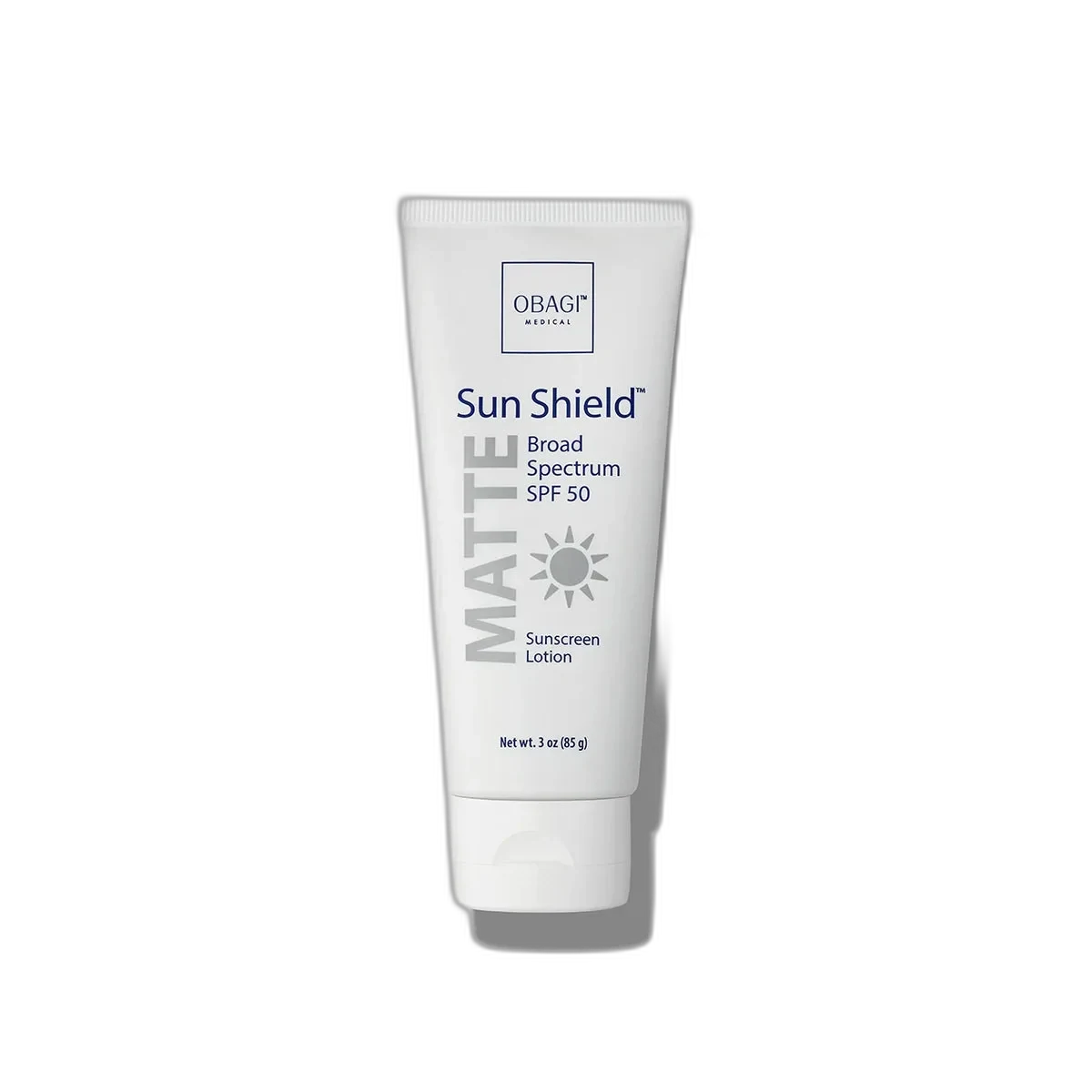
Sun Shield Matte Broad Spectrum SPF 50
Matte Finish Oil Control SPF
 Verified reviewer
Pros & cons.
- +Genuinely matte velvety finish that controls oil for 4-6 hours without touchups
- +No white cast despite 10.5% zinc oxide thanks to the hybrid filter system
- +SPF 50 broad-spectrum protection suitable for use with photosensitizing active ingredients
- +Non-comedogenic formula sits well under makeup without pilling or separation
- +Tetrahexyldecyl ascorbate adds antioxidant support to complement UV protection
- +Squalane provides lightweight moisture without contributing to shine
- −Contains methylisothiazolinone a preservative flagged as a significant contact allergen
- −Lower user ratings than typical Obagi products with reports of allergic reactions
- −Octinoxate has been banned in several jurisdictions for coral reef concerns
- −Can feel drying on already-dry skin types due to the aggressive matte finish
- −Formula has not been updated to remove the controversial MI preservative
Ingredient analysis.
Full INCI list
Active Ingredients: Zinc Oxide 10.5%, Octinoxate 7.5%. Inactive Ingredients: 1,2-Hexanediol, Caprylyl Glycol, Ceteareth-20, Cetearyl Alcohol, Chlorphenesin, Citric Acid, Cyclopentasiloxane, Dimethicone, Dimethicone Crosspolymer-3, Disodium EDTA, Glycerin, Hydrogenated Palm Glycerides, Hydroxyethyl Acrylate/Sodium Acryloyldimethyl Taurate Copolymer, Methylisothiazolinone, PEG-40 Stearate, Pentylene Glycol, Phenoxyethanol, Phenyl Trimethicone, Polysilicone-11, Polysorbate 60, Potassium Sorbate, Sodium Benzoate, Sodium Dihydroxycetyl Phosphate, Sodium Polyacrylate, Squalane, Stearyl Alcohol, Tetrahexyldecyl Ascorbate, Tropolone, Water, Xanthan Gum.
Skin match.
The science.
The Science
The hybrid UV filter system in this sunscreen combines zinc oxide (mineral/physical) and octinoxate (chemical/organic) for complementary UVA and UVB protection. Zinc oxide provides broad-spectrum coverage, absorbing and reflecting UV radiation across both UVA and UVB ranges, with particular strength in the UVA spectrum. A study published in the Journal of the American Academy of Dermatology (2004) established zinc oxide as one of the most photostable mineral UV filters available.
Octinoxate (ethylhexyl methoxycinnamate) is an efficient UVB absorber that has been used in sunscreen formulations for decades. While effective at preventing sunburn, research published in Environmental Science & Technology (2016) has documented octinoxate's potential to contribute to coral reef bleaching, leading to regulatory restrictions in several jurisdictions.
The inclusion of tetrahexyldecyl ascorbate — an oil-soluble vitamin C derivative — adds antioxidant protection that complements the UV filters. Research published in Photodermatology, Photoimmunology & Photomedicine (2005) has demonstrated that topical antioxidants provide synergistic photoprotection when combined with UV filters, neutralizing the free radicals that UV exposure generates even when the sunscreen is working effectively.
The methylisothiazolinone (MI) preservative warrants specific scientific discussion. A landmark position statement by the European Scientific Committee on Consumer Safety (SCCS, 2013) concluded that MI at concentrations commonly used in cosmetics is not safe for use in leave-on products due to high rates of contact sensitization. The American Contact Dermatitis Society named MI its Allergen of the Year in 2013, and subsequent epidemiological studies published in Contact Dermatitis have documented rising rates of MI sensitization across populations.
Dermatologist Perspective
Board-certified dermatologists recognize the Sun Shield Matte as an effective broad-spectrum sunscreen with a cosmetically elegant matte finish that promotes daily compliance among oily-skinned patients. However, many dermatologists express concern about the methylisothiazolinone inclusion, noting that MI sensitization has become increasingly common and that leave-on products containing MI are no longer recommended by European dermatological guidelines. Dermatologists who dispense this product typically advise patients to discontinue immediately at any sign of irritation and offer alternative matte sunscreens from brands that have moved to MI-free preservative systems.
Where it fits in your routine.
Apply a generous amount to your face, neck, and exposed areas as the last step in your morning skincare routine. Use about a nickel-sized amount for the face alone — most people underapply sunscreen. Wait 15 minutes before sun exposure. Reapply every 2 hours during prolonged outdoor activity, or immediately after swimming or sweating. The matte finish works well as a primer base for makeup application.
At $59 for 3 oz, the Sun Shield Matte has a competitive price for clinical sunscreens. The 3-oz tube lasts about 2-3 months with daily use, so the monthly cost is roughly $20-30. The hybrid filter system, matte finish technology, and vitamin C antioxidant support add formulation value. However, the MI preservative controversy may cause consumers to stop using the product if sensitization occurs.
This sunscreen works for oily or combination skin types that dislike the greasy finish of most high-SPF sunscreens. If you want a matte sunscreen that controls shine and sits well under makeup, and you have no history of preservative sensitivity, the Sun Shield Matte performs well on texture and protection.
People with contact dermatitis, preservative sensitivity, or reactive skin should avoid this product because it contains methylisothiazolinone. Those seeking reef-safe sunscreens need octinoxate-free options. The matte finish dries out dry skin; these users should choose a hydrating sunscreen instead.
Product details.
All Year Certifications Non-comedogenicDermatologist-tested
The backstory.
The Sun Shield Matte was developed to solve a specific complaint from Obagi's clinical patient base: patients using aggressive active treatments (retinoids, AHAs, vitamin C) needed daily SPF 50 protection but could not tolerate the greasy, shiny residues of most high-SPF sunscreens. The matte formula was designed to complement Obagi's treatment products while giving oily-skinned patients a sunscreen they would actually want to wear.
About Obagi
Legacy Brand (20+ years)Board-certified dermatologist Dr. Zein Obagi founded Obagi Medical in 1988. The Sun Shield line provides daily sun protection in dermatology offices and complements Obagi's active treatment products.
Common myths.
Matte sunscreens offer less UV protection than shiny or greasy ones.
Silicone microspheres create the matte finish by absorbing excess oil and diffusing light; this does not change the UV filters' protective capacity. The zinc oxide and octinoxate provide the same SPF 50 protection regardless of the texture.
Hybrid sunscreens (mineral + chemical) outperform pure mineral sunscreens.
Hybrid formulas provide elegant textures at high SPF levels. This makes daily use more likely—and the best sunscreen is the one you actually wear. However, hybrid formulas do not work for those seeking purely mineral protection (reef-safe, chemical-filter-free).
FAQ.
Does Obagi Sun Shield Matte leave a white cast?
No — even with 10.5% zinc oxide, the hybrid formula uses octinoxate and silicone microspheres to create a blurred, matte finish without the white cast of pure mineral sunscreens. The formula is invisible on skin.
Why does Obagi Sun Shield Matte have low ratings on some sites?
The formula contains methylisothiazolinone (MI), a preservative the European Scientific Committee on Consumer Safety and the American Contact Dermatitis Society identify as a contact allergen. Some users get allergic reactions like itching, redness, and irritation. Stop use immediately if irritation occurs.
Is Obagi Sun Shield Matte reef-safe?
No. The formula contains octinoxate (ethylhexyl methoxycinnamate). Hawaii, Palau, and several other jurisdictions banned this ingredient because it impacts coral reef ecosystems. If you want reef-safe sunscreen, use a pure zinc oxide formula.
Can I use this sunscreen with retinol?
Yes, and this is one of its intended uses. The SPF 50 broad-spectrum protection provides the daily UV defense required when using photosensitizing active ingredients like retinol, AHAs, and vitamin C. Apply the sunscreen as your final morning step after your retinol-compatible morning products.
How often should I reapply Obagi Sun Shield Matte?
Reapply every 2 hours during prolonged sun exposure, or right after swimming or heavy sweating. For typical indoor/commuter use, one morning application protects most of the day, but midday reapplication is ideal for maximum protection.
What the community says.
"Excellent matte finish that genuinely controls oil throughout the day"
"No white cast despite containing zinc oxide"
"Sits beautifully under makeup without pilling"
"SPF 50 broad-spectrum protection provides strong daily defense"
"Causes allergic reactions and irritation in some users likely due to methylisothiazolinone"
"Contains octinoxate which has been banned in some reef-protection jurisdictions"
"Can feel drying on already-dry skin types"
"Lower rating than most Obagi products suggests formula concerns"
People also looked at.