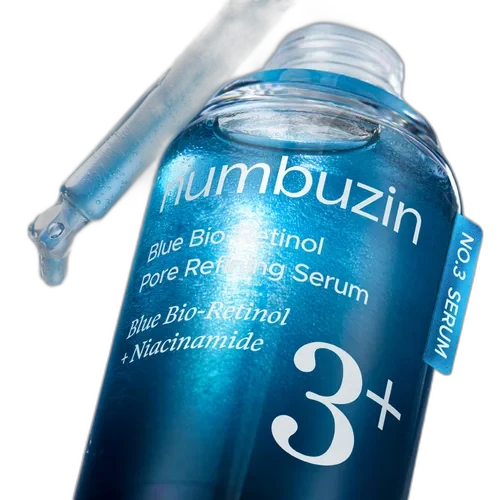
No. 3 Blue Bio-Retinol Pore Refining Serum
Gentle Retinol Gateway
 Verified reviewer
Pros & cons.
- +Triple-action pore refinement combining 10% niacinamide, encapsulated retinol, and copper peptide
- +Virtually zero irritation reported even by first-time retinol users thanks to slow-release encapsulation
- +Fragrance-free and alcohol-free formula suitable for reactive skin types
- +Lightweight texture absorbs instantly without pilling or interfering with subsequent product layers
- +Visible oil control and pore smoothing within the first week of consistent use
- +Novel phyto-exosome delivery system signals advanced formulation thinking at an accessible price
- −30 mL bottle lasts only 6-8 weeks with nightly use, requiring frequent repurchase
- −Retinol concentration not disclosed, making it difficult to gauge potency for experienced users
- −Results more subtle than prescription retinoids or high-concentration OTC retinol for advanced users
- −Slight film-like finish from gum-based tightening agents may bother texture-sensitive users
- −Not suitable for use during pregnancy due to retinol content
The full review.
For a decade, Korean skincare has focused on gentleness—barrier repair creams, centella serums, and snail mucin essences. This philosophy heals and hydrates skin damaged by active-heavy routines. When a K-beauty brand makes a retinol serum, they promise results without the usual peeling, purging, or redness.
Numbuzin’s No. 3 Blue Bio-Retinol Pore Refining Serum attempts this, and the execution is thoughtful. The retinol is encapsulated in a lipid delivery system stabilized by hydrogenated lecithin and cholesterol to create a slow-release mechanism. It is like sipping espresso over an hour instead of chugging it; the caffeine is the same, but the experience differs. This encapsulation allows users to report virtually zero irritation even on the first night, which is notable for a product listing actual retinol on its INCI.
But niacinamide is the star here, listed second at a 10% concentration. At this level, niacinamide regulates sebum to prevent oil from stretching pores, inhibits melanin transfer for brightening, and strengthens the barrier to help skin tolerate the retinol. Research for 10% niacinamide and pore appearance is robust in cosmetic dermatology. In this formula, niacinamide handles visible pore refinement while the retinol works on long-term collagen stimulation and cell turnover.
The formula also contains 0.2% salicylic acid, a maintenance dose rather than a treatment concentration. At this level, it provides gentle, ongoing pore-clearing by loosening sebum plugs and dead cells without the dryness or irritation of higher BHA concentrations. It acts like a background housekeeper rather than a deep-cleaning crew. Combined with niacinamide’s oil control and the retinol’s turnover acceleration, this BHA concentration contributes to pore refinement.
The ingredient that ages best is copper tripeptide-1. This signaling peptide stimulates collagen and elastin production to work on the structural scaffolding around pores. While niacinamide handles surface appearance and retinol works on cell turnover, copper tripeptide-1 addresses why pores look enlarged: the collagen framework loosens with age and UV damage. It is the long-game ingredient in a formula where every active has a different timeline.
The phyto-exosome technology is worth noting. Numbuzin includes centella asiatica extract and centella-derived extracellular vesicles—tiny lipid-enclosed particles from plant cell culture that act as delivery vehicles. The concept is scientifically legitimate; exosome-mediated delivery shows promise in drug research for crossing biological barriers. Whether these concentrations provide a clinical advantage over traditional centella extract is unverified, but the inclusion shows a formulator using modern delivery science.
The serum is a lightweight, slightly viscous liquid that absorbs within seconds. It has no stickiness, no residue, and no color transfer despite the faint blue tint in the bottle. A subtle tightening sensation occurs as it dries—not uncomfortable, just noticeable—likely from gellan gum and sclerotium gum creating a temporary film that makes pores look immediately refined. This cosmetic effect provides immediate results while the actives work over weeks.
The texture layers easily. It disappears under a ceramide moisturizer. This is a PM-only product because retinol and sunlight do not mix, and the brand correctly positions it for evening use. After regular use, skin looks smoother and more refined, with niacinamide’s oil-control benefits lasting into the afternoon.
The bottle size is a limitation. Thirty milliliters of a nightly serum lasts roughly six to eight weeks at 2-3 drops per application. At $23, the per-use cost is reasonable, but the refill frequency affects your budget. The retinol concentration is not disclosed, which is common in K-beauty but makes direct comparison difficult. Because users report near-universal zero irritation, the concentration is likely low—effective for beginners but potentially underwhelming for users accustomed to 0.5% or higher.
Botanical extracts at the end of the list—eggplant fruit extract, turmeric root extract, and neem flower extract—are likely trace concentrations that act as formulation flourishes rather than functional additions. They are not harmful, but they do not drive the serum’s efficacy.
This serum works because pore refinement is not a single-ingredient problem. Pores enlarge due to excess sebum (niacinamide), debris (salicylic acid), slow cell turnover (retinol), and structural collagen loss (copper peptide). Addressing these four mechanisms at gentle concentrations while using a slow-release capsule for the most aggressive active shows formulation intelligence rather than simple ingredient stacking.
Formula
Ingredient analysis.
Full INCI list
Water, Niacinamide, Butylene Glycol, Propanediol, Glycerin, Dipropylene Glycol, Pentylene Glycol, Glyceryl Glucoside, 1,2-Hexanediol, Caprylic/Capric Triglyceride, Glycereth-26, C12-14 Alketh-12, Polysorbate 20, Calcium Chloride, Salicylic Acid, Hydrolyzed Collagen, Gellan Gum, Honokiol, Panthenol, PPG-13-Decyltetradeceth-24, Hydrolyzed Sclerotium Gum, Chlorella Vulgaris Extract, Sodium Citrate, Centella Asiatica Extract, Glucose, Gardenia Florida Fruit Extract, Adenosine, Acacia Senegal Gum, Citric Acid, Panax Ginseng Adventitious Root Extracellular Vesicles, Dextrin, Lecithin, Cynanchum Atratum Extract, Silica, Centella Asiatica Callus Extracellular Vesicles, Ethylhexylglycerin, Macadamia Ternifolia Seed Oil, Retinol, Hydrogenated Lecithin, Althaea Rosea Flower Extract, Brassica Campestris (Rapeseed) Sterols, Glycine, Cholesterol, Polyglyceryl-10 Laurate, Phytosteryl/Behenyl/Octyldodecyl Lauroyl Glutamate, Tocopheryl Acetate, Aluminum/Magnesium Hydroxide Stearate, Pentaerythrityl Tetra-Di-T-Butyl Hydroxyhydrocinnamate, Potassium Cetyl Phosphate, Glycine Soja (Soybean) Oil, Diethylhexyl Syringylidenemalonate, Tocopherol, Tris(Tetramethylhydroxypiperidinol) Citrate, Copper Tripeptide-1, Hydroxyethylcellulose, Melia Azadirachta Flower Extract, Coccinia Indica Fruit Extract, Melia Azadirachta Leaf Extract, Aloe Barbadensis Flower Extract, Solanum Melongena (Eggplant) Fruit Extract, Ocimum Sanctum Leaf Extract, Corallina Officinalis Extract, Curcuma Longa (Turmeric) Root Extract
Skin match.
The science.
The Science
This serum uses four mechanisms to refine pores, each supported by varying clinical evidence.
Niacinamide at 10% uses strong research to improve pore appearance. A 2006 study in the International Journal of Cosmetic Science shows 2% topical niacinamide reduces sebum excretion rate over four weeks, while a Japanese study in the British Journal of Dermatology shows 5% niacinamide improves pore appearance. At 10%, this formula exceeds concentrations in most clinical trials, though evidence shows diminishing returns above 5% for some endpoints.
The encapsulated retinol delivery system uses lipid vesicles (hydrogenated lecithin and cholesterol) to create artificial cell membranes around the retinol molecule. This delays retinol's conversion to retinoic acid at the skin surface, lowering the peak concentration that causes irritation and extending active delivery. Research in the International Journal of Pharmaceutics shows liposomal encapsulation of retinol improves stability and skin tolerability while maintaining efficacy.
Copper tripeptide-1 (GHK-Cu) has studied wound-healing and collagen-stimulating properties. A 2018 review in Molecules documented GHK-Cu's ability to promote dermal fibroblast proliferation and stimulate collagen and glycosaminoglycan synthesis. For pore refinement, this structural strengthening of the peripore dermis addresses the cause of age-related pore enlargement: the loss of collagen scaffolding that lets pore walls sag.
Salicylic acid at 0.2% is below the 0.5-2% therapeutic concentration used in clinical studies for acne and comedone reduction. At this concentration, it provides mild keratolytic action in pores—enough for maintenance exfoliation but unlikely to produce the dramatic comedolytic effects of higher concentrations.
The centella asiatica extracellular vesicles use emerging technology. Research in the Journal of Extracellular Vesicles shows plant-source extracellular vesicles (EVs) can cross biological barriers as drug delivery systems. However, data on centella-specific EVs in cosmetics remains limited.
References
- The effect of niacinamide on reducing cutaneous pigmentation and suppression of melanosome transfer — British Journal of Dermatology (2002)
- GHK Peptide as a Natural Modulator of Multiple Cellular Pathways in Skin Regeneration — Molecules (2018)
Dermatologist Perspective
Board-certified dermatologists would see this as a well-considered entry-level retinol product that minimizes the barrier to retinoid use. The encapsulated retinol delivery system addresses the main retinol complaint—irritation—while the 10% niacinamide provides the evidence-based pore refinement dermatologists routinely recommend. Dermatologists would note this serum fits patients new to retinoids or those with mild pore concerns; experienced retinoid users seeking stronger anti-aging effects may need higher concentrations or prescription retinoids. The copper tripeptide-1 adds a collagen-stimulating dimension dermatologists would appreciate, though they would likely caution that the undisclosed retinol concentration makes individual results hard to predict.
Where it fits in your routine.
Apply 2-3 drops to fingertips after evening cleansing and toning. Pat onto the face, focusing on the T-zone, cheeks, and pore-prone areas. Avoid the immediate eye area. Follow with a moisturizer—ideally a ceramide-based one to support barrier health during retinol use. Retinol beginners should use it every other night for the first two weeks, then move to nightly use if no irritation occurs. Always apply broad-spectrum SPF 30 or higher the next morning.
At about $23 for 30 mL, this serum has a high concentration of actives per dollar — 10% niacinamide, encapsulated retinol, copper peptide, and BHA in one product. Each use costs roughly $0.35-0.50 per night, but the 6-8 week lifespan increases long-term costs. For an emerging K-beauty brand, the price competes with the ingredient complexity, specifically the phyto-exosome technology. The absence of a larger size limits value. The price-to-performance ratio is strong for a retinol introduction or a standalone pore-refining serum.
Use this for visible pore refinement and oil control without the harsh initiation period of traditional retinol products. It works for retinol beginners, oily and combination skin types with enlarged pores, and K-beauty enthusiasts seeking a multi-active treatment serum.
Avoid this if pregnant or nursing due to the retinol content. Experienced retinoid users seeking aggressive anti-aging results may find the concentration insufficient. Very dry skin types may need extra hydrating layers because the formula optimizes for oil control instead of moisture delivery.
Product details.
This lightweight, water-based serum has a slightly viscous consistency. It absorbs quickly and feels slightly tight on the skin. It leaves a smooth, thin film instead of a dewy or oily finish.
No added fragrance. Active ingredients have a faint neutral scent that dissipates immediately upon application.
Numbuzin's numbered minimalist design uses a frosted glass dropper bottle. The dropper controls precise dispensing amounts. The dark or opaque bottle protects light-sensitive retinol from degradation.
The serum feels lightweight and comfortable on first use. It lacks the tingling or burning common in stronger retinol products. A subtle tightening sensation starts within minutes. Most users see smoother skin texture during the first week. If you are new to retinol, use it every other night for the first two weeks before moving to nightly use.
1. 5-2 months with nightly use (2-3 drops per application)
6 months
All Year
The backstory.
Part of Numbuzin's No. 3 line, which focuses on pore care and skin refining. The Blue Bio-Retinol formulation represents the brand's push into more sophisticated active ingredient territory, moving beyond their barrier-repair and cleansing roots. The 'blue' in the name refers to the product's slight blue tint from the bio-retinol complex, distinguishing it visually from standard retinol serums.
About Numbuzin
Emerging Brand (2–5 years)Numbuzin launched in 2019 as a K-beauty brand under Benow. It gained popularity via Olive Young and social media. The formulations use well-studied ingredients, but the brand lacks independent clinical data and relies on consumer validation and viral buzz.
Common myths.
Bio-retinol is a marketing term for plant-based retinol alternatives like bakuchiol.
This product contains real retinol (listed in the INCI) plus other actives. The 'bio-retinol' branding describes the encapsulation and delivery system that makes the retinol more bioavailable and gentle, not a plant-based substitute. You get genuine retinoid activity, not a retinol-free alternative.
Niacinamide and retinol cancel each other out; do not use them in the same product.
This debunked myth stems from a misunderstanding of a study on niacinamide and acidic pH. In a properly formulated product like this serum, niacinamide and retinol work synergistically. Niacinamide helps reduce retinol-induced irritation while both work on pore refinement.
What the community says.
"Remarkably gentle for a retinol product with zero irritation for most users"
"Visible pore refinement noticeable within the first week of use"
"Lightweight texture absorbs quickly without greasiness or pilling"
"Effective oil control throughout the day with consistent PM use"
"Beginner-friendly retinol introduction that delivers real results"
"30 mL bottle runs out quickly for a nightly-use serum"
"Slight film-like finish from high niacinamide concentration"
"Results more subtle compared to stronger prescription retinoids"
"Could use more hydration for combination-dry skin types"
People also looked at.