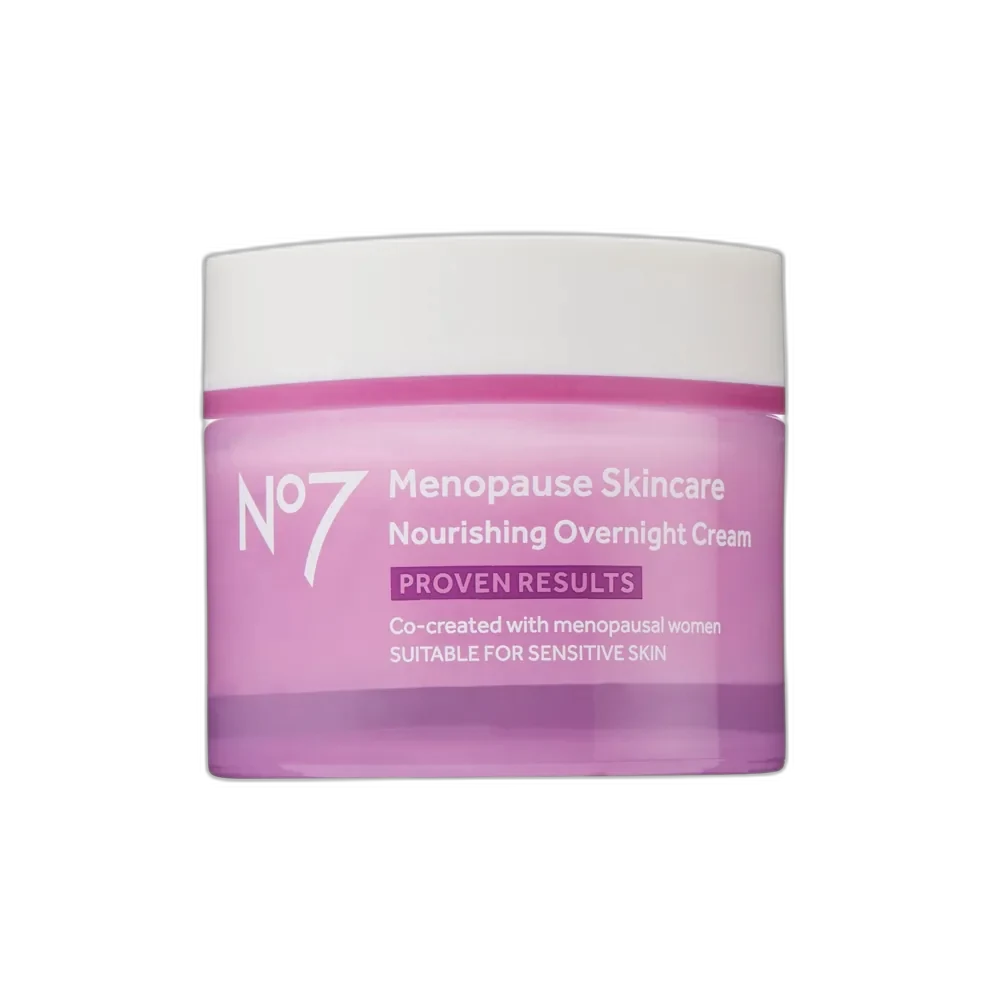
Menopause Skincare Protect & Hydrate Day Cream SPF 30
Menopause Skin Specialist
 Verified reviewer
Pros & cons.
- +Sphinganine ceramide precursor addresses the root cause of menopausal barrier weakness
- +SPF 30 broad spectrum built into a genuinely hydrating day cream saves a routine step
- +Niacinamide supports barrier function and helps with menopausal hyperpigmentation
- +Co-developed with input from 7,000+ menopausal women — not a token reformulation
- +Bisabolol and panthenol provide anti-inflammatory soothing for reactive skin
- +Stable vitamin C and green tea antioxidants complement the UV protection
- +Reasonable price at $27.99 for an SPF moisturizer with meaningful actives
- −Contains alcohol denat — questionable for a product targeting sensitized menopausal skin
- −Fragrance is a frustrating inclusion given the target demographic's increased reactivity
- −Chemical UV filters (particularly avobenzone) may sting already-sensitized skin
- −Jar packaging exposes the vitamin C and antioxidants to air degradation with each use
- −Only available in one size with no refill or travel options
The full review.
For decades, the skincare industry ignored a major gap. Women in menopause experience dramatic skin changes, yet they often receive the same anti-aging creams marketed to 30-year-olds. Menopause causes hormonal shifts that differ from gradual aging: estrogen decline drops ceramide production, thins the lipid barrier, accelerates collagen loss by roughly 30 percent in the first five postmenopausal years, and increases skin sensitivity. No7 addressed this in 2022.
The Menopause Skincare Protect & Hydrate Day Cream is a new type of product from a mainstream pharmacy brand. It targets the specific biology of menopausal skin rather than just the aesthetics of aging. No7 surveyed over 7,000 menopausal women to guide the development of this range, and the formula reflects that research.
The most notable ingredient is sphinganine, a ceramide precursor in the ingredient list. Most moisturizers use humectants and occlusives to pull in and seal water. Sphinganine works differently: it provides the building blocks skin cells need to synthesize their own ceramides. Since estrogen decline causes ceramide production to crash in menopausal skin, this addresses the root cause instead of just the symptom. This ingredient shows a formulation team that understands menopausal skin at a cellular level.
Niacinamide sits at position ten in the inactive ingredients, suggesting a meaningful concentration. Here, it strengthens the weakened barrier, helps even out hyperpigmentation, and supports natural moisture retention. It is a highly researched skincare active, and its inclusion is logical.
The SPF 30 protection uses four chemical UV filters: avobenzone, octinoxate, octisalate, and octocrylene. This provides broad spectrum UVA and UVB coverage, which is vital for menopausal skin that has lost natural photoprotective capacity. Built-in SPF offers daily convenience; many women find a streamlined morning regimen necessary due to menopause brain fog or changing routines.
Panthenol and ascorbyl glucoside complete the active profile—the former provides soothing hydration and barrier repair, while the latter offers stable antioxidant protection alongside the SPF. Bisabolol, derived from chamomile, adds anti-inflammatory calming for new sensitivities. Green tea extract adds polyphenol antioxidant protection. The formula is layered and considered.
This cream contains alcohol denat and fragrance. For a product designed for skin that is more reactive and sensitive during menopause, these are difficult to defend. The alcohol denat makes the cream feel lightweight and non-greasy, but it is a potential irritant in a formula meant to soothe sensitized skin. The fragrance is purely cosmetic. In No7’s testing with 7,000 women, the formula was well-tolerated, and most menopausal women may have no issues. However, for the subset with genuinely reactive skin, these ingredients are barriers to using a product that otherwise addresses their concerns.
The texture balances well for a daily cream with SPF—moisturizing without the heaviness of many sunscreens. It sets to a semi-matte finish that works under makeup. The chemical UV filters leave no significant white cast.
Value is reasonable at $27.99 for 50ml. Combining skincare actives and SPF 30 in one product saves money and time. Since many menopausal women buy separate moisturizer and sunscreen, consolidating them into one product with barrier-supportive ingredients is practical.
No7 deserves credit for taking menopause skincare seriously at the pharmacy level. The sphinganine and niacinamide target real biological mechanisms. The SPF 30 provides essential daily protection. However, the fragrance and alcohol denat feel like compromises for mass-market appeal over the needs of the most sensitive menopausal skin. For women with moderate menopausal skin changes and no severe reactivity, this is a well-formulated daily protector. For those with heightened sensitivity, a fragrance-free alternative is still needed.
Formula
Texture
The texture balances well for a daily cream with SPF—moisturizing without the heaviness of many sunscreens. It sets to a semi-matte finish that works under makeup. The chemical UV filters leave no significant white cast.
Value
Value is reasonable at $27.99 for 50ml. Combining skincare actives and SPF 30 in one product saves money and time. Since many menopausal women buy separate moisturizer and sunscreen, consolidating them into one product with barrier-supportive ingredients is practical.
Best for
For women with moderate menopausal skin changes and no severe reactivity, this is a well-formulated daily protector. For those with heightened sensitivity, a fragrance-free alternative is still needed.
Ingredient analysis.
Full INCI list
Active Ingredients: Avobenzone 3%, Octinoxate 0.5%, Octisalate 5%, Octocrylene 7.5%. Inactive Ingredients: Aqua (Water), C12-15 Alkyl Benzoate, Glycerin, Alcohol Denat., Tribehenin, Aluminum Starch Octenylsuccinate, Dimethicone, Cetearyl Glucoside, Ammonium Acryloyldimethyltaurate/VP Copolymer, Niacinamide, Phenoxyethanol, Potassium Cetyl Phosphate, Panthenol, Polysorbate 20, Tocopheryl Acetate, Parfum (Fragrance), Dimethiconol, Caprylyl Glycol, Ascorbyl Glucoside, Sodium Benzoate, Bisabolol, Xanthan Gum, Ethylhexylglycerin, Dipropylene Glycol, Citric Acid, Sphinganine, Simethicone, Tetrasodium EDTA, Potassium Hydroxide, T-Butyl Alcohol, Dimethylmethoxy Chromanol, Camellia Sinensis Leaf Extract, BHT
Skin match.
The science.
The Science
The formula's most interesting science is the use of sphinganine as a ceramide precursor. Declining estrogen during menopause reduces epidermal ceramide content and compromises the skin barrier. The Journal of Investigative Dermatology has documented how estrogen decline affects ceramide synthesis. Sphinganine, a sphingoid base, is a biosynthetic precursor to ceramides; the skin uses it to generate ceramides de novo via the ceramide synthase pathway. This method differs from applying preformed ceramides and helps menopausal skin rebuild its barrier capacity more naturally.
Niacinamide (vitamin B3) has extensive evidence for strengthening the barrier. A landmark study in the British Journal of Dermatology (Bissett et al., 2004) shows topical niacinamide significantly reduces transepidermal water loss and improves stratum corneum lipid barrier function. This is relevant for menopausal skin with increased TEWL.
The SPF system uses four chemical UV filters for broad spectrum protection. Avobenzone absorbs UVA (310-400nm), while octinoxate, octisalate, and octocrylene cover UVB wavelengths. Octocrylene also photostabilizes avobenzone, preventing degradation and maintaining UVA protection all day—a standard strategy in sunscreen chemistry.
Dermatologist Perspective
Dermatologists specializing in menopausal skin know conventional anti-aging products often miss the specific barrier dysfunction caused by estrogen decline. Board-certified dermatologists note the ceramide precursor approach in this formula aligns with clinical understanding of menopausal skin biology. Combining niacinamide for barrier support, SPF for photoprotection, and anti-inflammatory botanicals is a dermatologically sound strategy. However, dermatologists treating patients with severe menopausal skin reactivity typically prefer fragrance-free and alcohol-free formulations, and may recommend this product only for mild to moderate sensitivity.
Where it fits in your routine.
Apply a nickel-sized amount after cleanser and serums as your final morning step. Smooth it over your face, neck, and décolletage. Let it set for one minute before applying makeup. Reapply every two hours if you spend extended time outdoors. One morning application provides adequate protection for desk-based days with limited sun exposure.
At $27.99 for 50ml, this product provides value by replacing both a moisturizer and a sunscreen. The niacinamide, sphinganine, vitamins C and E, panthenol, and green tea content competes with prestige menopause-targeted skincare, which costs $50-$80 for similar formulations without SPF. Only one size is available, so no bulk discount exists for long-term users.
Women with menopausal or perimenopausal skin changes—increased dryness, barrier sensitivity, dullness, and loss of resilience—who want one morning product for hydration, barrier support, and sun protection. It also works for anyone with dry, mature skin seeking a nourishing SPF moisturizer with barrier-supportive ingredients.
People with severely reactive menopausal skin should avoid this because of the fragrance and alcohol denat. Those sensitive to chemical UV filters (especially avobenzone) should use a mineral sunscreen. This is not ideal for oily skin types who want lightweight, oil-free SPF formulas.
Product details.
The No7 Menopause range has a typical floral-powdery fragrance. It fades within a few minutes of application.
50ml jar in the Menopause Skincare range's mauve and gold packaging. Screw-top lid. The jar format lets fingers touch the product, which affects vitamin C stability. Finish satinnon-greasylightweight What to Expect on First Use The first application provides comfortable hydration and a smooth base. The SPF blends in without a significant white cast. Most users feel no stinging or tingling, but chemical UV filters cause mild warmth in sensitized menopausal skin.
2-3 months with daily morning application to face and neck
12 months
All Year Background
The backstory.
No7 launched its Menopause Skincare range in 2022 after conducting extensive research with over 7,000 menopausal women to understand their specific skin concerns. The range was a groundbreaking move for a mainstream pharmacy brand — menopause skincare was previously confined to niche brands or clinical settings. No7 used its Boots R&D capabilities to create formulas addressing the hormonal skin changes (barrier thinning, moisture loss, increased sensitivity) that conventional anti-aging products were not designed to handle.
About No7
Legacy Brand (20+ years)Boots launched No7 in 1935. It has anchored British pharmacy skincare for nearly nine decades. The Menopause Skincare range uses input from over 7,000 menopausal women and is dermatologist-approved for menopausal skin concerns.
Common myths.
Regular moisturizers with SPF work as well for menopausal skin as targeted formulas.
Menopausal skin changes structurally: ceramide production drops, the skin barrier thins, and sensitivity increases. This formula uses sphinganine (a ceramide precursor) and bisabolol (anti-inflammatory) to address these hormonal changes, which a standard SPF moisturizer does not.
Menopause skincare is just higher-priced anti-aging products.
These formulas overlap, but genuine menopause-targeted formulas like this one address different mechanisms. Estrogen decline drives menopausal skin changes by affecting ceramide synthesis and barrier function, not just collagen loss and cumulative UV damage. The sphinganine in this formula targets the ceramide deficiency pathway.
FAQ.
Is No7 Menopause Skincare Day Cream good for very dry menopausal skin?
Glycerin, panthenol, and the sphinganine ceramide precursor hydrate this cream. In No7's testing, 94% of menopausal women reported moisturized skin after first use. If menopausal skin is severely dry, layer a hydrating serum underneath for more moisture, especially during winter months.
Does No7 Menopause Day Cream provide enough SPF protection?
Yes — this cream has SPF 30 broad spectrum protection using four chemical UV filters (avobenzone, octinoxate, octisalate, octocrylene) against UVA and UVB rays. Application amount matters. Most people under-apply SPF moisturizers; use at least a nickel-sized amount on your face and include your neck.
Can I use No7 Menopause Day Cream if I'm not menopausal?
The ingredients — niacinamide, vitamins C and E, panthenol, SPF 30 — work for everyone, even though the formula targets menopausal skin concerns. People with dry, mature, or barrier-compromised skin benefit from this formula. The sphinganine ceramide precursor helps any skin with barrier weakness, regardless of the cause.
Does No7 Menopause Skincare Day Cream contain estrogen or hormones?
No. This product has no hormones, phytoestrogens, or hormone-mimicking ingredients. It treats menopausal skin changes using conventional skincare actives: niacinamide for barrier support, sphinganine as a ceramide precursor, and antioxidant vitamins. It helps skin manage hormonal change effects instead of replacing hormones.
Why does this menopause cream contain alcohol and fragrance?
alcohol denat helps the cream absorb fast and leaves a non-greasy finish for wearing under makeup. The fragrance is a cosmetic choice for user experience. Both are valid concerns for sensitized menopausal skin, but No7's testing with 7,000+ menopausal women shows the majority tolerate the formula well. Patch test if your skin is reactive.
Community
What the community says.
"Skin feels moisturized and softer from first use"
"Convenient SPF 30 built into day cream"
"Addresses menopausal dryness effectively"
"Pleasant texture that sits well under makeup"
"Fragrance is noticeable and may irritate reactive menopausal skin"
"Contains alcohol denat which can be drying"
"Chemical sunscreen filters may cause stinging on sensitized skin"
"Some find the texture too heavy for warmer months"
People also looked at.