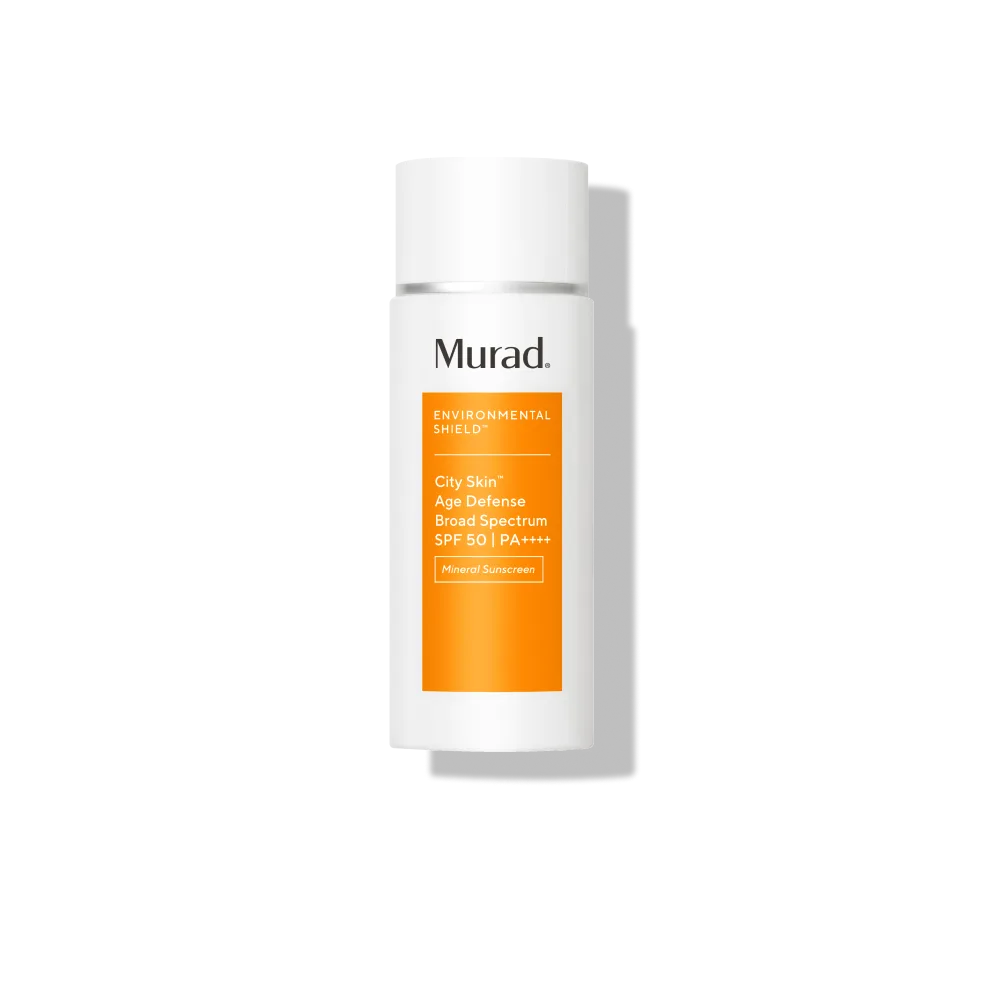
City Skin Age Defense Broad Spectrum SPF 50
Urban Shield Luxury SPF
 Verified reviewer
Pros & cons.
- +100% mineral UV protection (zinc oxide 10% + titanium dioxide 2.7%) at SPF 50 PA++++
- +Iron oxide tint minimizes white cast while adding visible light protection
- +Fragrance-free, cruelty-free, vegan formulation from a legacy dermatologist-developed brand
- +Primer-like silicone texture creates a flawless makeup base
- +Multi-defense concept addresses UV, visible light, and environmental free radicals
- +Hydrating argan oil formula doubles as moisturizer for normal to dry skin
- +Exceptionally well-tolerated by sensitive and reactive skin types
- −$69 for 1.7 oz is very expensive for a daily-use sunscreen — annual cost exceeds $450
- −Can still leave noticeable cast on medium-to-deep skin tones at proper application amounts
- −Emollient texture is too rich for oily skin — never fully sets matte
- −Pilling under water-based foundations and certain makeup formulations
- −Blue light and anti-pollution claims have limited independent scientific validation
- −Small tube size requires frequent repurchasing with recommended daily use
The full review.
The premise of the Murad City Skin Age Defense is that traditional sunscreens are fighting yesterday’s war. UV protection is necessary, the argument goes, but the modern urban dweller also needs defense against blue light from screens, visible light through windows, and free radicals generated by particulate pollution. It is a compelling narrative. It is also, depending on who you ask, either prescient environmental science or cleverly marketed anxiety. The truth, as usual, sits somewhere in the middle.
Let us start with what is unambiguous. This is a genuinely excellent mineral sunscreen. Zinc oxide at 10% and titanium dioxide at 2.7% provide broad-spectrum UV protection that is FDA-verified at SPF 50 and PA++++. The mineral-only approach means no risk of the chemical filter sensitivities that send many people searching for alternatives. It is fragrance-free, cruelty-free, and vegan. Dr. Howard Murad — a board-certified dermatologist and UCLA Associate Clinical Professor — lends his name and his decades of clinical skincare expertise to the formulation. This is not a celebrity brand or an Instagram startup. It is a product backed by genuine dermatological authority.
The texture is where the premium pricing starts to justify itself. Mineral sunscreens have a notorious reputation for sitting on the skin like spackle — chalky, heavy, white. The City Skin defies this stereotype with a cushy gel-lotion texture that has more in common with a silicone primer than a sunscreen. It spreads with effortless slip, blends seamlessly, and sets to a satin finish that makes skin look healthy rather than greasy or matte. The silicone base is doing serious work here, creating a smooth, blurring canvas that doubles as an excellent makeup primer.
The warm peach tint from iron oxides is a smart formulation choice with dual benefits. Aesthetically, it neutralizes the gray-white cast that zinc oxide and titanium dioxide typically leave behind. Functionally, iron oxides have been shown in published research to significantly improve protection against visible light — a wavelength range that traditional mineral and chemical sunscreens do not adequately address. A study published in the Journal of Cosmetic Dermatology found that the addition of iron oxides to mineral sunscreens provided meaningful protection against visible light-induced pigmentation, particularly relevant for individuals with melasma or post-inflammatory hyperpigmentation.
Now for the more contentious claims. Xanthophyll, a yellow-orange carotenoid also known as lutein, is positioned as this product’s blue light defender. Lutein does absorb light in the blue-violet range — that much is established photochemistry. Whether the concentration in this formula provides meaningful protection against the blue light emitted by phone and computer screens is far less clear. The intensity of blue light from screens is a fraction of what the sun delivers, and there is ongoing scientific debate about whether screen-derived blue light causes clinically significant skin damage. The iron oxides likely provide more meaningful visible light protection than the lutein.
Hydroxyphenyl propamidobenzoic acid, marketed by Murad as Oxisol, is the anti-pollution component. As a proprietary antioxidant, its evidence base is limited to internal Murad research rather than independent peer-reviewed studies. The concept of anti-pollution skincare is sound — particulate matter and atmospheric pollutants do generate free radicals that can damage skin — but the specific efficacy claims for Oxisol require more independent validation.
The supporting ingredient cast is thoughtful. Argan oil provides essential fatty acids and vitamin E for nourishment. Ascorbic acid and retinyl palmitate contribute antioxidant support. Avena sativa (oat) kernel extract and bisabolol add soothing properties. The formula is clearly designed to be a skincare treatment that happens to also be a sunscreen, rather than the reverse.
On skin, the product performs beautifully for its target audience. Normal to dry skin types will appreciate the hydrating, moisturizer-like feel. The satin finish is flattering and photograph-friendly. Under makeup, it creates a smooth base that most foundations glide over — though some water-based foundations may pill on the silicone-heavy surface. The lack of fragrance is a genuine relief for sensitive skin users tired of sunscreens that smell like a tropical vacation.
Oily skin types will find this too emollient. The argan oil and silicone base create a finish that never fully sets to matte, which can read as greasy on skin that already produces excess sebum. The primer-like slip that dry skin loves is precisely what oily skin does not need.
The white cast question deserves nuance. On fair to light-medium skin tones, the peach tint effectively neutralizes any cast. On medium-to-deep skin tones, some cast may still be visible when applied at the recommended quarter-teaspoon amount needed for proper SPF protection. It is significantly better than untinted mineral sunscreens, but it is not invisible.
And then there is the price. At $69 for 1.7 ounces, the Murad City Skin is expensive by any standard and borderline unreasonable for a daily-use sunscreen. If you apply the dermatologist-recommended amount and reapply appropriately, the tube lasts roughly six to eight weeks. That is an annual sunscreen budget of $450-600 for face alone. The dermatologist-developed pedigree, the cosmetic elegance, the multi-defense ingredients — these justify a premium over a drugstore mineral sunscreen. Whether they justify this much premium is a personal calculation.
The product that Dr. Murad launched in 2017 to address the future of environmental skin damage has aged well as a sunscreen and less well as a blue light story. The science of visible and blue light skin protection continues to evolve, and the practical significance of screen-based HEV exposure remains debated. But strip away the City Skin marketing narrative and what remains is a beautifully formulated, fragrance-free mineral sunscreen with genuine cosmetic elegance, from a brand with real dermatological credibility, that happens to also include some interesting — if not yet fully proven — environmental defense ingredients. That is worth something. Whether it is worth $69 depends on your skin, your budget, and how much you value the intersection of science and luxury.
Ingredient analysis.
Full INCI list
Active Ingredients: Titanium Dioxide 2.7%, Zinc Oxide 10.0%. Inactive Ingredients: Water, Cyclopentasiloxane, Dimethicone, Glycerin, C12-15 Alkyl Benzoate, Argania Spinosa Kernel Oil, Tocopheryl Acetate, Polyurethane-35, Polyglyceryl-3 Polydimethylsiloxyethyl Dimethicone, Polymethylsilsesquioxane, Avena Sativa Kernel Extract, Xanthophyll, Retinyl Palmitate, Ascorbic Acid, Bisabolol, Hydrolyzed Jojoba Esters, Urea, Yeast Amino Acids, Trehalose, Inositol, Taurine, Betaine, Biosaccharide Gum-4, Hydroxyphenyl Propamidobenzoic Acid, Silica, Tapioca Starch, Sucrose, Pentylene Glycol, Butylene Glycol, Stearic Acid, Dimethicone/PEG-10/15 Crosspolymer, Dimethicone/Vinyl Dimethicone Crosspolymer, Lauryl PEG-9 Polydimethylsiloxyethyl Dimethicone, PEG-8 Dimethicone, Octyldodecanol, Sodium Propoxyhydroxypropyl Thiosulfate Silica, Triethoxysilylethyl Polydimethylsiloxyethyl Hexyl Dimethicone, Aluminum Hydroxide, PEG/PPG-18/18 Dimethicone, Triethoxycaprylylsilane, Phenoxyethanol, Ethylhexylglycerin, Iron Oxides (CI 77491)
Skin match.
The science.
The Science
This formula uses a proven combination of zinc oxide (10%) and titanium dioxide (2.7%) for UV protection. Zinc oxide offers the broadest spectrum of any single mineral filter, absorbing and reflecting UVA and UVB radiation across wide wavelengths. Titanium dioxide targets UVB and some UVA. Together, they reach SPF 50 PA++++, a level verified by FDA testing methodology.
Iron oxides extend protection into the visible light range. A landmark study by Dumbuya et al. in the Journal of Cosmetic Dermatology showed that tinted sunscreens with iron oxides protect better against visible light-induced pigmentation than untinted mineral formulations (Journal of Cosmetic Dermatology, 2020). This matters for melasma patients, because visible light triggers melanogenesis via opsin-3 receptor activation—a pathway different from UV-induced melanin production.
Xanthophyll (lutein) is the blue light defense ingredient. This carotenoid peaks in absorption at 400-500nm, overlapping the blue-violet visible spectrum. While ophthalmology documents lutein's ability to protect the retinal macula, its efficacy as a topical skin protectant against HEV light is less established. A study in the Journal of Drugs in Dermatology noted that blue light at screen-exposure intensities causes modest oxidative stress in skin cells; the clinical significance of this exposure remains an active research area.
Murad's proprietary Oxisol (hydroxyphenyl propamidobenzoic acid) is an antioxidant that targets pollution-generated free radicals. Oxisol appears in Murad's internal research, but independent peer-reviewed validation of its specific anti-pollution efficacy is limited. Research supports the broader concept of antioxidant protection against environmental free radicals—topical antioxidants like vitamins C and E show photoprotective benefits in many clinical studies.
Dermatologist Perspective
Dermatologists often recommend mineral sunscreens for sensitive, rosacea-prone, or post-procedure skin; the City Skin's fragrance-free zinc oxide formula fits this pattern. Board-certified dermatologists value the iron oxide addition for melasma patients, as evidence supports visible light as a pigmentation contributor in susceptible individuals. Dermatologists view the blue light and pollution marketing claims with cautious interest—they recognize the theoretical basis but note that topical protection against these specific stressors needs more independent study. The formula's cosmetic elegance helps patient compliance, as many dermatologists note that the best sunscreen is the one patients actually wear daily.
Where it fits in your routine.
Apply a nickel-sized amount to your face, neck, and ears as the last step in your morning routine. Press the formula into your skin with your fingertips. Wait 1-2 minutes for it to set before applying makeup. Reapply every 2 hours if you have extended sun exposure. In the evening, use an oil-based cleanser or micellar water to break down the mineral filters and silicone base, then use a water-based cleanser. Water-based cleansing alone does not work; mineral sunscreens require thorough removal.
At $69 for 50 ml, this sits in the premium sunscreen category. Using recommended amounts, the daily cost is about $1.15-1.50, or $420-550 annually. This costs much more than excellent mineral sunscreens priced at $15-30. The price covers the dermatologist-developed brand, proprietary ingredients, and exceptional cosmetic elegance. A 0.6 oz travel size exists for testing, while a 4 oz professional size through medical channels has better per-ounce value. The formula quality is genuine, but the value is difficult to justify against alternatives that provide equivalent UV protection for less.
Sensitive, rosacea-prone, or post-procedure skin types need a mineral-only, fragrance-free sunscreen with premium cosmetic elegance. It also works for melasma patients who need iron oxide visible light protection. Urban dwellers who want multi-defense and can afford the premium price point also benefit.
Budget-conscious consumers face a high annual cost for daily use. Oily skin types need a matte finish. People with deeper skin tones require an invisible sunscreen. Skeptics of blue light protection claims can avoid paying a premium for unproven benefits.
Product details.
This gel-lotion has a smooth, primer-like silicone slip. Iron oxides provide a light peach-warm tint. It feels emollient and moisturizing, acting more like a tinted moisturizer than a traditional sunscreen.
Fragrance-free — essentially no detectable scent. Clean, neutral odor.
An opaque squeeze tube uses Murad's signature teal/turquoise color and gold accents. It has a screw-cap closure. The size is compact and travel-friendly. Medical aesthetic channels sell a professional-size 4 oz tube with pump dispenser.
This peachy-tinted gel-lotion squeezes out and spreads easily. The silicone base feels smooth and slippery during blending. It absorbs to a satin finish within 1-2 minutes. The warm tint makes skin look slightly more even-toned immediately. It causes no stinging, burning, or tightness.
6-8 weeks with daily face application at recommended SPF amounts
12 months
All Year
The backstory.
Murad launched the City Skin line in 2017 to address growing consumer concern about urban environmental stressors beyond UV — particularly blue light from screens and particulate pollution. Dr. Howard Murad, the brand's founder, has long advocated for the concept of 'environmental aging' as a distinct category alongside photoaging. The City Skin Age Defense was designed as a comprehensive daily shield for the modern urban lifestyle, combining decades of mineral sunscreen expertise with emerging environmental defense ingredients.
About Murad
Legacy Brand (20+ years)Dr. Howard Murad, a board-certified dermatologist and Associate Clinical Professor of Dermatology at UCLA, founded Murad in 1989. The brand has over three decades of clinical skincare expertise and pioneered the use of prescription-grade actives in cosmetics. Unilever owns Murad, which keeps its derm-developed positioning.
Common myths.
Blue light from screens damages skin and requires specific protection.
Research suggests high-energy visible (HEV) light contributes to hyperpigmentation and oxidative stress, but screen blue light intensity is lower than sunlight. The xanthophyll in this product may provide HEV defense, though the practical impact of topical blue light protection from screens is scientifically debated. The iron oxides providing visible light protection have stronger evidence.
Mineral sunscreens always leave a white cast
This product uses iron oxides to add a warm peach tint. This tint neutralizes the white cast from zinc oxide and titanium dioxide. It works well on fair to light-medium skin tones, but deeper skin tones may see a residual cast at proper application amounts.
FAQ.
Does the Murad City Skin sunscreen leave a white cast?
Iron oxides in the formula provide a warm peach tint, which reduces the white cast common in mineral sunscreens. Fair to light-medium skin tones see minimal or no cast. Medium-to-deep skin tones may show some residual cast at proper application amounts, but it is less pronounced than most untinted mineral sunscreens.
Does this sunscreen really protect against blue light?
The formula contains xanthophyll (lutein), a carotenoid that absorbs HEV blue light wavelengths, and iron oxides for visible light protection. However, scientists debate the practical significance of topical blue light protection from screens; screen-emitted blue light is much less intense than sunlight. The UV protection from the mineral filters is the primary, proven benefit.
Is the Murad City Skin sunscreen worth $69?
The premium price covers the dermatologist-developed formula, proprietary ingredients (Oxisol, lutein complex), 100% mineral filters, and premium cosmetic elegance. Daily use of the 1.7 oz tube lasts 6-8 weeks, so the annual cost is roughly $450-600. Value depends on how much you prioritize the multi-defense concept and cosmetic finish over cheaper mineral alternatives.
Can I use this as a moisturizer and sunscreen in one step?
Normal to dry skin types can skip a separate moisturizer in warmer months because the argan oil, glycerin, and silicone base provides enough hydration. Very dry skin may still need a hydrating serum underneath. The emollient texture may feel too thick for oily skin without a mattifying primer or powder.
Is this sunscreen pregnancy-safe?
Yes — it uses 100% mineral UV filters (zinc oxide and titanium dioxide) without chemical sunscreen actives, prescription-strength retinoids, or other pregnancy-concerning ingredients. The retinyl palmitate exists at trace levels in a sunscreen format. Always consult your OB-GYN for personalized advice.
Why does this sunscreen pill under my makeup?
The silicone-heavy base conflicts with water-based foundations or products with certain polymers. For best results, use silicone-based primers and foundations over this sunscreen. Wait 2 minutes for this sunscreen to set before applying makeup, and pat rather than rub when layering.
What the community says.
"Minimal to no white cast thanks to the warm peach tint and iron oxides"
"Lightweight, primer-like feel under makeup with excellent slip"
"100% mineral formula suitable for sensitive and reactive skin"
"Multi-defense concept addresses UV, blue light, and pollution in one step"
"Hydrating enough to skip moisturizer for normal skin types"
"Fragrance-free with no detectable scent"
"Works well for people who struggle with white cast from mineral sunscreens"
"$69 for 1.7 oz makes daily use expensive — runs out quickly"
"Can leave a noticeable cast on medium-to-deep skin tones at proper application amounts"
"Too emollient for oily and combination skin — doesn't set matte"
"Pilling under certain foundation formulations"
"Blue light protection claims have limited scientific backing for topical products"
"Small tube size means frequent repurchasing"
Featured in.
People also looked at.