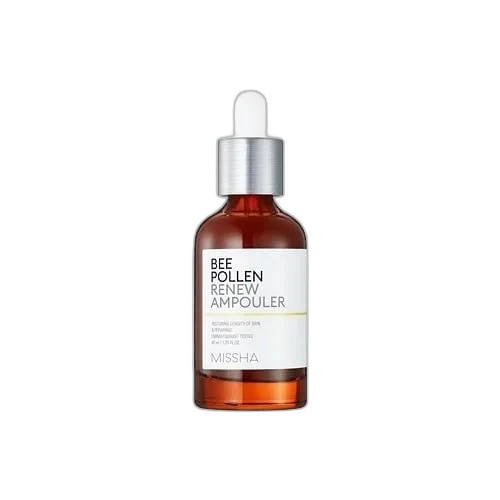
Bee Pollen Renew Ampouler
Hive-Powered Skin Revival
 Verified reviewer
Pros & cons.
- +42% bee pollen extract concentration makes this a genuinely active-forward treatment
- +Five bee-derived ingredients create a comprehensive hive complex unique in K-beauty
- +Niacinamide, ceramide NP, and panthenol provide proven barrier repair support
- +Delivers visible plumping and glow, particularly impressive for overnight recovery
- +Available in standard 40ml and larger 75ml sizes for value seekers
- +Premium amber glass packaging with visible liposome capsules adds luxurious appeal
- +Excellent rescue treatment for dry, depleted, winter-stressed skin
- −Thick, syrupy texture absorbs slowly and can feel tacky on oily or combination skin
- −Essential oil blend including bergamot and lavender may irritate fragrance-sensitive users
- −Bee-derived ingredients are a hard no for anyone with bee or pollen product allergies
- −Dropper mechanism operates counterintuitively and takes a few uses to master
- −Dewy, rich finish limits daytime wearability in warm or humid climates
The full review.
People added bee pollen to smoothie bowls for years before applying it to skin. Missha, a brand that has spent over two decades turning emerging ingredients into affordable skincare, saw an opportunity. In 2018, while K-beauty focused on snail mucin and centella, Missha launched the Bee Pollen Renew line with this ampoule as its centerpiece — a concentrated treatment built around an ingredient most skincare consumers had never considered.
The formula uses 42% bee pollen extract, making it the dominant ingredient. This is not a small amount of extract at the bottom of the INCI list. Bee pollen is the star, and Missha built the entire formulation around it. Research in Molecules in 2020 documented bee pollen’s antioxidant, anti-inflammatory, and antimicrobial properties in dermatological applications, noting its flavonoids, amino acids, and unsaturated fatty acids. The evidence base is smaller than for established actives like niacinamide, but the data is encouraging.
Niacinamide is also here, working with bee pollen to brighten skin tone and strengthen the moisture barrier. Ceramide NP repairs the lipid barrier, panthenol adds soothing hydration, and the formula includes propolis extract, honey extract, royal jelly extract, and hydrolyzed royal jelly protein to create a five-ingredient bee complex. It contains the entire hive in a bottle.
Texture
The texture either wins you over or makes you want something lighter. It is thick and viscous. It feels syrupy like snail mucin, with visible liposome capsules in the amber formula that dissolve when you pat them into skin. This is not a fast-absorbing watery essence; it requires patience. You press it into your skin, wait, and feel deep hydration settle in. By morning, skin that felt papery and tired the night before looks plumper and more luminous.
Packaging
The dropper dispenser has a quirk: you pinch before inserting rather than after. Many reviews mention this, so it is worth noting. Once you learn the mechanism, dispensing is easy — three to five drops covers the full face.
Scent
The scent is sweet and honeyed with essential oils — lavender, rose, ylang-ylang, and bergamot. It smells pleasant if you like natural fragrances. If you do not, or if your skin reacts to essential oils, this is a concern. The bergamot oil carries a theoretical phototoxicity risk, though the concentration here is likely below the threshold. Fragrance-sensitive users should use caution.
Best for
This ampoule excels at rescuing dry, depleted, barrier-compromised skin. Users report improvement in tight, flaky, winter-ravaged skin within days of regular use. The combination of humectant hydration (glycerin, sodium hyaluronate, hydroxyethyl urea) and occlusive barrier support (ceramide, shea butter, silicones) creates a layered hydration approach that works. Skin feels softer, looks more radiant, and recovers from dehydration faster than most serums.
Not ideal for
It lacks versatility. The dewy finish that dry skin likes feels excessive on oily skin. Daytime wear in humid climates can feel tacky and heavy. Also, the bee-derived ingredients create an allergen footprint — anyone with bee allergies, bee sting sensitivity, or propolis allergy must avoid this.
Value
The value is in the middle ground. At around $24 for 40 ml (with a 75 ml size available), the cost per use is reasonable for an ampoule with 42% active concentration. It is not luxury pricing, but it is not drugstore-cheap either. The price is fair for the ingredient concentration and formulation complexity.
Missha took a risk building a line around bee pollen, an ingredient without the decades of clinical validation that ceramides or retinol have. But interesting products often bet on something new. This ampoule is not for everyone — the texture is too thick for some, the essential oils too risky for others, and the bee ingredients impossible for allergy sufferers. But for dry, tired skin that needs nourishment and does not mind a sticky texture, the Bee Pollen Renew Ampouler feels different from the hundreds of hyaluronic acid serums on the shelf.
Ingredient analysis.
Full INCI list
Pollen Extract, Glycerin, Water, Propanediol, Butylene Glycol, Glycereth-26, Methyl Trimethicone, Dipropylene Glycol, Niacinamide, C14-22 Alcohols, Dimethicone, Octyldodecanol, Panthenol, 1,2-Hexanediol, Glyceryl Stearate, Hydroxyethyl Urea, Chondrus Crispus Extract, Hydroxyethyl Acrylate/Sodium Acryloyldimethyl Taurate Copolymer, Choleth-24, C12-20 Alkyl Glucoside, Saccharum Officinarum (Sugarcane) Extract, Diphenyl Dimethicone, Triethylhexanoin, Sodium Polyacrylate, Hydrogenated Lecithin, Carbomer, Glyceryl Acrylate/Acrylic Acid Copolymer, Caprylic/Capric Triglyceride, Caprylyl Glycol, Tromethamine, Adenosine, Polysorbate 60, Sorbitan Isostearate, Helianthus Annuus (Sunflower) Seed Oil, Citric Acid, Disodium EDTA, Lavandula Angustifolia (Lavender) Oil, Ceramide NP, Dextrin, Theobroma Cacao (Cocoa) Seed Extract, Royal Jelly Extract, Pelargonium Graveolens Flower Oil, Anthemis Nobilis Flower Oil, Cananga Odorata Flower Oil, Citrus Aurantium Bergamia (Bergamot) Fruit Oil, Honey Extract, Rosa Damascena Flower Oil, Leontopodium Alpinum Callus Culture Extract, Aspalathus Linearis Leaf Extract, Anthemis Nobilis Flower Extract, Propolis Extract, Butyrospermum Parkii (Shea) Butter, Chrysanthemum Boreale Flower Extract, Ethylhexylglycerin, Sodium Hyaluronate, Phenethyl Alcohol, Maltodextrin, Hydrolyzed Royal Jelly Protein
Skin match.
The science.
The Science
Cosmeceutical research supports bee pollen's role in skincare. A 2020 review in Molecules, "Bee Products in Dermatology and Skin Care," shows bee pollen contains over 200 biologically active substances—including flavonoids, phenolic acids, amino acids, and unsaturated fatty acids. These provide antioxidant, anti-inflammatory, and antimicrobial effects for skin health (Molecules, 2020). That same review notes bee products like pollen and propolis protect against UV-induced skin damage and support wound healing.
A 2018 review in the Journal of the Science of Food and Agriculture examined bee pollen's cosmeceutical potential. It concluded that high flavonoid content (mostly quercetin, kaempferol, and isorhamnetin glycosides) provides antioxidant protection against free radical damage, a key driver of premature skin aging (Journal of the Science of Food and Agriculture, 2018).
Other ingredients add proven mechanisms. Topical niacinamide increases ceramide synthesis in the stratum corneum, reduces transepidermal water loss, and inhibits melanin transfer—complementing the bee pollen's anti-inflammatory action. Ceramide NP replenishes the intercellular lipid matrix, while panthenol converts to pantothenic acid in the skin to support cellular energy metabolism and wound repair. Propolis adds documented antimicrobial and anti-inflammatory properties; studies show propolis extracts accelerate re-epithelialization and modulate inflammatory cytokines.
The bee complex—pollen, propolis, honey, and royal jelly—creates theoretical synergy by addressing different skin repair aspects. However, clinical studies on this specific combination in topical skincare are limited, and evidence for topical bee pollen is still emerging compared to established actives.
References
- Bee Products in Dermatology and Skin Care — Molecules (2020)
- The Potential of Using Bee Pollen in Cosmetics: a Review — Journal of the Science of Food and Agriculture (2018)
Dermatologist Perspective
Dermatologists view bee-derived ingredients as an emerging cosmeceutical interest, though clinical evidence is less mature than for established actives like retinoids and niacinamide. The inclusion of ceramide NP, niacinamide, and panthenol provides a foundation of proven barrier-repair ingredients that dermatologists frequently recommend for compromised skin. Board-certified dermatologists advise patients with bee or bee product allergies to avoid formulations containing bee pollen, propolis, honey, or royal jelly. For non-allergic patients with dry, barrier-damaged skin, this ampoule's multi-humectant and lipid-replenishing approach aligns with evidence-based barrier repair strategies.
Where it fits in your routine.
Apply 3-5 drops to clean fingertips after toner. Press and pat into the face and neck. Do not rub, as the thick texture can cause pilling. Wait 30-60 seconds for absorption before applying moisturizer. Use morning and evening. The richer finish works well at night. In the AM, use 2-3 drops to reduce tackiness under sunscreen and makeup. For an intensive overnight treatment, apply a thick layer and seal with a sleeping mask.
At approximately $24 for 40 ml, this ampoule costs a reasonable mid-range price for K-beauty treatments. The 42% bee pollen concentration shows high active loading; you pay for formulation substance, not just packaging. A 75 ml size is also available and offers better per-milliliter value for regular users. Compared to premium bee-derived treatments from brands like Guerlain (which charges luxury prices for royal jelly formulations), Missha delivers comparable ingredient complexity at a fraction of the cost. The price is fair for the contents, though not as low as some other Missha products.
Dry, dehydrated, or barrier-compromised skin types want a concentrated nourishing treatment with a unique ingredient profile. This works for skin that feels depleted from harsh winters, over-exfoliation, or environmental stress and for those who like distinctive K-beauty formulations.
This formula contains five bee-derived ingredients, so avoid it if you have bee or bee product allergies. It is also not ideal for oily skin types who find dewy, viscous textures too heavy for daily wear, or fragrance-sensitive individuals who react to essential oil blends.
Product details.
Thick, viscous gel contains visible liposome capsules. The texture is slightly syrupy, like snail mucin products. Pat the product instead of rubbing for best absorption.
Sweet, honey-like propolis fragrance mixes with lavender, ylang-ylang, rose, and chamomile essential oils. The scent is subtle and fades within a few minutes of application.
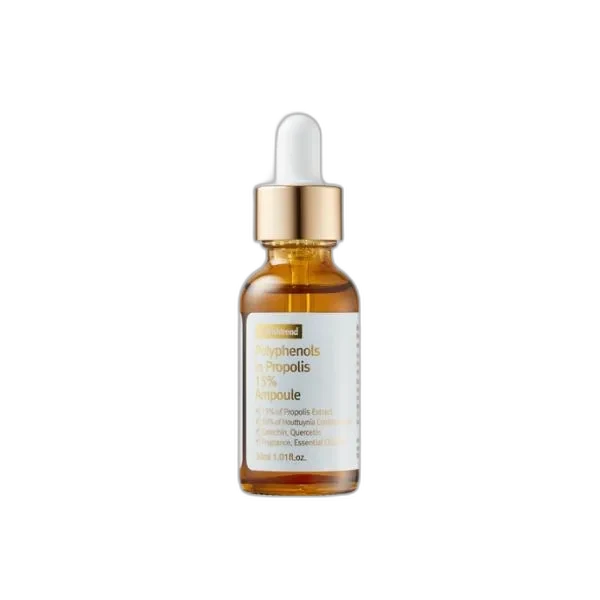
Amber-toned glass bottle with a dropper applicator. The honey-colored glass shows the visible liposome capsules suspended in the formula. The apothecary-style appearance fits the natural bee theme.
The thick, syrupy texture surprises on first use — it feels heavier than most serums. Visible capsules dissolve as you pat the product in, and skin feels plumped and hydrated immediately. A dewy glow appears within minutes. Some users notice slight tackiness until they layer a moisturizer over top.
2-3 months with twice-daily use of 3-5 drops per application
12 months
fall winter
The backstory.
Missha developed the Bee Pollen Renew line in 2018 to capitalize on growing interest in bee-derived cosmeceuticals. While propolis and honey had already become staples in K-beauty, bee pollen remained largely untapped as a topical ingredient despite research showing its antioxidant and anti-inflammatory potential. The Ampouler was designed to be the concentrated treatment step in a full bee pollen skincare routine.
About Missha
Established Brand (5–20 years)Missha launched in 2000 as an affordable Korean skincare pioneer. For over two decades, the brand has built a reputation for science-forward formulations at accessible prices. The Bee Pollen line uses natural bee-derived ingredients backed by emerging cosmeceutical research.
Common myths.
Bee pollen in skincare causes allergic reactions in people with seasonal allergies
People with confirmed bee or bee product allergies must avoid this product. Seasonal pollen allergies (hay fever) usually stem from airborne grass, tree, or weed pollen, not bee-collected flower pollen. Cross-reactivity is possible, so patch testing is prudent.
Ampoules are just serums with fancier packaging
K-beauty ampoules usually have higher active ingredient concentrations than serums. This product's 42% bee pollen extract concentration shows this difference — it is a concentrated treatment for targeted use, not liberal application like a hydrating serum.
FAQ.
Is the Missha Bee Pollen Renew Ampouler safe for sensitive skin?
This ampoule has niacinamide, ceramide NP, and panthenol, which work well for sensitive skin. But the essential oil blend (lavender, bergamot, ylang-ylang) and bee-derived ingredients can cause reactions in very reactive or allergy-prone skin. Patch test on your inner arm for 48 hours before face application.
Can I use the Missha Bee Pollen Ampouler with retinol?
Yes — the nourishing formula with ceramide NP and panthenol helps buffer retinol irritation. Apply retinol first on dry skin, wait a few minutes, then use 3-4 drops of this ampoule to seal in hydration and support the skin barrier.
What does bee pollen do for skin?
Bee pollen has flavonoids, amino acids, and fatty acids that provide antioxidant and anti-inflammatory benefits. This formula uses a 42% concentration to protect against oxidative stress, soothe irritation, and support the skin's natural repair processes — backed by emerging cosmeceutical research.
How is the Missha Bee Pollen Ampouler different from propolis serums?
Most propolis serums use one bee ingredient, but this ampoule combines five bee-derived actives: pollen, propolis, honey, royal jelly, and hydrolyzed royal jelly protein. The 42% bee pollen concentration is the main ingredient, while the other bee ingredients support a more comprehensive approach.
Why does this ampoule feel sticky?
The thick texture comes from high bee pollen extract levels and visible liposome capsules. To reduce tackiness, use 2-3 drops instead of 4-5, pat instead of rub, and wait one full minute for absorption before applying moisturizer on top.
What the community says.
"Excellent for restoring damaged or compromised moisture barriers"
"Provides deep, lasting hydration without feeling heavy"
"Creates a visible glow and plumpness, especially noticeable by morning"
"Soothing for dry, irritated winter skin"
"Luxurious sensory experience with premium-looking amber bottle"
"Layers well under moisturizer and makeup"
"Good value for the quality and concentration of bee-derived ingredients"
"Can feel tacky or sticky, especially in humid climates"
"Slower absorption compared to lightweight water-based serums"
"Dropper mechanism operates counterintuitively and takes practice"
"Not ideal for oily skin during daytime due to dewy richness"
"Essential oils may irritate truly sensitive or reactive skin"
People also looked at.