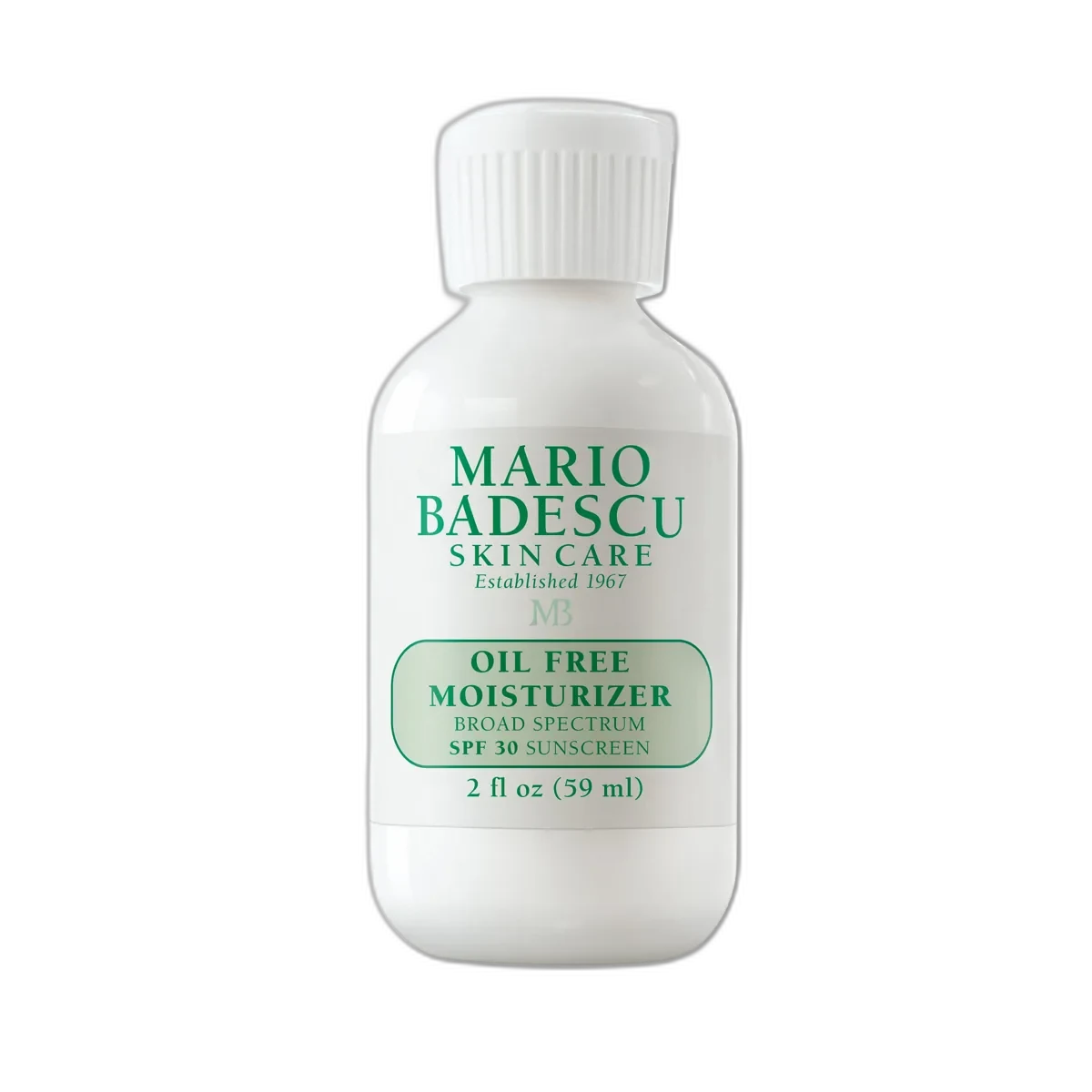
Oil Free Moisturizer SPF 30
Oil-Free Daily SPF
 Verified reviewer
Pros & cons.
- +SPF 30 meets the dermatological minimum for daily broad-spectrum protection
- +Four-filter UV system with dedicated avobenzone stabilization provides reliable coverage
- +Oil-free base with no traditional oils suits combination and oily skin types
- +Green tea extract provides antioxidant backup against UV-generated free radicals
- +Paraben-free formula with oxybenzone removed in the 2017 reformulation
- +No white cast from the chemical UV filters
- −Fragrance blend includes EU-restricted Lyral plus four other identified allergens
- −Comedogenic emulsifiers (sorbitan oleate, ceteareth-20) contradict the acne-prone skin positioning
- −Small 2 oz tube depletes in 1-2 months with proper sunscreen application
- −Contains octinoxate, which adversely affects avobenzone photostability per published research
- −Some users experience a greasy feel despite the oil-free claim when applied generously
- −Not safe for pregnancy due to octinoxate's potential endocrine activity
The full review.
Credit where it is due: Mario Badescu heard the criticism about oxybenzone and acted. The current formulation of the Oil Free Moisturizer SPF 30, FDA-registered since February 2017, replaces the older oxybenzone-containing version with a four-filter system of avobenzone, octocrylene, octinoxate, and octisalate. That is a meaningful improvement, and it puts this product a step ahead of the brand’s own Aloe Moisturizer SPF 15, which still contains oxybenzone at an inadequate SPF level. But the reformulation also reveals how selective the brand’s ingredient consciousness can be.
The UV protection system is competent if conventional. Octocrylene at 10% — the US maximum — serves double duty as a UVB absorber and avobenzone stabilizer. Avobenzone at 3% provides the UVA coverage needed for genuine broad-spectrum protection. Octinoxate at 7.5% and octisalate at 5% fill out the UVB protection. Ethylhexyl methoxycrylene provides additional avobenzone stabilization. On paper, this is a well-constructed chemical sunscreen system that should deliver reliable SPF 30 protection.
However, there is an irony in the formulation: a 2021 study in Physical Chemistry Chemical Physics found that while octocrylene stabilizes avobenzone through triplet-triplet energy quenching, octinoxate can actually adversely affect avobenzone’s photostability. This formula contains both, meaning the stabilization and destabilization forces are working against each other. The added ethylhexyl methoxycrylene likely tips the balance toward stability, but it is a formulation tension worth noting.
The moisturizing component is straightforward — glycerin handles the hydration, dimethicone provides smoothing, and aloe and green tea add soothing and antioxidant support respectively. It is a perfectly adequate moisturizing base, though nothing that distinguishes itself in a crowded market of SPF moisturizers that do the same thing.
The fragrance situation is where this product loses credibility as a thoughtful modern formulation. The Parfum blend includes five identified fragrance allergens: linalool, limonene, citronellol, hydroxycitronellal, and hydroxyisohexyl 3-cyclohexene carboxaldehyde — commercially known as Lyral. Lyral was restricted in the European Union in August 2021, with a transition period completed by 2022, due to its high rate of contact sensitization. It remains legal in US products, but its inclusion in a daily-use product in 2026 raises questions about how closely the brand monitors ingredient safety beyond the most high-profile concerns. If they removed oxybenzone in response to scrutiny, the retention of Lyral suggests the scrutiny has not yet reached their fragrance suppliers.
The oil-free claim is technically accurate but experientially incomplete. No traditional oils appear in the INCI list. But dimethicone, C12-15 alkyl benzoate, and PPG-2 myristyl ether propionate all contribute slip and emollience that can mimic an oily feel on skin, particularly if you apply the generous amount that sunscreen efficacy requires. Multiple users report that the product can feel greasy when properly applied — which reveals the tension between the oil-free marketing and the reality of chemical sunscreen formulation. You need a certain amount of vehicle to dissolve and distribute four UV filters evenly, and that vehicle does not always feel weightless.
The comedogenic emulsifiers add another concern for the acne-prone demographic this product targets. Sorbitan oleate carries a comedogenicity rating of 3, and ceteareth-20 rates at 2-3. For oily skin types already managing breakouts, these ingredients represent a non-trivial congestion risk — ironic for a product positioned as oil-free and suitable for problematic skin.
At 8 for 59 milliliters, the price is moderate, but the value calculation is complicated by the small tube size. Sunscreens require generous application — about a quarter teaspoon for the face alone — and reapplication every two hours during sun exposure. At that usage rate, this tube lasts roughly one to two months, making it more expensive per day of protection than many drugstore SPF 30 alternatives in larger sizes. The convenience of a moisturizer-SPF combination provides some value, but it is a convenience you pay for.
The green tea extract is a genuinely smart inclusion. Camellia oleifera provides polyphenol antioxidants that scavenge free radicals generated by UV radiation that penetrates past the sunscreen filters. No sunscreen blocks 100% of UV, and antioxidant support provides a secondary line of defense against photoaging. It is the kind of thoughtful ingredient choice that suggests someone in the formulation lab was thinking beyond the minimum requirements.
Mario Badescu has been making skincare since 1967, and their manufacturing facility in Edison, New Jersey produces everything in-house. That legacy carries weight. But legacy also means inherited formulation habits, and this SPF 30 moisturizer shows both the brand’s ability to evolve — removing oxybenzone — and its reluctance to fully modernize — retaining fragrance allergens, comedogenic emulsifiers, and octinoxate. It is a product caught between eras: new enough to meet SPF 30 standards, old enough to include ingredients that a 2026 formulator would likely leave on the cutting room floor.
Ingredient analysis.
Full INCI list
Active Ingredients: Avobenzone 3.0%, Octinoxate (Ethylhexyl Methoxycinnamate) 7.5%, Octisalate (Ethylhexyl Salicylate) 5.0%, Octocrylene 10.0%. Inactive Ingredients: Water (Aqua), Glycerin, Aluminum Starch Octenylsuccinate, Dimethicone, Cetearyl Alcohol, Ethylhexyl Methoxycrylene, PPG-2 Myristyl Ether Propionate, C12-15 Alkyl Benzoate, Ceteareth-20, Sorbitan Oleate, Aloe Barbadensis Leaf Juice, Camellia Oleifera Leaf Extract, Hypericum Perforatum Extract, Ethylhexylglycerin, Tetrasodium Glutamate Diacetate, PEG-100 Stearate, Caprylyl Glycol, Carbomer, Parfum (Fragrance), Phenoxyethanol, Sodium Hydroxide, Linalool, Limonene, Hydroxyisohexyl 3-Cyclohexene Carboxaldehyde, Citronellol, Hydroxycitronellal
Skin match.
The science.
The Science
The four-filter UV protection system in this formula uses complex photochemistry. A 2021 study by Dunning et al. in Physical Chemistry Chemical Physics (PMID: 34694312) studied avobenzone stability in multi-filter sunscreens. It found octocrylene stabilizes avobenzone via triplet-triplet energy quenching — necessary because avobenzone alone photodegrades fast under UV exposure. However, the study also found octinoxate (EHMC) hurts avobenzone stability through competing photochemical pathways. This formula contains octocrylene, octinoxate, and avobenzone, creating a stabilization-destabilization tension that the added ethylhexyl methoxycrylene likely offsets, though the interaction lacks formulation purity.
Chemical sunscreen systemic absorption remains unresolved. A 2019 randomized clinical trial in JAMA by Matta et al. (PMID: 31058986) found avobenzone, octocrylene, and other chemical UV filters exceeded the FDA's 0.5 ng/mL plasma safety threshold after standard application. The FDA says this does not show harm but wants more safety data from sunscreen manufacturers. All four UV filters in this product exceeded that threshold.
The green tea extract provides antioxidant support. Research shows Camellia sinensis polyphenols — specifically EGCG — reduce UV-induced oxidative stress, inflammation, and DNA damage in skin. In this formula, the green tea acts as a secondary photoprotective layer behind the primary UV filters.
References
- Determining the photostability of avobenzone in sunscreen formulation models using ultrafast spectroscopy — Physical Chemistry Chemical Physics (2021)
- Effect of Sunscreen Application Under Maximal Use Conditions on Plasma Concentration of Sunscreen Active Ingredients: A Randomized Clinical Trial — JAMA (2019)
Dermatologist Perspective
Dermatologists see the SPF 30 level as the minimum standard for daily protection — an improvement over the brand's SPF 15 alternative. Board-certified dermatologists would value the four-filter broad-spectrum system and the green tea antioxidant support. However, the fragrance profile raises concern, especially the Lyral, which European dermatological guidelines flag as a sensitizer. Dermatologists treating acne patients would also note the comedogenic emulsifiers may be counterproductive. For pregnancy, dermatologists would recommend mineral sunscreen alternatives.
Where it fits in your routine.
Apply a generous amount (at least a quarter-teaspoon for face alone) as the last step of your morning skincare routine, 15 minutes before sun exposure. Reapply every two hours if outdoors for long periods. Wear it alone or under makeup. It is not water-resistant — reapply after sweating, swimming, or toweling off.
At 8 for 59 mL, this SPF moisturizer is moderately priced, but the small tube makes the daily cost high. Using a quarter-teaspoon for the face, the tube lasts one to two months. This puts the daily cost at /bin/bash.50-0.90 — acceptable, but not competitive with drugstore SPF 30 moisturizers that have more volume for less money. The oil-free formulation and chemical-only UV system suit oily skin types who dislike mineral sunscreens, but better options exist at this price point.
Combination to oily skin types want a lightweight, oil-free SPF 30 moisturizer and are not sensitive to fragrance or chemical UV filters. It works best for daily commuting and indoor work with limited sun exposure.
Fragrance-sensitive individuals (especially with EU-restricted Lyral), acne-prone skin avoiding comedogenic emulsifiers, pregnant individuals, those wanting water-resistant or high-SPF protection, and anyone preferring mineral sunscreens.
Product details.
This lightweight cream absorbs well on oily and combination skin. Over-application causes a heavy or shiny feel. It spreads with moderate ease and lacks the elegance of some modern SPF formulations.
Light floral-herbal fragrance from the Parfum blend. Contains EU-designated fragrance allergens including Lyral (Hydroxyisohexyl 3-Cyclohexene Carboxaldehyde), which has been restricted in the EU since 2022.
White plastic squeeze tube with screw cap uses standard Mario Badescu branding. At 2 fl oz, the tube is small for a sunscreen that needs frequent, generous reapplication.
It applies as a lightweight cream with a faint herbal-floral scent. The chemical filters leave no white cast. Oily skin absorbs it within 1-2 minutes. Some users see a slight sheen or residue if they apply too much. Most users feel no tingling or stinging.
1-2 months with daily generous application to face
12 months
All Year
The backstory.
This product represents Mario Badescu's upgrade from their older SPF 15 and SPF 17 moisturizers to meet the dermatological minimum of SPF 30. The reformulation around 2017 removed oxybenzone — a response to growing consumer and regulatory pressure — while maintaining the brand's oil-free, lightweight approach to sun protection.
About Mario Badescu
Legacy Brand (20+ years)Romanian esthetician Mario Badescu founded Mario Badescu in New York City in 1967. The brand manufactures all products in-house at their Edison, New Jersey facility. Mario Badescu reformulated this product around 2017 to remove oxybenzone, responding to ingredient safety concerns.
Common myths.
Mineral sunscreens work better than chemical sunscreens.
Chemical filters in this product absorb UV radiation and convert it to heat. Mineral filters reflect it. Both methods work if the formulation is correct. Chemical filters often have better textures and no white cast, but they carry risks of sensitivity and systemic absorption debates.
Oil-free sunscreens cannot cause breakouts.
The oil-free designation means no traditional oils, but this formula uses comedogenic emulsifiers like sorbitan oleate (rating 3) and ceteareth-20 (rating 2-3) that clog pores regardless of oil content. Oil-free is not non-comedogenic.
FAQ.
Does the Mario Badescu Oil Free Moisturizer SPF 30 contain oxybenzone?
The current formulation (reformulated around 2017) lacks oxybenzone. It uses avobenzone, octocrylene, octinoxate, and octisalate as its four UV filters. Older batches may have contained oxybenzone; check the ingredient list on your specific tube if concerned.
Is this moisturizer truly oil-free?
It lacks traditional oils but uses dimethicone (a silicone), C12-15 alkyl benzoate (an emollient ester), and PPG-2 myristyl ether propionate to provide slip and moisture. The oil-free claim is accurate, though the formula is not as stripped-down as the name suggests. Some users report a greasy feel if they apply too much product.
Can I use this as my only sunscreen?
SPF 30 meets the dermatological minimum for daily use. The four-filter system provides broad-spectrum protection. This formula is not water-resistant, so use a dedicated sunscreen for outdoor activities. The 2 oz tube is small for a sunscreen; generous application lasts about a month.
Does this product contain Lyral?
Yes — the fragrance blend includes Hydroxyisohexyl 3-Cyclohexene Carboxaldehyde, known as Lyral. The EU restricted Lyral in 2022 because it is a high allergen. It is legal in US products but is a known sensitizer. This is a concern for those with fragrance sensitivities.
Is this safe during pregnancy?
This product contains octinoxate, which has potential endocrine activity flagged by researchers. Most dermatologists recommend mineral sunscreens (zinc oxide, titanium dioxide) during pregnancy as the safest option. Consult your healthcare provider for personalized guidance.
Community
What the community says.
"Lightweight, non-greasy feel for a chemical SPF moisturizer"
"No white cast from the chemical UV filters"
"Convenient moisturizer and SPF in one step"
"Absorbs relatively quickly on oily and combination skin"
"Paraben-free and oxybenzone-free reformulation"
"Can feel greasy if too much is applied, contradicting the oil-free positioning"
"Contains fragrance with multiple EU-designated allergens including restricted Lyral"
"Small 2 oz tube runs out quickly when applied generously as sunscreen should be"
"Some users report clogged pores and breakouts from comedogenic emulsifiers"
"Difficult to spread evenly for some users"
People also looked at.