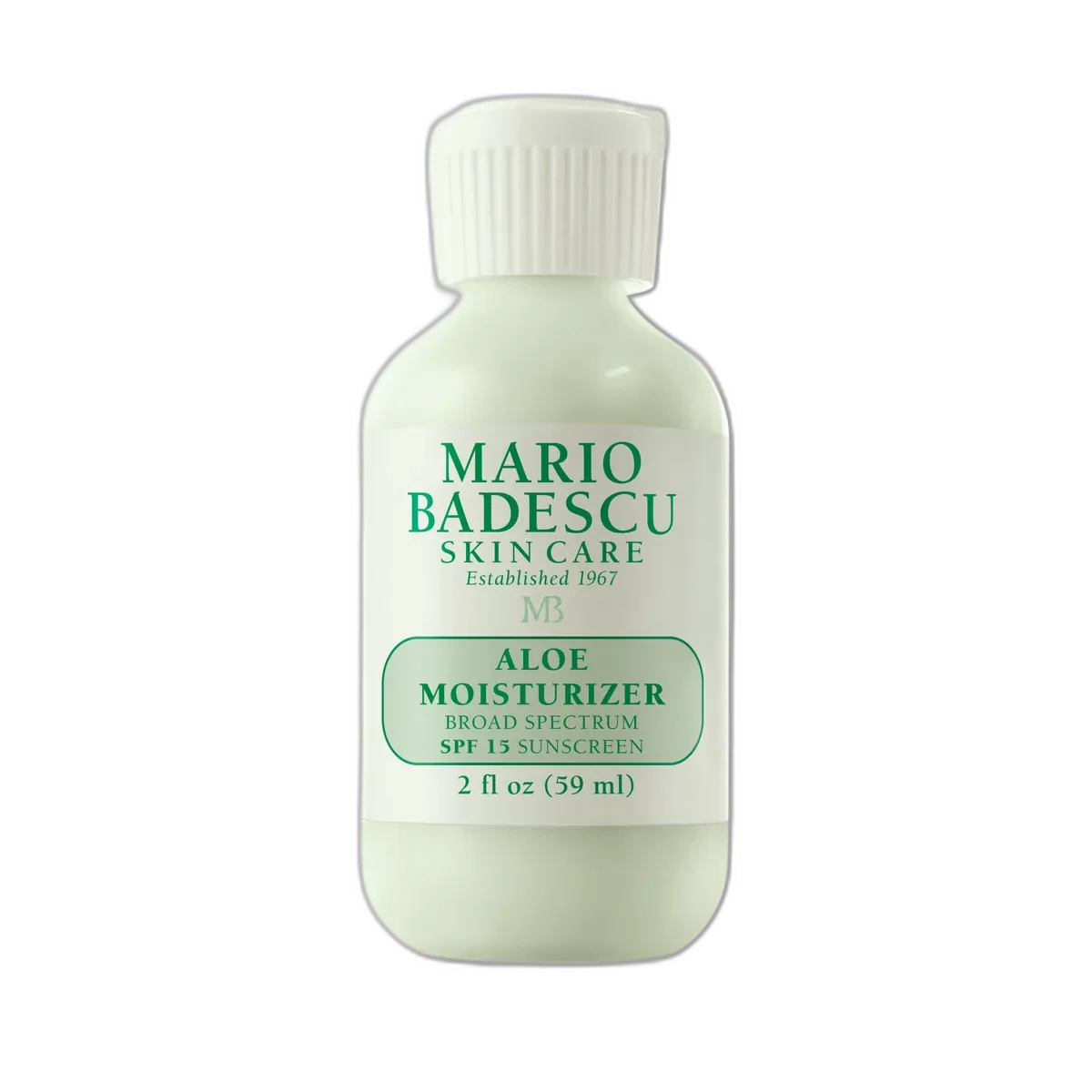
Aloe Moisturizer SPF 15
Budget Basics SPF
 Verified reviewer
Pros & cons.
- +Oil-free and fragrance-free — a rare combination in affordable SPF moisturizers
- +Soothing aloe vera base is genuinely calming for reactive oily skin
- +Lightweight texture that does not feel heavy or greasy on oily skin types
- +Affordable at 4 for 2 fl oz with 2-3 months of daily use
- +No white cast from the chemical UV filters
- +Practical squeeze tube packaging that is hygienic and travel-friendly
- +Legacy brand with nearly 60 years of skincare experience
- −SPF 15 falls below the dermatologically recommended minimum of SPF 30
- −Contains oxybenzone, which is banned in several jurisdictions and absorbs systemically above FDA thresholds
- −Isopropyl myristate has a comedogenicity rating of 5/5 — contradicting acne-prone skin positioning
- −Contains unnecessary synthetic blue dye (CI 42090) with no functional purpose
- −Octinoxate faces increasing regulatory scrutiny for potential endocrine activity
- −Not safe for pregnancy due to oxybenzone and octinoxate concerns
The full review.
About Mario Badescu
The brand has existed for nearly sixty years.
Myth
The product is a modern, cutting-edge sunscreen.
Reality
The product uses older sunscreen formulation methods.
How to Use
Apply liberally 15 minutes before sun exposure. Reapply at least every two hours.
Who Should Buy
Budget-conscious users needing a simple, oil-free daily moisturizer with SPF.
Texture
Lightweight and smooth.
Scent
Fragrance-free.
Packaging
Squeeze tube.
Best Season
All seasons, but reapplication is crucial.
Common Praise
Accessible price point.
Common Complaints
Low SPF, oxybenzone inclusion, comedogenic ingredients.
Pairs Well With
Other Mario Badescu products.
Conflicts With
Products containing ingredients that react with oxybenzone.
Best for
Oily skin types.
Works for
Those seeking a basic, affordable moisturizer with SPF.
Not ideal for
People spending much time outdoors or near windows, or those avoiding oxybenzone or comedogenic ingredients.
AM routine
Apply after cleansing and any serums. Follow with makeup if desired.
PM routine
Not applicable.
Ingredient analysis.
Full INCI list
Active Ingredients: Avobenzone 2.0%, Octinoxate 7.5%, Oxybenzone 3.5%. Inactive Ingredients: Aqua (Water), Aloe Barbadensis Leaf Juice, Aluminum Starch Octenylsuccinate, Glycerin, Ethylhexyl Methoxycrylene, Isopropyl Myristate, Cetyl Alcohol, Dimethicone, PPG-2 Myristyl Ether Propionate, Stearic Acid, Styrene/Acrylates Copolymer, Caprylyl Glycol, PEG-8 Laurate, Ceteareth-20, Cetearyl Alcohol, Glyceryl Stearate, PEG-100 Stearate, Carbomer, Tetrasodium Glutamate Diacetate, Ethylhexylglycerin, Sodium Hydroxide, Phenoxyethanol, CI 42090 (FD&C Blue No. 1)
Skin match.
The science.
The Science
Three extensively studied chemical filters provide the UV protection in this formula. A landmark 2020 randomized clinical trial in JAMA (PMID: 31961417) by Matta et al. shows that oxybenzone, one of the three actives in this product at 3.5%, reaches plasma concentrations of 169-210 ng/mL after one maximal-use application. This exceeds the FDA's 0.5 ng/mL safety threshold by over 300-fold. The same study shows octinoxate (at 7.5% here) and avobenzone (at 2%) also exceed the threshold, but at lower concentrations than oxybenzone. The FDA notes that exceeding this threshold does not prove these ingredients are harmful, only that more safety data is required.
The 2% avobenzone provides UVA protection, stabilized by ethylhexyl methoxycrylene. Avobenzone is photolabile and degrades under UV exposure, but stabilizers like methoxycrylene extend its photoprotective lifespan. At 2%, the UVA protection is moderate; many modern formulations use 3% avobenzone or newer, more photostable UVA filters.
Aloe barbadensis leaf juice is the moisturizing base and has documented anti-inflammatory properties. A 2008 review in the Indian Journal of Dermatology (PMID: 19882025) confirms acemannan and other aloe polysaccharides provide anti-inflammatory, antimicrobial, and wound-healing benefits. In this formula, the aloe may mitigate irritation from the chemical UV filters, especially oxybenzone, a known contact sensitizer.
References
- Effect of Sunscreen Application on Plasma Concentration of Sunscreen Active Ingredients: A Randomized Clinical Trial — JAMA (2020)
- Aloe vera: a short review — Indian Journal of Dermatology (2008)
Dermatologist Perspective
Dermatologists would struggle to recommend this product in its current formulation. Board-certified dermatologists advocate for SPF 30 as minimum daily protection, making SPF 15 a hard sell in clinical settings. The oxybenzone inclusion adds concern; while the FDA has not deemed it unsafe, many dermatologists now prefer mineral filters or newer chemical alternatives over oxybenzone-containing products. The isopropyl myristate is problematic for the acne-prone demographic this product targets. Dermatologists treating acne patients would likely flag this ingredient as counterproductive to treatment goals.
Where it fits in your routine.
Apply a generous amount as the last step of your morning skincare routine, at least 15 minutes before sun exposure. Use a nickel-sized amount for the face. Reapply every two hours during sustained sun exposure. For extended outdoor time, layer a higher-SPF sunscreen over this product or use a dedicated SPF 30+ sunscreen instead.
At 4 for 59 mL, the price is fair for an SPF moisturizer. Daily use lasts 2-3 months, which keeps the per-use cost low. But value depends on more than price. Multiple SPF 30+ moisturizers from drugstore brands like CeraVe, Neutrogena, and Cetaphil offer better UV protection, skip oxybenzone, avoid comedogenic ingredients, and cost the same or less. The aloe base and fragrance-free formula are unique, but they do not fix the gaps in sun protection and comedogenic safety.
Budget-conscious oily skin types with minimal direct sun exposure who want a simple, fragrance-free moisturizer with basic UV protection. Best for low-UV environments and limited outdoor exposure.
People seeking daily SPF 30+ protection, acne-prone users avoiding comedogenic ingredients, pregnant individuals, travelers to jurisdictions that ban oxybenzone, and those preferring modern sunscreen formulations without controversial UV filters.
Product details.
The scent is very faint and has no added fragrance. Natural ingredients and sunscreen actives provide any smell.
Standard Mario Badescu white plastic squeeze tube with green accents. It comes in 1 fl oz and 2 fl oz sizes. The packaging is simple and functional.
Light and easy to spread, it has a faint cooling sensation from the aloe. The blue-green tint shows during application but disappears as the product blends. The chemical UV filters leave no white cast. Some users notice a slight film after application. ***
2-3 months with daily morning application to face ***
12 months ***
All Year ***
The backstory.
Mario Badescu built his brand on the principle that effective skincare does not need to be expensive — a philosophy that resonated from his first Manhattan studio in 1967 through today. This aloe moisturizer represents the brand's straightforward approach: basic hydration, basic sun protection, basic ingredients. Whether that simplicity is a virtue or a limitation depends on how you feel about SPF 15 and oxybenzone in the modern skincare landscape.
About Mario Badescu
Legacy Brand (20+ years)Mario Badescu opened its first skincare studio on East 52nd Street in New York City in 1967. The brand has a cult following from nearly six decades of accessible pricing and simple formulations. However, Mario Badescu faced past controversy over undisclosed steroids in some products and lacks significant clinical research for its specific formulations.
Common myths.
SPF 15 gives most people enough daily sun protection.
Dermatologists recommend SPF 30 as the daily minimum. SPF 15 blocks about 93% of UVB rays, while SPF 30 blocks 97%. This difference means SPF 15 lets through roughly twice the burning radiation. SPF 15 provides basic protection for daily commuting in low-UV environments, but it lacks enough coverage for meaningful sun exposure.
Avoid chemical sunscreens like oxybenzone because they are dangerous.
A 2020 JAMA study shows oxybenzone absorbs into the bloodstream above FDA safety thresholds. This does not mean it causes harm; the FDA requested more data rather than a ban. Oxybenzone is a documented contact allergen for some and is banned in certain locations to protect coral reefs. Many dermatologists now recommend mineral alternatives or newer chemical filters as a precaution.
FAQ.
Is Mario Badescu Aloe Moisturizer SPF 15 enough sun protection?
SPF 15 blocks about 93% of UVB rays. This provides basic protection for minimal daily sun exposure like commuting. Dermatologists recommend SPF 30 as the minimum for daily use. If you spend significant time outdoors, use a higher-SPF product or layer a separate sunscreen over this moisturizer.
Does this moisturizer contain oxybenzone?
Yes, it contains 3.5% oxybenzone as one of three chemical UV filters. The FDA approves oxybenzone, but studies show systemic absorption and potential environmental impact on coral reefs. Hawaii, Key West, and Palau ban it. If this concerns you, use mineral SPF alternatives with zinc oxide or titanium dioxide.
Is Mario Badescu Aloe Moisturizer SPF 15 good for acne-prone skin?
This product is oil-free but contains isopropyl myristate. This ingredient has a comedogenicity rating of 5 out of 5, making it one of the most pore-clogging ingredients in skincare. This is a concern for acne-prone skin. The oil-free claim is technically true but can mislead breakout-prone skin.
Can I use this moisturizer during pregnancy?
Most dermatologists recommend avoiding oxybenzone and octinoxate during pregnancy because they show endocrine activity. Mineral sunscreens with zinc oxide or titanium dioxide are the safest options during pregnancy and breastfeeding.
Why is this moisturizer blue-green in color?
CI 42090 (FD&C Blue No. 1) is a synthetic dye in the product that creates a blue-green tint. This dye is cosmetic and does not affect how the product works. The color vanishes as the product blends into the skin.
What the community says.
"Lightweight and oil-free — absorbs without greasy residue"
"Soothing aloe base feels pleasant and calming on skin"
"Affordable for a combined moisturizer and SPF product"
"Fragrance-free formulation is a welcome touch"
"Good for oily skin as a simple daily moisturizer with basic sun protection"
"SPF 15 is too low by modern dermatological standards — SPF 30+ is recommended"
"Contains oxybenzone, which is controversial and banned in some locations"
"Isopropyl myristate is highly comedogenic despite product being marketed for acne-prone skin"
"Some users report it sits on top of skin and does not absorb well"
"Contains unnecessary synthetic blue dye (CI 42090)"
People also looked at.