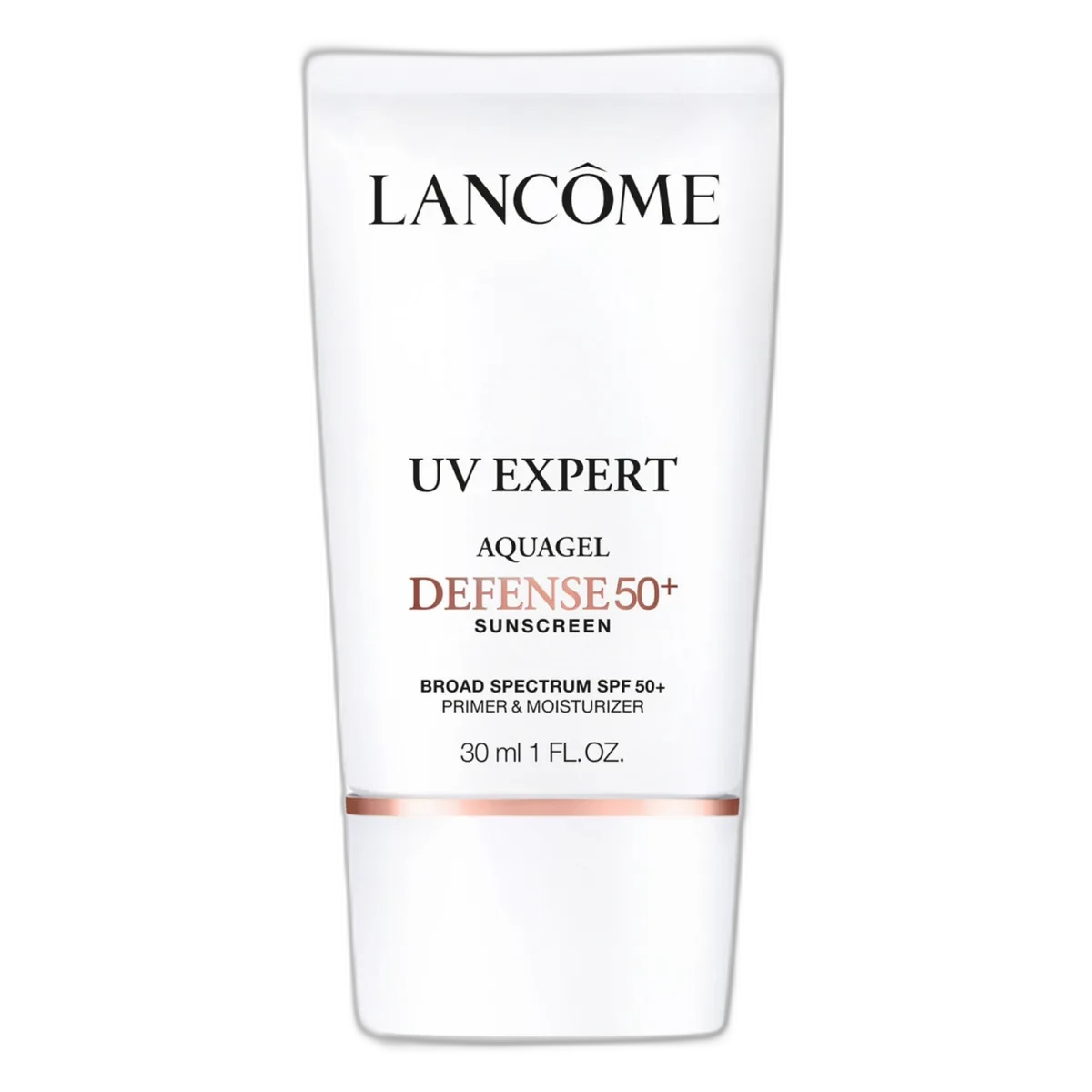
UV Expert Aquagel Defense SPF 50
Weightless UV Shield
 Verified reviewer
Pros & cons.
- +Aquagel texture absorbs in seconds and is genuinely invisible on all skin tones — zero white cast
- +Effective broad-spectrum SPF 50 with four stabilized chemical UV filters
- +Functions as a legitimate makeup primer — smooth, non-pilling base for foundation
- +Oil-free formula avoids midday shine for oily and combination skin types
- +Cooling menthyl lactate makes daily application genuinely pleasant
- +Moringa seed extract and vitamin E add antioxidant and anti-pollution support
- +Consumer study: 93% reported more hydrated skin, 82% confirmed no white appearance
- −Alcohol Denat. as the second ingredient — very high concentration can compromise skin barrier
- −Homosalate at 15% (US maximum) faces increasing regulatory scrutiny in Europe
- −Very expensive at $42 for 1 oz — lasts only 3-4 weeks with proper SPF application
- −Can sting severely if perspiration carries the formula into the eyes
- −Contains fragrance with no functional purpose in a daily-use sunscreen
The full review.
About Lancôme UV Expert Aquagel
The number one reason people skip sunscreen every day has nothing to do with whether they believe in sun protection — it is because they hate how sunscreen feels on their face. The greasy film, the white cast, the pilling under makeup, the heavy, suffocating layer that makes you want to wash your face thirty minutes after applying it. These are not trivial complaints. They are the reason that the single most effective anti-aging product available — daily sunscreen — gets skipped by millions of people who know better. Lancôme built UV Expert Aquagel entirely around solving that problem.
Texture
The texture is the product’s reason for existing, and it delivers. This is not a cream, not a lotion, not a fluid — it is a translucent aquagel that transforms into something closer to water the moment it touches skin. It absorbs within seconds. It leaves no white cast, no visible residue, no sticky film. If someone applied it to your face while you were blindfolded, you might not know anything was there. For a product carrying SPF 50 broad-spectrum protection through four chemical UV filters, this disappearing act is genuinely impressive.
Reality
The UV protection system uses homosalate at 15 percent, octocrylene at 7 percent, octisalate at 5 percent, and avobenzone at 3 percent. This is a high-concentration chemical sunscreen package that delivers real broad-spectrum protection. Avobenzone handles UVA — the radiation that penetrates deep into the dermis, breaking down collagen and driving the photoaging that accounts for ninety percent of visible skin aging. Octocrylene stabilizes the avobenzone against photodegradation, and an additional stabilizer — diethylhexyl syringylidenemalonate — reinforces this protection. The result is SPF 50 that should maintain reasonable efficacy between the recommended two-hour reapplication intervals.
Scent
Menthyl lactate adds a cooling sensation that is immediately noticeable and genuinely pleasant, particularly in warm weather. It turns sunscreen application from a grudging obligation into a brief moment of refreshment. Peppermint extract contributes to this cooling effect. It is a small sensorial detail, but it is the kind of thing that makes someone actually look forward to putting on their sunscreen, which is the whole point.
Pairs Well With
The primer claims are not marketing overreach. The dimethicone and film-forming polymers in the formula create a smooth, even canvas that foundation glides across. Multiple users confirm that this is one of the better SPF products for layering under makeup, with no pilling, no separation, and no interference with foundation finish. The oil-free formula avoids the midday shine that oily and combination skin types associate with moisturizing sunscreens.
Conflicts With
But the ingredient story has significant caveats. Alcohol Denat. is the second inactive ingredient — directly after water. This is an aggressive concentration of denatured alcohol, and it is the primary reason the formula achieves its impossibly lightweight, fast-absorbing texture. The alcohol evaporates rapidly, leaving behind only the UV filters and a thin polymer film. The trade-off is that daily application of high-concentration alcohol on the face can compromise the skin’s lipid barrier over time, leading to increased transepidermal water loss, sensitivity, and paradoxically, increased oiliness as the skin overcompensates. For the oily skin types this product targets, the short-term cosmetic elegance may be worth the trade-off. For anyone with dry, dehydrated, or sensitive skin, this is a problem.
Common Complaints
Homosalate at 15 percent is worth discussing. It is one of the most efficient UVB absorbers, which is why it enables such a lightweight formula — you can achieve high SPF with less total filter mass. However, homosalate has faced increasing regulatory scrutiny. In vitro studies have shown estrogenic activity, and the European Commission’s Scientific Committee on Consumer Safety recommended lowering the maximum concentration to 7.34 percent (from the current US maximum of 15 percent). The FDA has also requested additional safety data. This does not mean homosalate is proven unsafe at 15 percent — it means the science is evolving, and the concentration in this product is at the maximum US limit.
Not ideal for
The fragrance inclusion in a daily sunscreen is the most straightforward criticism. There is no functional reason for a sunscreen to contain fragrance. It adds sensitization risk without adding protective or therapeutic value. The menthyl lactate already provides a pleasant sensorial experience — the additional perfuming feels like a luxury-brand reflex rather than a formulation decision.
Works for
Moringa seed extract and edelweiss extract add antioxidant and anti-pollution claims to the marketing story. Vitamin E (tocopherol) provides more substantiated antioxidant support. These botanicals are nice-to-have additions that complement the UV protection with free radical defense, though their concentrations are likely too low to provide dramatic independent benefits.
Who Should Buy
The value conversation is where UV Expert faces its toughest challenge. At $42 for one ounce, this is among the most expensive daily sunscreens available. With the generous application required for proper SPF 50 coverage — a nickel-sized amount for the face alone — the tube lasts roughly three to four weeks. That is a monthly cost of $42 for sunscreen, and more if you reapply during the day. The texture is excellent, the protection is real, and the primer functionality adds value. But purely on sun protection, comparable SPF 50 chemical sunscreens are available at a fifth of the price.
Best for
Lancôme’s UV Expert Aquagel succeeds at exactly what it set out to do: make daily sunscreen feel like nothing on your face. If textural objections are the only thing standing between you and daily SPF use, this product removes that barrier entirely. The alcohol content and homosalate concentration are genuine concerns that should factor into an informed decision, but for oily and combination skin types who have tried and rejected every other sunscreen for being too heavy, this may be the one that finally sticks. And a sunscreen you actually wear every day protects your skin infinitely more than a theoretically better sunscreen sitting unused in your drawer.
Ingredient analysis.
Full INCI list
Active Ingredients: Avobenzone 3%, Homosalate 15%, Octisalate 5%, Octocrylene 7%. Inactive Ingredients: Aqua/Water, Alcohol Denat., Styrene/Acrylates Copolymer, Dimethicone, Acrylates/Dimethicone Copolymer, Tocopherol, Dicaprylyl Ether, Diethylhexyl Syringylidenemalonate, Phenoxyethanol, Parfum/Fragrance, Caprylyl Glycol, PEG-8 Laurate, Sodium Polyacrylate, Acrylates/C10-30 Alkyl Acrylate Crosspolymer, Trisodium Ethylenediamine Disuccinate, Caprylic/Capric Triglyceride, Menthyl Lactate, Glycerin, Propanediol, Sodium Dodecylbenzenesulfonate, Butylene Glycol, Pentylene Glycol, Leontopodium Alpinum Flower/Leaf Extract, Mentha Piperita Extract, Moringa Oleifera Seed Extract, Citric Acid, Rosa Meichibon/Delgramaue Callus, Xanthan Gum, Disodium Phosphate, Sodium Benzoate, Potassium Sorbate
Skin match.
The science.
The Science
The four-filter UV protection system offers broad-spectrum coverage via complementary absorption profiles. Avobenzone (3%) is the most effective UVA I absorber in the US, peaking at 357 nm. To fix its photolability—losing up to 36% absorption capacity in one hour without stabilization—octocrylene (7%) stabilizes avobenzone through triplet-triplet energy transfer, alongside the photostabilizer diethylhexyl syringylidenemalonate.
Homosalate (15%) absorbs UVB, peaking at 306 nm. Its high molar extinction coefficient allows efficient UV absorption at low mass, which creates the lightweight texture. However, the European Commission's Scientific Committee on Consumer Safety (SCCS) flagged concerns about potential endocrine activity at high concentrations. In vitro studies show weak estrogenic activity, though the clinical significance of topical application is debated. The EU proposed reducing the maximum allowed concentration from 10% (EU) to 7.34%.
Octisalate (5%) adds UVB absorption in the 280-320 nm range. Octocrylene absorbs UV radiation and stabilizes avobenzone, making it indispensable to this formula.
Tocopherol (vitamin E) provides secondary photoprotection by scavenging free radicals created when UV photons hit skin molecules that bypass chemical filters. Multiple studies show that combining antioxidants with UV filters provides more photoprotection than UV filters alone, especially against sub-erythemal UV doses that cause photoaging without visible sunburn.
Dermatologist Perspective
Dermatologists recommend daily broad-spectrum sunscreen as the best evidence-based anti-aging intervention. Board-certified dermatologists know the best sunscreen is the one patients use daily; the UV Expert's lightweight texture solves this compliance barrier. The chemical filter combination provides reliable broad-spectrum protection. However, dermatologists treating sensitive skin or rosacea typically recommend mineral sunscreens over chemical filters, and the high alcohol content may disrupt the skin barrier with long-term daily use. Dermatologists tracking regulatory changes may note the homosalate scrutiny and suggest monitoring for reformulation.
Where it fits in your routine.
Apply a generous amount to your face and neck as the last step of your morning routine, at least 15 minutes before sun exposure. Use a nickel-sized amount for the face. The lightweight texture may lead to under-application, but you need enough to reach the labeled SPF 50 protection. Oily skin types can use it directly as a primer without moisturizer, while drier skin can apply it over a hydrating serum. Reapply every two hours during extended sun exposure. Wait for the cooling sensation to fade before applying makeup.
At $42 for 1 ounce, UV Expert Aquagel is a premium facial sunscreen. Using a nickel-sized amount for the face, one tube lasts about 3-4 weeks. This makes monthly costs $42-56 when including reapplication. The 1.69 oz size has better per-ounce value. The price pays for the aquagel texture, primer functionality, and the Lancôme brand experience. The UV filters are standard and appear in many cheaper sunscreens. UV Expert Aquagel offers the best value for users needing an oil-free, invisible-finish SPF that works as a makeup primer.
Oily or combination skin types often reject heavier sunscreens because of texture. This single product works as sunscreen, moisturizer, and makeup primer. It works well for daily wear in hot weather when heavy sunscreens feel oppressive. It suits people who prioritize cosmetic elegance in their sun protection.
High alcohol content worsens dry, dehydrated, or sensitive skin. Use caution if you worry about homosalate at maximum concentration due to evolving regulatory scrutiny. Budget-conscious shoppers can find comparable SPF 50 chemical sunscreens for much less. This option suits those who prefer fragrance-free sun protection.
Product details.
This lightweight, translucent aquagel turns into a water-like liquid when applied. It absorbs in seconds and leaves an invisible, breathable film. It feels less like a traditional sunscreen and more like a lightweight serum or primer.
A light, clean fragrance is noticeable at first but fades fast. The menthyl lactate adds a subtle cooling sensation.
A pump dispenser tube. Compact and travel-friendly. The 1 oz size is standard for a luxury sunscreen but feels small because you need generous application to reach the labeled SPF.
The first application surprises users used to heavy, greasy sunscreens. This aquagel feels nearly weightless, absorbs in seconds, and leaves a smooth, invisible primer-like finish. Menthyl lactate provides an immediate, pleasant cooling sensation in warm weather. It leaves no white cast. Makeup applies beautifully over it.
3-4 weeks with daily generous face application
12 months
spring summer
The backstory.
Lancôme developed UV Expert as an answer to the most common reason people skip daily sunscreen: they hate how it feels. The aquagel format was designed to eliminate every textural objection — heaviness, greasiness, white cast, pilling under makeup — by creating a formula that barely registers on the skin. The cooling sensation from menthyl lactate turns application from a chore into a pleasant moment, particularly in warm climates where heavy sunscreens feel oppressive.
About Lancôme
Legacy Brand (20+ years)Lancôme launched in 1935 in France and belongs to L'Oréal's luxury division. The UV Expert line is the brand's sun protection range, acting as a primer, moisturizer, and sunscreen in one step. The formula uses moringa seed extract and edelweiss extract from L'Oréal's botanical research.
Common myths.
Lightweight sunscreens can't provide serious UV protection
SPF depends on UV filter concentration and efficacy, not base formula weight or texture. This product uses four chemical filters at effective concentrations to reach SPF 50. The aquagel texture provides cosmetic elegance without reducing protection.
You only need sunscreen when it's sunny outside
UVA radiation penetrates clouds and glass. This specific type causes photoaging, which the avobenzone in this product targets. Dermatologists recommend daily broad-spectrum sunscreen regardless of weather or indoor/outdoor plans, because cumulative UV exposure drives visible skin aging.
FAQ.
Does Lancôme UV Expert Aquagel leave a white cast?
No — this product uses chemical UV filters (avobenzone, homosalate, octisalate, octocrylene) to absorb UV radiation instead of reflecting it. The aquagel formula is translucent and absorbs invisibly on all skin tones. In Lancôme's consumer study, 82% of women confirmed the product left no white appearance.
Can Lancôme UV Expert be used as a makeup primer?
Yes — this product works as a sunscreen, moisturizer, and primer. The lightweight gel absorbs fast and leaves a smooth, non-greasy base for foundation and makeup application. Many users say it is one of the better SPF products for layering under makeup.
Is Lancôme UV Expert Aquagel good for oily skin?
Yes — the oil-free, lightweight aquagel formula works well for oily and combination skin. It absorbs fast without adding shine, and the matte-to-satin finish does not increase midday oiliness. However, users with very dry skin may find it lacks moisture.
Does Lancôme UV Expert contain oxybenzone?
The current formulation lacks oxybenzone. It uses four chemical UV filters: avobenzone (3%), homosalate (15%), octisalate (5%), and octocrylene (7%). Earlier versions of the product contained oxybenzone; check the label if buying older stock.
How often should I reapply Lancôme UV Expert Aquagel?
Reapply all sunscreens every two hours during extended sun exposure, or right after swimming, sweating heavily, or towel-drying. One morning application works for indoor days with minimal sun exposure. Apply a nickel-sized amount to the face to reach the full SPF 50 rating.
What the community says.
"Incredibly lightweight gel texture absorbs instantly with zero white cast"
"Works beautifully as a makeup primer — smooth, invisible base"
"Cooling sensation from menthyl lactate feels refreshing on application"
"Oil-free formula does not contribute to midday shine"
"Effective broad-spectrum SPF 50 protection in an elegant texture"
"Alcohol Denat. as the second ingredient can be drying for non-oily skin types"
"Can sting and burn if it runs into eyes from perspiration"
"Expensive at $42 for just 1 oz — runs out quickly with proper SPF application"
"Homosalate at 15% concentration faces increasing regulatory scrutiny"
"Fragrance is unnecessary in a sunscreen product applied daily"
People also looked at.