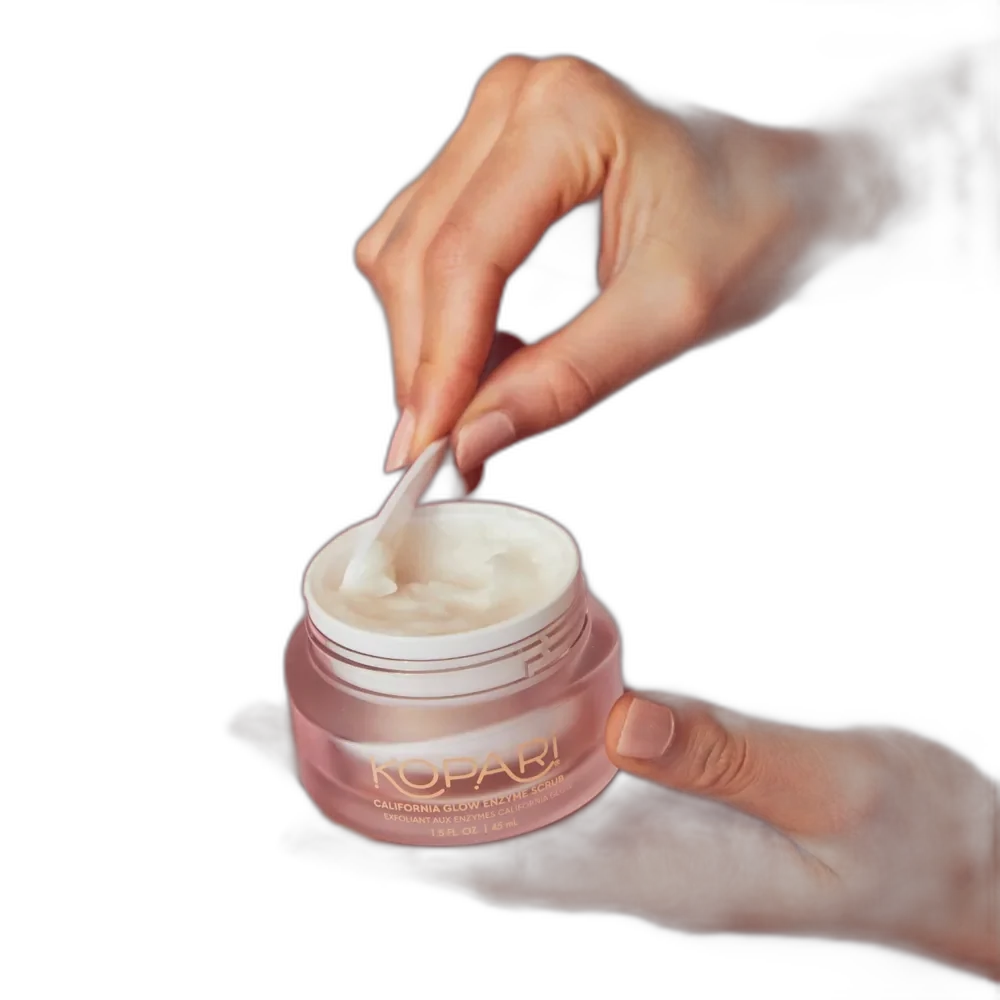
California Glow Enzyme Face Scrub
California Clean Glow-Getter
 Verified reviewer
Pros & cons.
- +Dual-action enzyme and physical exfoliation provides thorough yet gentle dead-skin removal
- +Coconut-oil-rich base prevents post-scrub dryness and leaves skin dewy
- +Bromelain and papain enzymes work on different protein bonds for broader coverage
- +Fine particle size avoids the micro-tear risk associated with rougher scrubs
- +Immediate visible glow and smoother texture after first use
- +Vegan, cruelty-free, and free from parabens, sulfates, and silicones
- −Contains polyethylene microplastics despite clean beauty brand positioning
- −Extremely small 1.5 oz size makes the $30 price feel steep for a scrub
- −Citrus peel extracts (orange and lemon) are potential photosensitizers and irritants
- −Too gentle for users seeking deep mechanical or chemical exfoliation
- −Natural fruit fragrance, while pleasant, means this isn't suitable for fragrance-free routines
The full review.
It is a contradiction to open a product from a brand with a ‘no-no list’ of over 200 ingredients and find polyethylene — a microplastic — sixth on the INCI. Kopari’s California Glow Enzyme Face Scrub tries to be both a clean beauty darling and an effective exfoliating scrub. It mostly succeeds at the latter, and that tension warrants examination.
The scrub uses a dual exfoliation approach. Bromelain from pineapple and papain from papaya are proteolytic enzymes — they dissolve the keratin proteins that hold dead skin cells to your face. They target different peptide bonds, so using both creates a broader exfoliation sweep than either alone. These enzymes work at the surface, dissolving the dull outer layer without the deep penetration of glycolic or salicylic acid. This lighter touch explains why users with sensitive-leaning skin tolerate it well.
Physical exfoliant particles layer over the enzymatic action — polylactic acid (PLA), a biodegradable polymer from plant sugars, plus the non-biodegradable polyethylene. The particle size is fine; the scrub feels like a soft polish rather than an abrasive sandblast. Corn starch adds a gentle, dissolvable buffing element that softens during massage.
The base formula is pure Kopari DNA: coconut fruit extract provides a thick, balm-like vehicle that melts on warm skin. This turns the scrub from a gritty paste into something closer to a cleansing balm. Your skin doesn’t feel stripped — the emollient base leaves a light, dewy layer that creates a genuine glow instead of the raw-and-shiny look from harsher scrubs.
Panthenol soothes post-exfoliation, while fruit extracts — melon, apple, cucumber, orange, and lemon — add antioxidants and a tropical scent. The scent is a highlight. If you want skincare that smells like a smoothie bar, this delivers. However, the citrus extracts, specifically orange peel and lemon peel, contain limonene and other compounds that are known photosensitizers and potential irritants. For truly sensitive skin, these natural fragrances are more concerning than synthetic ones because people assume ‘natural’ means ‘gentle.’
In practice, the scrub performs as advertised. You massage it on dry skin, feel the fine particles and melting balm, rinse, and reveal smoother, more luminous skin. The glow lasts through the evening and into the next morning. Pores look temporarily refined and texture feels more even. The sensorial experience makes exfoliation feel like self-care.
But the math is uncomfortable. At $30 for 1.5 ounces, the price matches luxury products while the size matches a sample. Twice-weekly use lasts roughly six to eight weeks. That is about $3.75-5.00 per use for a scrub — a category with effective options at a fraction of the cost.
The polyethylene issue is direct. Kopari is a clean beauty brand — no parabens, no sulfates, no silicones, and Leaping Bunny certified. But polyethylene is a plastic polymer that enters waterways and does not biodegrade. Its presence alongside polylactic acid (an explicitly biodegradable exfoliant) is an oversight or a formulation compromise. The PLA alone handles the physical exfoliation; the polyethylene is unnecessary.
The scrub does what it promises. It exfoliates gently, smells wonderful, leaves skin glowing, and doesn’t over-strip. For someone wanting an enzyme-forward scrub in a nourishing base who isn’t troubled by the price or the polyethylene, it is a pleasant addition. But at $30 an ounce from a clean beauty brand, the bar is higher than ‘pleasant.’
Ingredient analysis.
Full INCI list
Cetyl Ethylhexanoate, Polyglyceryl-3 Caprate, Caprylic/Capric Triglyceride, Stearyl Palmitate, Polylactic Acid, Polyethylene, Propanediol, Water (Aqua), Bromelain, Papain, Cucumis Melo (Melon) Fruit Extract, Cocos Nucifera Fruit Extract, Pyrus Malus (Apple) Fruit, Cucumis Sativus (Cucumber) Fruit Extract, Citrus Aurantium Dulcis (Orange) Peel Extract, Rosa Damascena Flower Extract, Panthenol, 1,2-Hexanediol, Caprylyl Glycol, Zea Mays Starch, Xanthan Gum, Sorbitan Sesquioleate, Sorbitan Oleate, Decylglucoside Crosspolymer, Citric Acid, Citrus Limon (Lemon) Peel Extract, Potassium Sorbate, Sodium Benzoate
Skin match.
The science.
The Science
The Kopari California Glow Enzyme Face Scrub uses two proteolytic enzymes for chemical exfoliation. Bromelain, from pineapple stems, is a cysteine protease that cleaves peptide bonds in dead keratinocytes. Biotechnology Research International (2012) documented bromelain's anti-inflammatory, anti-edematous, and fibrinolytic activities; topical use shows wound-healing and skin-debridement properties. In this scrub, bromelain dissolves proteins in outermost corneocytes without affecting viable cells below.
Papain, from papaya latex, is a second cysteine protease with complementary specificity. The Journal of the Society of Cosmetic Chemists (1969) established papain as an effective topical keratolytic agent that selectively digests dead tissue while leaving healthy skin intact. Combining bromelain and papain targets more peptide bonds than either enzyme alone, which provides more complete surface exfoliation.
The physical exfoliation uses polylactic acid (PLA), a biodegradable polyester from fermented plant starch. PLA particles provide mechanical buffing to complement the enzymatic action. The formula also includes polyethylene, a non-biodegradable synthetic polymer used for uniform particle size and smooth texture.
Panthenol (pro-vitamin B5) soothes skin after exfoliation. Studies show panthenol improves stratum corneum hydration, reduces transepidermal water loss, and accelerates epidermal wound healing—properties that mitigate exfoliation-induced barrier disruption.
References
- Properties and Therapeutic Application of Bromelain: A Review — Biotechnology Research International (2012)
Dermatologist Perspective
Dermatologists view enzyme-based exfoliants as gentler than chemical peels for patients needing surface exfoliation without deep acid penetration. Board-certified dermatologists note that bromelain and papain work selectively on dead tissue, making them suitable for patients who cannot tolerate glycolic or salicylic acid treatments. However, dermatologists flag the citrus peel extracts in this formula as potential photosensitizers and recommend strict sunscreen use the day after application. This dual physical-plus-enzymatic approach works for mild texture concerns and dullness, though dermatologists typically recommend pure chemical exfoliants for significant concerns like acne scarring or hyperpigmentation.
Where it fits in your routine.
Apply a quarter-sized amount to clean, dry skin. Massage in small circles for 30-60 seconds; this lets the enzymes activate while physical particles buff the surface. Rinse well with warm water and pat dry. Use a hydrating toner and moisturizer after. Use 1-2 times per week, ideally in the evening. Apply sunscreen the next morning because exfoliation increases sun sensitivity.
At $30 for 1.5 fl oz, this scrub has a high per-ounce cost. Using it twice weekly lasts 6-8 weeks, making the cost per use $3.75-5.00. No larger size exists, which lowers the value. The dual enzyme formulation and coconut-rich base feel thick, but the price is hard to justify when effective enzyme exfoliants from established brands offer larger sizes for less. The clean beauty positioning adds a premium, but polyethylene undermines that value narrative.
Normal to combination skin types want a sensorial, multi-action exfoliator that gives an immediate glow without harsh scrubbing. It suits users who like clean beauty products with a tropical aesthetic and pay a premium for a pleasant-to-use scrub.
People with sensitive skin, rosacea, or active eczema should avoid this because of the citrus extracts and physical exfoliation. Larger-format enzyme or acid exfoliants offer better value for those on a budget. The polyethylene content makes this a dealbreaker if you want microplastic-free formulations.
Product details.
This thick, balm-like cream has fine granular particles suspended throughout. It melts into the skin on contact and feels slightly oily, like a cleansing balm with scrub beads.
Natural pineapple, papaya, and citrus extracts create a sweet, fresh tropical fruit fragrance like a fruit smoothie.
Small squeeze tube with a flip-top cap. It travels easily, but the 1.5 oz size feels small for the price.
Skin feels polished and radiant after one use. The enzyme-plus-physical combination avoids harsh scraping or redness; it feels like a facial treatment rather than a traditional scrub. The oily base leaves a slight glow.
6-8 weeks with twice-weekly use on face only.
12 months
All Year
The backstory.
Kopari built its brand identity around coconut oil, and this scrub extends that ethos into the exfoliation category. The California Glow line was designed to evoke a post-surf, sun-kissed radiance without UV exposure, using tropical fruit enzymes as the active exfoliating agents alongside the brand's signature coconut base.
About Kopari
Established Brand (5–20 years)Kopari Beauty launched in 2015 in San Diego, California, using coconut-derived formulations. The brand is vegan and cruelty-free, follows a 'no-no list' of over 200 avoided ingredients, and grew from a DTC startup into a clean beauty brand sold at Sephora and Ulta. Its formulations are simple and ingredient-conscious, but the brand lacks the clinical research backing of dermatologist-developed lines.
Common myths.
Physical scrubs cause micro-tears and damage skin.
Rough, irregularly shaped particles like crushed walnut shells cause micro-tears. This scrub uses fine, rounded polylactic acid beads and soft corn starch particles. These buff gently without causing micro-damage when used with light pressure.
Enzyme exfoliants work the same as acid exfoliants.
Enzyme exfoliants like bromelain and papain break down proteins on the dead cell layer without deeper penetration. Acid exfoliants (AHAs/BHAs) work by disrupting intercellular bonds at different depths. Enzymes work more gently and stay on the surface.
FAQ.
How often should I use Kopari California Glow Enzyme Scrub?
Use 1-2 times per week for best results. This scrub uses physical and enzymatic exfoliation; frequent use over-exfoliates and compromises your skin barrier. Start once weekly and increase to twice if your skin tolerates it.
Is Kopari California Glow Scrub good for sensitive skin?
The enzymatic exfoliation is gentle, but citrus peel extracts (orange and lemon) in this scrub can irritate sensitive skin. The physical exfoliant particles add more stimulation. Patch test first and use sparingly if you have sensitive or reactive skin.
Does Kopari California Glow Scrub contain microplastics?
The formula contains polyethylene, a classified microplastic. It also uses polylactic acid, a biodegradable alternative. Note this if you avoid microplastics, despite the brand's clean beauty positioning.
Can I use Kopari Enzyme Scrub with retinol?
Do not use this scrub on the same night as retinol. Combining physical and enzymatic exfoliation with retinol causes excessive irritation. Use them on alternate nights, or use this scrub earlier in the week and retinol on other nights.
Best for
This scrub works best for normal to combination skin needing brightening and texture refinement. Oily skin types get a polished finish, while the coconut-oil-rich base helps dry skin. Avoid if you have actively inflamed or compromised skin.
Community
What the community says.
"Leaves skin immediately smooth and glowing"
"Gentle enough for sensitive-leaning skin despite being a scrub"
"Smells amazing with a tropical fruit scent"
"Balm-like texture melts into skin nicely"
"Very small size for the price — runs out quickly"
"Too gentle for those wanting deep exfoliation"
"Contains polyethylene microplastics despite clean beauty positioning"
"Citrus extracts may irritate truly sensitive skin"
People also looked at.